LONDON--(BUSINESS WIRE)--Feb 5, 2026--
The Royal Ballet School is heading to Edinburgh this Thursday, 5 February, to host a special day of free workshops for local school students.
This press release features multimedia. View the full release here: https://www.businesswire.com/news/home/20260204444362/en/
On Thursday 5 February, more than 70 pupils in Years 3 and 4 from Abbeyhill Primary School and Royal Mile Primary School will take part in insight workshops introducing them to the School’s national Associate Programme.
The sessions will be led by Royal Ballet School alumna and former Principal of Scottish Ballet, Bethany Kingsley-Garner, and supported by Emily Gibbs, Associates and Primary Steps Legacy Lead at The Royal Ballet School.
Delivered in partnership with Dance Base, which also celebrates its 25th anniversary in 2026, the workshops will take place in Dance Base’s award-winning studios in central Edinburgh.
Three one-hour workshops will run throughout the day — 9.30–10.30, 10.45–11.45, and 13.30–14.30 — all accompanied by live music.
The free sessions will provide local primary school students with access to high-quality creative ballet training and a unique opportunity to experience a typical Associate class at The Royal Ballet School.
The School is committed to widening access to classical ballet through its national Associate Programme, which offers high-quality ballet training to students aged 8 to 18 at centres across the UK. Around 90% of students who enter the School come through its seven national Associate centres.
The Royal Ballet School has delivered its Junior and Mid Associate programmes at Dance Base since January 2024, offering children of all backgrounds, experiences, and means the opportunity to engage with dance closer to home.
Emily Gibbs said:
“The Royal Ballet School is committed to creating opportunities for children and young people across the UK to engage with dance. As part of our centenary celebrations, these insight workshops give pupils in Years 3 and 4 the opportunity to experience what it’s like to take a ballet class with the School. The sessions encourage creativity, build confidence, develop musicality, and offer a deeper understanding of this inspiring art form.”
Event details
Date: Thursday, 5 February 2026
Workshops: 9.30-10.30, 10.45-11.45, and 13.30-14.30
Location: Dance Base, 4-16 Grassmarket, Edinburgh, EH1 2JU.
About The Royal Ballet School
The Royal Ballet School was founded in 1926 by Dame Ninette de Valois and is one of the world’s leading centres for classical ballet training. The School is the UK’s foremost institution for professional ballet education and an internationally recognised centre of excellence.
Graduates go on to professional careers with The Royal Ballet, Birmingham Royal Ballet, and other leading UK and international companies. Admission is based purely on talent and potential, with around 90% of students receiving financial support.
The School’s national Associate Programme provides high-quality ballet training for students aged 8 to 18 at centres across the UK and plays a vital role in widening access to classical ballet.
In 2026, The Royal Ballet School celebrates 100 years of excellence, with a future focused on expanding opportunity, access, and artistic leadership.

© 2024 The Royal Ballet School. Photographed by Photography by ASH.
NASHVILLE, Tenn. (AP) — A new Tennessee law has eased up on two longstanding financial hurdles for people with felony sentences who want their voting rights back, including a unique requirement among states that they must have fully paid their child support costs.
The Republican-supermajority Legislature approved the Democratic-sponsored change, which now lets people prove they have complied for the last year with child support orders, such as payment plans. The legislation also unties the payment of all court costs from voting rights restoration.
Advocates for years have sought various changes to Tennessee’s voting rights restoration system at the statehouse and in court. They say loosening these two rules marks the biggest rollback of restrictions to voting rights restoration in decades.
“This is huge and this is history,” said Keeda Haynes, senior attorney for the advocacy group Free Hearts led by formerly incarcerated women like her.
Most Republicans voted for it and Democrats supported it unanimously. The law took effect immediately upon Republican Gov. Bill Lee's signature last week.
“I think people are at a point where they want to just remove the barriers out of the way and allow people to be fully functional members of society,” said Democratic House Minority Leader Karen Camper, a bill sponsor.
In 2023 and early 2024, the state decided that the system did require going to court or showing proof of a pardon, not just a paperwork process, and that gun rights were required to restore the right to vote. Election officials said a court ruling made the changes necessary, though voting rights advocates said officials misinterpreted the order.
Last year, lawmakers untangled voting and gun rights. But voting rights advocates opposed some of the bill's other provisions, such as keeping the process in the courts, where costs can rack up if someone isn't ruled indigent.
Easing up on the financial requirements uncommonly split legislative Republicans. For instance, Senate Speaker Randy McNally voted against it, while House Speaker Cameron Sexton supported it, noting that people aren't getting forgiveness on making their payments.
“They need to continue paying that, and as long as they do, then there’s a possibility (to restore their voting rights)," Sexton said. "I really think that’s harder for people to argue against than maybe what something else was.”
Republican Rep. Johnny Garrett, who voted no, said in committee his vote would hinge on whether “there still can be an (child support) arrearage owed beyond that 12 months.”
For some, backed-up child support payments could reach hundreds or thousands of dollars, and court costs could be hundreds or thousands more, said Gicola Lane, Campaign Legal Center's Restore Your Vote community partnership senior manager.
Advocates credited their narrowed focus, omitting goals such as automatic restoration of rights, no longer tying restitution payments to voting rights, or offering a path for certain people to restore their right who are permanently disenfranchised, including those convicted of voter fraud or most murder charges.
The bill passed the Senate last year and the House this year.
Lawmakers gave the child support requirement final passage in 2006 within an overhaul bill that also created a voting rights restoration process outside of court. Critics said the child support rule penalized impoverished parents.
Democrats were then narrowly hanging onto legislative leadership in both chambers. Republicans held a slim Senate majority but GOP defectors voted for a Democratic speaker.
Last year marked the dismissal of a nearly five-year-old federal lawsuit over Tennessee’s voting-rights restoration system. Free Hearts and the Campaign Legal Center represented plaintiffs in the long-delayed case, which saw some election policy changes along the way.
Roughly 184,000 people have completed supervision for felonies and their offenses don't preclude them from restoring their voting rights, according to a plaintiffs expert’s 2023 estimate in the lawsuit. About one in 10 were estimated to have outstanding child support payments, and more than six in 10 owed court courts, restitution or both, the expert said.
Both Republican and Democratic-led states have eased the voting rights restoration process in recent years. Some states have added complexities.
In Florida, after voters approved a constitutional amendment in 2018 restoring the right to vote for people with felony convictions, the Republican-controlled Legislature watered that down by requiring payment of fines, fees and court costs.
Voting rights are automatically restored upon release in nearly half of states. In 15 others, it occurs after parole, probation or a similar period and sometimes requires paying outstanding court costs, according to the National Conference of State Legislatures. In Maine and Vermont, people with felonies keep their voting rights in prison, the NCSL says.
Ten other states including Tennessee require additional government action. Virginia ’s governor must intervene to restore voting rights of people convicted of felonies. In some states, including Tennessee, certain conviction types render someone ineligible.
However, Virginia lawmakers this year have passed a proposed state constitutional amendment to ask voters whether they want automatic voting rights restoration after someone is released from prison. Kentucky lawmakers have proposed a similar change for voters' consideration that would automatically restore voting rights after certain completed sentences, including probation.
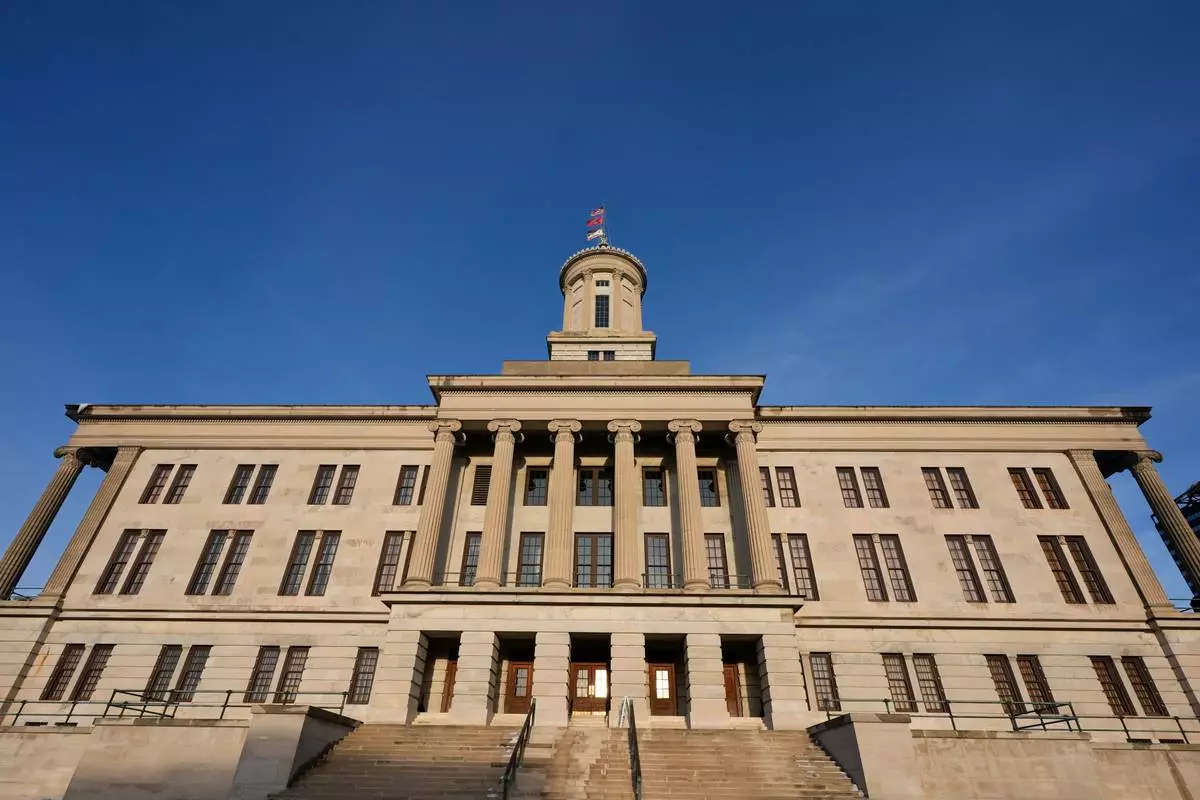
FILE - The Tennessee Capitol is seen, Jan. 22, 2024, in Nashville, Tenn. (AP Photo/George Walker IV, File)