Skip to Content Facebook Feature Image

Reigning Olympic GS champion Marco Odermatt embraces pressure of being from ski-crazed Switzerland

Sport

Reigning Olympic GS champion Marco Odermatt embraces pressure of being from ski-crazed Switzerland
Sport

Sport

Reigning Olympic GS champion Marco Odermatt embraces pressure of being from ski-crazed Switzerland

2026-02-05 16:10 Last Updated At:16:20

BORMIO, Italy (AP) — Marco Odermatt hears the comparison all the time, that he is the Roger Federer of ski racing.

It’s flattering to be linked with the tennis great and dominate as his fellow Swiss countryman once did. It’s pressure, too, as the expectations for Odermatt are immense heading into the Milan Cortina Games, where he will be a favorite in the giant slalom – he’s the defending champion – downhill and super-G.

The 28-year-old doesn’t mind the added weight of competing for a ski-crazed nation. Or the spotlight. Or the demands. Or even the loss of privacy (well, maybe a little bit on that one).

“It all kind of feels normal,” Odermatt recently said in an interview. “I’ve grown up with this (pressure) during the last couple of years. It’s not something that comes overnight, so you learn to deal with it and it doesn't feel like pressure.”

Odermatt’s the ski racer everyone studies because his form is so solid, his line through a course always so fast and his turns so crisp. He's won four straight overall World Cup titles — cruising toward a fifth — and holds the season-long globe titles in the giant slalom, super-G and downhill.

“Winning,” he said, “is still fun, so that’s my biggest motivation to try and stay on top.”

He’s the most dominant men's ski racer since Austria’s Marcel Hirscher, who won eight straight overall World Cup titles. Hirscher did things on skis that left his rivals in awe.

Odermatt has a different sort of wizardry. His talent comes from his timing, which two-time Olympic champion Ted Ligety described as Odermatt's “superpower.”

“Timing sounds so simple in ski racing, but it is so hard to do at varying speeds, to know exactly when to start your turn into a whole bunch of varying tempos," Ligety explained. "To do that as consistently as he does is pretty amazing to watch.”

Ligety used to go head-to-head against Hirscher. Now he just observes Odermatt's mastery.

“We’ve seen more magical skiing out there before,” Ligety said, “but we’ve never seen such magical timing before.”

From Buochs, a small town in central Switzerland, Odermatt was on the slopes at an early age. His father was a skier while his mother was there “for everything else besides skiing,” he explained on an episode of the International Ski and Snowboard Federation's podcast. “This gave me exactly the good balance. Skiing was important but they always told me there were more important things in life.”

His idol was Swiss great Didier Cuche, a 21-time World Cup winner and an Olympic silver medalist in the super-G at the 1998 Nagano Games. As a kid, Odermatt won a race where the prize was to meet and spend a day skiing with Cuche.

Winning simply became a familiar theme. Like at the 2018 junior world championships in Switzerland, when Odermatt captured four individual gold medals.

He’s become the gold standard on the circuit, with 53 World Cup victories and three world championship crowns. Odermatt won the Olympic giant slalom at the 2022 Beijing Games when he held off Zan Kranjec of Slovenia by 0.19 seconds.

“Generational talent,” American ski racer Bryce Bennett said. “Just totally dialed in. He’s consistent, too. It’s amazing.”

That goes ditto for many on the World Cup tour:

— “He’s always bringing intensity, he’s pushing limits and showing that the athleticism is very important in this sport,” said Norwegian skier Aleksander Aamodt Kilde, who recently withdrew from the Olympics as he works his way back from injuries. “You can say much about his skiing but what you can see is that he’s on point with his timing, he’s willing to ski fast, he’s motivated and he’s pushing. That’s why he keeps winning.”

— “It’s pretty much the same like Marcel,” said Austrian skier Vincent Kriechmayr, who's in second place behind Odermatt in the World Cup super-G standings. “They, of course, are the best skiers but they’re even stronger in the head. That’s the most important part.”

— “On my best day, I can compete with anybody,” explained American racer River Radamus, who finished fourth in the GS four years ago in Beijing. “But a guy like Marco Odermatt, on his bad days, he's still competing with everybody.”

Odermatt’s quite familiar with the Olympic track in Bormio, winning a World Cup super-G twice at the venue and finishing runner-up a pair of times in the downhill.

“Marco combines technical precision, physical conditioning and an exceptional ability to read in-run conditions — that mix creates his consistency,” said Markus Waldner, the men’s World Cup race director. “Having a dominant athlete is healthy for the sport: it creates a reference point opponents aim at, builds narratives and draws new audiences.”

Just like Federer, who won 20 Grand Slam singles titles.

Odermatt has taken up tennis, and hopes to one day play an official match with Federer. Odermatt also enjoys golf, escaping into the wilderness for a hike, biking and, of course, going fast on skis.

“I just like skiing,” he said with a laugh, “and I always try to give my best.”

AP skiing: https://apnews.com/hub/alpine-skiing

Switzerland's Marco Odermatt speeds down the course during the alpine ski, men's downhill first official training, at the 2026 Winter Olympics, in Bormio, Italy, Wednesday, Feb. 4, 2026. (Michael Buholzer/Keystone via AP)

Switzerland's Marco Odermatt speeds down the course during the alpine ski, men's downhill first official training, at the 2026 Winter Olympics, in Bormio, Italy, Wednesday, Feb. 4, 2026. (Michael Buholzer/Keystone via AP)

Switzerland's Marco Odermatt at the finish area, during the alpine ski, men's downhill first official training, at the 2026 Winter Olympics, in Bormio, Italy, Wednesday, Feb. 4, 2026. (AP Photo/Pier Marco Tacca)
Switzerland's Marco Odermatt at the finish area, during the alpine ski, men's downhill first official training, at the 2026 Winter Olympics, in Bormio, Italy, Wednesday, Feb. 4, 2026. (AP Photo/Pier Marco Tacca)

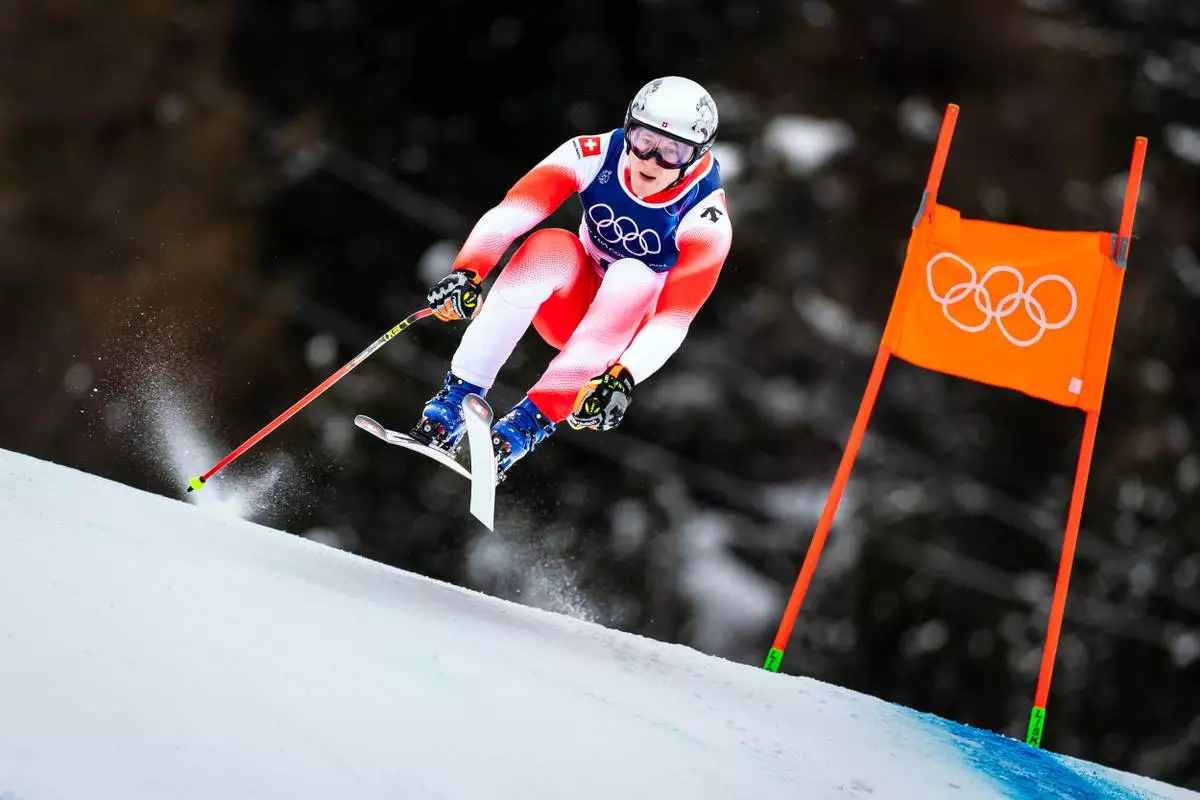
Switzerland's Marco Odermatt takes a jump as he speeds down the course during the alpine ski, men's downhill first official training, at the 2026 Winter Olympics, in Bormio, Italy, Wednesday, Feb. 4, 2026. (Michael Buholzer/Keystone via AP)
Switzerland's Marco Odermatt takes a jump as he speeds down the course during the alpine ski, men's downhill first official training, at the 2026 Winter Olympics, in Bormio, Italy, Wednesday, Feb. 4, 2026. (Michael Buholzer/Keystone via AP)

NASHVILLE, Tenn. (AP) — A new Tennessee law has eased up on two longstanding financial hurdles for people with felony sentences who want their voting rights back, including a unique requirement among states that they must have fully paid their child support costs.

The Republican-supermajority Legislature approved the Democratic-sponsored change, which now lets people prove they have complied for the last year with child support orders, such as payment plans. The legislation also unties the payment of all court costs from voting rights restoration.

Advocates for years have sought various changes to Tennessee’s voting rights restoration system at the statehouse and in court. They say loosening these two rules marks the biggest rollback of restrictions to voting rights restoration in decades.

“This is huge and this is history,” said Keeda Haynes, senior attorney for the advocacy group Free Hearts led by formerly incarcerated women like her.

Most Republicans voted for it and Democrats supported it unanimously. The law took effect immediately upon Republican Gov. Bill Lee's signature last week.

“I think people are at a point where they want to just remove the barriers out of the way and allow people to be fully functional members of society,” said Democratic House Minority Leader Karen Camper, a bill sponsor.

In 2023 and early 2024, the state shelved a paperwork process that didn’t require going to court and decided gun rights were required to restore the right to vote. Election officials said a court ruling made the changes necessary, though voting rights advocates said officials misinterpreted the order.

Last year, lawmakers untangled voting and gun rights. But voting rights advocates opposed some of the bill's other provisions, such as keeping the process in the courts, where costs can rack up if someone isn't ruled indigent.

Easing up on the financial requirements uncommonly split legislative Republicans. For instance, Senate Speaker Randy McNally voted against it, while House Speaker Cameron Sexton supported it, noting that people aren't getting forgiveness on making their payments.

“They need to continue paying that, and as long as they do, then there’s a possibility (to restore their voting rights)," Sexton said. "I really think that’s harder for people to argue against than maybe what something else was.”

Republican Rep. Johnny Garrett, who voted no, said in committee his vote would hinge on whether “there still can be an (child support) arrearage owed beyond that 12 months.”

For some, backed-up child support payments could reach hundreds or thousands of dollars, and court costs could be hundreds or thousands more, said Gicola Lane, Campaign Legal Center's Restore Your Vote community partnership senior manager.

Advocates credited their narrowed focus, omitting goals such as automatic restoration of rights, no longer tying restitution payments to voting rights, or offering a path for certain people to restore their right who are permanently disenfranchised, including those convicted of voter fraud or most murder charges.

The bill passed the Senate last year and the House this year.

Lawmakers gave the child support requirement final passage in 2006 within an overhaul bill that also created a voting rights restoration process outside of court. Critics said the child support rule penalized impoverished parents.

Democrats were then narrowly hanging onto legislative leadership in both chambers. Republicans held a slim Senate majority but GOP defectors voted for a Democratic speaker.

Last year marked the dismissal of a nearly five-year-old federal lawsuit over Tennessee’s voting-rights restoration system. Free Hearts and the Campaign Legal Center represented plaintiffs in the long-delayed case, which saw some election policy changes along the way.

Roughly 184,000 people have completed supervision for felonies and their offenses don't preclude them from restoring their voting rights, according to a plaintiffs expert’s 2023 estimate in the lawsuit. About one in 10 were estimated to have outstanding child support payments, and more than six in 10 owed court courts, restitution or both, the expert said.

Both Republican and Democratic-led states have eased the voting rights restoration process in recent years. Some states have added complexities.

In Florida, after voters approved a constitutional amendment in 2018 restoring the right to vote for people with felony convictions, the Republican-controlled Legislature watered that down by requiring payment of fines, fees and court costs.

Voting rights are automatically restored upon release in nearly half of states. In 15 others, it occurs after parole, probation or a similar period and sometimes requires paying outstanding court costs, according to the National Conference of State Legislatures. In Maine and Vermont, people with felonies keep their voting rights in prison, the NCSL says.

Ten other states including Tennessee require additional government action. Virginia ’s governor must intervene to restore voting rights of people convicted of felonies. In some states, including Tennessee, certain conviction types render someone ineligible.

However, Virginia lawmakers this year have passed a proposed state constitutional amendment to ask voters whether they want automatic voting rights restoration after someone is released from prison. Kentucky lawmakers have proposed a similar change for voters' consideration that would automatically restore voting rights after certain completed sentences, including probation.

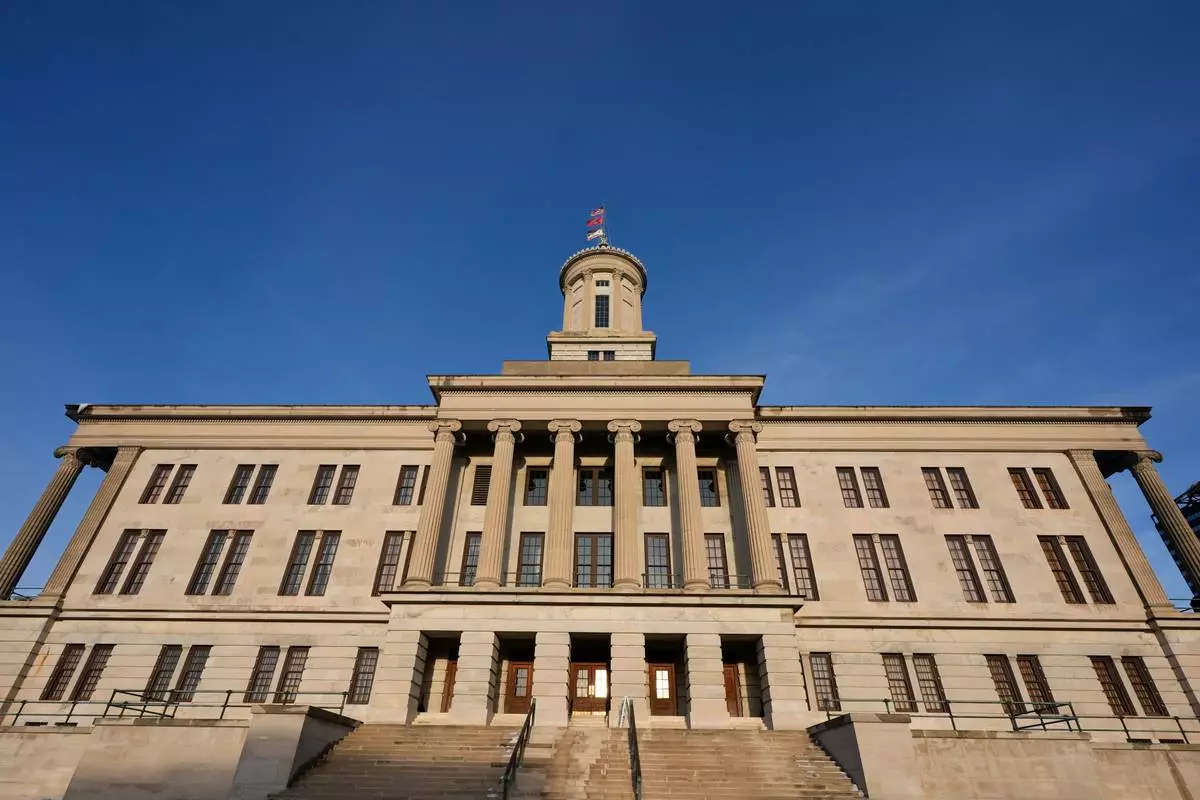
FILE - The Tennessee Capitol is seen, Jan. 22, 2024, in Nashville, Tenn. (AP Photo/George Walker IV, File)

FILE - The Tennessee Capitol is seen, Jan. 22, 2024, in Nashville, Tenn. (AP Photo/George Walker IV, File)

Recommended Articles