A village in Quzhou City, east China's Zhejiang Province, held a millennia-old ritual on Wednesday to celebrate the Beginning of Spring, or Lichun, the first of the 24 Chinese solar terms.
Traditionally, Lichun is also a symbolic start of farming work for the new year.
In 2016, China's 24 solar terms and related folk practices were officially inscribed on UNESCO's Representative List of the Intangible Cultural Heritage of Humanity. With 2026 marking the 10th anniversary, domestic and international guests were invited to attend the ceremony, which dates back to the Song Dynasty (960–1279).
The ceremony began with the resonant boom of drums and the chime of bells, featuring a series of rituals including welcoming the spring, offering sacrifices to the God of Spring, and a festive parade.
One of the highlights was the "whipping of the spring ox," during which children waved colorful whips and sang cheerful rhymes, while an elder villager led an ox-drawn plow to till the field, commencing the first plowing of spring.
Wu Haigen, a representative inheritor of this intangible cultural heritage, has participated in the event for more than 20 consecutive years.
"The ritual for the Beginning of Spring aims to sow hope, while whipping the spring ox symbolizes praying for a good harvest. By keeping this tradition alive today, we pass on the blessings of spring and preserve the true essence of our culture," said Wu.
The 24 solar terms, consisting of 12 major and 12 minor terms, were created thousands of years ago by the ancient Chinese to guide agricultural production.
Today, the culture behind the terms provides useful guidance for people's lives, as each term features special food, cultural ceremonies, and healthy living tips.
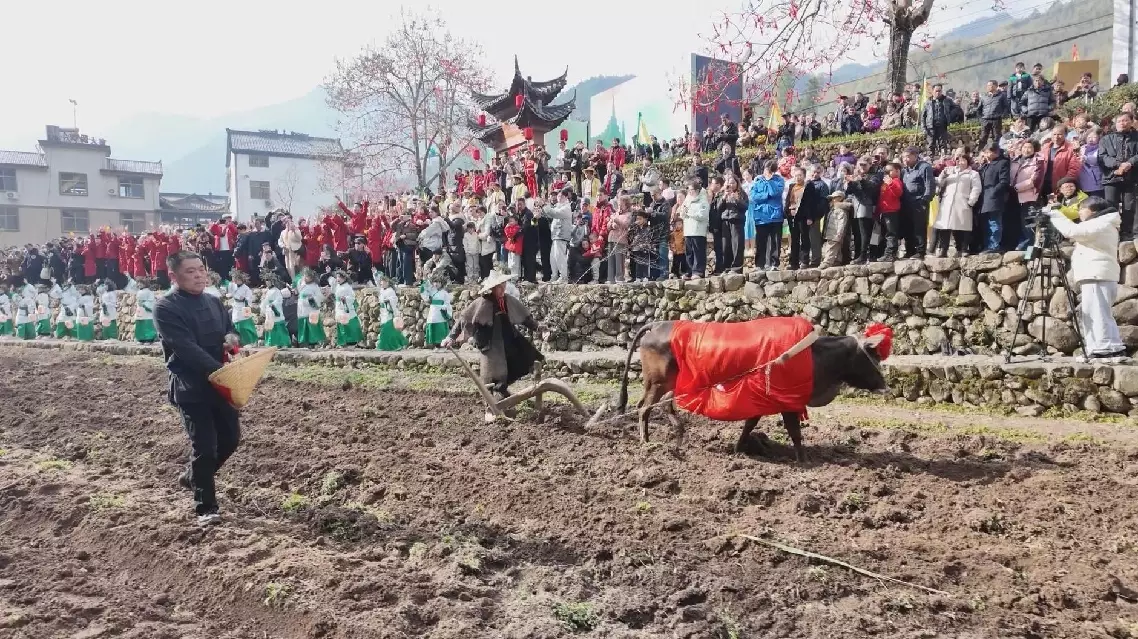
Traditional ritual held in Quzhou as locals observe "Beginning of Spring"
Spain is seeing a surge in European tourists as conflict in the Middle East prompts travelers to opt for closer and safer destinations.
With Easter holiday underway, Palma de Mallorca airport has been packed with visitors who abandoned plans for trips eastward. Hostilities triggered by Israeli‑U.S. strikes on Iran have forced major airports across the Middle East to cancel or delay flights, severely disrupting aviation and tourism in the region.
"We were thinking about going to Dubai, but because of the war, there was no option, so we came here to Mallorca," said a traveler named Michelle, who works as a kindergarten teacher.
"We thought about going to Thailand, but I see the flights were disrupted and they said there were drones and things like that, so we thought Spain may be a safer option," another traveler Ross McGrego said.
"The situation in the Middle East is a little bit too unstable for my holiday plans," said traveler Rose Danaher, a rabies specialist nurse with the UK Health Services Agency.
The influx has brought new opportunities for local businesses. Local restaurant owner in Mallorca Victoria Amoros opened her second restaurant just days ago.
"50,000 people extra are flying to Mallorca. These people were supposed to fly to the Middle East and they are rerouted to Mallorca. I don't know how we are going to handle that, but we will receive them with love," said Amoros, owner of La Malvasia Restaurant Chain.
Chris Pomeroy, the global head of tourism of international communications group Hopscotch said people all over the world are choosing to holiday closer to home.
"So, 14 percent of international travel goes through the Middle East, it's a connectivity issue. So, when these bridges are down, the logical effect is that people will stay in their hemisphere. We say in tourism that when in times of conflict, investors turn to gold, and in times of conflict, tour operators turn to Spain," he said.
Spain welcomed a record 97 million foreign tourists in 2025, and industry experts say the figure could surpass 100 million this year. With Middle East routes disrupted, Spain's role as Europe's fallback destination is set to grow even further.
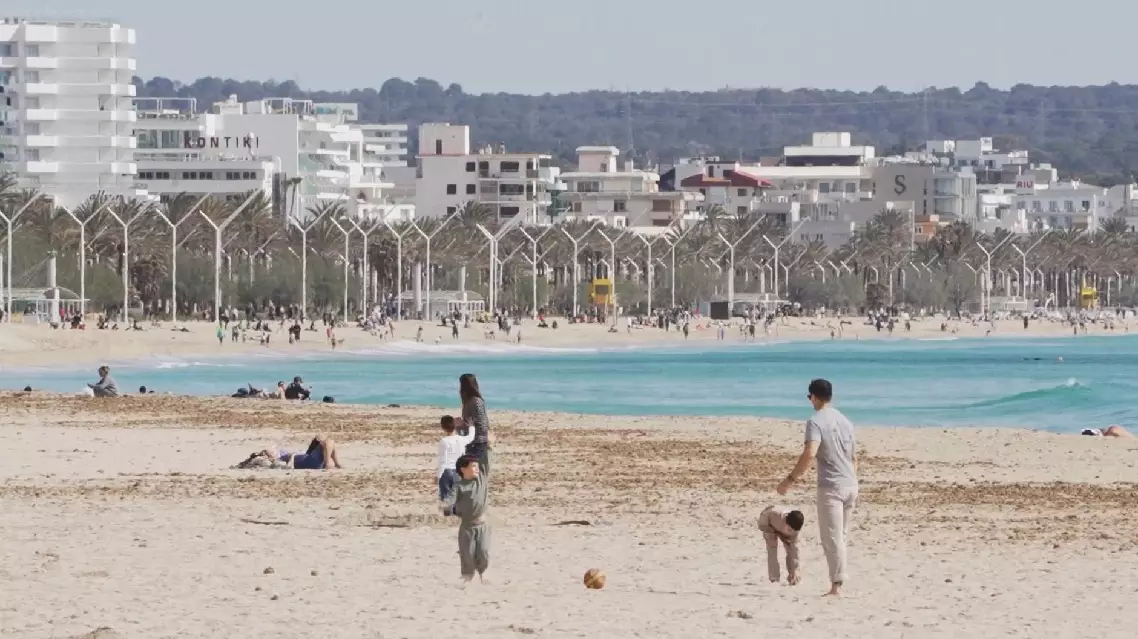
Spain tourism surges as Europeans opt for safer holidays amid Middle East conflict