A vibrant painting of mythical winged horses has been discovered on a coffin unearthed from a 1,300-year-old tomb in Xinjiang Uygur Autonomous Region, northwest China, offering a remarkable glimpse into the artistic and cultural exchanges that flourished during the Tang Dynasty (618-907).
The discovery was announced on Wednesday by the Chinese Academy of Social Sciences as part of its annual list of major archaeological findings. The painted "heavenly horse" was found in a Tang-era tomb at the Badam East cemetery site near the ancient city of Gaochang in Turpan, Xinjiang.
In the M20 tomb, archaeologists uncovered a wooden couch, a painted coffin, and a screen, which is exceptionally rare to find preserved as original objects from the Tang period.
The painted coffin is regarded as the most structurally complex of its kind ever discovered. Its upper section is decorated with elaborate floral and geometric patterns, while the lower portion features twelve arched panels. Inside these panels are vibrant depictions of mythical winged beasts, including horses, lions, and tigers, captured with mouths agape, wings spread wide, which are poised as if they were running through fields of flowers.
Among these twelve auspicious animals are two particularly striking winged horses: one adorned with blue spots, and the other with green drawings. Both are rendered with remarkable artistry and are believed to carry deep symbolic meaning. "It might have been created with inspiration drawn from ancient mural art. The painting was executed in one continuous, seamless stroke. Even under magnification, you can see the lines. There's no wavering, no hesitation, no harsh breaks. They are smooth and fluid, which reflects the painter's exceptional skill. This is likely the first discovery of its kind in the country," said Shang Yuping, lead archaeologist for the project. Experts explain that the set of patterns of beasts reflects a blend of cultural influences brought together through the Silk Road. While traditional Chinese auspicious animals such as the Qilin had long been part of local symbolism, creatures like lions from ancient Egypt, heavenly horses from Eurasian steppe cultures, and elephants from Buddhist traditions were introduced through trade and gradually integrated into China's system of auspicious imagery, especially during the cosmopolitan Tang Dynasty.
The tomb's structure and contents strongly suggest Central Plains cultural influences, indicating close ties between the western regions and the Tang capital during that era.
"This is truly a very significant gift from Chinese archaeology to the nation in this Year of the Horse. Its value and meaning lie in how it presents a complete system of auspicious animals, offering a vivid portrayal of traditional Chinese beliefs in pursuing peace, happiness, and national prosperity and stability. It integrates both indigenous Chinese elements and foreign cultural influences into a new synthesis, making it a highly important example of cultural exchange between China and other civilizations along the Silk Road," said Huo Wei, a professor at the Sichuan University.
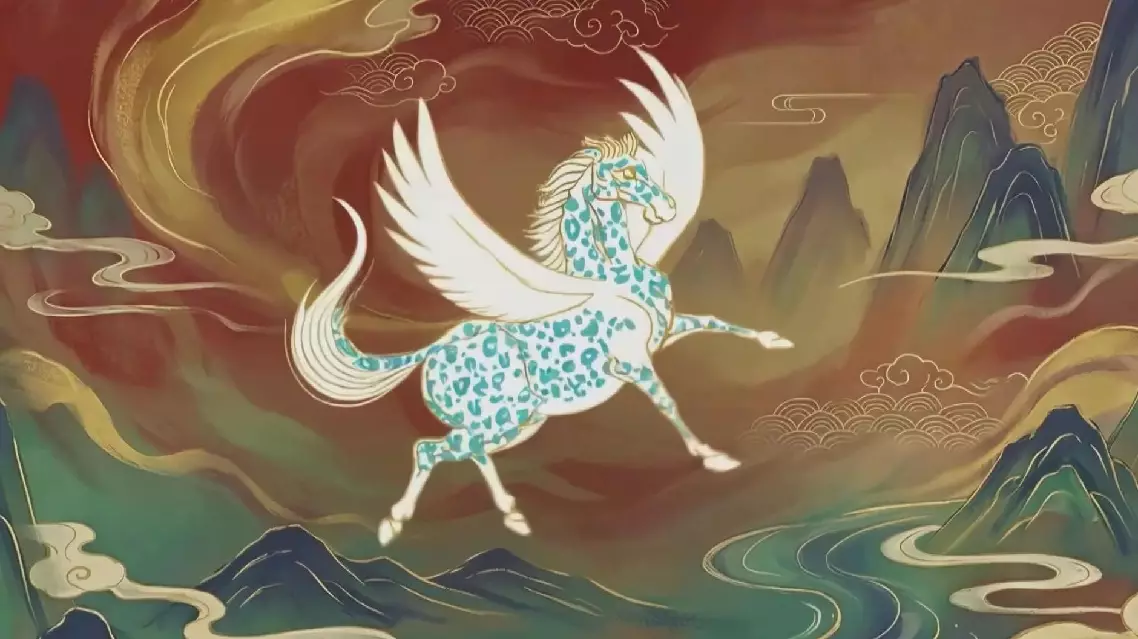
Ancient "heavenly horse" painting unearthed in northwest China's Xinjiang sheds light on Tang Dynasty culture
An American content creator has given his take on a surprising new viral trend which has taken social media by storm, as global internet users joke about entering a "very Chinese phase" of their lives.
The unexpected phenomenon which is sweeping across the online world shines a new spotlight on Chinese culture and lifestyle, and sees users declare they are "becoming Chinese" alongside the phrase "you've met me at a very Chinese time of my life," accompanied by videos of them adopting Chinese habits on various social media platforms.
U.S. influencer Paul Mike Ashton, known online as 'BaoBaoXiong', gained fame for coining the phrase which led to the "city or not city" meme back in 2024.
As for this latest online sensation, Ashton believes it's not just another amusing meme, but also a casual way to experience Chinese culture through everyday details, rather than abstract stereotypes.
He said the current wave is giving foreign audiences a fresh, tangible perspective on China, which makes cultural exchange more engaging and relatable.
"As a content creator, I absolutely think that this is going to be changing the way people perceive China in general. Oftentimes when we need simplified stories, we need people to see things as a whole unit as opposed to their little parts. I would say even just the practice of doing these things is giving you a chance to engage with the culture and engage with specifics instead of just kind of this big overall idea and getting new experience like 'OK, this particular form of life actually does really feel very nice and very comfortable'. I think it also gives a chance for Chinese creators to take more of a spotlight and actually talk a little bit more about their culture in ways that people will listen because there's a curiosity about this," he said.
Ashton also believes there are other deeper reasons for why this "becoming Chinese" trend has taken off, pointing to the current challenges and level of discontent many people feel in the U.S., which means many are looking for some form of escapism.
"I think I've heard somebody mention before kind of this idea that the U.S., politically and economically, is in a very sensitive time. There's a lot going on and there's a lot of unrest and a lot of unhappiness and a lot of unsatisfaction. So, I think that it's been proposed this idea that people are kind of looking for stuff outside of these sorts of traditional cultural superpowers to kind of find a sense of either excitement or safety or comfort," he said.
Ashton also pointed to how concerns over the future of the popular TikTok app early last year saw many online users flocking over to the Chinese mobile app RedNote as being another notable factor driving the emergence of these online trends.
He said this renewed global interest in Chinese culture has created fresh engagement channels on other international platforms.
"This is almost a year now since the initial TikTok refugee exodus last year in which a lot of people suddenly took interest in Chinese culture in a new way than before. So, I think there's been since then some opportunities to engage with and interact with Chinese culture in TikTok, in international social media, besides just China on its own that definitely I think has influenced this becoming a bigger trend," he said.
US influencer shares thoughts on 'Becoming Chinese' trend