The National Aviation Infrastructure Show 2026 got underway in Moscow on Wednesday, with "import substitution" and "localization" emerging as the central priorities for the future of Russia's aviation industry.
The event comes as Western sanctions squeeze the industry, grounding numerous civilian aircraft due to a critical shortage of spare parts. As Russia's only professional exhibition dedicated to civil aviation, this year's two-day show underscores the growing urgency to build an autonomous domestic supply chain.
The exhibition, the largest of its kind in the country, features a wide range of products including civil passenger aircraft, airport facilities, drones, and integrated technology systems, with 92 percent of exhibitors hailing from Russia.
Since the implementation of Western sanctions in 2022, Russia's civil aviation fleet has been significantly impacted, leading to a shortage of operational aircraft. In October 2025, the head of the Federal Air Transport Agency, Dmitry Yadrov, offered a pessimistic forecast: by 2030, approximately one-third of Russia's civil aircraft fleet could be decommissioned. This includes 109 foreign aircraft that are beyond repair and 230 Russian-made planes grounded due to a lack of parts or after exceeding 40 years of service.
In June 2022, to address the potential shortage of civil aircraft, the Russian government approved a comprehensive program for the development of the aviation industry until 2030. Russian President Vladimir Putin has mandated that the proportion of Russian-made aircraft in the national fleet must increase to 50 percent by 2030. Currently, Russia is accelerating the research, development, and production of three main domestic passenger aircraft: the Tu-214, SJ-100, and MC-21.
The Tu-214 has already completed airworthiness certification for its main domestic configurations and secured letters of intent for 100 aircraft from Russian airlines at the exhibition. It is poised to become the most viable option to fill the current fleet gap for medium-haul routes.
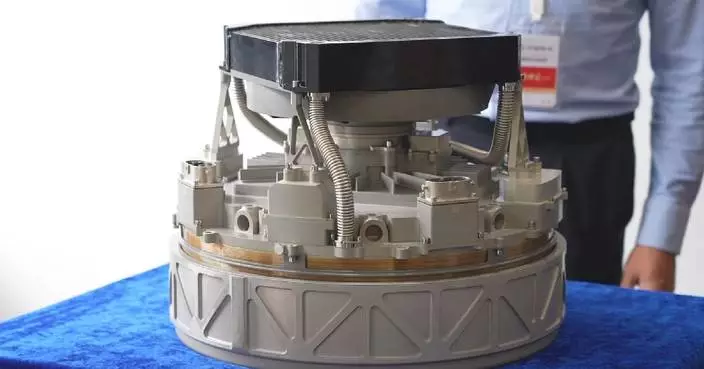
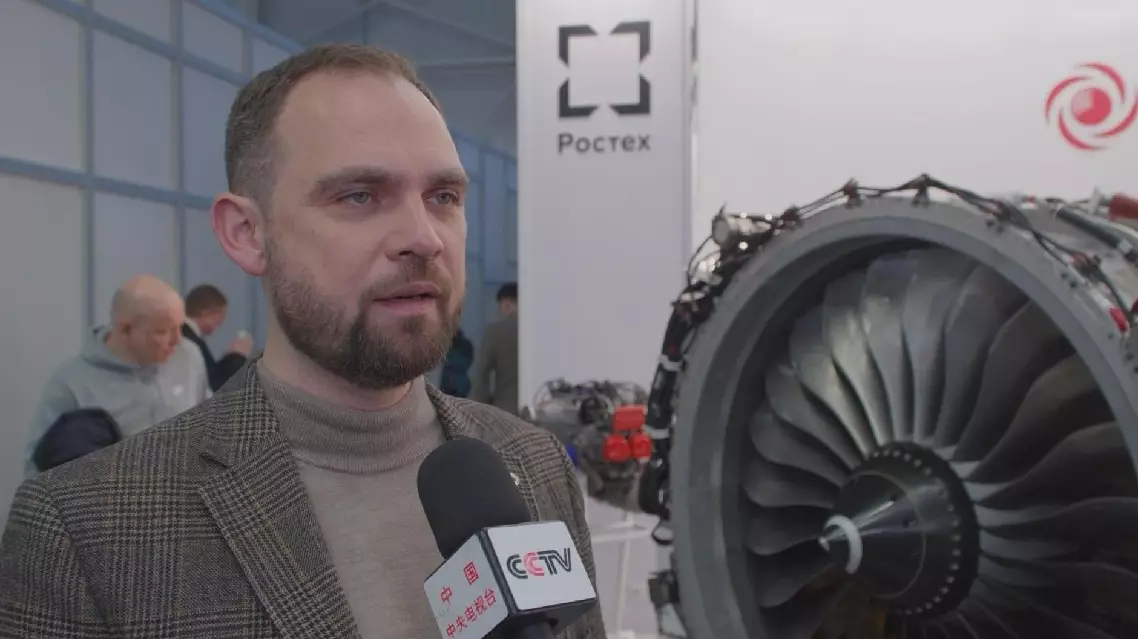
Development of critical components is also being fast-tracked. The PD-8 engine, developed domestically for the Sukhoi Superjet (SJ-100) to replace the partially French-made SaM146 engine, has broken records in its development timeline.
"Many processes were carried out in parallel, and thanks to our expertise in engines of this class, we were able to develop it in record time. The scientific school is not standing still -- it is moving forward. The most complex part of any aircraft engine, the so-called 'hot section,' is located right here. The unique feature of the PD-8 is that it was developed specifically for a particular aircraft -- the Sukhoi Superjet -- for the purpose of import substitution, replacing the SaM146 which was previously manufactured partly in Russia and partly in France. From the moment the decision was made to produce the PD-8 to the practical conclusion of its certification tests, only five years passed. This is a record," said Roman Okhotenko, deputy head of administration at Russia's United Engine Corporation.
However, significant challenges remain. The Minister of Industry and Trade of Russia has previously noted that no single country in the world can independently produce all the components required for a modern aircraft. For instance, the technologically mature Boeing 787 consists of approximately 2.3 million parts, with key systems supplied by vendors from over 10 countries, according to its official website.
The International Air Transport Association (IATA) said in 2023 that the aerospace supply chain's high dependency on a few key component suppliers creates a structural vulnerability that has become a major factor constraining global airline capacity growth.
For Russia, rebuilding or replacing such a complex supply chain under sanctions remains a formidable hurdle to overcome.
Western sanctions drive import substitution in Russia's aviation industry