The closure of the Gatumba–Kavimvira border post between Burundi and the Democratic Republic of Congo (DRC) for security reasons is profoundly disrupting daily lives in local communities.
Traders, mothers, and patients are being forced to suspend their activities and wait for the border to reopen.
In Gitega, the Burundian authorities are making any reopening conditional on a lasting improvement in the security situation on the other side of the border.
In Gatumba, a Burundian village, a 36-year-old former cross-border trader and mother of four has had to give up her usual activities. She now sells fruit and ripe bananas on the streets of Bujumbura to support her family.
"I sold ripe bananas and eggs. I often exported small bananas. I always had enough to feed my children. Even if I didn't save any money, at least the children had enough to eat. Once I was across the border, I knew my family would have enough to eat," she said.
Since the closure of the Gatumba border in December 2025, traffic on the Uvira road, linking Bujumbura to eastern DRC, has fallen sharply and cross-border trade has come to a virtual standstill.
"The border was our field. Traders worked with the certainty that their children would eat, go to school, and have medicine. After the closure, life was turned upside down. Children who used to eat two or three times a day now eat only once, often with poor nutrition. Sometimes we go a whole day without earning a single cent," said Clarisse Baricako, a representative of cross-border traders.
While waiting for the Gatumba border to reopen, traders are organizing themselves to find local alternatives with a meeting held recently to discuss trading fresh produce across different regions of Burundi.
"We plan to trade fish for pineapples or tomatoes here, inland, to ensure our survival. We have no other choice. I urge women traders not to sit idly by, but to go to local markets and identify products to sell. Someone who is used to trading cannot just stand by and do nothing," said Pulcherie Ahishakiye, the president of a cross-border women traders' advocacy platform.
On the ground, civilians and cross-border traders are eagerly awaiting the reopening of the border and the alleviation of the serious humanitarian consequences of a prolonged closure as authorities weigh security imperatives against the prosperity of local populations.
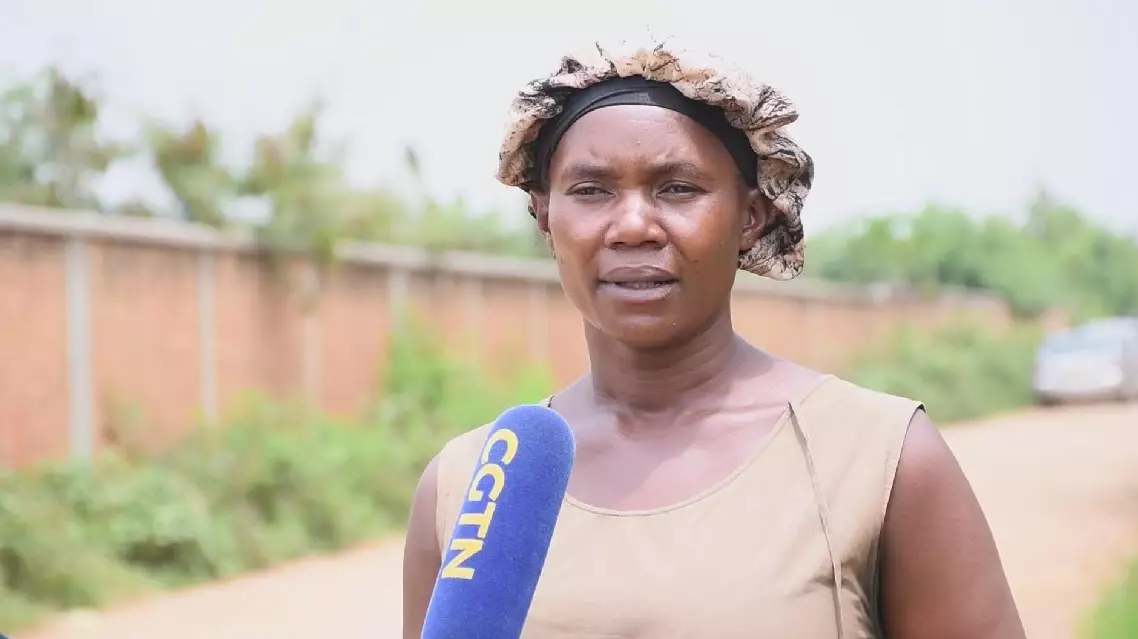
Closure of border post between Burundi, DRC disrupts lives of locals
The second round of U.S.-brokered talks between Russia and Ukraine concluded in Abu Dhabi, the United Arab Emirates (UAE) on Thursday, with both sides agreeing to a large-scale prisoner exchange but failing to achieve substantive breakthroughs on core issues such as territorial arrangements and a ceasefire.
According to Ukraine, the talks were conducted trilaterally before moving to group consultations. Ukraine's National Security and Defense Council Secretary Rustem Umerov said the Ukrainian delegation sought a "dignified and lasting peace," without disclosing specific outcomes.
Kyrylo Budanov, the head of Ukraine's presidential office, said the trilateral negotiations had been truly constructive, thanking the U.S. and the UAE for their mediating roles.
Russia's presidential special envoy Kirill Dmitriev said on Thursday that there was progress and a positive movement forward in peace talks with Ukraine.
The talks ended with no joint political or security statement, underscoring persistent differences between Russia and Ukraine on key matters, including territorial disputes, ceasefire arrangements, and security guarantees.
U.S. President Donald Trump's special envoy Steve Witkoff said representatives from the three countries reached a consensus on a prisoner swap.
In a readout of the talks he posted on social media, Witkoff described the discussions as constructive and focused on how to create the conditions for a durable peace.
The delegations had wide-ranging discussions over the past two days on the remaining open issues, including methods for implementing a ceasefire and monitoring the cessation of military activities, according to Witkoff.
He added that the United States and Russia had agreed to establish a military-to-military dialogue to be led by commander of U.S. European Command Alexus Grynkewich.
Following the talks, Russia and Ukraine conducted their first large-scale prisoner exchange in nearly five months, with each side returning 157 detainees. Ukrainian President Volodymyr Zelensky said those released included both military personnel and civilians.
Zelensky also said Thursday that the next peace talks with the delegations of the U.S. and Russia will be held soon. "Further meetings are planned in the near future, likely in the United States," Zelensky said in his evening address.
However, no timetable or arrangements for a next round of talks were announced, highlighting continued uncertainty in the political settlement process.
The second round of talks began on Wednesday. The previous meeting of the trilateral working group on security issues took place from Jan 23 to 24 in Abu Dhabi. It marked the first trilateral engagement since the escalation of the conflict in February 2022, although no concrete agreement or joint statement was announced afterward.
In a statement issued earlier, the United Arab Emirates (UAE) Ministry of Foreign Affairs welcomed cooperation between Russia and Ukraine on the prisoner exchange, saying it demonstrated the UAE's role as a reliable mediator in easing the crisis and promoting constructive dialogue.
2nd round of Russia-Ukraine talks ends in UAE with prisoner swap deal, key differences unresolved