The European Central Bank (ECB) on Thursday decided to keep key interest rates unchanged at its first monetary policy meeting of 2026, marking the fifth consecutive hold since July 2025.
The deposit facility rate, the primary tool used by the ECB to steer monetary policy, remains unchanged at 2 percent, while the rates on the main refinancing operations and the marginal lending facility stay at 2.15 percent and 2.4 percent, respectively.
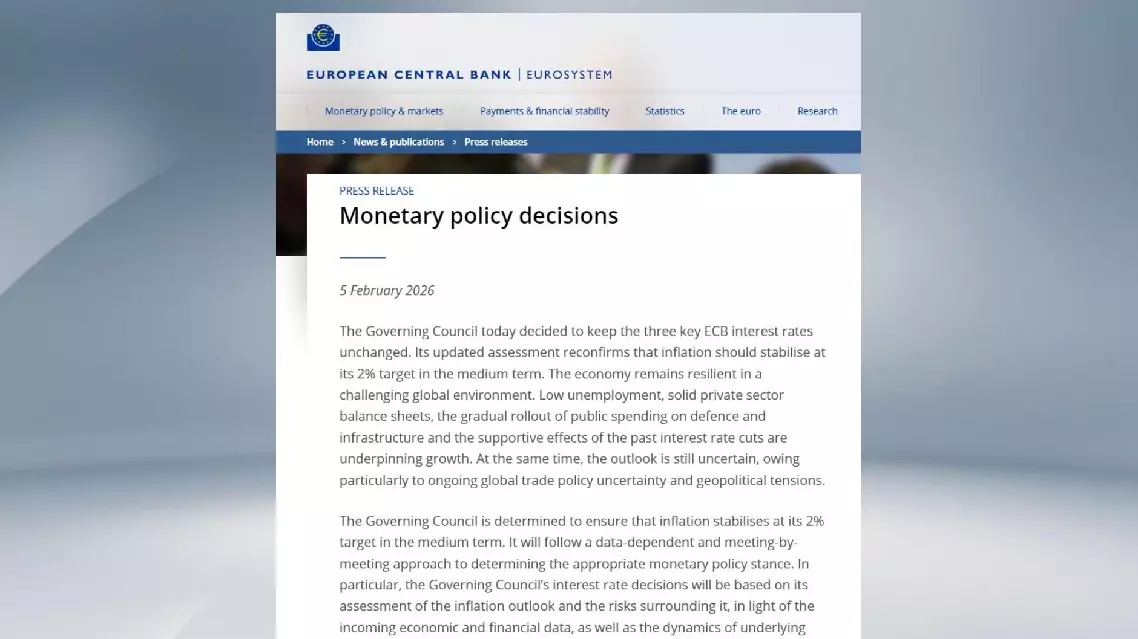
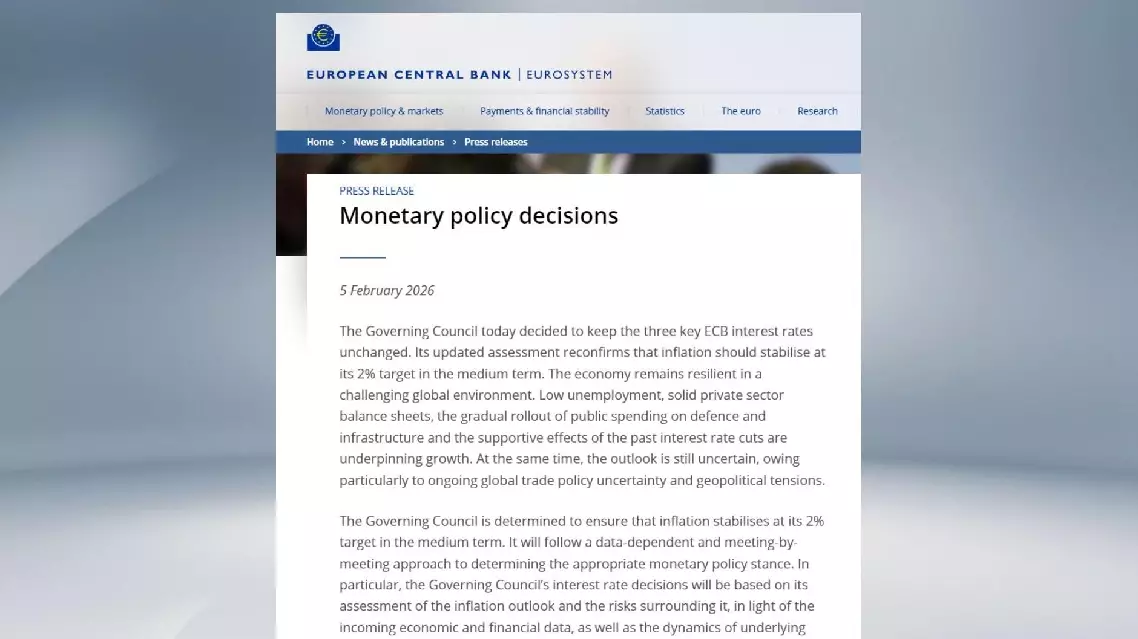
The central bank reconfirmed in a statement that the inflation outlook remains stable and that the economy has shown resilience.
The ECB has reiterated that it will stick to its data-dependent and meeting-by-meeting approach in determining its future monetary policy stance.
The latest assessment by the ECB also remains unchanged regarding the outlook for inflation, which is expected to stabilize at 2 percent in the medium term.
Commenting on the decision, Carsten Brzeski, global head of macro at ING Research, said the ECB's statement pointed to lingering uncertainty and reflected a heightened wait-and-see stance.
ECB holds interest rates steady
ECB holds interest rates steady
Tokyo stocks rose Friday, with the benchmark Nikkei stock index ending at a fresh record high, buoyed by optimism over a settlement in the Middle East conflict.
The 225-issue Nikkei Stock Average ended up 1,654.93 points, or 2.68 percent, from Thursday at 63,339.07.
The broader Topix index, meanwhile, finished 38.65 points, or 1.00 percent, higher at 3,892.46.
"There was some optimistic trade around the latest U.S.-Iran talks, but this optimism seems to be based on the fact that things aren't getting drastically worse in the region rather than the situation improving significantly," Timothy Pope, a market analyst for China Global Television Network (CGTN), recapped the day's developments.
"This optimism was most strongly on display, I think, in Tokyo today, where the Nikkei rose 2.7 percent with hopes for some relief on oil prices and other currently scarce materials. It's not just oil that is not getting out of the region. As we know, it's other petrochemicals and things like helium as well. The general performance was pretty strong. Metals producers were doing fairly well in Tokyo, but in Japan as well, the market is very much focused on AI stocks. And today, the gains were strong for SoftBank -- it was up almost 12 percent after a bit of a battering earlier in the week. And that SoftBank gain contributed nearly a third to the Nikkei's overall gains on Friday," said Pope.
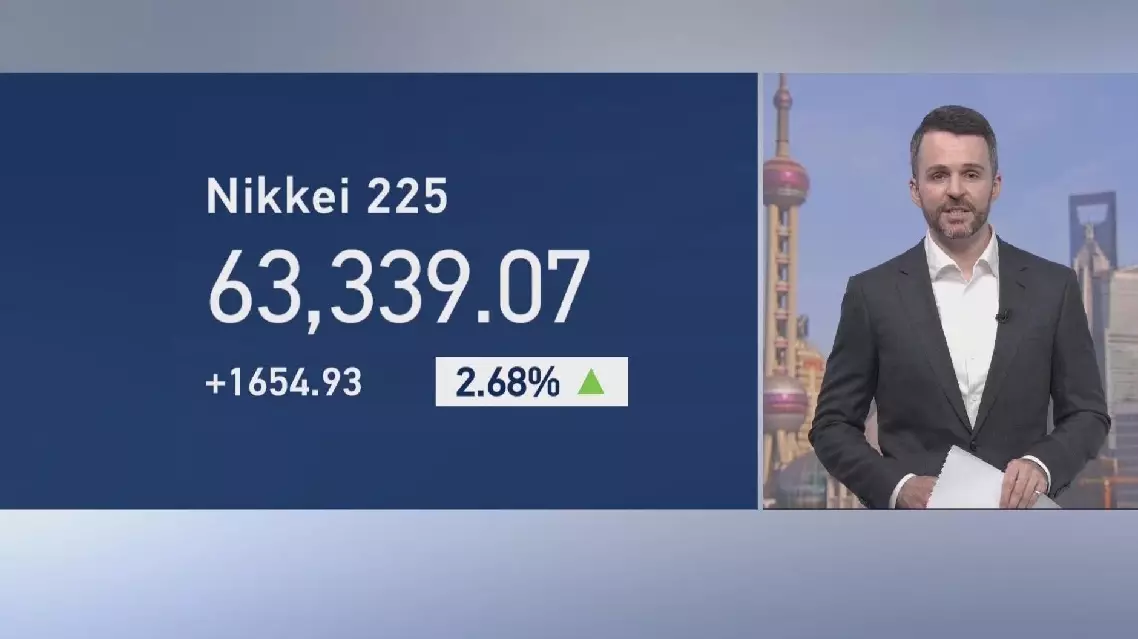
Tokyo stocks end higher as U.S.-Iran talks fuel cautious optimism