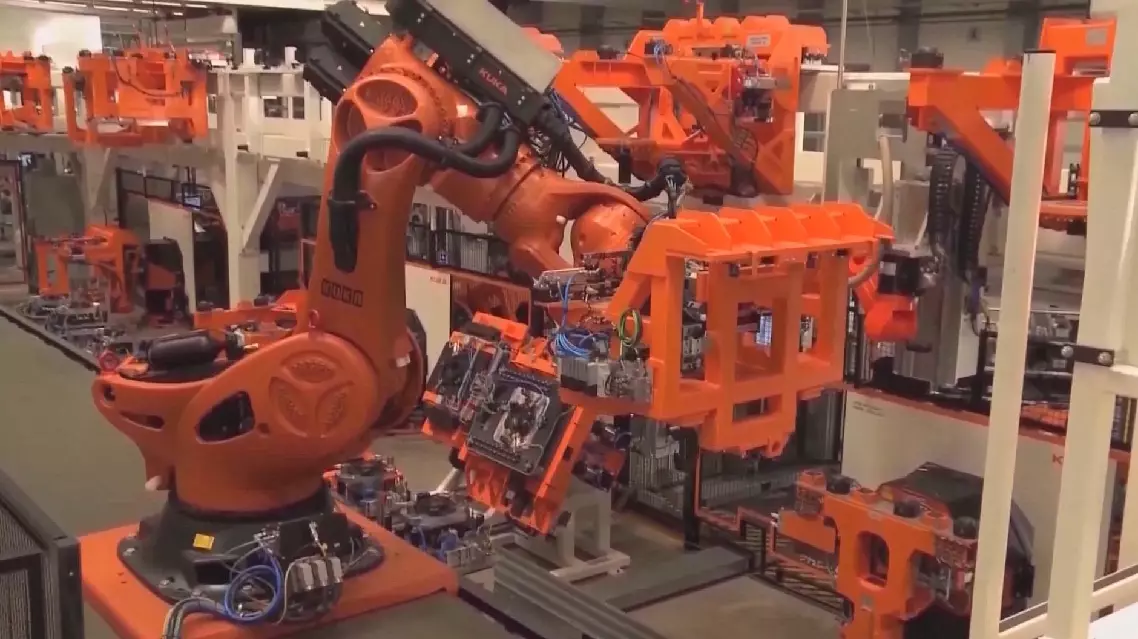
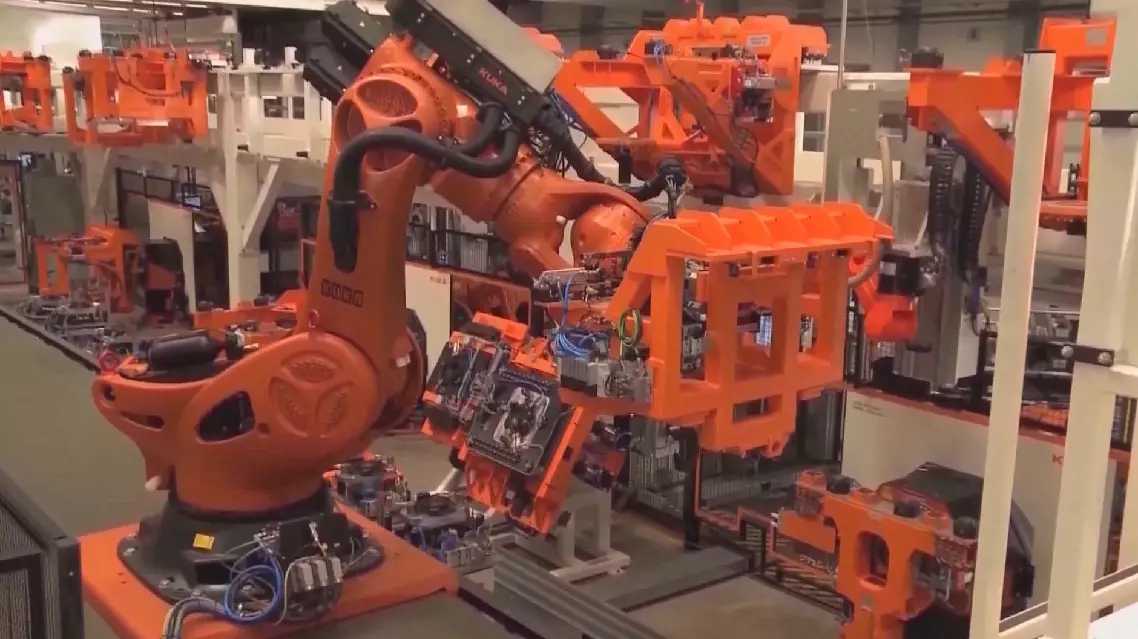
Global manufacturing activity increased 1.5 percentage points to 51 percent in January, marking an end to a 10-month stretch of contraction, according to an index published by the China Federation of Logistics and Purchasing (CFLP) on Friday.
A reading below 50 generally indicates contraction in the sector, while a reading above 50 signals expansion.
The federation said that Asian manufacturing continued to expand, with its purchasing managers' index (PMI) standing at 51 -- remaining above the critical point for nine consecutive months.
According to the CFLP, the manufacturing PMI in Europe and the Americas both rose, largely boosted by an increase in stocks in major European and American countries after the Christmas and New Year holidays.
The European manufacturing PMI came in at 50, up 0.7 percentage points month on month, with indexes in the UK, France, Greece, and Germany rebounding. The Americas manufacturing PMI reached 51.8, 3.9 percentage points higher than one month ago.
The federation noted that Africa's manufacturing PMI declined 1.1 percentage points to 49.6, largely due to trade frictions and geopolitical conflicts.
Experts warned that global trade flows, market confidence, and supply chain stability will continue to face challenges as international trade tensions have not eased significantly, and the potential risks of geopolitical conflict have not been eliminated amid persistently sluggish effective demand in the global market.
Promoting multilateral trade cooperation remains the main approach to overcoming challenges and stabilizing global economic growth, said experts.
Global manufacturing PMI up slightly in Jan
China urges the United States to respect a recent World Trade Organization (WTO) ruling that found U.S. clean energy subsidies under its Inflation Reduction Act inconsistent with WTO rules, the Ministry of Commerce said Thursday.
Ministry spokesman He Yadong made the remarks at a press briefing in Beijing when asked to comment on a statement by the Office of the United States Trade Representative regarding the ruling that requires the U.S. to withdraw the subsidies in question.
The U.S. side, while acknowledging it lost the case, said the ruling was wrong and claimed that existing WTO rules cannot address the issue of "overcapacity".
"As a WTO member, the U.S. should respect the ruling and comply with rules. The existing WTO rules were jointly negotiated and agreed upon by participants in the Uruguay Round, including the United States. As both a negotiating party and a signatory, the U.S. has an obligation to comply with its international treaty commitments," said He.
"The relevant actions and remarks by the U.S. are aimed at excusing its own violations of treaty obligations and abuse of subsidies and other protectionist practices, while attempting to shift the blame for insufficient industrial competitiveness and other domestic problems onto others. Such moves artificially interfere with and fragment global markets, undermining the stability of global industrial and supply chains," he said.
"The current international economic and trade order is facing severe shocks from unilateralism and protectionism, and safeguarding a multilateral trading system with the WTO at its core is the shared responsibility of all WTO members. We urge the U.S. side to earnestly respect WTO rulings, promptly correct practices that violate WTO rules, and uphold the rules-based multilateral trading order through concrete actions," said the spokesman.
China urges U.S. to respect WTO ruling against Inflation Reduction Act