China's domestically developed C909 airplane hospital, the country's first specialized medical aircraft, arrived in the Lao capital of Vientiane on Friday morning, officially kicking off the first stop of an overseas public welfare medical mission under the vision of the Air Health Silk Road.
The airplane hospital will provide comprehensive medical services, including mobile diagnosis and treatment, surgical demonstrations, medical personnel training, and material donations. The mission will focus on screening and performing surgical treatments for eye, ear, nose, and throat (EENT) conditions among local residents.
The public welfare medical program is scheduled to last until February 15.
The C909 seats between 78 and 97 passengers and has a range of 2,225 to 3,700 kilometers. It is designed for operations at airports with short and narrow runways and performs well in high-temperature, high-altitude and crosswind conditions.

China's first C909 airplane hospital lands in Laos for medical mission
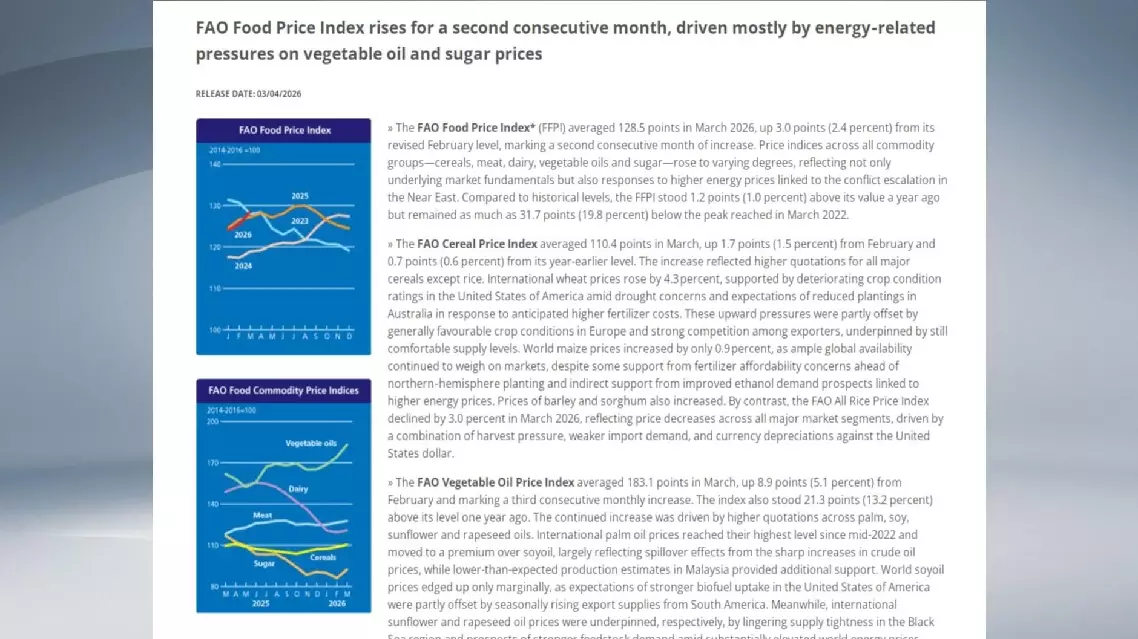
Global food commodity prices climbed for a second consecutive month in March, driven mainly by higher energy costs linked to escalating conflict in the Middle East, the Food and Agriculture Organization of the United Nations (FAO) said in report released on Friday.
The FAO Food Price Index, which tracks monthly changes in the international prices of a basket of globally traded food commodities, averaged 128.5 points in March, up 2.4 percent from February and 1.0 percent above its level a year ago.
According to the report, the FAO Vegetable Oil Index and Sugar Price Index showed the largest increases, up 5.1 percent and 7.2 percent, respectively.
The FAO Cereal Price Index increased by 1.5 percent from the previous month, driven primarily by higher world wheat prices, which rose 4.3 percent.
The FAO Meat Price Index rose by 1.0 percent from the previous month, and the FAO All-Rice Price Index declined by 3.0 percent in March, according to the report.
FAO stated that rising energy and fertilizer prices have been driving up agricultural input costs.
If the conflict stretches beyond 40 days, farmers will have to choose to farm the same with fewer inputs, plant less, or switch to less intensive fertilizer crops, according to FAO Chief Economist Maximo Torero.
These choices will hit future yields and shape food supply and commodity prices for the rest of this year and beyond, Torero said.
Global food prices rise for 2nd consecutive month in March amid Middle East conflict: FAO