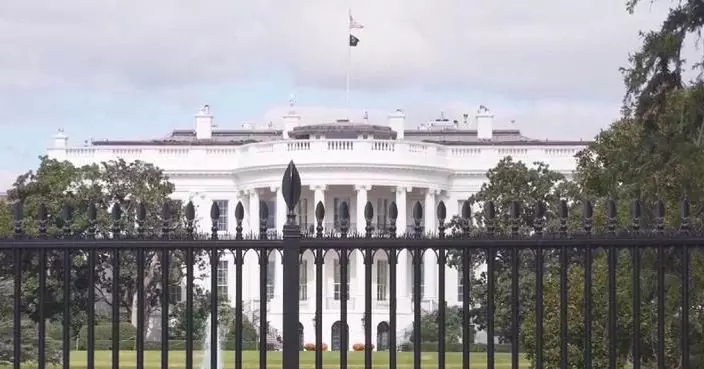
Residents living in the Iranian capital Tehran have warned of the dangers of any military conflict erupting between Iran and the United States and have called for increased diplomatic efforts to ease the current tensions and prevent a war which they say is in no-one's best interest.
Following weeks of heightened tensions, Iran and the U.S. hold talks in Oman's capital, Muscat, on Friday. The negotiations come amid a recent U.S. military buildup in the Middle East, while Iran says it has stepped up preparations to respond to any escalation.
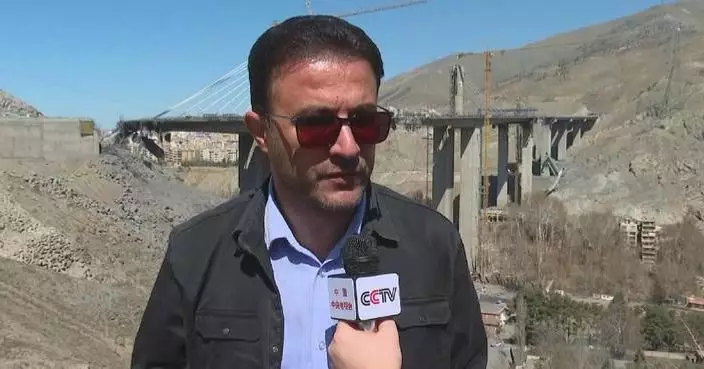
In interviews with the China Global Television Network (CGTN) ahead of the talks, many Tehran residents said any form of armed conflict benefits no one, stressing that war must be avoided.
"If war breaks out, our currency will weaken further against the dollar. For ordinary people, life will only get harder. That's why we oppose war. A successful negotiation would be the best outcome. War serves no one's interest. That's what I believe," said a resident named Masoud.
Despite the sense of alarm after U.S. President Donald Trump said a "massive armada" was heading towards Iran, some residents are hopeful both sides will reach an agreement to avoid what they say would ultimately be a lose-lose situation.
"The U.S. has moved its forces into the region. But I think the actual chance of war is only about one percent. I'm sure an agreement will be reached. They cannot afford a confrontation with Iran -- they would face serious consequences too," said Yazdan, another Tehran local.
Others expressed concern that a full-scale war would only bring more suffering to people's livelihoods, which have already been strained by economic pressure, and say the worst-case scenario must be avoided through dialogue.
"Fundamentally, war yields no good results. We are already at war -- an economic war. The inflation we're suffering now is worse than a military conflict. I hope our decision-makers and diplomats can find a path to prevent [full-scale] war. Our country's territorial integrity is paramount. They must do everything possible to avert a military war," said Amin, a resident.
Tensions were raised on Tuesday after the U.S. Central Command said a U.S. fighter jet shot down an Iranian Shahed-139 drone which they said approached the aircraft carrier USS Abraham Lincoln in the Arabian Sea with unclear intent.
The carrier strike group was deployed to the Middle East on January 26.
Last month, Iranian Parliament Speaker Mohammad Baqer Qalibaf warned that Tehran would view U.S. and Israeli bases and facilities in the Middle East as "legitimate targets" if Washington takes military action against Iran.
Iran and the United States held five rounds of indirect talks under Omani mediation starting last April. However, those efforts collapsed in June after Israel carried out a series of strikes on Iran, triggering a 12-day conflict, during which the United States bombed key Iranian nuclear sites.
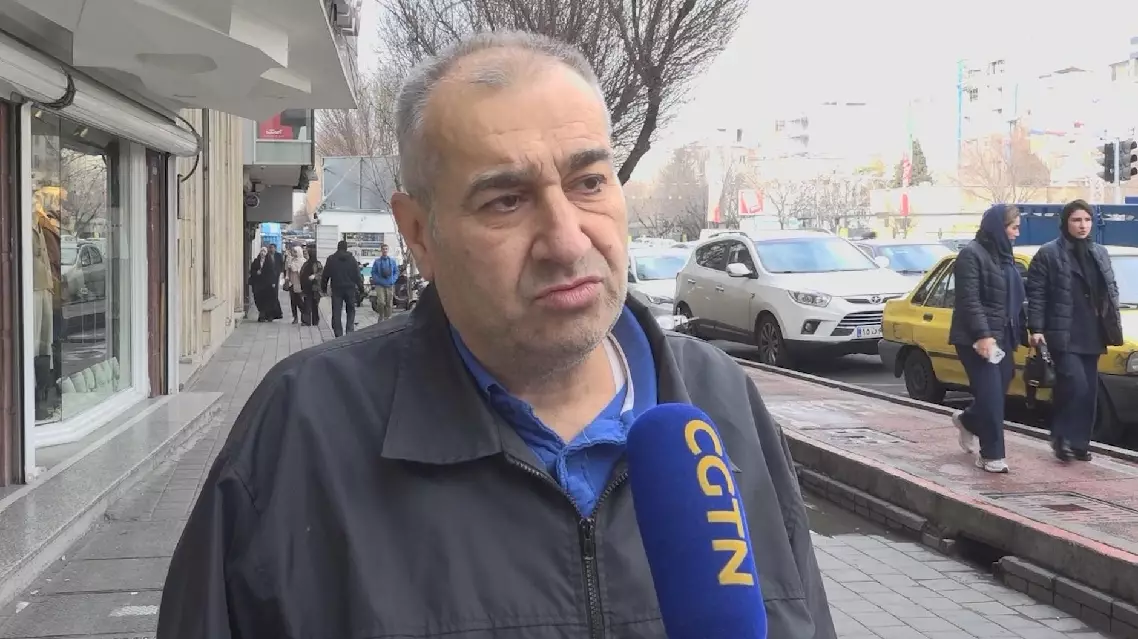
Tehran residents oppose military conflict, call for diplomacy to ease crisis
Tehran residents oppose military conflict, call for diplomacy to ease crisis
Tehran residents oppose military conflict, call for diplomacy to ease crisis