Speech by FS at Inaugural Francis Chan Lecture 2025
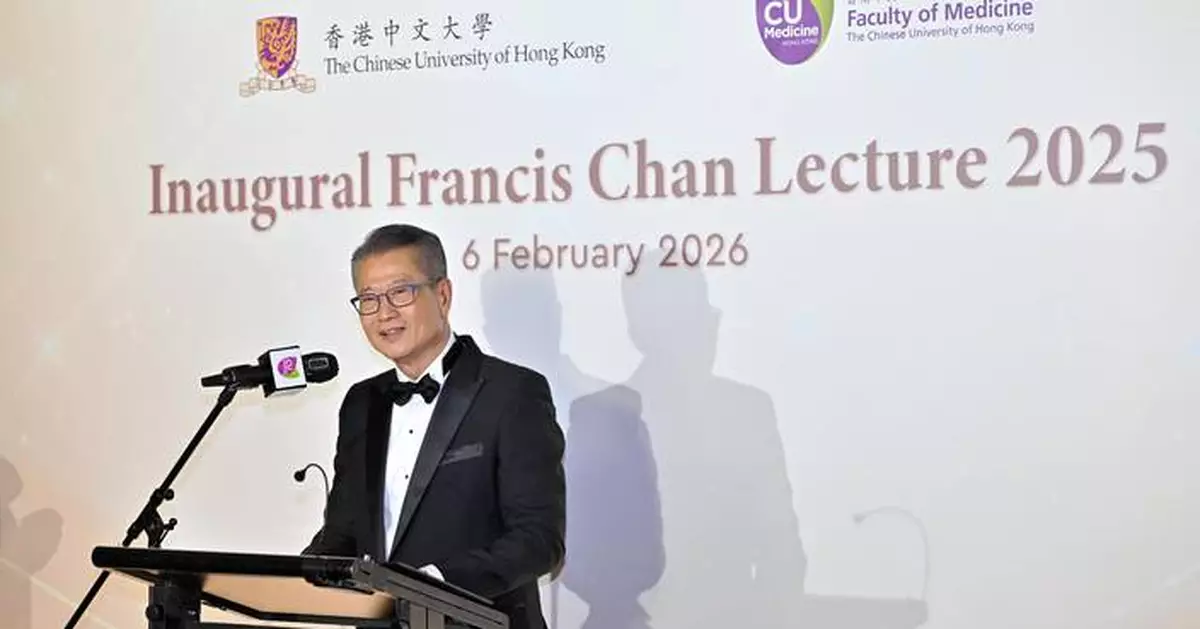
Following is the speech by the Financial Secretary, Mr Paul Chan, at Inaugural Francis Chan Lecture 2025 today (February 6):
Francis (Choh-Ming Li Professor of Medicine and Therapeutics, Faculty of Medicine, the Chinese University of Hong Kong, Professor Francis Chan), Philip (Dean of Faculty of Medicine, the Chinese University of Hong Kong, Professor Philip Chiu), distinguished guests, ladies and gentlemen,
Thank you very much for the kind invitation. It is an honour to be here among so many distinguished leaders from the business sector, academia, and the wider community.
This lecture series is a fitting tribute to Professor Francis Chan, whose visionary leadership and unwavering commitment to excellence at CU Medicine have shaped not only the Faculty for more than a decade, but also the broader development of healthcare and medical education in Hong Kong.
Tonight I have been invited to speak on the trends, the challenges and the outlook for the coming years. Indeed, we are living through an era of great changes unseen in a century, or as commonly referred to in Chinese. Here, I would like to share some reflections on what we have been experiencing globally, how our country is rising to this moment, and what this unfolding chapter means for Hong Kong.
My standpoint is clear: the world is becoming more unpredictable and challenging, but we can be confident about our country's and Hong Kong's future.
Great changes unseen in a century
Former Senior Vice President and Chief Economist of the World Bank, Professor Lin Yifu, has advanced an economic perspective on "great changes unseen in a century". For a century or so, a small group of eight advanced economies sat at the apex of the global economic order. Together, they accounted for close to half of the world's GDP in purchasing power parity terms (PPP). Since 2000, however, their share has been declining, and now stands at around 35 per cent. This shift reflects the rapid growth of the Global South, which now accounts for about 60 per cent of the world's GDP in PPP terms. China already overtook the US in 2014 to become the world's largest economy by PPP.
China's achievements over the past decade were indeed spectacular, and they span multiple dimensions: in poverty alleviation, in industrial production, in innovation and technology, in green transition, in military capabilities and many other areas.
In 2012, two eminent economists, later Nobel laureates, wrote a book called "Why Nations Fail", attempting to make prophetic predictions about China. They said China's growth "will not last" because its so-called "extractive" institutions would ultimately choke off innovation and higher incomes.
More than 13 years on, our country has not become extractive. Rather, it has placed growing emphasis on inclusive development, with technology and innovation as a core driver of growth. The results are clear. China is now home to more than 400 unicorns, nearly one-third of the world's total. This dynamism and technological prowess were vividly illustrated by the "DeepSeek Moment" last year.
At a time when advanced economies are facing mounting governance challenges, the structural change of economic weight is prompting people to ask if the Western models of development offer a universally applicable blueprint for good governance.
These points above are helpful in understanding the global geo-economic landscape. US unilateralism and its hegemonic reflexes are, of course, objectionable. But much of it can also be seen as resisting the changing order. Many commentators note that Washington's sweeping tariffs seek to raise revenue, helping to finance an increasingly unsustainable debt burden. Others say the US is tightening its grip on the Western Hemisphere, as part of its effort to counter its principal strategic competitor: China.
This development has profound ramifications. We are hearing growing calls for greater European independence, and for middle powers to work together. My view is that the international community now recognises that great power politics is here to stay, and that countries must build strategic resilience by diversifying their economic and even security partnerships.
In the foreseeable future, we will likely see more regionalised patterns of co-operation, with three major blocs taking shape: first, China together with Southeast Asia; second, the Americas; and third, Europe together with the Middle East and possibly India. Some may say this is "de-globalisation", but it is more a reconfiguration of globalisation than its reversal. Some call this "re-globalisation".
Beyond geo-economics, another driver of change is the new wave of technological innovation powered by artificial intelligence.
AI is permeating every industry and sector, giving rise to the term "AI+": AI plus manufacturing, AI plus finance, AI plus healthcare, AI plus public services, and much more.
There is no doubt that AI has become a key arena of great power competition, and that competition is intense. It is not only a race to build better models and more advanced chips, but also a broader contest for capital, energy, talent, application, and the capacity to build competitive innovation ecosystems. It is also a matter of national security.
The third major trend is the global push for green transition. The devastating impacts of climate change need no further elaboration, but we are confronting two critical gaps. The first is a financing gap. Global estimates indicate a shortfall of US$4.4 trillion annually in the investment required to meet the targets set under the Paris Agreement. The second is a gap in political will. With the US withdrawing from the Paris Agreement for the second time, serious questions arise about whether other economies will remain as committed, and whether the necessary global funding for climate action will materialise.
Yet there are also reasons for optimism, particularly in China. In the first three quarters of 2025, renewable energy accounted for approximately 40 per cent of total power generation on the Chinese Mainland. In approaching the "3060" carbon neutrality goals, China has established a dominant position in the "new three industries": electric vehicles, lithium-ion batteries, and solar cells. Indeed, China is well positioned to take a leading role in driving the global green transition in the years ahead.
China's path of development
Ladies and gentlemen, I have taken some time to highlight some key global trends because they provide the context for understanding our country's development directions, which will be unveiled in the upcoming National 15th Five-Year Plan.
In the relevant recommendations released in October last year, our country has set out a target to raise GDP per capita to the level of a "moderately developed country" by 2035. This means that in the coming 10 years, China's real GDP needs to grow, on average, at around 4.2 per cent annually. Maintaining this trajectory requires continuous enhancements in productivity, upgrading of industr, and steady progress in innovation driven, high quality development.
How to achieve this is the key question. Three points are worth highlighting. First, there is a strong emphasis on boosting domestic consumption. China is already the world's second-largest consumer market. And with rising incomes, growing urbanisation and upgrading of spending structure, there is significant potential for consumption to become a powerful economic driver.
Second, expanding high-level two-way opening up. This exactly responds to the need for diversification of the country's economic relationships to strengthen its strategic resilience. On the one hand, more Mainland enterprises are encouraged to go global, as supply and industry chains are being reconfigured. On the other hand, China has made it clear that it welcomes high-quality foreign goods and services besides investment into its domestic market. This also rightly addresses international concerns about China's trade surplus, signalling that the country is willing and able to import more and share the benefits of its growth with the world.
Third, there is a strong push for high-level scientific and technological self-reliance. One point is particularly noteworthy. The country will focus on building a modern industrial system in which technological innovation is deeply integrated with industrial development. In the years to come, we can expect many more game-changing breakthroughs from China in cutting-edge fields such as AI, quantum computing, semiconductor, biotech, communications and new energy. We will see solid progress in overcoming critical "chokepoints" that have constrained the country's technological advancement in the past.
Hong Kong, going forward
Ladies and gentlemen, all these bring me to the final part of my remarks: where will Hong Kong stand?
Two key principles will be pivotal for Hong Kong going forward. First, we must integrate with and actively contribute to the country's overall development, while leveraging these opportunities to advance our own growth and enhance our competitiveness. Second, we must make full use of our unique strengths under the "one country, two systems" arrangement and, in the years ahead, do all we can to support the implementation of the upcoming 15th National Five-Year Plan.
In the interest of time, I would highlight just three specific areas where we can make valuable contributions: finance, talent and international connectivity.
In the process of building China into a strong nation, a strong international financial centre is essential. And Hong Kong is playing precisely that role. Our financial sector has all the leading global financial institutions and players. Our stock market serves as a key platform for Mainland companies to raise capital to support their expansion globally. Last year, Hong Kong ranked first in the world for IPO fundraising, with over HK$280 billion raised. Today, more than 400 companies are in the pipeline waiting to be listed.
Indeed, many companies seeking to raise funds in Hong Kong are tech start-ups engaged in frontier technologies. Over the years, we have revamped our listing regime for new economy companies to list here. And that is supported by a vibrant private equity and venture capital ecosystem, second in Asia only after the Mainland. Meanwhile, with the efforts of the Hong Kong Investment Corporation Limited, we are also channelling patient capital to frontier technology sectors. In other words, Hong Kong is providing a full spectrum of funding options that serve the needs of tech enterprises at various stages of development.
That said, we also see tremendous potential to further develop our capital market to make it more comprehensive and competitive.
One segment is the fixed income and currency market, or the FIC market, such as bonds, fixed income ETFs, and other debt securities. Another key pillar of our vision is to expand Hong Kong's offshore Renminbi (RMB) market. This will not only increase the liquidity of our market but can also support the prudent internationalisation of the RMB. We will continue to broaden the range of RMB-denominated investment and risk management products, improve offshore RMB liquidity, and strengthen the supporting market infrastructure.
For example, we are also working to develop a globally competitive, multi-asset class clearing and custodial infrastructure that spans both equities and debt securities in multiple currencies. This will enable cross-collateralisation of assets to enhance liquidity and support the development of a new suite of derivatives and other financial products.
Another segment with high potential, but not without controversy, is digital assets. At its core, the vision is for Hong Kong to serve as a testing ground for financial innovation, leveraging the unique advantages of the "one country, two systems" framework. We are advancing this development prudently, by striking the right balance between innovation and risk, embracing new technologies while safeguarding investors, consumers and financial security.
The second area where Hong Kong can make a meaningful contribution is talent development. The Central Government has positioned Hong Kong as an international hub for high-calibre talent, and we are advancing this goal through a two-pronged approach. First, we are supporting our world-class academic and research institutions in nurturing top-tier talent. A recent initiative is the Northern Metropolis University Town, with the vision of fostering deep integration between education, research and industrial development. A working group chaired by the Chief Secretary is currently examining the suitable development models.
The second prong is attracting global talent. Over the past three years, our various talent admission schemes have received nearly 580 000 applications, of which 400 000 have been approved, and around 266 000 individuals have already arrived in Hong Kong. In today's shifting geopolitical landscape, many ethnic Chinese scientists and engineers are more willing to pursue their careers in Hong Kong. On this, we have also launched a HK$3 billion Frontier Technology Research Support Scheme to help local publicly funded universities bring in more world-renowned academic and researchers in cutting-edge fields.
The third area to make the best use of our unique strength under "one country, two systems" is international connectivity. Beyond supporting Mainland enterprises to "go global", Hong Kong also serves as an ideal showcase and validation platform, helping Chinese products, standards and practices gain broader international recognition. We are already contributing to international rule making and standard setting in areas such as financial regulation, green and sustainable finance, construction services and dispute resolution. But we can—and should—do more. Our professionals' and businesses' deep understanding of both Chinese and global systems gives us a distinct and valuable advantage.
But beyond business, we need to enhance our participation in multilateral institutions and contribute to the evolving architecture of global governance.
One prominent example is the recent establishment in Hong Kong of the headquarters of the International Organization for Mediation, an intergovernmental body dedicated to resolving international disputes through mediation.
In a rapidly changing world, we are well positioned to enhance the voice and influence in the international community of not just our country, but this region and the broader Global South.
Closing remarks
Ladies and gentlemen, as the saying goes, "Fortune favours the brave." The world is changing in ways that are complex and, at times, unpredictable. Yet our country's development in the coming five years presents enormous opportunities. And Hong Kong's openness, connectivity and resilience remain our enduring strength, and the compass in navigating this era of transformation.
With agility, perseverance and a clear sense of purpose, we are ready to rise to the challenges, embrace the opportunities, and play a defining role in shaping a brighter future for our city and contribute to the development of our country. For that, I'm highly confident.
Thank you once again for the kind invitation. I wish you a most enjoyable evening. In just a couple of weeks, we will welcome the Year of the Horse. May it bring you and your loved ones good health, great success and boundless energy in all your pursuits. Thank you very much.
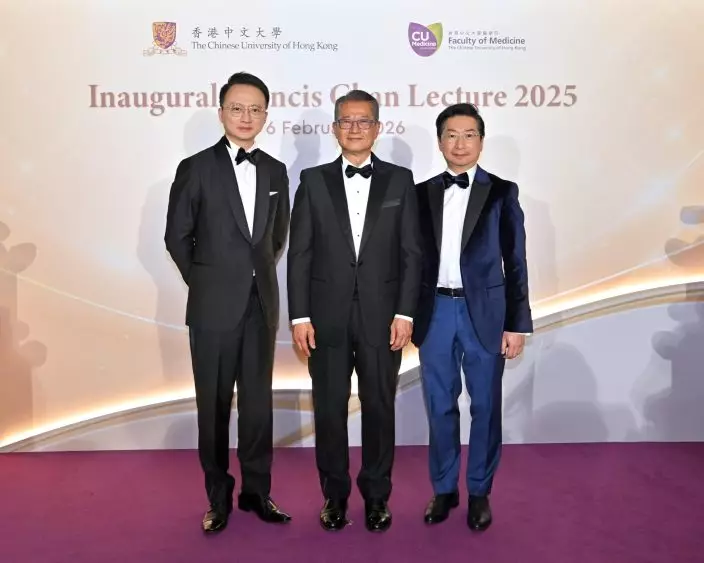
FS attended the Inaugural Francis Chan Lecture 2025, Source: HKSAR Government Press Releases
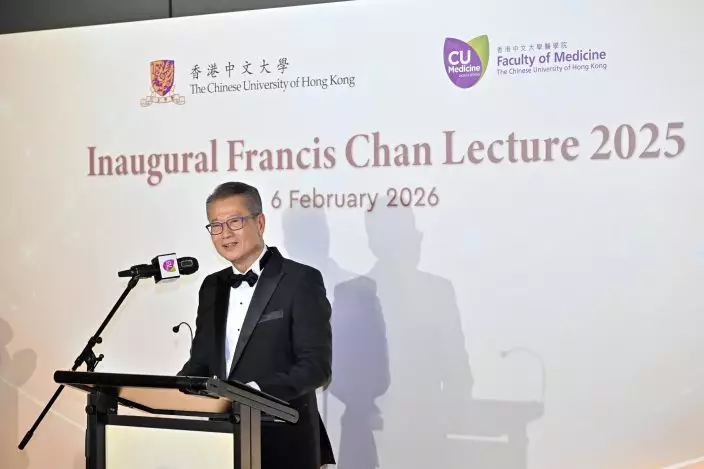
The Financial Secretary, Mr Paul Chan, Source: HKSAR Government Press Releases