Legislative amendment proposals and related measures for reforming Medical Council of Hong Kong
The Health Bureau (HHB) today (February 6) submitted a paper to the Panel on Health Services of the Legislative Council (LegCo) on the legislative amendment proposals to the Medical Registration Ordinance (MRO) (Cap. 161) formulated to support the reform of the Medical Council of Hong Kong (MCHK), with a view to ensuring that the MCHK can continue to uphold medical professional standards and discharge its statutory functions, as well as strengthening the support provided by the Department of Health (DH) and the Secretariat of the MCHK to the work of the MCHK, including relevant supporting measures to enhance the MCHK's handling of complaints concerning doctors' professional conduct.
The Health Bureau (HHB), Photo source: HKSAR Government Press Release
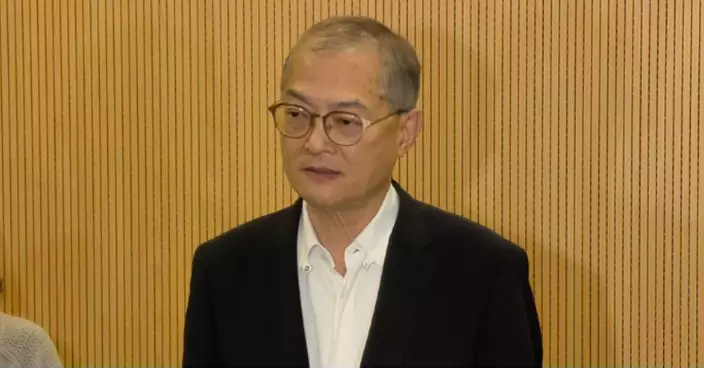
The Secretary for Health, Professor Lo Chung-mau, said, "The Government expects the reform of the MCHK's system will bring about enhanced medical professional standards, safeguards to the health of citizens and consolidation of the mutual trust between doctors and patients, supporting Hong Kong's development into an international health and medical innovation hub. I am grateful to various stakeholders, including the MCHK, professional bodies, patient groups and other relevant stakeholders, for offering valuable views over the past few weeks. The Government will make every effort to take forward the work of amending the MRO, with a view to introducing an amendment bill into the LegCo in the first half of this year, and to implement the related reform measures progressively."
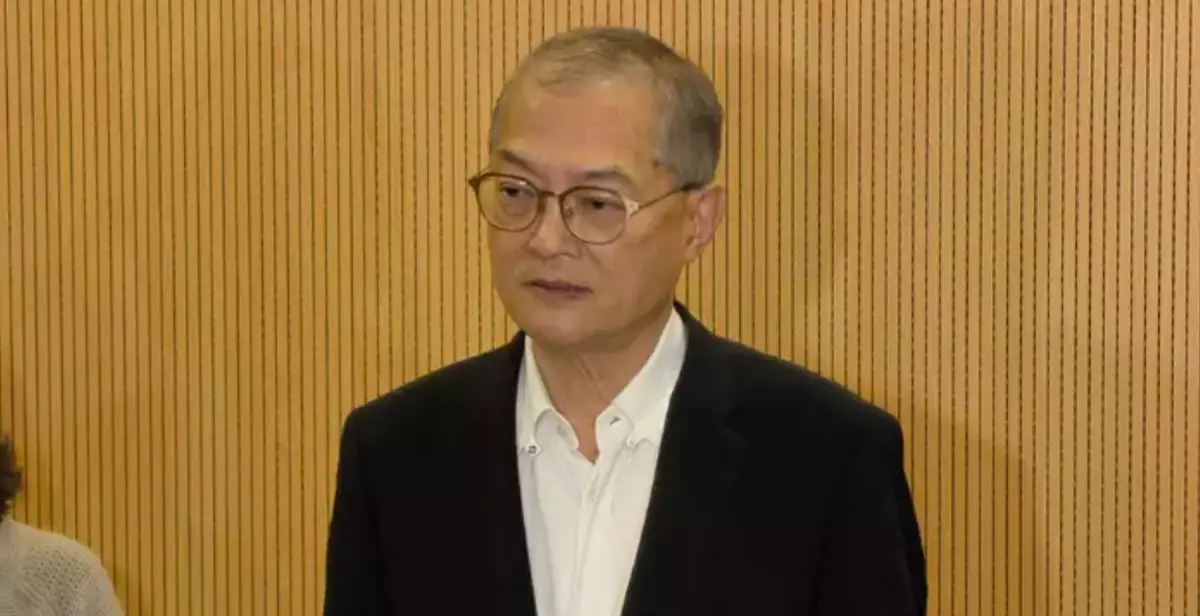
The Secretary for Health, Professor Lo Chung-mau, Photo by Bastille Post
Reforming the composition of the MCHK
The MCHK is a statutory body established under the MRO. In accordance with the powers conferred by the legislation, it handles the registration of medical practitioners, oversees the Licensing Examination, formulates professional codes and guidelines, and conducts disciplinary inquiries into complaints involving professional misconduct of doctors. The MCHK shoulders the primary responsibility for upholding doctors' professional standards and ethical conduct. Within the framework of the MRO and relevant subsidiary legislation, the MCHK discharges its functions to enhance doctors' professional and ethical conduct; establish and promote doctors' professional standards; and strives to safeguard patients' well-being and the public interest. Over the years, Hong Kong's healthcare professional standards have enjoyed an esteemed reputation among developed economies. The MCHK plays a crucial role in ensuring doctors' professional conduct, continuously enhancing professional standards, and promoting medical innovation.
In recent years, the MCHK has continuously adjusted and enhanced its work. These include conducting accreditation of the medical curriculum offered by local medical schools every five years, preparing and administering the Licensing Examination for non-locally trained medical graduates; arranging internship for local medical graduates and for non-locally trained doctors who have passed the Licensing Examination to ensure the overall standard of local medical education and the professional knowledge and skills of all doctors; fully supporting the Government's policy to admit non-locally trained doctors by establishing the Special Registration Committee to assess medical qualifications from different places, and recognising a total of 150 medical qualifications from different places to date; and issuing ethical guidelines on the provision of services to patients through telemedicine by doctors in response to societal needs.
The composition of the MCHK plays a significant role in the corporate governance of the MCHK and how it discharges the functions stipulated under the MRO. At present, the MCHK has 32 members, comprising 24 medical practitioner members (75 per cent) and eight lay members (25 per cent). Among the medical practitioner members, 16 are nominated and elected by the profession, while the remaining eight medical practitioner members are from the University of Hong Kong (two), the Chinese University of Hong Kong (two), the Hong Kong Academy of Medicine (HKAM)(two), the Hospital Authority (HA)(one) and the DH (one).
To ensure the MCHK fully takes into account the views of the profession and the community (especially patients), and with reference to international developments in medical regulation, the Government proposes the composition of the MCHK be amended as follows, including:
(i) Increase the number of lay members in the MCHK (e.g. healthcare professionals other than doctors) to promote cross-disciplinary collaboration, enabling MCHK's decisions to better reflect the concerns of the public and enhance public accountability of the system;
(ii) Suitably adjust the composition of medical practitioner members, including introducing non-officio medical practitioner members directly appointed by the Government, to ensure that the professional views of the sector are represented by medical practitioner members with diverse qualifications and backgrounds; and
(iii) Include representation from primary healthcare, to ensure the MCHK's deliberations fully take into account the working environment of primary healthcare, which differs from that of the secondary and tertiary health system.
Enhancing the MCHK's complaints handling mechanism
The MCHK has a statutory responsibility and the powers to protect patients' rights and interests. It is vested with independent quasi-judicial functions and powers to impose disciplinary sanctions through disciplinary proceedings on doctors whose professional standards or ethical conduct fall short of the required standards. Under the current arrangements of the MRO, the complaint handling mechanism generally involves three stages from the receipt of a complaint:
(i) Initial screening: the chairman and deputy chairman of the Preliminary Investigation Committee (PIC) consider whether the complaint received is frivolous or groundless. If so, the complaint may be dismissed. If not, the case must be referred to the PIC for further investigation;
(ii) Case investigation: the PIC conducts investigation into the complaint. In the process, the PIC may require the complainant or the doctor concerned to provide information for the PIC's consideration as to whether there is sufficient evidence to refer the complaint to the Inquiry Panel (IP) for inquiry; and
(iii) Disciplinary inquiry: the IP conducts inquiry into the referred case and imposes disciplinary sanctions on the doctor concerned.
The MCHK operates an assessor system, where medical assessors are nominated by eight medical institutions or organisations (including the two local medical schools, the HA, the HKAM, the Hong Kong Medical Association), while lay assessors are nominated by six institutions or organisations (including the Hong Kong Bar Association, the Hong Kong Council of Social Service, the Hong Kong Institute of Certified Public Accountants and the Law Society of Hong Kong) to participate in the work of the PIC and the IP. At present, there are a total of 36 lay assessors and 48 medical assessors, who may be appointed as members of the PIC or IP and participate in hearings.
In recent years, the MCHK has endeavoured to address bottlenecks in the complaints handling process. Since end-2024, it has implemented measures to improve efficiency in handling complaints, including taking stock of all cases pending inquiry, prioritising and expediting their handling and co-ordinating with legal representatives and expert witnesses for better support, enhancing the complaint handling information system and strengthening the Secretariat's monitoring of case progress to closely track the time taken at various stages of the process.
In response to public concern last year about the MCHK's investigation and disciplinary inquiry mechanism for handling complaints, the MCHK earlier reviewed the mechanism at the request of the Secretary for Health and submitted a report to the HHB on improving the mechanism's operation to safeguard doctors' professional standards. Meanwhile, the Office of The Ombudsman conducted a full investigation into the MCHK's complaints handling mechanism and released its findings yesterday (February 5). Having considered the report submitted by the MCHK, the Office of The Ombudsman's investigation report and the views of relevant stakeholders, the Government proposes the following amendments to the MCHK's complaints handling mechanism:
(1) Require the MCHK to set target time frames for different stages of the overall complaints handling mechanism, and establish a system to monitor overall case progress;
(2) Affirm the independence of the decisions and operation of the PIC and the IP, and strengthen the participation of independent assessors in the PIC and the IP;
(3) At present, both the chairman and deputy chairman of the PIC are doctors and they handle the dismissal of frivolous complaints; it is proposed to strengthen the role of lay persons to enhance the process;
(4) Specify in the MRO the MCHK's responsibility for overseeing the work of its Secretariat, and require the Secretariat to be responsible to the MCHK for its work;
(5) Allow both the complainant and the doctor concerned to apply to the MCHK for review of the IP’s decision, or lodge an appeal to the court;
(6) When handling disciplinary proceedings involving doctors who have been convicted by the court, stipulate (save in exceptional circumstances) that the IP should adopt the court’s findings of fact made upon conviction; and
(7) If a doctor is convicted of a serious offence and sentenced to imprisonment for a specified term, the doctor may be removed from the register immediately, and any application for restoration will be handled having regard to the nature and seriousness of the offence under the disciplinary procedures and mechanism.
Continuously enhancing doctors' professional standards
The Government has proposed legislative amendments to make continuing professional development a prerequisite for nurses, dentists and allied health professionals when renewing their practising certificates. For doctors, the MRO stipulates that registered medical practitioners whose names are included in the Specialist Register must undertake continuing medical education (CME) relevant to their specialties. To maintain doctors' professional competence, the Government is considering extending the CME requirement to non-specialist doctors (i.e. covering all registered medical practitioners) and making it a prerequisite for renewal of practising certificates.
Increasing the supply of doctors
Under the current MRO, only Hong Kong permanent residents may practise in Hong Kong under the special registration pathway without holding a recognised specialist qualification. In addition, holders of recognised medical qualifications may sit the Licensing Examination even if they have not yet completed internship, and may apply for special registration after passing the Examination and completing the assessment period. Overseas recruitment experience shows that, the special registration pathway are not particularly attractive to non-locally trained doctors who are non-Hong Kong permanent residents. In view of the continued shortage of doctors and intensifying global competition for healthcare talent, we propose allowing both non-Hong Kong permanent residents and Hong Kong permanent residents to apply for special registration.
The HA will continue to implement its policy of giving priority to recruiting all suitable local medical graduates, and has sufficient internship positions and specialist training places to absorb local graduates. The above amendments will not affect employment opportunities for local graduates or their opportunities to receive specialist training. The HA will continue to recruit qualified non-locally trained doctors to work in Hong Kong via the special registration and limited registration pathways according to service needs.
Strengthening support for the MCHK
To complement healthcare policy development, the Government considers it necessary to strengthen the role of the Director of Health within the MCHK as an ex-officio member and Registrar of Medical Practitioners to suitably reflect the Government's views on policies and serve as a communication and collaboration channel between the MCHK and the Government to facilitate the MCHK in adjusting and enhancing its work to continue uplifting the professional standard of medical practitioners.
At present, to assist the MCHK in discharging its statutory functions, the DH provides resources to establish the Secretariat. The work of the Secretariat of the MCHK is led and supervised directly by the MCHK. The Government will explore with the MCHK how to enhance the Secretariat's support to the MCHK, including supporting measures to enhance the handling of complaints concerning doctors' professional conduct, with the following proposed directions:
(1) Actively explore the establishment of a dedicated team to support complaint investigations, comprising staff with relevant professional backgrounds to investigate complaints received and support the PIC's investigation work;
(2) Actively explore increasing legal support and administrative personnel to handle the growing number of complaints, supporting the MCHK to increase the number of PICs and IPs as necessary in the future to expedite complaint handling;
(3) To expedite the obtaining of expert reports, the Government has invited the HKAM to study the establishment of a talent pool to systematically arrange experts from different medical specialties to provide advice on complaint cases and participate in inquiries regularly at the invitation of the MCHK;
(4) Provide appropriate training and support for newly appointed assessors (especially lay assessors) to ensure that they fully understand the MCHK's statutory functions and help them participate in the complaints handling process; and
(5) Explore the Secretary of the MCHK to be served by a senior management staff of the DH with professional background to enhance the functions of the Secretariat.
The Medical Council of Hong Kong (MCHK), Photo source: reference image