For over two decades, a warmhearted veterinary science teacher in north China's Shanxi Province has driven his "animal ambulance" into the countryside on his days off to treat sick livestock for free, preventing heavy economic losses for local farmers.
Wang Xingchun is a teacher at an agricultural school in Shanxi's Xinzhou City. Each year, the weeks around the Chinese New Year are his busiest time, as winter is the peak season for diseases and births.
The idea of treating livestock for farmers first struck Wang in a training class in 2004.
"During the training class, a farmer brought a goat that was circling due to brain cysticercosis. After we performed the surgery, the goat stood up almost immediately and stopped circling. While talking afterward, the farmer said, 'If you teachers could bring your students to our village, it would make things much easier for us.' That's when the idea struck me: to bring our technical services directly to the farmers' fields and right to their doorsteps," Wang said.
And so, Wang began driving to villages day after day to treat livestock, and soon he became the person farmers would call first whenever their animals had a problem.
Located in northern Shanxi, Xinzhou has a short frost-free period of just about five months and relatively poor soil. Local farmers can only manage one harvest per year, with yields not very high. For many, raising cattle, goats and sheep has thus become a vital source of income.
Wang, who grew up in the countryside, knows that livestock means a lot to a farmer.
"When livestock animals are sick, I can feel the despair among the farmers. They often say, 'It feels like the sky is falling.' Imagining that a fiftyish or sixtyish man is crying as half of his more than 200 sheep are lying motionlessly, how could he not be anxious? When I served the farmers, I witnessed their harsh conditions and lack of knowledge about raising animals. So, I determined to keep going. And every time I save an animal, it gives me a deep sense of fulfillment," Wang said.
Over the past 20 years, in addition to classes, Wang and his students have offered free veterinary care to livestock farmers in Xinzhou, Shuozhou, and Datong. Their endeavors have won support from the agricultural school, providing them with professional tools.
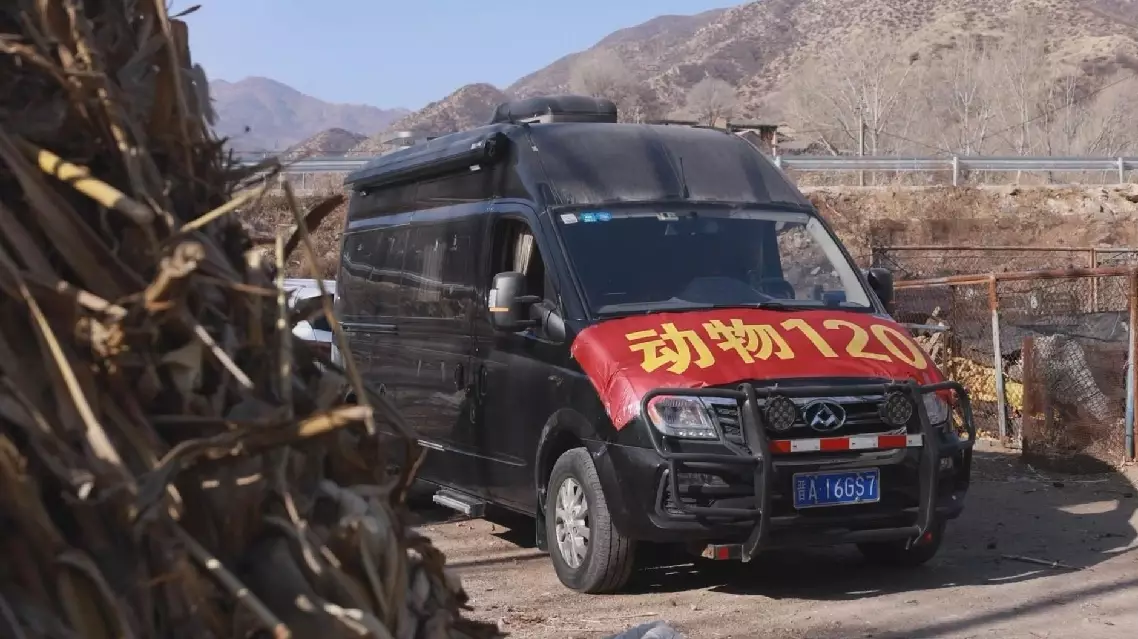
Wang also bought a used car to serve as his "animal ambulance," attaching a banner that reads "Animal 120", a reference to the emergency number for urgent medical situations.
Whenever farmers need help, the ambulance promptly arrives at their doorstep.
"Here are the tools we use on our visits. This is an electronic microscope, and this is a blood gas and electrolyte analyzer. Our school provides these tools annually for student experiments; they are used for examinations. While the school doesn't have live animals on hand for practice, when we go out to serve the farmers, we can offer these services directly to them, for free," Wang said.
So far, Wang has driven 187,000 kilometers and provided more than 9,800 visiting services, saving 16,000 livestock animals and reducing economic losses for farmers by about 51 million yuan (around 7.4 million U.S. dollars).
"I want to use what I've learned to benefit everyone. You can't just lock your scientific research away in a drawer. My goal in doing research is to serve more people. That's also why I always bring my students along. My strength alone isn't enough, and I will grow old as well. I want to help train more skilled professionals in animal husbandry for the society so that they can also serve the people in their hometowns in the future," Wang said.
Veterinary science teacher runs free 'animal ambulance' to treat livestock in Shanxi