CORTINA D'AMPEZZO, Italy (AP) — The race for the medals in men's singles luge might already be down to three sliders.
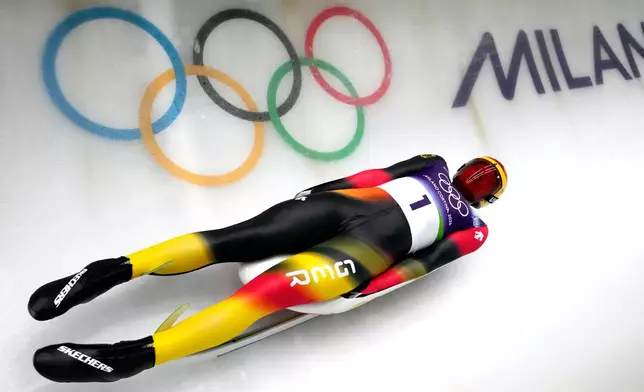
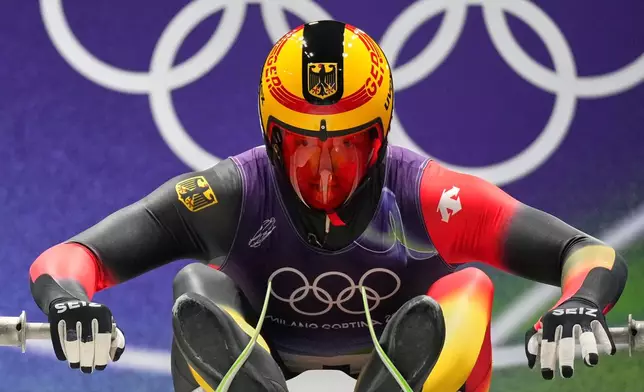
Germany’s Max Langenhan finished his two runs in 1 minute, 45.826 seconds on Saturday, making him the leader going into the final two runs on Sunday. All four runs count in the event, with the fastest combined time winning gold.
Click to Gallery
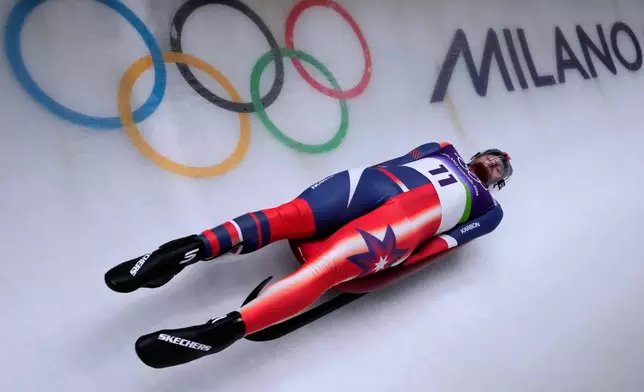
United States' Jonathan Gustafson slides down the track during a men's single luge run at the 2026 Winter Olympics, in Cortina d'Ampezzo, Italy, Saturday, Feb. 7, 2026. (AP Photo/Aijaz Rahi)
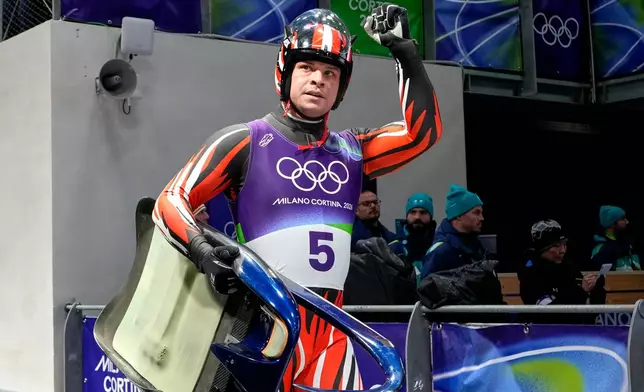
Austria's Jonas Mueller raises a fist after a men's single luge run at the 2026 Winter Olympics, in Cortina d'Ampezzo, Italy, Saturday, Feb. 7, 2026. (AP Photo/Aijaz Rahi)
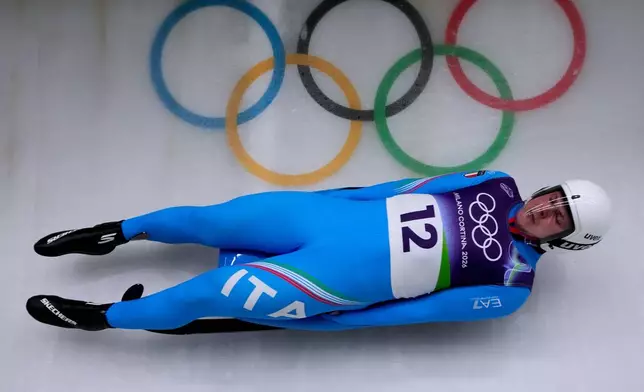
Italy's Dominik Fischnaller slides down the track during a men's single luge run at the 2026 Winter Olympics, in Cortina d'Ampezzo, Italy, Saturday, Feb. 7, 2026. (AP Photo/Aijaz Rahi)
Germany's Max Langenhan slides down the track during a men's single luge training session at the 2026 Winter Olympics, in Cortina d'Ampezzo, Italy, Saturday, Feb. 7, 2026. (AP Photo/Aijaz Rahi)
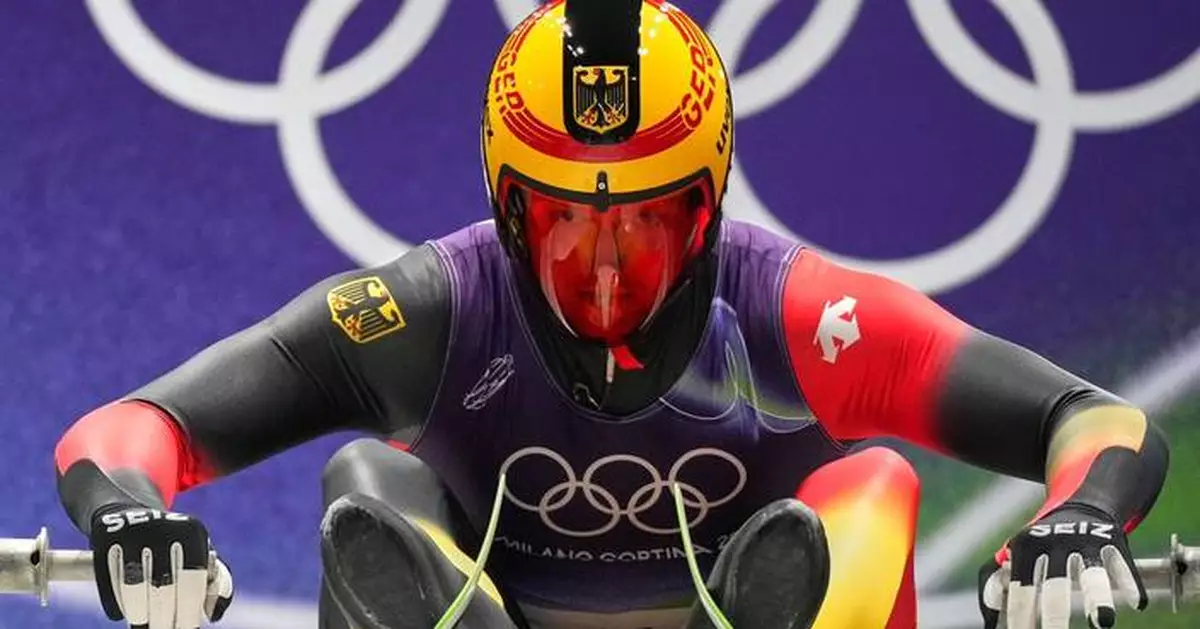
Germany's Max Langenhan prepares for a men's single luge run at the 2026 Winter Olympics, in Cortina d'Ampezzo, Italy, Saturday, Feb. 7, 2026. (AP Photo/Alessandra Tarantino)
Jonas Mueller of Austria was second in 1:45.988 and Italy’s Dominik Fischnaller is third going into Sunday after his two-run time was clocked at 1:46.124.
Nobody else is within a half-second of Langenhan’s lead. Latvia’s Kristers Aparjods is fourth, 0.508 seconds off the pace, and Italy’s Leon Felderer is fifth — 0.765 seconds back.
Langenhan and Mueller are bidding for what would be their first Olympic medals; Langenhan was sixth at the Beijing Games four years ago and Mueller is making his debut in the games. Fischnaller was third at Beijing 2022.
It was a disappointing start for a pair of favorites. World Cup current overall leader Felix Loch of Germany, a two-time Olympic men's singles champion after prevailing in 2010 and 2014, is only eighth going into Sunday — one spot behind Austria's Wolfgang Kindl, the reigning Olympic silver medalist and the only slider out of 105 luge Olympians this year who is qualified to race in both the men's singles and the men's doubles events.
For the Americans, Jonny Gustafson is 11th and Matthew Greiner is 17th going into Sunday.
History says Langenhan, Mueller and Fischnaller are in the driver's seats now. In the previous 16 Olympic men’s luge competitions, the eventual gold medalist has been no worse than third after the first two heats.
And in 10 of those 16 races, the 1-2-3 order after two runs became the exact 1-2-3 order on the medal stand as well.
AP Olympics: https://apnews.com/hub/milan-cortina-2026-winter-olympics
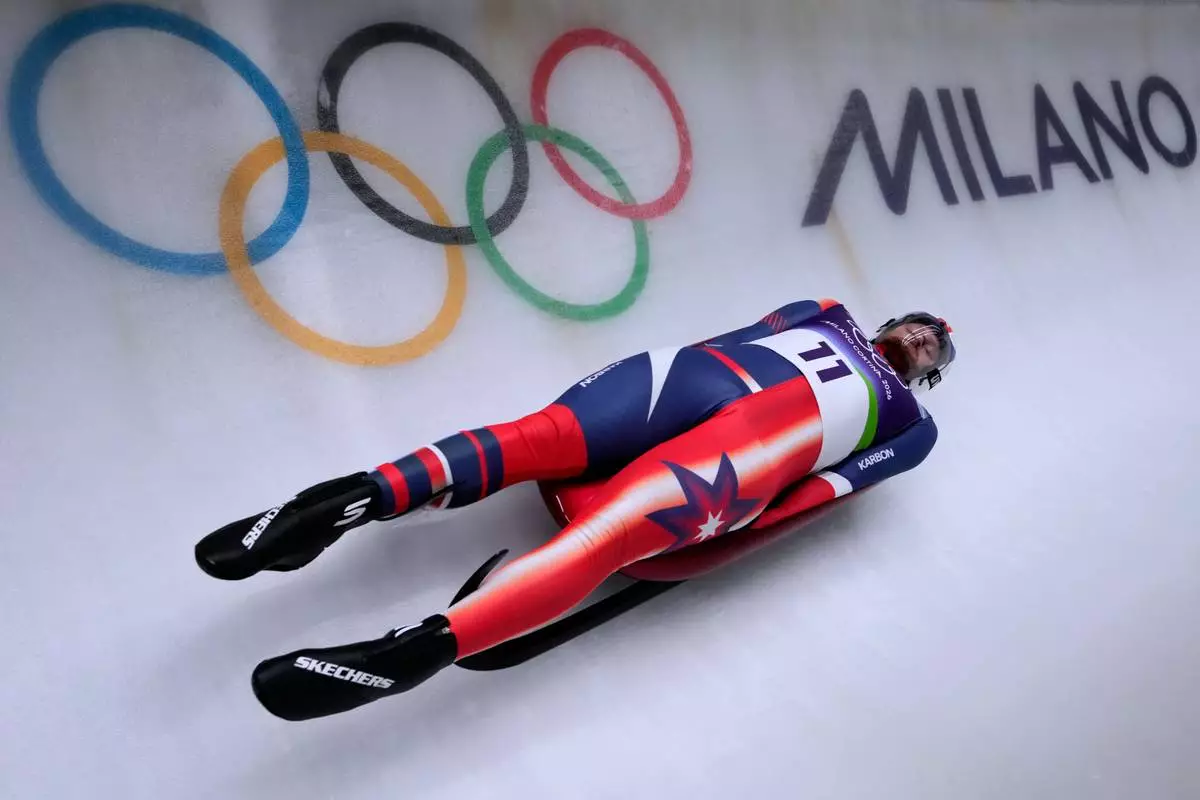
United States' Jonathan Gustafson slides down the track during a men's single luge run at the 2026 Winter Olympics, in Cortina d'Ampezzo, Italy, Saturday, Feb. 7, 2026. (AP Photo/Aijaz Rahi)
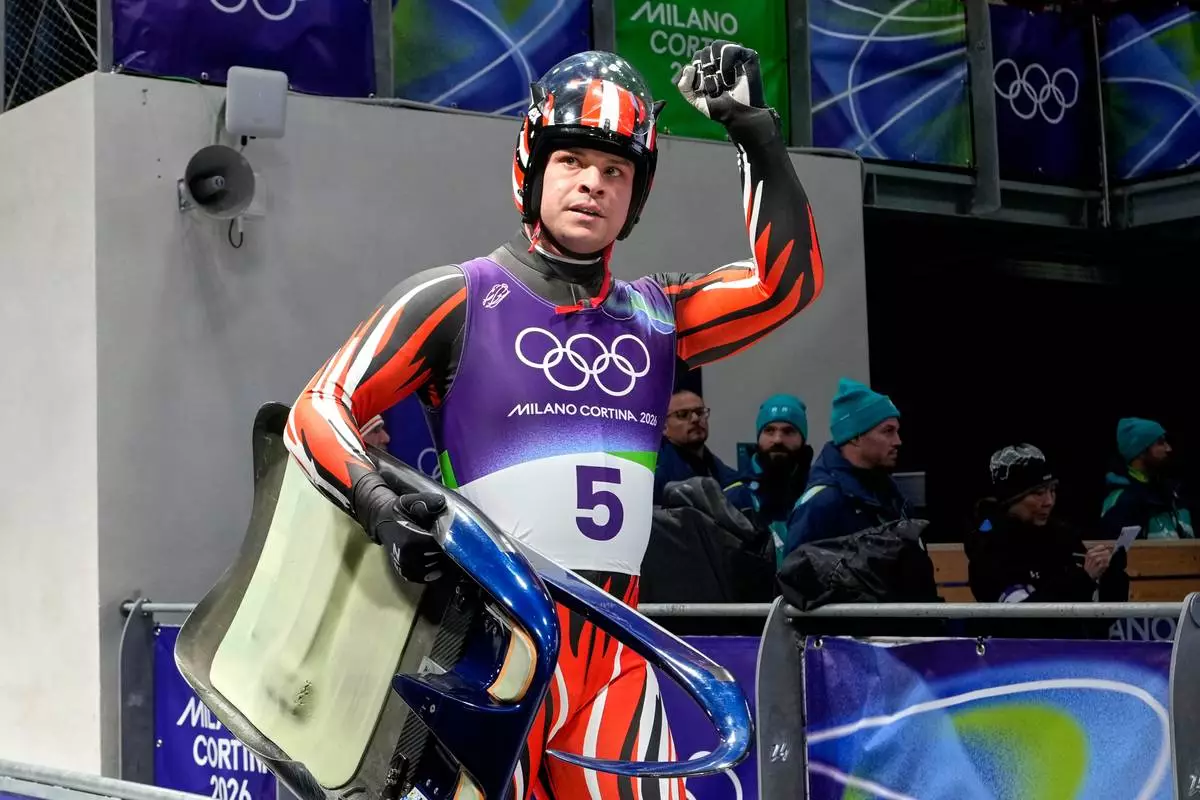
Austria's Jonas Mueller raises a fist after a men's single luge run at the 2026 Winter Olympics, in Cortina d'Ampezzo, Italy, Saturday, Feb. 7, 2026. (AP Photo/Aijaz Rahi)
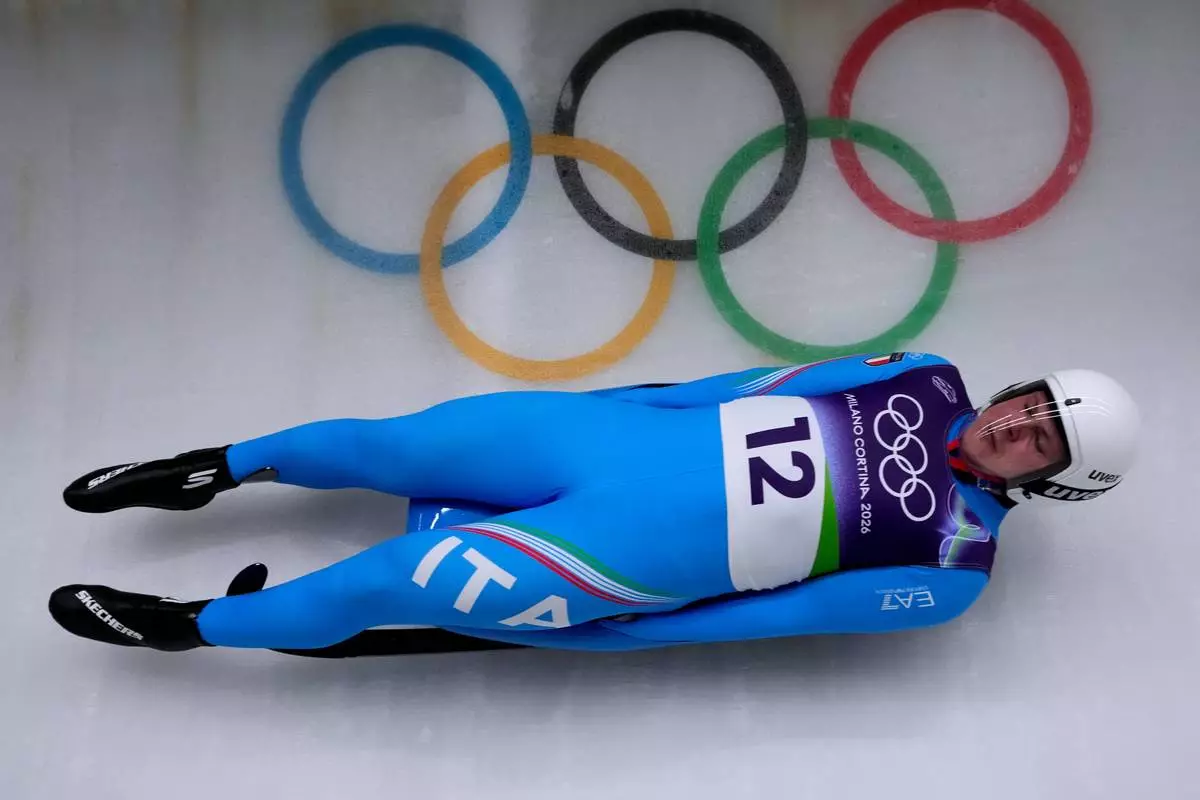
Italy's Dominik Fischnaller slides down the track during a men's single luge run at the 2026 Winter Olympics, in Cortina d'Ampezzo, Italy, Saturday, Feb. 7, 2026. (AP Photo/Aijaz Rahi)
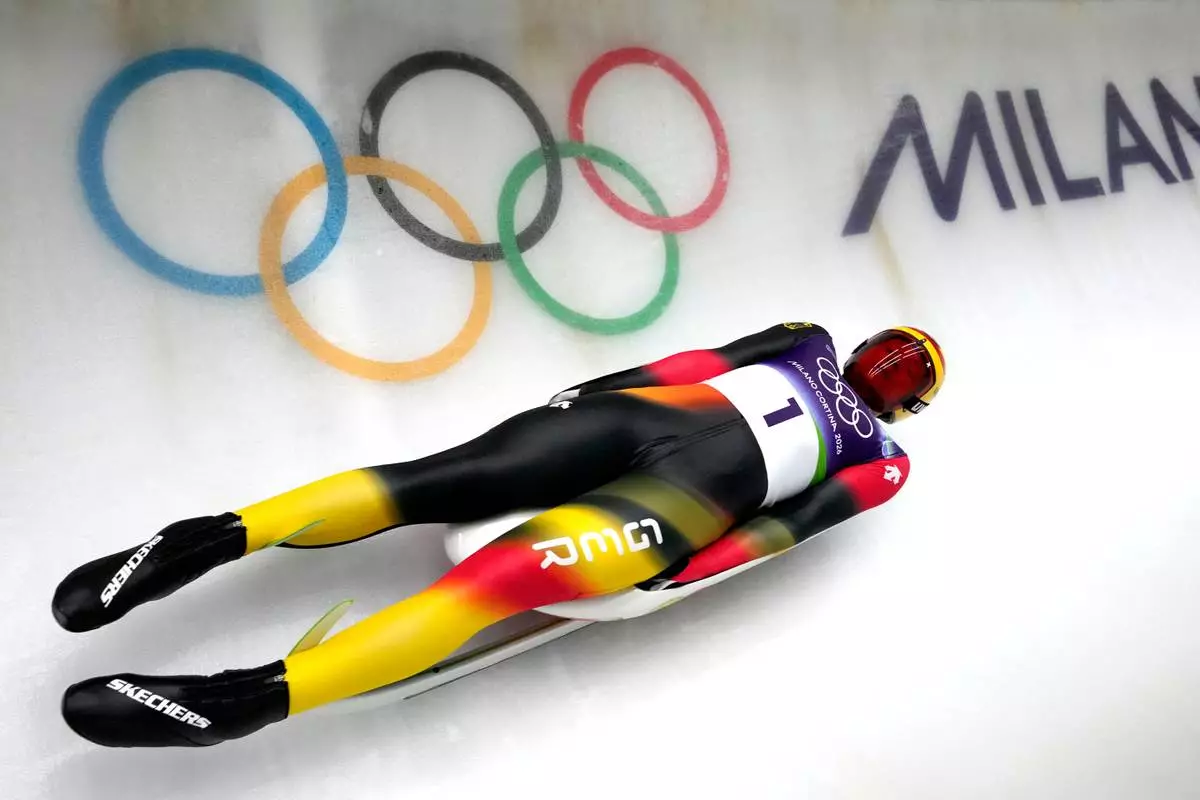
Germany's Max Langenhan slides down the track during a men's single luge training session at the 2026 Winter Olympics, in Cortina d'Ampezzo, Italy, Saturday, Feb. 7, 2026. (AP Photo/Aijaz Rahi)
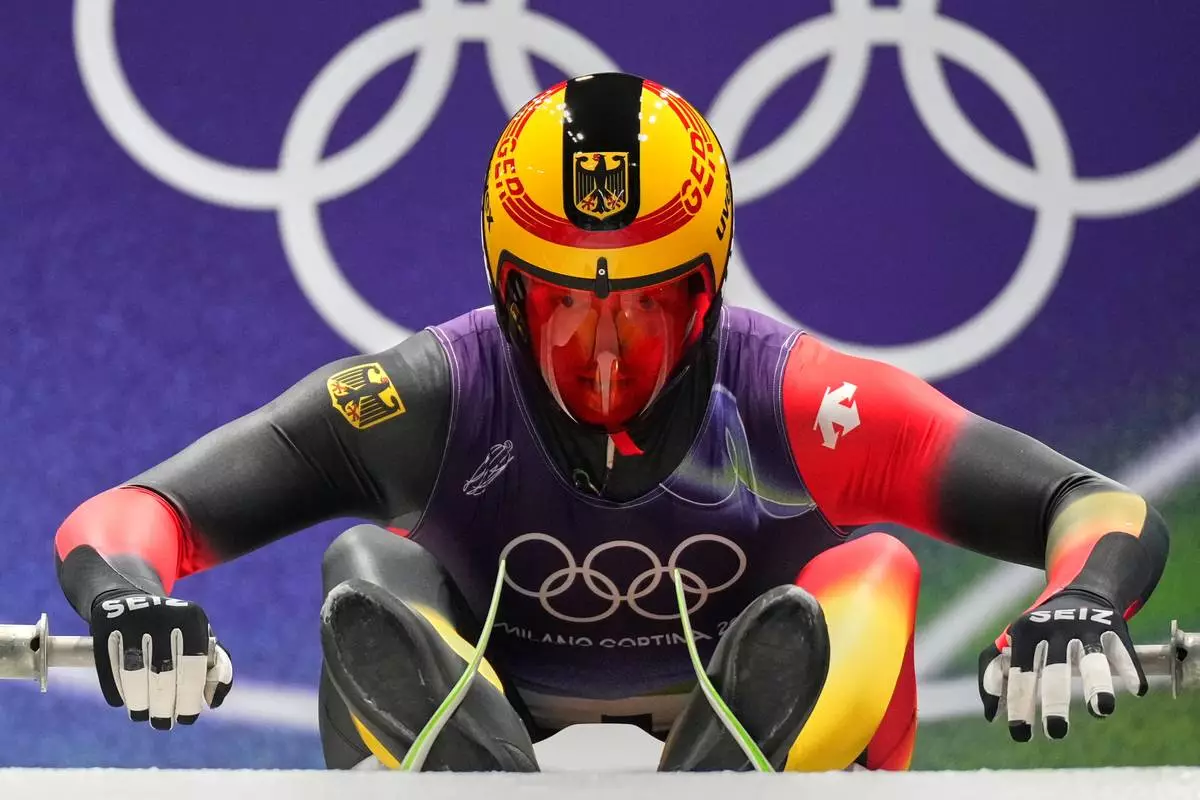
Germany's Max Langenhan prepares for a men's single luge run at the 2026 Winter Olympics, in Cortina d'Ampezzo, Italy, Saturday, Feb. 7, 2026. (AP Photo/Alessandra Tarantino)
Kelly Pannek was so determined to carve out a future in hockey while still at college, the forward made the conscious decision to sacrifice offense to focus on her shutdown skills.
The choice led to Pannek becoming a U.S. national team fixture as a three-time Olympian, beginning in 2018, and establish herself as one of women's hockey's best defensive forwards.
Some eight years later, Pannek discovered she hasn’t lost her scoring touch in closing her third PWHL season with Minnesota.
In a league featuring proven offensive stars in Hilary Knight and Marie-Philip Poulin, and teammates Taylor Heise and Kendall Coyne Schofield, Pannek topped them all as the two-time defending Walter Cup champion Frost open the playoffs at Montreal on Saturday.
Pannek led the PWHL with 16 goals and a league-record 33 points, and was one assist from completing what would have been rare hockey triple crown — for men or women.
“I think more than anything, it’s reassuring and confidence-building to know that I used to be someone who was often relied on to provide offense for teams, and I still am that player,” Pannek said by phone this week. “I just needed to kind of re-find it, I guess.”
Her 33 points in 30 games this year surpassed her total production in her first two seasons, when she combined for seven goals and 27 points in 54 games.
And the offensive output didn’t hinder Pannek’s defensive play.
She finished sixth in the PWHL with a plus-13 plus-minus rating. She also won 341 of 575 faceoffs for a 59.3% success rate, third among players with 200 or more attempts.
“I don’t want to say no, because I think she’s a great player,” Frost coach Ken Klee said when asked whether he expected this much production from Pannek.
“From the beginning of the year, she seemed different. Our very first coach’s meeting, we had her in the office, and she just seemed lighter, she seemed more energetic," Klee added. “I really think she just said, ‘Hey, I’m going to play free, and if it's time to play offense, I'm going to play offense.' She's just really taken a next step.”
There are several reasons behind Pannek flipping the offensive switch.
An offseason roster shake-up caused by Minnesota losing talent in the expansion process led to Pannek realizing she was going to have to contribute more offensively.
Another factor was Pannek growing in confidence while turning 30 in December.
In her early Team USA days, Pannek stuck to defense and shied away from opening up on offense in fear of making mistakes that could cost her ice time or even her roster spot.
In the PWHL, Pannek came to realize she had more job security and, with it, the leeway to make a mistake or two over a 30-game season, as opposed to the pressure that comes with competing in two-week international tournaments where miscues are magnified.
“There’s a lot of implications with points and stuff on the line, but you also accept that you’re going to make mistakes, and goals are going to go in and it’s not life or death,” Pannek said of PWHL play. “I’ll still be on the team if I have a bad game and if I have a great game. ... So I think a lot of it was a little bit of a mentality shift.”
She's had far more good games than bad, and called this season “invigorating.”
Former U.S. star Meghan Duggan is not surprised by Pannek’s development: “She always had it in her, but it just started to come out as of late.”
What stood out to Duggan was the maturity and reliability Pannek brought to the ice even as a 22-year-old.
“Kelly Pannek is a player I would choose 10 times out of 10 to go into the biggest game with right by my side, because I know what she’s going to bring: stability, predictability, high character,” said Duggan, now the New Jersey Devils' player development director. “Kelly to me is the type of player that you win championships with, and she's done that multiple times.”
Pannek was a two-way star during her four college seasons at Minnesota, where she won two national titles and finished with 72 goals and 186 points in 157 career games. At the Olympics, she won gold in 2018 and 2026, along with a silver in 2022.
“I’ve changed as a player over these last almost eight years, but also my role has changed,” Pannek said. “I pride myself on being someone who can do any role up and down the lineup.”
Today, her sole focus is on the upcoming playoffs.
“Whatever it takes," Pannek said. “If I have zero points the rest of the playoffs and we win — it’s all about the winning.”
AP women’s hockey: https://apnews.com/hub/womens-hockey
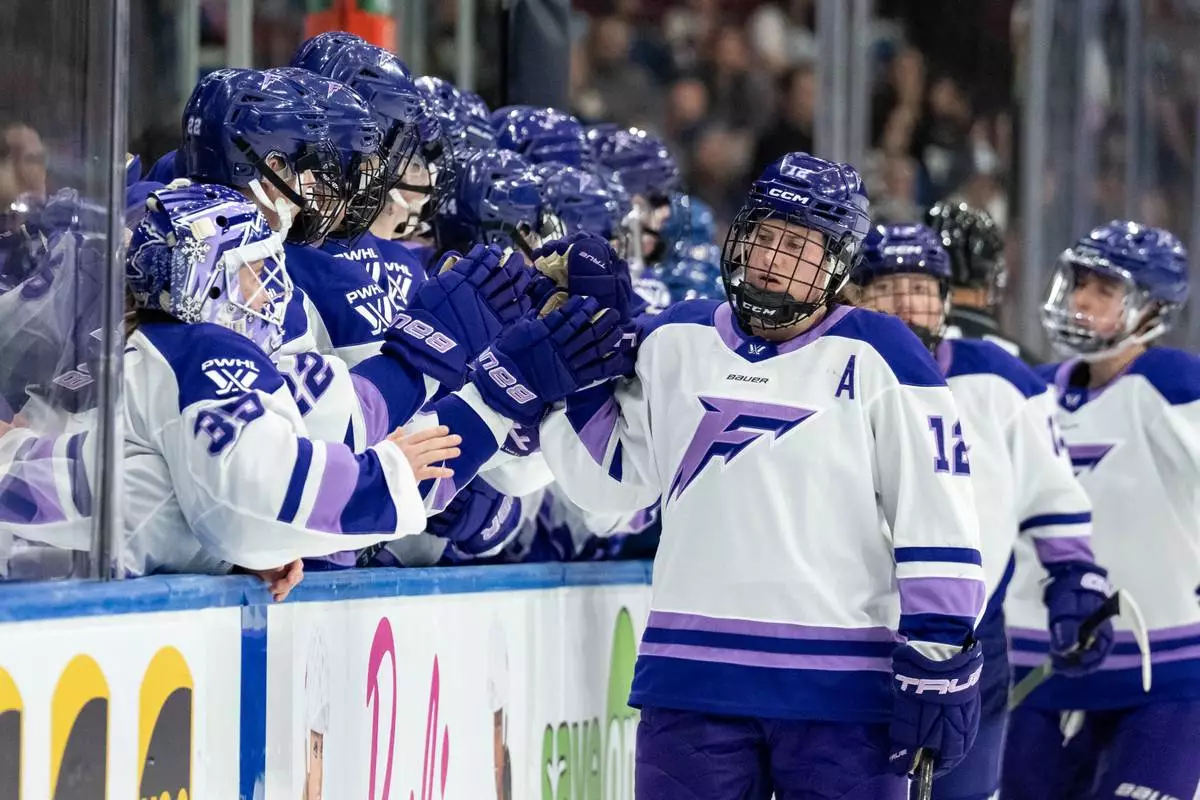
Minnesota Frost's Kelly Pannek (12) celebrates with teammates after her goal against the Vancouver Goldeneyes during the third period of a PWHL hockey game in Vancouver, British Columbia, Saturday, April 25, 2026. (Ethan Cairns/The Canadian Press via AP)