Skip to Content Facebook Feature Image

2025 data from Shanghai's pioneering climate action platform released

China

China

China

2025 data from Shanghai's pioneering climate action platform released

2026-02-08 17:31 Last Updated At:02-09 12:42

The latest 2025 data from Shanghai's pioneering climate action platform, Carbon Inclusion, was released on Friday, showing that more than 330,000 residents have opened personal carbon accounts.

The digital platform rewards residents for making low-carbon choices.

Among various low-carbon choices, public transport is the biggest contributor, accounting for 82 percent of individual carbon reductions, and nowhere is this impact more visible than on the Shanghai Metro.

"As the backbone of Shanghai's public transport, we've enabled passengers to quantify their low-carbon behavior. For every kilometer traveled, they earn a 97-gram carbon reduction. These credits can then be exchanged for tangible rewards. We're also developing our own green power, with rooftop solar projects across our depots already generating 267 million kilowatt-hours of clean electricity," said Zhu Dahuan, deputy director of Shanghai Shentong Metro Group's Energy Conservation Office.

At the Shanghai Environment and Energy Exchange, a key element of the city's carbon trading system, a closed-loop model of incentives is operating, allowing carbon credits earned by individuals to be redeemed.

"Our focus is moving beyond just quantifying green behavior to giving it real market value. As of the end of 2025, more than 100 reward items have been launched, including digital RMB, product vouchers and tourism tickets. Over 530,000 orders were placed, showing strong public participation and engagement. This creates multiple pathways for their use: corporations can purchase them to meet compliance targets, or they can be used in innovative eco-judicial cases for environmental restoration. This ensures the system is self-sustaining, directly funding the public's rewards," said Xu Mingyi, general manager of Shanghai Environment and Energy Exchange.

A key architect of the system explains why Shanghai's approach is increasingly seen as a blueprint for other mega-cities.

"Trust is the foundation of this entire system. Our 'Shanghai Solution' uses blockchain technology to guarantee that every carbon credit is fully traceable and secure. We are now expanding this trusted model, not just into new lifestyle areas like recycling and energy saving, but also by launching dedicated carbon-credit malls at the district level. This creates a far more granular and engaging blueprint for sustainable urban life," said Zhao Min, head of Carbon Emissions Section, Shanghai Technology Center for Reduction of Pollution and Carbon Emissions.

Shanghai's Carbon Inclusion offers a rewarding model for green and urban living. By gathering collective forces through daily lifestyle, the system is making a concrete contribution to China's carbon peak and neutrality goals. This shows the power to forge a sustainable future for the planet is truly in the hands of each and every one of us.

2025 data from Shanghai's pioneering climate action platform released

2025 data from Shanghai's pioneering climate action platform released
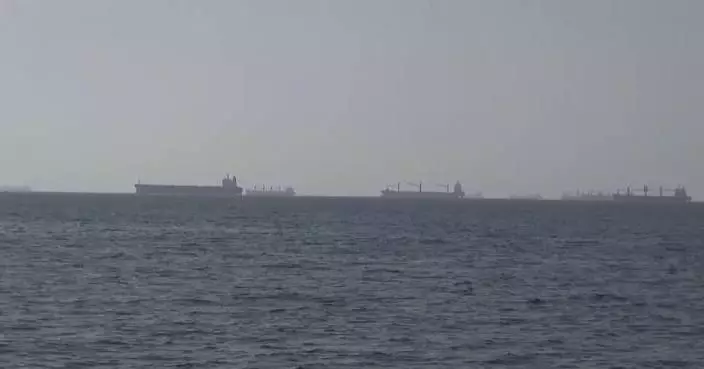
The Navy of Iran's Islamic Revolution Guards Corps (IRGC) said that the Strait of Hormuz has been blocked since Saturday evening and will not reopen until the United States lifts its naval blockade on the waterway.

In a statement carried by its official news outlet Sepah News, the IGRC said that the move came after the United States violated its commitments under the two-week ceasefire, which took effect on April 8, and failed to end its naval blockade against Iranian vessels and ports.

The IRGC Navy called on all vessels and their owners to follow official updates via its channel and VHF Channel 16, the international maritime distress, safety, and calling frequency. The statements by U.S. President Donald Trump hold no credibility in the strait and the Gulf, it added.

The IRGC warned that no vessel should move from its anchorage in the Gulf or the Gulf of Oman, and any approach to the strait would be deemed "cooperation with the enemy" and targeted accordingly.

Tehran's political leadership echoed the IRGC's firm position. Parliament Speaker Mohammad Bagher Ghalibaf asserted that the Strait of Hormuz is under Iran's control, revealing that during previous negotiations, Iran had firmly countered U.S. attempts to carry out minesweeping operations, which Tehran viewed as a ceasefire violation.

He said the situation had come close to conflict, but the U.S. had eventually backed off.

Calling the U.S. maritime blockade "reckless and ignorant," Ghalibaf warned that passage through the strait would certainly be restricted if Washington does not lift the blockade.

Underpinning these public announcements, Iran's Supreme National Security Council on Saturday affirmed the country's resolve to exercise control and supervision over traffic through the Strait of Hormuz until the war is definitively ended and lasting peace is achieved in the region.

For its part, the United States pressed ahead with its own military measures.

The U.S. Central Command (CENTCOM) said in a statement on Saturday that the U.S. military is imposing a maritime blockade on ships entering and exiting Iranian ports and nearby coastal areas. Since the blockade began on April 13, 23 ships have complied with U.S. directions to turn around.

Meanwhile, the U.S. military is preparing in the coming days to board Iran-linked oil tankers and seize commercial ships in international waters, The Wall Street Journal reported on Saturday, citing U.S. officials.

The move will enable the U.S. to take control of Iran-linked vessels around the world, including ships carrying Iranian oil that are already sailing outside the Persian Gulf and those carrying arms that could support Tehran, the report said.

Iran's IRGC says Strait of Hormuz blocked, demands end to US naval blockade

Iran's IRGC says Strait of Hormuz blocked, demands end to US naval blockade

Recommended Articles