Hong Kong has seen significant improvements in economic growth and international confidence since the National Security Law became effective on June 30, 2020.
The law has enabled Hong Kong to move from chaos to stability, and ushered in a new era of "one country, two systems."
By safeguarding national sovereignty, security, and development interests, it has been fundamental to maintaining Hong Kong's prosperous development and economic growth.
According to data from the government of Hong Kong Special Administrative Region (HKSAR), the region's GDP reached 407 billion U.S. dollars in 2024, up 2.5 percent year on year. Meanwhile, preliminary estimates have placed Hong Kong's GDP growth in 2025 at 3.5 percent.
In Hong Kong, capital markets have strengthened sharply, with Initial Public Offerings (IPO) fund-raising in the first half of 2025 rising sevenfold to 14 billion U.S. dollars, ranking first globally.
By the end of 2024, the number of overseas and Chinese mainland companies operating in Hong Kong had increased 10 percent year on year to 9,960.
Hong Kong's international status and confidence have also strengthened alongside the recovery. In 2025, it was ranked the world's freest economy, placed third as a global financial center, and returned to the top three in world competitiveness rankings.
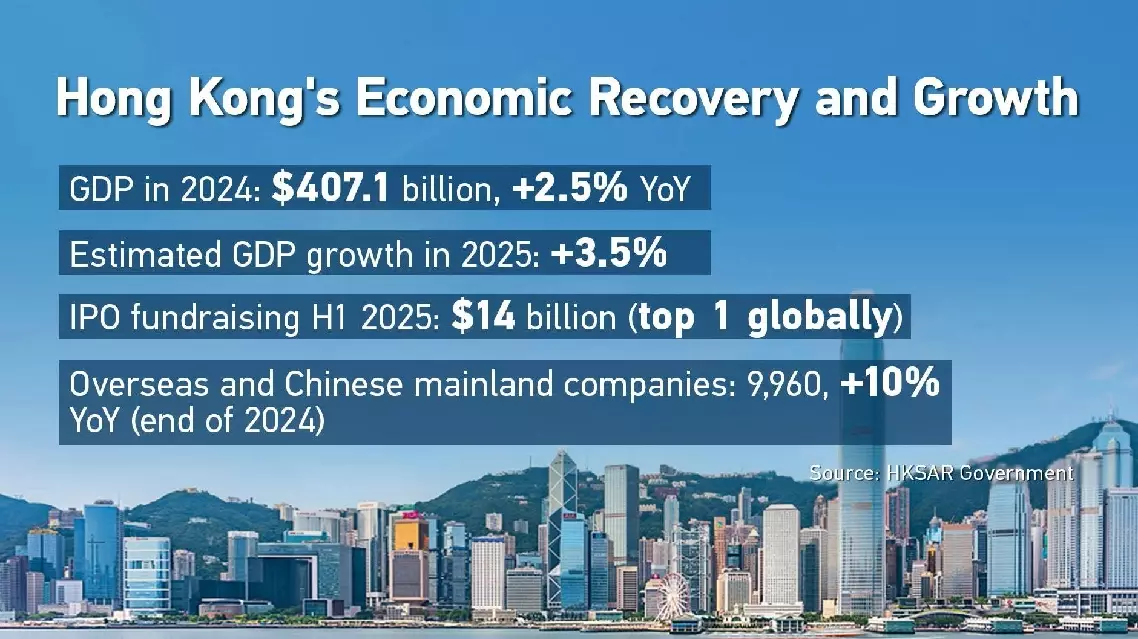
Hong Kong witnesses renewed economic growth since National Security Law took effect in 2020
The tech sector insiders in the United States have voiced their concerns over Pentagon's use of AI, saying the public is becoming increasingly worried about the government abusing the advanced technology as they appeal for setting public constitutions for pioneering models.
In the latest development of the clashes between the AI sector and the U.S. military, a Washington D.C. federal appeals court on April 8 declined to block the Pentagon's national security blacklisting of AI company Anthropic for now.
This is a win for U.S. President Donald Trump's administration that comes after another appeals court has arrived at the opposite conclusion in a separate legal challenge by the company.
Anthropic, developer of the popular Claude AI assistant, alleges that Defense Secretary Pete Hegseth overstepped his authority when he issued orders designating the company as a national security supply-chain risk under two different laws over its refusal to remove certain usage guardrails on its products.
Anthropic is challenging each separately, claiming the label blocks it from Pentagon contracts and could trigger a government-wide blacklisting.
Hegseth's unprecedented move came after Anthropic refused to allow the military to use AI chatbot Claude for U.S. surveillance or autonomous weapons due to safety and ethics concerns.
Across the U.S., people took to the streets to voice concerns over the Pentagon's potential abuse of the advanced technology.
"It's like fear has set back in again because the unknown of what you could do with it. People have become educated and now they see the possibility and the fear of losing control. I think the government's overreacting," said Marc Potter, CEO of Actian.
Shayan Mohanty, chief data and AI officer at Thoughtworks, said AI companies and the government are free to choose the partner they would like to work with.
"I think that there's no issue in Anthropic taking a stance, in fact, that should be applauded. There's no requirement for them to sell to the federal government. Now, that said, it is also up to the federal government who they decide to procure," said Mohanty.
At the San Francisco tech conference HumanX, which ran from April 6 to 9, Al Gore, chairman of Generation Investment Management, praised Anthropic for writing a constitution for its AI, which includes avoiding actions that are dangerous or harmful.
"I would like to see all of the pioneer models have a constitution that is public and not secret. Some of the others have constitutions alongside Anthropic, but they keep it secret," said Gore.
Nand Mulchandani, former CIA chief technology officer and a visiting fellow at the Hoover Institution, Stanford University, said he sees nothing wrong with the government purchasing intelligence gathering software from private companies for military purposes and using it how they please.
"You can't have a situation, rightly so, where the military has to call somebody up for permission over here in Palo Alto or in the Bay area to say, can I use the system? They have every right as a customer. And see [It's] equivalent enough [of] you walking into your car in the morning and have to call Elon Musk to say, can it be allowed to drive this car? No, you need agency to be able to own that decision and do whatever you want with it lawfully," said Mulchandani.
He also said in his view the militaries are not ready for using AI weapons systems without a human in the loop.
"I personally don't think so that they're ready. They're not ready from a trust perspective in terms of understanding how to wield these AI systems. And I don't feel that the operators themselves have trust in the systems from a security standpoint and other standpoints. There's still a lot of things to be done there," he said.
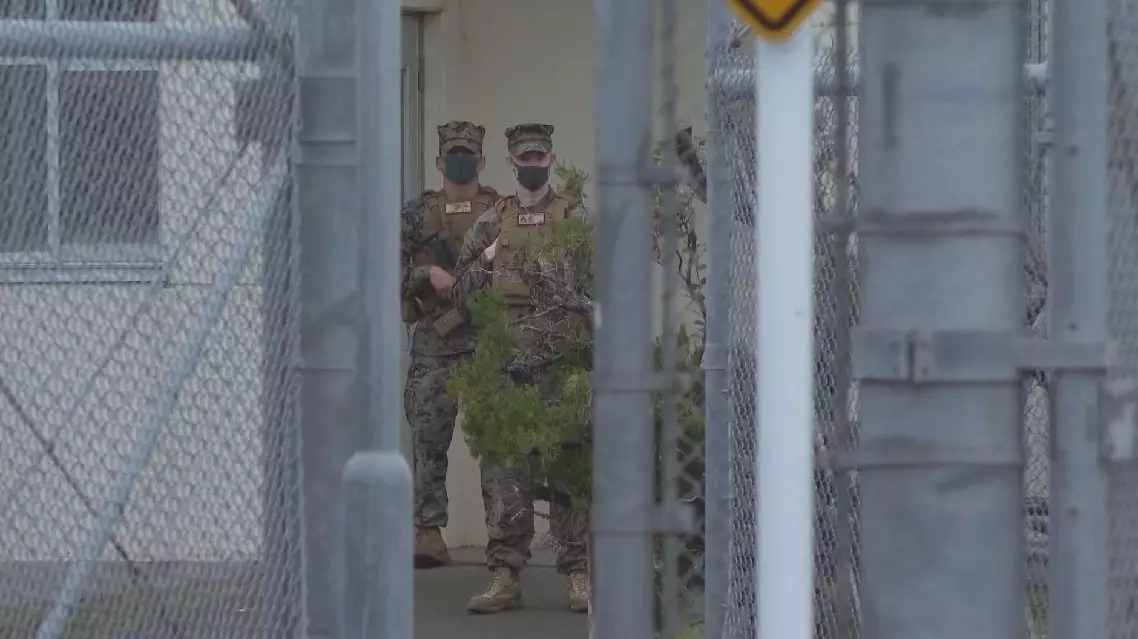
U.S. tech insiders voice skepticism over military's use of AI