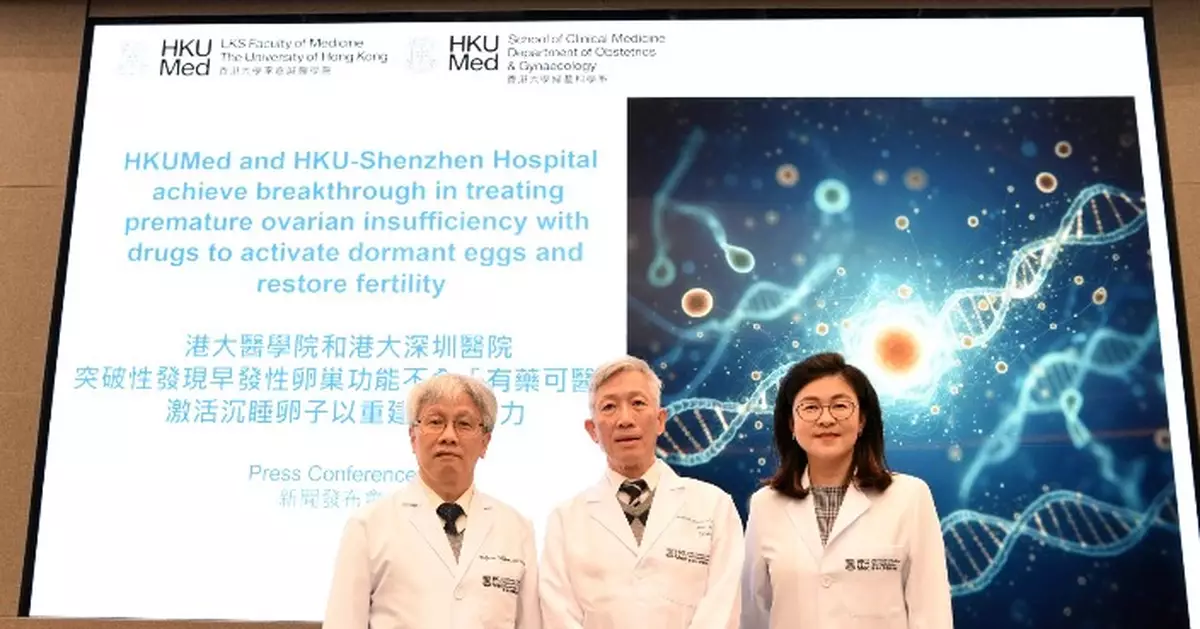
A research team from the Department of Obstetrics and Gynaecology at the School of Clinical Medicine, LKS Faculty of Medicine, the University of Hong Kong (HKUMed), has made a major breakthrough in treating premature ovarian insufficiency (POI). The team discovered that finerenone, a drug used to treat type 2 diabetes-related chronic kidney disease, can promote the development of follicles into mature eggs and form viable embryos in patients with POI. In contrast to traditional strategies focusing solely on direct follicle stimulation, this pioneering study is the first to focus on improving the ovarian microenvironment to treat infertility caused by POI.
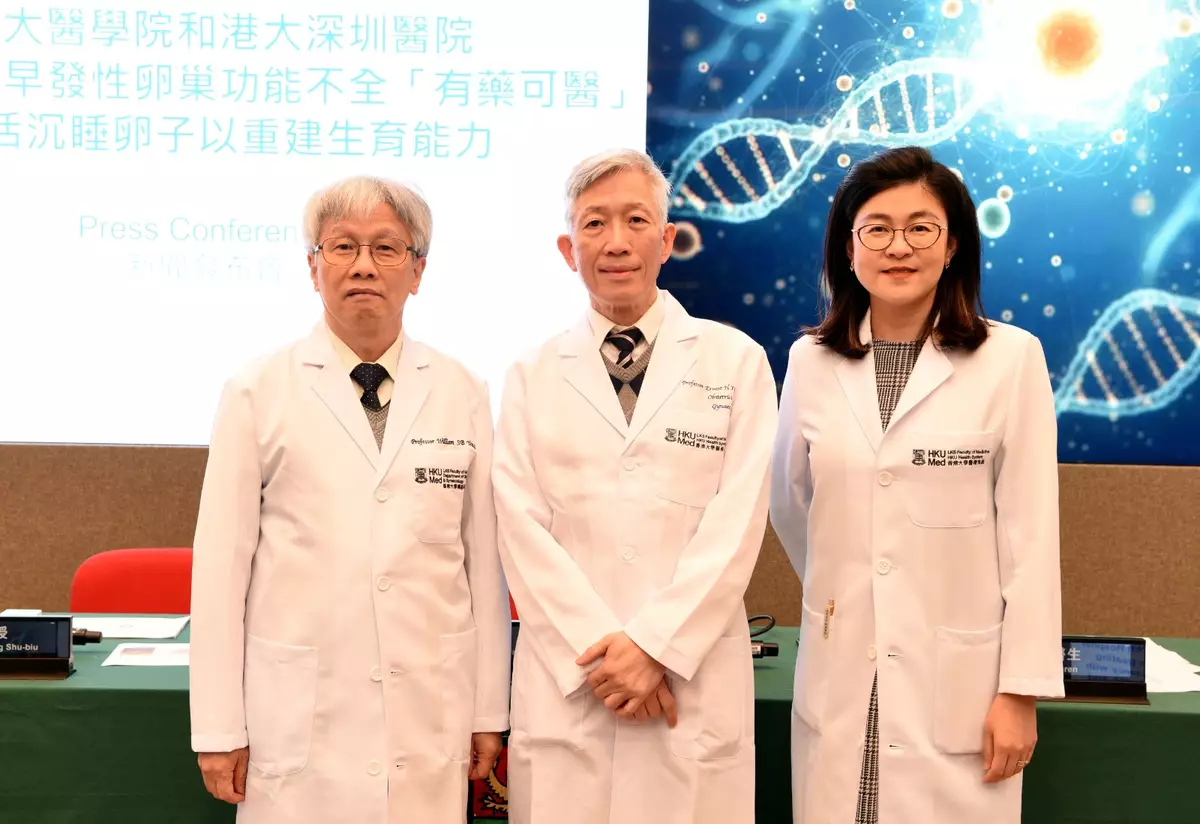
HKUMed reveals that using drugs to treat POI by awakening dormant eggs and facilitating their development into usable antral follicles, is a key breakthrough in restoring fertility (from left: Professor William Yeung Shu-biu, Professor Ernest Ng Hung-yu and Dr Wang Tianren). Photo source: HKUMed
A related clinical trial conducted at the University of Hong Kong-Shenzhen Hospital (HKU-SZH) confirmed that the participants experienced significant improvement in follicle development. About half of the participants successfully produced mature eggs, several of which developed into viable embryos. The results confirmed that this ground-breaking approach can restore fertility for women affected by POI. The research findings were published in the prestigious scientific journal Science.
POI affects approximately 1-3% of women of childbearing age worldwide. These patients have difficulty conceiving because of lack of ovarian follicular development. Under normal circumstances, small ovarian follicles develop gradually into larger antral follicles, which respond to ovarian stimulation drugs, enabling ovulation and in vitro fertilisation (IVF) treatment. However, patients with POI often lack antral follicles that can be detected by ultrasound, rendering conventional IVF treatment almost impossible.
A new strategy to improve the ovarian microenvironment to awaken dormant small follicles
There may still be a small number of small dormant follicles in the ovaries of patients with POI. However, they cannot develop naturally into the antral follicle stage, which is essential for ovulation and fertility treatments. Professor Liu Kui from the Department of Obstetrics and Gynaecology at the School of Clinical Medicine of HKUMed, who led the research, said, 'These small follicles represent a source of potential eggs. The key is finding a way to awaken them and help them develop into usable antral follicles.'
The research team adopted the 'drug repurposing' strategy to explore novel treatment for POI-related infertility using drugs that have been approved and backed by established clinical safety data. Professor Liu noted that this method can avoid the lengthy and costly process involved in developing new drugs from scratch and can significantly accelerate the translation of the new treatment for clinical use. Leveraging the previous in-depth research into the regulatory mechanism of ovarian follicle development, the team established a systematic screening platform and selected finerenone, a non-steroidal antifibrotic drug from a library of over a thousand drugs approved by the US Food and Drug Administration (FDA). The team found that finerenone has potential clinical value in improving the ovarian microenvironment and facilitating the development of small dormant follicles.
Professor Ernest Ng Hung-yu, Clinical Professor in the Department of Obstetrics and Gynaecology at the School of Clinical Medicine, HKUMed, explained, 'Patients with POI often experience fibrosis, characterised by an excessive deposition of collagen in the ovarian microenvironment, which severely limits follicle growth and ultimately leads to infertility. We found that finerenone effectively reduces fibrosis, creating a favourable microenvironment for the continuous development of follicles into mature antral follicles.'
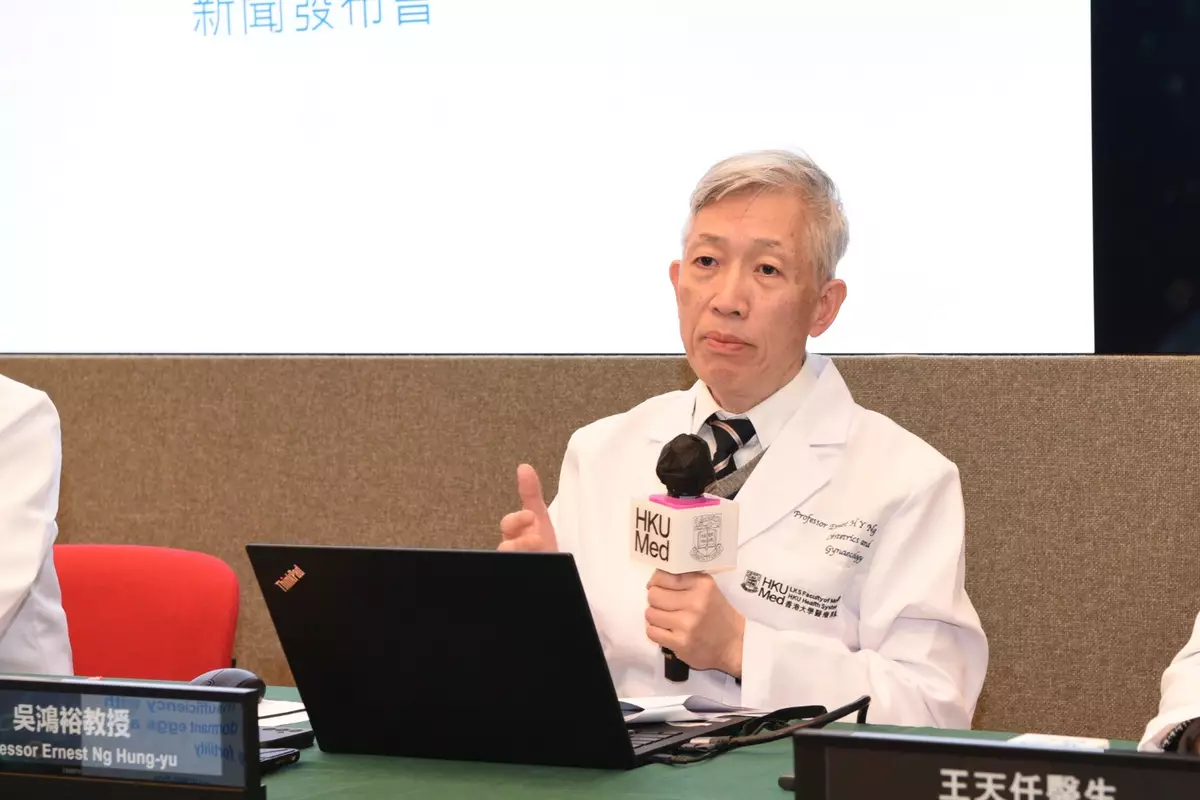
Professor Ernest Ng Hung-yu remarks that patients with POI often experience fibrosis in the ovarian microenvironment, which severely limits follicle growth and leads to infertility. However, finerenone effectively reduces fibrosis, creating a favourable microenvironment for the continuous development of follicles into mature antral follicles. Photo source: HKUMed
The research team launched a clinical trial at HKU-SZH in 2024, providing pulsed oral therapy to 14 women of childbearing age diagnosed with POI. The therapy was combined with personalised ovarian stimulation regimens for up to seven months. Dr Wang Tianren, Clinical Assistant Professor from the same Department, said, 'Preliminary results showed that eight participants successfully developed antral follicles that progressed to mature follicles. About half of the participants obtained mature eggs. Three participants developed usable embryos, and another three opted to freeze their oocytes. The treatment results were highly encouraging.'
Ovarian fibrosis is a cause of follicular development arrest
This study also revealed the underlying pathological mechanism of follicular development arrest in POI. The team found that ovarian fibrosis is not caused solely by ageing. It is also a key factor leading to the stagnation of follicular development. To verify this, the team tested multiple antifibrotic drugs with different targets to redefine the initiation and growth mechanism of primordial follicles from the perspective of the 'ovarian microenvironment'. They proposed a new treatment framework for POI based on these findings. In addition, the study confirmed that other FDA-approved antifibrotic drugs, such as Nintedanib and Ruxolitinib, had similar effects in promoting follicular development in preclinical studies. This suggests that treatments targeting the ovarian microenvironment, rather than just the follicles, may have potential in broader clinical application.
Professor Liu Kui stated, ‘In the past, treatments for POI-related infertility focused mainly on directly stimulating the follicles, but the overall efficacy was limited. Our study is the first to show that improving the ovarian microenvironment, especially by addressing fibrosis, is a key breakthrough in restoring fertility.'
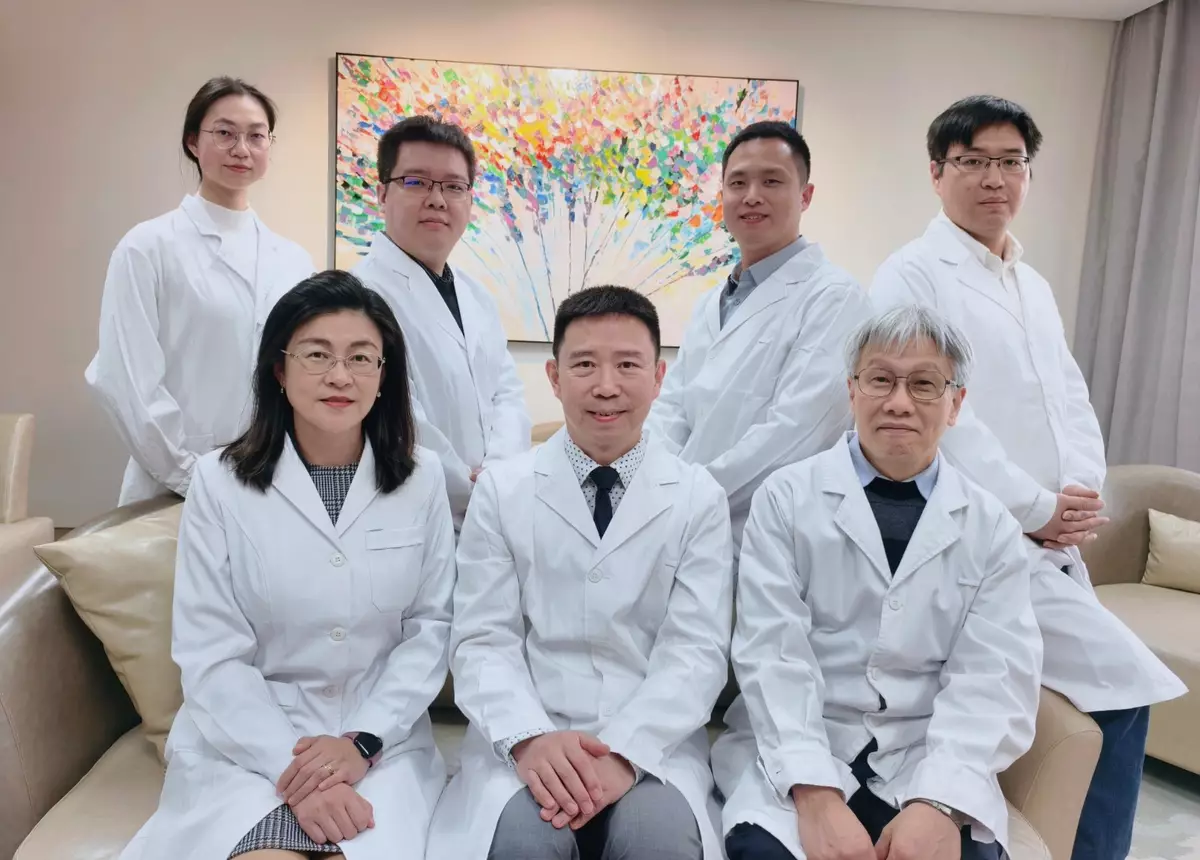
Professor Liu Kui (middle, front row) from the Department of Obstetrics and Gynaecology at the School of Clinical Medicine, HKUMed, who led the research team, states that improving the ovarian microenvironment, especially by addressing fibrosis, is important for treating POI-related infertility. Photo source: HKUMed
About the research team
The study was led by Professor Liu Kui from the Department of Obstetrics and Gynaecology at the School of Clinical Medicine, HKUMed. The research team includes Professor Ernest Ng Hung-yu, Clinical Professor, Professor William Yeung Shu-biu, Emeritus Professor, Dr Wang Tianren, Clinical Assistant Professor, and PhD student Lin Zexiong, from the same department; as well as Dr Li Yu, Chief of Service, and Dr Li Yuan, postdoctoral fellow, from the Reproductive and Prenatal Diagnostic Medicine Centre at HKU-SZH.
Acknowledgements
This study was conducted in collaboration with HKU-SZH, which served as a clinical research partner. It received funding support from the Shenzhen Science and Technology Innovation Committee.