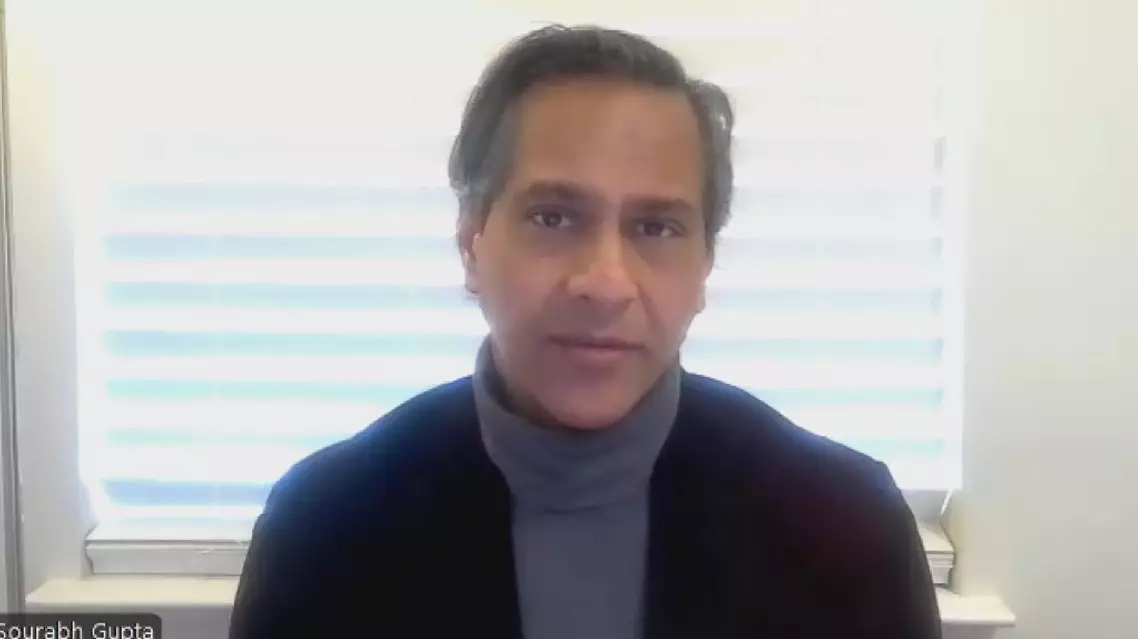
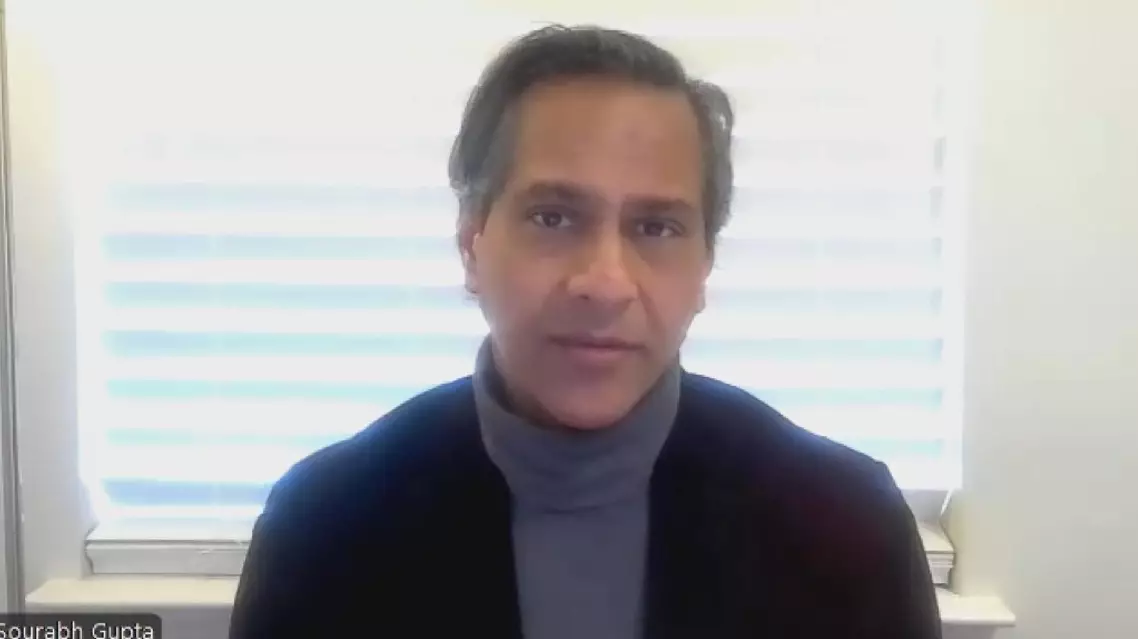
Japanese Prime Minister Sanae Takaichi's recent provocative remarks move in the "complete opposite direction" of building of a harmonious relationship, at a time when both sides should be working together to ensure peace, said Sourabh Gupta, a senior international relations expert based in the United States.
Takaichi recently said any crisis in the Taiwan Strait could prompt Tokyo and Washington to take joint action to rescue their respective citizens.
Click to Gallery
Takaichi's remarks on US-Japan joint action damage China-Japan relations: US expert
Takaichi's remarks on US-Japan joint action damage China-Japan relations: US expert
Takaichi's remarks on US-Japan joint action damage China-Japan relations: US expert
Takaichi's remarks on US-Japan joint action damage China-Japan relations: US expert
In an exclusive interview with China Global Television Network (CGTN), Gupta stressed that her remarks only serve to stir up tensions, not to ensure peace.
"At this point of time, it is not right to fan the flames, especially when tensions are high and the possibilities cannot be ruled out that something unfortunate happens in cross-Strait affairs, in the Taiwan Strait, in East Asia. Though frankly the only area where there is a possibility of China's engagement in a conflict is if it is stirred up by the United States and Japan with regard to Taiwan. I think the whole emphasis must be on tamping down the tensions rather than aggravating them," said the analyst.
He further emphasized that if this tone continues, ties between China and Japan will continue to deteriorate.
"Japan-China relations will be in the ice age. That's number one, and that ice age will prolong for a long period of time. Japan and China are the two primary main actors in the Asia Pacific and in East Asia. It is to the benefit of East Asia and the Asia Pacific that Japan and China be on the same page and have a harmonious relationship. This is digressing and going in the complete opposite direction, and it is stirring up, unfortunately, these sort of remarks some of the worst forces in Japanese society which had brought misfortune to Japan in the past and will not help Japan in the future either. The bottom line is, and I'll say this very clearly, Taiwan is not the place to make a stand for Japan or the United States," Gupta said.
Takaichi's remarks on US-Japan joint action damage China-Japan relations: US expert
Takaichi's remarks on US-Japan joint action damage China-Japan relations: US expert
Takaichi's remarks on US-Japan joint action damage China-Japan relations: US expert
Takaichi's remarks on US-Japan joint action damage China-Japan relations: US expert