Striking natural phenomena are currently on display in different parts of China, as changing temperatures create unique and beautiful landscapes. In Xinjiang, a frozen lake has displayed massive "star" patterns, while in Shanxi, the famous Hukou Waterfall has re-emerged from its icy winter slumber.
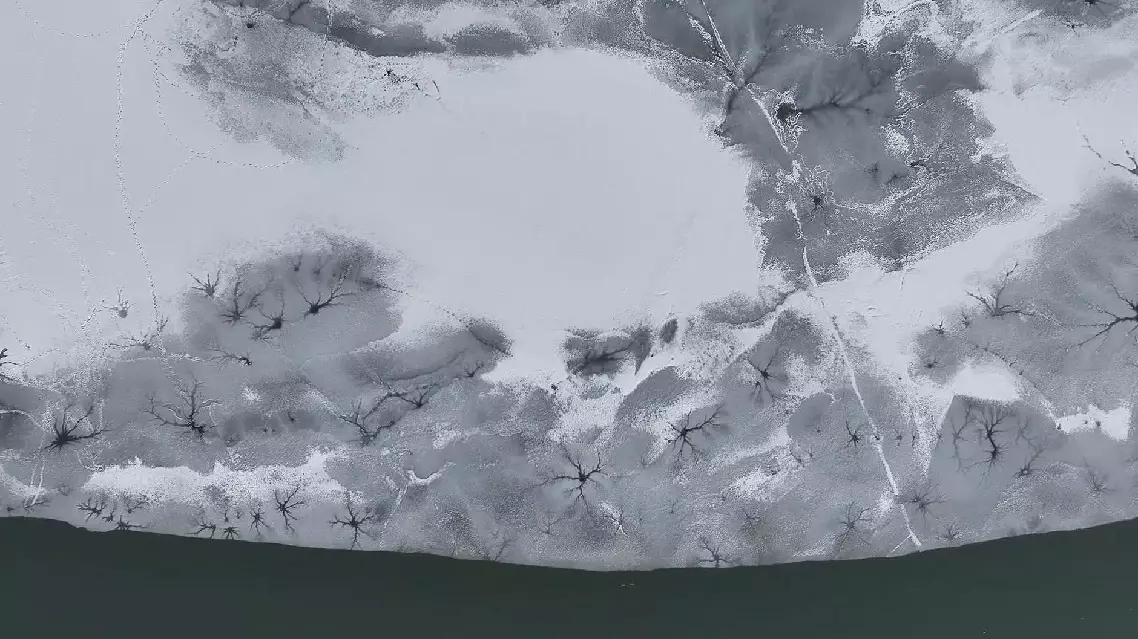
In Qapqal Xibe Autonomous County, northwest China's Xinjiang Uygur Autonomous Region, Saixi Lake is presenting a rare spectacle dubbed the "Star of the Ice Lake."
A combination of low temperatures, snowfall, and the local topography has created the stunning view. Water from beneath the frozen surface has seeped through cracks in the ice, spreading out over a thin layer of snow. This process has generated giant, star-like patterns across the lake.
Adding to the scene's mystique, another part of the lake remains unfrozen due to geothermal heat. Here, the collision of the lake's average water temperature of 28 degrees Celsius with the sub-zero air, which has dipped below minus 10 degrees Celsius, creates a misty effect over the water's surface.
Meanwhile, in border areas between Shanxi and Shaanxi provinces, the mighty Hukou Waterfall on the Yellow River is once again showcasing its spectacular cascade as ice gradually melts with rising temperatures.
As downstream water levels have receded, the drop between the upper and lower sections of the waterfall has increased to approximately 20 meters, amplifying its grandeur.
The powerful flow of the waterfall, set against the backdrop of remaining snow and ice on the riverbanks, has created a unique and picturesque scene characteristic of the seasonal transition.
Natural wonders emerge across China as seasons shift