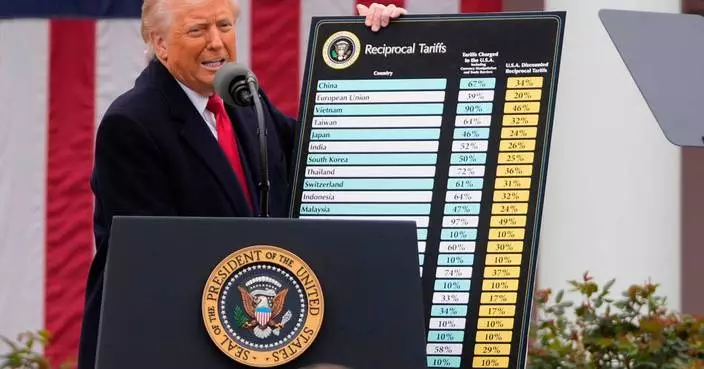
President Donald Trump announced Thursday he is imposing new double-digit tariffs on dozens of U.S. trading partners, just as the clock runs out Friday on stopgap levies he imposed after a defeat at the Supreme Court. The United States will impose taxes of 10% to 12.5% on imports from 60 countries, charging that they have inadequately enforced bans on goods produced by forced labor.
Trump said earlier Thursday that a new agreement reached with Saudi Arabia for a civilian nuclear program will require the kingdom to normalize relations with Israel through the Abraham Accords. Trump added that the new nuclear deal, which is expected to last 30 years and involve U.S. firms, does not allow for enrichment of uranium. But experts are concerned the deal lacks guardrails to prevent uranium enrichment to weapons-grade levels.
Meanwhile, Yemen’s Iran-backed Houthi rebels are threatening to blockade Saudi Arabia, a threat that could widen the Iran war and further disrupt global oil supplies and international trade. The Houthis said on Thursday they had attacked two Saudi oil tankers in the Red Sea, as international oil spiked to $100 a barrel.
The House on Thursday narrowly passed a resolution to halt U.S. military action in Iran, sending a largely symbolic warning to Trump for the second time. The 214-208 vote requiring congressional approval for the war comes as the Senate is expected to consider a similar resolution later Thursday morning.
Here's the latest:
Trump is going ahead with new double-digit tariffs on dozens of U.S. trading partners just as the clock runs out Friday on stopgap levies he imposed after a stinging defeat at the Supreme Court.
The United States will impose taxes of 10% to 12.5% on imports from 60 countries, charging that they have inadequately enforced bans on goods produced by forced labor.
The new tariffs come as temporary 10% worldwide tariffs expire at 12:01 a.m. Friday.
Trump had turned to those levies after the Supreme Court struck down his biggest and boldest tariffs in February. Now he’s tapping more durable tariffs under a 1974 trade law.
President Donald Trump is asking governors and electricity companies to join a pledge aimed at shielding U.S. consumers from higher utility bills because of data centers.
This move highlights the controversy surrounding the development of artificial intelligence before the November midterm elections.
Trump initially announced the pledge with leading AI and tech companies in March, but voters remain concerned about affordability and competition for resources. A recent analysis shows increased electricity demand could raise utility bills by 15% to 40% by 2030.
Opposition to data centers has become bipartisan. Some governors have taken steps to address these concerns.
▶ Read more
The government has withdrawn subpoenas that would have compelled three New York Times reporters to testify about their sources for articles about Trump’s Qatari-gifted Air Force One jet. The withdrawals in U.S. District Court followed a remarkable back-and-forth between a visibly irritated Judge Arun Subramanian and government attorneys.
They come at a time when the Trump administration is vigorously going after news organizations whose reporting and coverage it doesn’t like — and also trying to crack down on leaks inside the government.
The government’s retreat in the face of vigorous legal opposition and a stern reprimand from a judge marked the latest instance of the Justice Department pulling back on its aggressive efforts to compel journalists to identify their sources before a grand jury. The administration recently withdrew similar subpoenas that sought to compel testimony in Virginia from journalists for The Washington Post and The Wall Street Journal.
▶ Read more
“I’ll meet a man who’s just about the best pitcher in baseball and just about the best hitter in baseball,” Trump said of the upcoming appearance while speaking at an event at the EPA headquarters in Washington.
He was referring to Shohei Ohtani, the Dodgers designated hitter and pitcher.
Trump also mentioned Babe Ruth, himself a legendary pitcher and hitter, and suggested that Ohtani was superior to Ruth.
“So we’re going to meet him and all of the people of the Dodgers,” Trump said. “They won the World Championship, and we see the champions, the Super Bowl champions and the baseball and basketball, all of them. They like to come over to the White House.”
Los Angeles edged the Toronto Blue Jays in Game 7 last October to become the first repeat World Series champions in a quarter century.
Trump said elected officials and other leaders need to do a better job convincing their communities “how great” data centers are.
Speaking at an event to promote his Ratepayer Protection Pledge, Trump said local communities should accept new data centers that power AI and supercomputers.
“You can’t fight it. You have to go with it, and you’re going to have all that protection, and we’re giving you automatic protection” from rate increases, Trump said Thursday at the Environmental Protection Agency.
Communities that host data centers “are going to make a tremendous amount of money,’′ Trump said. “You’re going to reduce taxes, and you’re going to have something that if you don’t have it, everybody else wants it. Your community and your state’s going to become rich, and there’s very little disruption. You might as well do it yourselves.”
The Trump administration has imposed more sanctions on Cuban officials and organizations affiliated with a military-run company that it has previously designated for U.S. penalties.
Secretary of State Marco Rubio said he was targeting nine companies and two people linked to Grupo De Administración Empresarial, or GAESA, for sanctions. GAESA is a military conglomerate that was hit with sanctions in May.
The sanctions also apply to Cuba’s public health minister for his role in overseeing medical assistance overseas that Rubio says is a front for human trafficking.
The move is the latest escalation in the U.S. pressure campaign against the Cuban government, which the administration earlier this week accused of running a decades-old espionage and influence campaign inside the United States to promote left-wing or communist ideology. But it also comes just two days after the delivery of some $60 million in U.S. humanitarian aid to the island.
A day after he attended the dignified transfer of four U.S. service members killed in the Middle East, Trump mourned their deaths while comparing the war’s death toll to longer, costlier conflicts.
“I had a very sad day yesterday. I went to Dover. Four great American patriots killed,” Trump said. “That’s 18 in two wars. And one is too many, but it’s 18, whereas in Vietnam we lost 200,000.”
He added that “we want to get it over with, and we want to do it right, but we have to do what we came to do.”
The Trump administration has imposed new sanctions on more than 50 members of a Mexican cartel it accuses of narcotrafficking, including its new leader who took over the organization after the death of his stepfather known as “El Mencho.”
The Treasury Department on Thursday said it had targeted the leader of the Cartel de Jalisco Nueva Generación, or CJNG, Juan Carlos Gonzalez. Gonzalez is a dual U.S.-Mexico citizen, along with dozens of other CJNG members, for sanctions. The sanctions include freezing any assets they may have in the United States or that come into contact with financial institutions under U.S. jurisdiction.
The Treasury said the move was the largest ever single action it has taken against the group, which the U.S. accuses of widespread drug smuggling and violence and was designated a Foreign Terrorist Organization by the State Department in February 2025.
The Trump administration on Thursday designated a senior official of the Muslim Brotherhood and several individuals and entities accused of providing support to Hamas as terrorists.
This comes after the U.S. labeled three Middle Eastern branches of the organization in January with the same severe label, making it a criminal offense to provide material support to the group.
In a statement, the Treasury Department said that two of the entities listed are “sham charities” tied to the Muslim Brotherhood that “funneled substantial funding to Hamas’s military wing.”
Leaders of the Muslim Brotherhood, which was founded in Egypt in 1928, have previously said they disavow violence, with the branches in Egypt and Lebanon denouncing their inclusion on the U.S.’s list.
The State Department says roughly two-thirds is going to the International Committee of the Red Cross, which focuses on the protection of civilians in conflict.
The remainder is directed to the International Federation of Red Cross and Red Crescent Societies, an umbrella group of national organizations like the American Red Cross.
The “rapid, flexible and global focus” of the funding is part of efforts to help aid groups respond to natural disasters, the needs of people in conflicts and build on existing humanitarian aid channels, the department said.
ICRC said the U.S. has been its top donor for years and committed $363 million last year and a similar amount this year.
Trump is welcoming Shohei Ohtani and the Los Angeles Dodgers to the White House.
Thursday’s event in the Rose Garden celebrates the team’s second consecutive World Series title. The Dodgers previously celebrated their 2024 win with Trump in April 2025.
Trump has added personal touches to the White House, including a Mar-a-Lago -inspired patio where the team event is being held.
Championship baseball teams have been coming to the White House since 1869, when President Ulysses S. Grant welcomed the Cincinnati Red Stockings.
▶ Read more
The Secret Service says a member of Vice President JD Vance ’s security detail is being investigated over a suspected news leak.
An agency spokesperson said Thursday that the member faces an internal investigation and potential criminal inquiry over allegations that the person compromised “operational and information security.”
The Secret Service said the investigation is tied to a report from MS NOW last week that said some Secret Service agents had privately expressed frustration over last-minute travel requests from Vance and his family. The Secret Service did not disclose the identity of the member under investigation.
▶ Read more
The U.S. Energy Department and Saudi government announcement on Wednesday made no mention of the civil nuclear deal being contingent on the kingdom normalizing relations with Israel.
So Trump’s social media post on Thursday asserting that the deal was subject to the Saudis joining the accord — what would be a monumental achievement for the administration if it ever happens — was unexpected.
When asked by a reporter why the condition was not mentioned in the initial announcement, Leavitt said the president was the “final dealmaker” and has called on Saudi Arabia to join the accords “on numerous occasions.”
Asked if Trump is frustrated with Senate Majority Leader John Thune, Leavitt said, “The president spoke about this directly yesterday.”
She was referencing comments Trump made at a rally Wednesday in Georgia where he expressed frustration that his agenda is hampered in the Republican-controlled Senate by rules requiring 60 votes to advance most legislation — including the SAVE America voting bill he talks about often.
Trump’s Republican Party doesn’t have 60 members in the Senate.
The president told the rally, his voice rising as he spoke: “Everybody call John Thune at the Senate. He’s the leader of the Republican Party. And tell him to get this stuff approved.”
Leavitt added Thursday at the White House: “His patience is running out.”
Leavitt said Jamieson Greer, the U.S. trade representative, will announce “later” on Thursday a new set of tariffs.
After the Supreme Court in February rejected Trump’s ability to declare an economic emergency to impose sweeping import taxes, Trump unveiled 10% global tariffs under Section 122 of the Trade Act of 1974 that could only be in place for 150 days. Those replacement tariffs are set to expire Friday.
Greer in March launched a series of investigations using Section 301 tariffs from the Trade Act of 1974. Those taxes could replace the expiring tariffs.
The Section 301 investigations applied to countries with industrial excesses that disadvantage U.S. goods and trade partners that fail to adequately enforce restrictions on importing goods made by forced labor.
Asked whether the White House would intervene in the extradition of social media influencers Andrew and Tristan Tate, press secretary Karoline Leavitt flatly rejected the idea.
“No, we’ve already answered that question,” Leavitt said before moving on at a Thursday briefing.
The Tate brothers are fighting their extradition to the United Kingdom, where they’re accused of rape and sex trafficking. They were arrested by federal authorities on Saturday in Miami.
Leavitt said Trump’s assertion that Saudi Arabia must join the Abraham Accords as part of a civilian nuclear deal is a position he’s long held.
“It will eventually, hopefully be finalized with the condition that the president spoke about this morning,” Leavitt said.
Saudi officials have yet to comment since Trump announced that the deal, announced Wednesday by the two countries, is subject to joining the accords.
But Leavitt made the case that the president’s decision is hardly surprising, saying “this is something he has raised in previous conversations and also said many time in the past” with Saudi officials.
White House press secretary Karoline Leavitt said the president will honor his friend and ally at a funeral service next week.
“On Tuesday afternoon, the president will deliver a tribute honoring the life and legacy of his dear friend, Sen. Lindsey Graham, at the National Cathedral,” Leavitt said during a Thursday briefing.
Graham, a Republican from South Carolina, died July 11.
White House press secretary Karoline Leavitt announced Trump will hold a Cabinet meeting on July 31 — and there’s a twist with this one.
The president will host the Cabinet at the Camp David presidential retreat in Maryland’s Catoctin Mountains. Leavitt said the meeting “will be a lot of fun and something different for the Cabinet to experience together.”
Trump last visited Camp David in June to celebrate Father’s Day and his 80th birthday with family.
The Trump administration announced Thursday it would begin revoking or denying visas to foreigners involved in cyber scams and online “sextortion” of minors, barring them and their family members from traveling to the United States.
Secretary of State Marco Rubio said in a statement that the policy was a response to Americans being bilked of at least $10 billion in 2024 in online investment scams by transnational criminal organizations, many of them with Chinese connections, and American children being specifically targeted by overseas predators.
“This policy targets individuals responsible for, or complicit in, cybercrime and cyber-enabled crime, such as those involved in cyberscams, and sextortion,” Rubio said. “By restricting visa issuance to those who are responsible for or complicit in these criminal enterprises, we are sending a clear message: The United States will go after those who prey on our citizens.”
A member of Vice President JD Vance’s security detail is being investigated for allegedly “compromising operational and information security,” according to the U.S. Secret Service.
Agency spokesperson Anthony Guglielmi said the person faces an administrative investigation and “potential criminal inquiry” over alleged misconduct.
“While we will not comment on the specifics of this matter, one principle is unequivocal: any conduct that potentially threatens the safety of a protectee will not be tolerated,” Guglielmi said in a statement.
Vance’s office referred questions to the Secret Service.
Chinese police on Thursday handed over a wanted U.S. fugitive to American authorities at Shanghai Pudong International Airport, China’s Ministry of Public Security said in a statement.
The case is part of law enforcement cooperation to implement “important consensus” between Chinese leader Xi Jinping and President Trump, the ministry said. Trump visited Beijing in May and Xi is expected to travel to the U.S. in September.
The ministry did not reveal the suspect’s name but said the fugitive was suspected of sexually assaulting minors and fatally shooting his wife in 2004. It said Interpol issued a red notice calling on law enforcement worldwide to capture the suspect the following year.
After a U.S. request, Chinese police conducted investigations and captured the suspect, the ministry said.
Continued American airstrikes are occurring even as diplomatic efforts show little public sign of progress and officials on both sides have dug in on the dispute over the Strait of Hormuz, a crucial waterway for global energy that remains largely closed. The unpopular war threatens further worldwide economic disruption and is sending fuel prices up ahead of midterm U.S. elections this fall.
As the House debated the resolution Wednesday evening, Foreign Affairs Committee Chairman Brian Mast, R-Fla., read out names of 18 service members killed since the war began.
“To belittle this mission is to belittle and demean the very service these members gave their life for,” Mast said. “Their sacrifice was not meaningless. This operation is bringing reckoning for the hundreds of times Iran has attacked and killed people of the United States of America.”
The top Democrat on the panel, New York Rep. Gregory Meeks, said presidents are supposed to make the case to Congress.
The House on Thursday narrowly passed the resolution to halt U.S. military action in Iran, sending a warning to President Trump for the second time as the war has escalated and the future of the conflict is increasingly uncertain.
The 214-208 vote requiring congressional approval for the war comes as the Senate is expected to consider a similar resolution later Thursday morning. Though the votes forced by Democrats are largely symbolic, they’re meant as a strong signal to the Republican president that his support on Capitol Hill is chipping away as the war drags on and lawmakers in both parties have questioned his administration’s endgame.
The war has had “no clear mission, no strategy, no end goal,” said Washington Rep. Pramila Jayapal, a Democrat who led the resolution on the House floor.
The resolution narrowly passed after a handful of Republicans voted with Democrats to end the war. But the vast majority of Republicans voted to back the war and cede congressional war powers to Trump.
▶ Read more
Before the war in Iran, roughly 15 million barrels of Persian Gulf oil were shipped each day through the Strait of Hormuz. Within a few years, much of that oil could bypass the strait.
As Iran’s chokehold over the strait drags on and oil prices surge, countries across the Gulf are planning to spend billions of dollars to build pipelines enabling them to redirect more supplies to ports on the Red Sea, the Gulf of Oman and the Mediterranean.
At least seven major pipeline projects are under construction, in the planning stage or being discussed as possibilities, according to government officials, oil companies and analysts. The war has been a wake-up call for Gulf oil producers, who are determined to become less dependent on a transit point that hugs Iran’s coast.
But alternatives to Hormuz are also vulnerable to disruption. And some alternative routes will take the oil on longer and more expensive paths to market.
▶ Read more
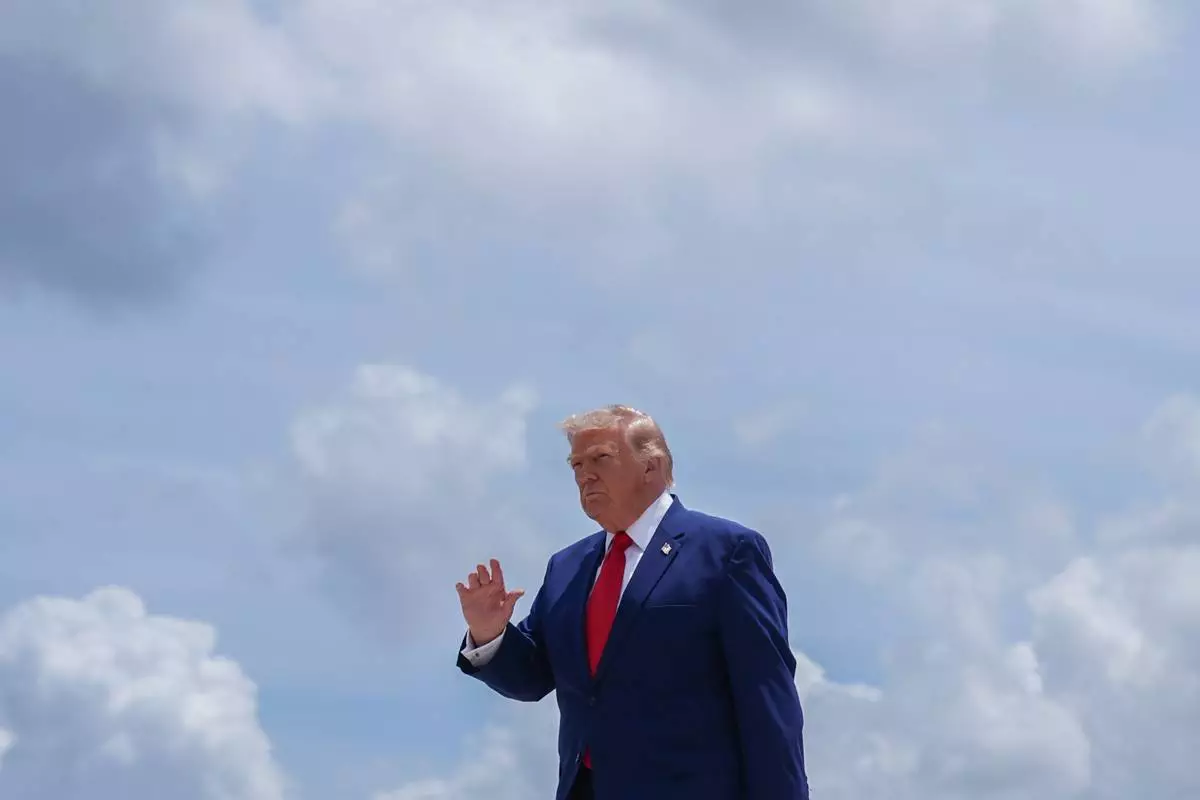
President Donald Trump waves to reporters after arriving on Air Force One at Dobbins Air Reserve Base, Wednesday, July 22, 2026, in Marietta, Ga. (AP Photo/Julia Demaree Nikhinson)
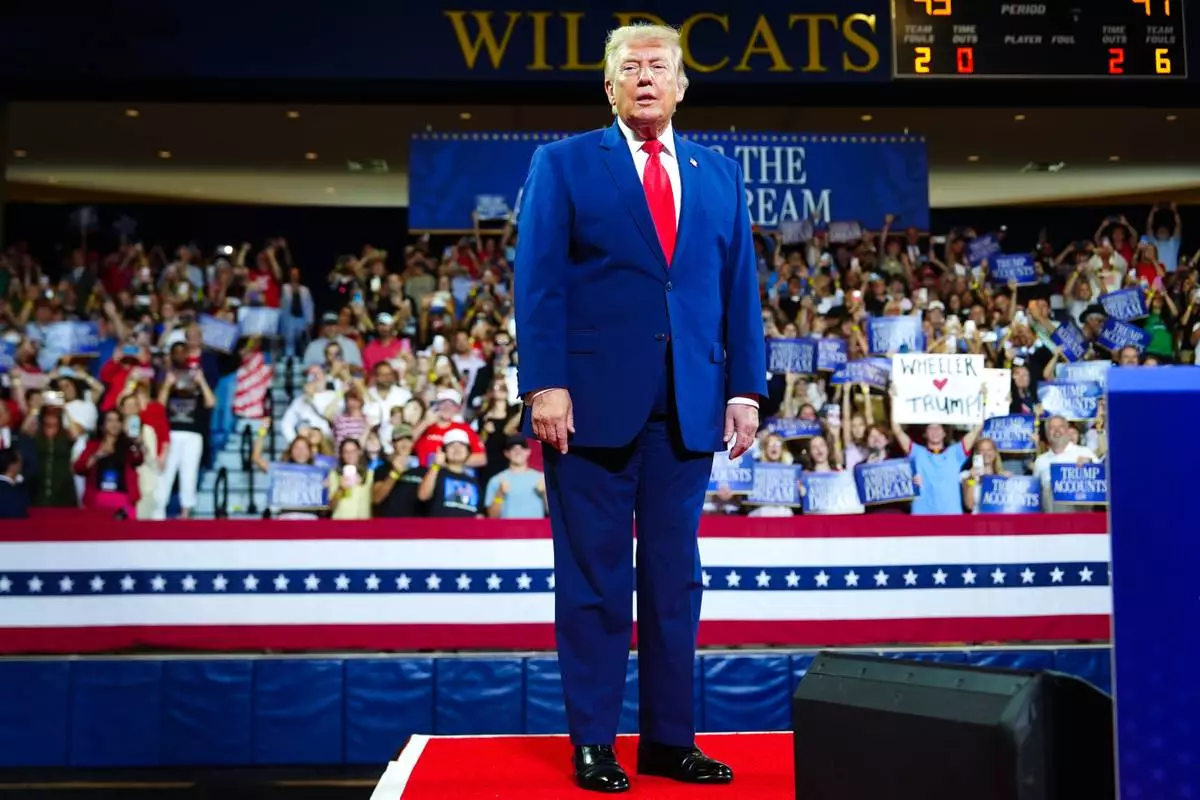
President Donald Trump arrives to speak at Wheeler High School, Wednesday, July 22, 2026, in Marietta, Ga. (AP Photo/Julia Demaree Nikhinson)
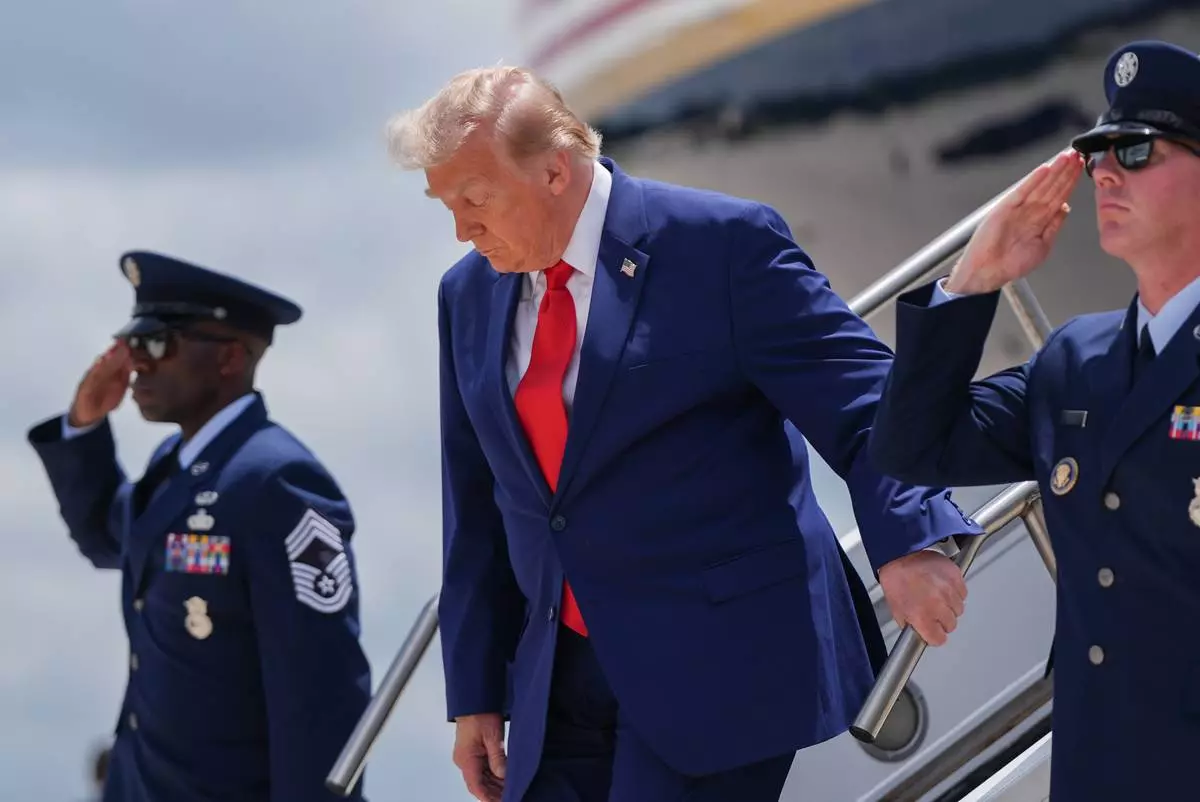
President Donald Trump arrives on Air Force One at Dobbins Air Reserve Base, Wednesday, July 22, 2026, in Marietta, Ga. (AP Photo/Julia Demaree Nikhinson)