Skip to Content Facebook Feature Image

US stocks drift higher as gold, silver and bitcoin stabilize

News

US stocks drift higher as gold, silver and bitcoin stabilize
News

News

US stocks drift higher as gold, silver and bitcoin stabilize

2026-02-10 05:15 Last Updated At:05:20

NEW YORK (AP) — U.S. stocks drifted higher on Monday following big rallies for markets in Asia earlier in the day.

The S&P 500 rose 0.5% and pulled closer to its all-time high set two weeks ago. The Dow Jones Industrial Average added 20 points, or less than 0.1%, and the Nasdaq composite gained 0.9%.

More Images
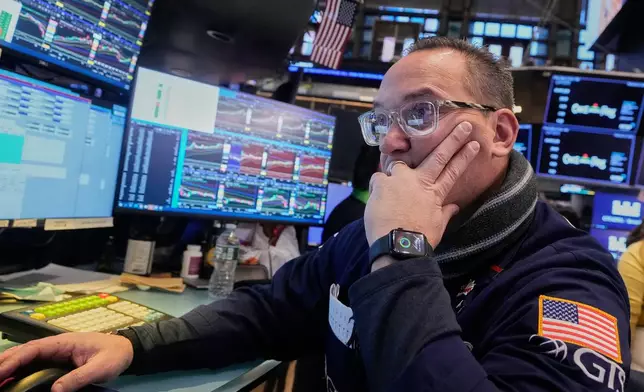
Specialist Anthony Matesic works at his post on the floor of the New York Stock Exchange, Friday, Feb. 6, 2026. (AP Photo/Richard Drew)

Specialist Anthony Matesic works at his post on the floor of the New York Stock Exchange, Friday, Feb. 6, 2026. (AP Photo/Richard Drew)

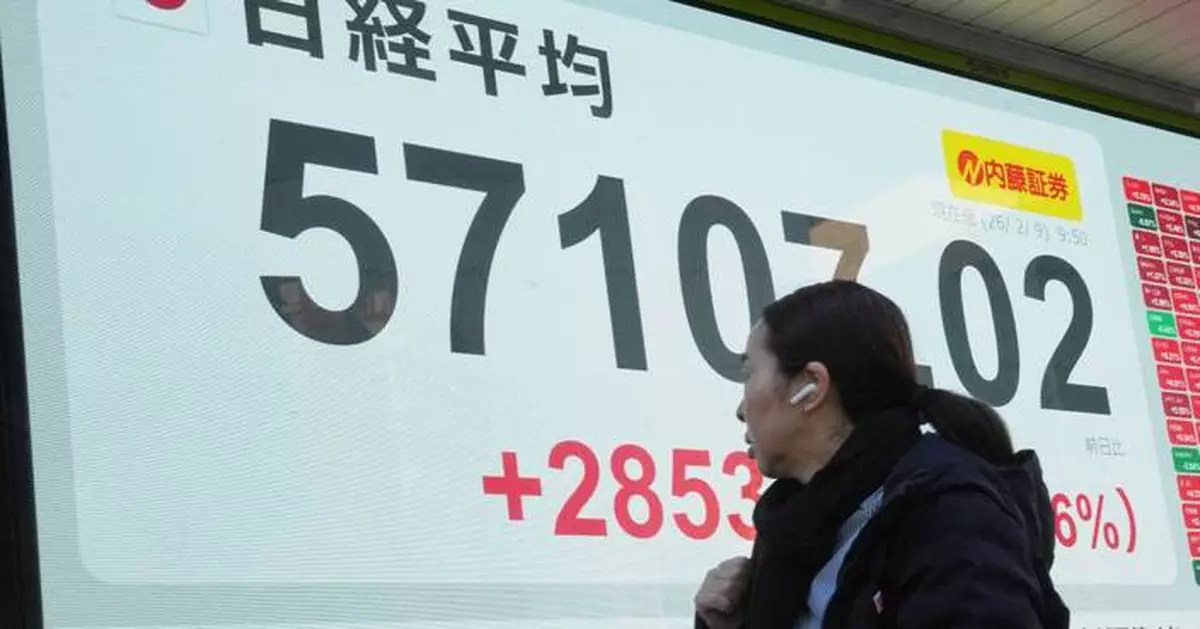
A security guard stands guard at the gate of Tokyo Stock Exchange building, Monday, Feb. 9, 2026, in Tokyo. (AP Photo/Eugene Hoshiko)
A security guard stands guard at the gate of Tokyo Stock Exchange building, Monday, Feb. 9, 2026, in Tokyo. (AP Photo/Eugene Hoshiko)

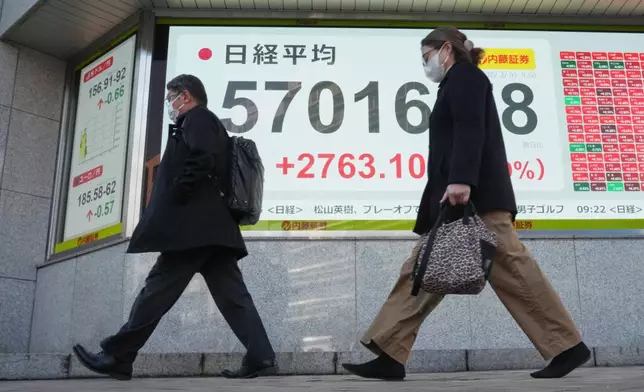
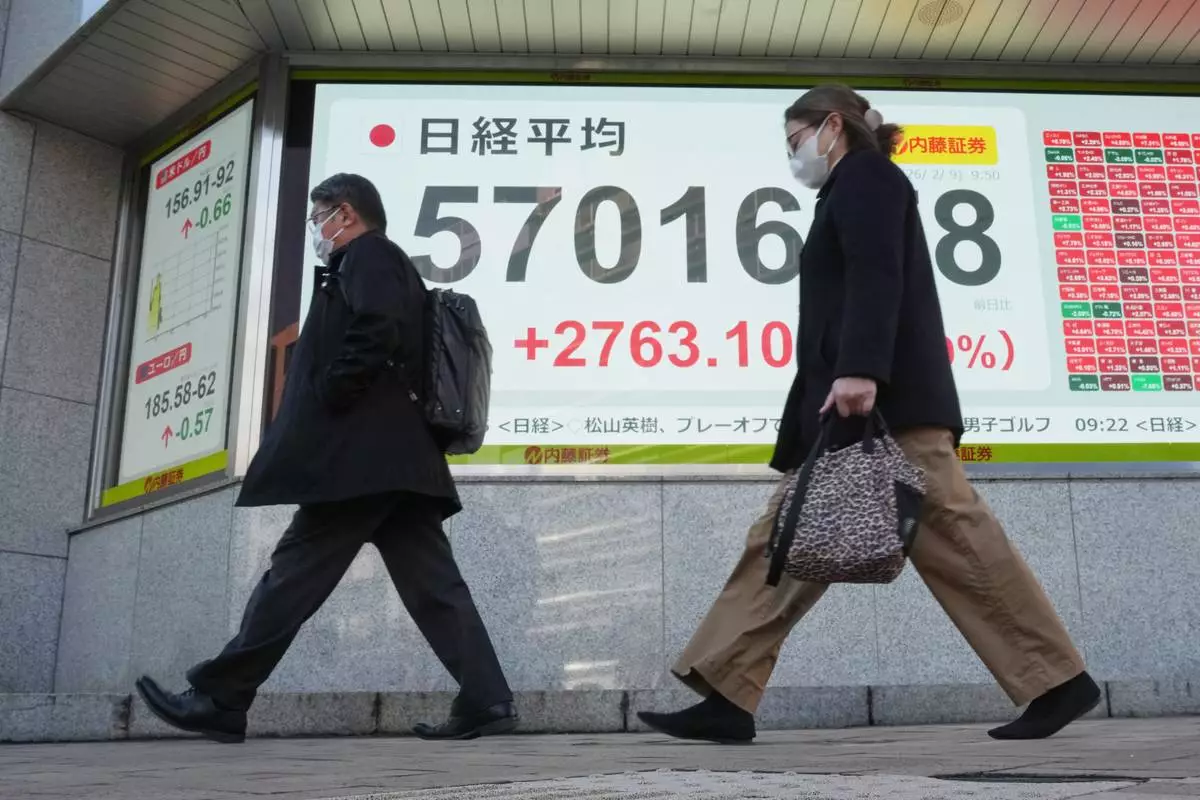
People walk in front of an electronic stock board showing Japan's Nikkei index at a securities firm Monday, Feb. 9, 2026, in Tokyo. (AP Photo/Eugene Hoshiko)
People walk in front of an electronic stock board showing Japan's Nikkei index at a securities firm Monday, Feb. 9, 2026, in Tokyo. (AP Photo/Eugene Hoshiko)

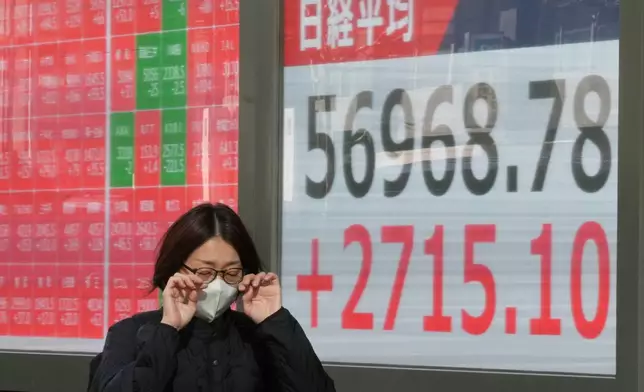
A person walks in front of an electronic stock board showing Japan's Nikkei index at a securities firm, Monday, Feb. 9, 2026, in Tokyo. (AP Photo/Eugene Hoshiko)
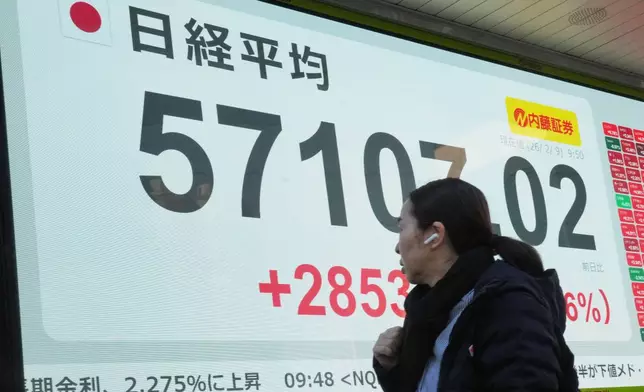
A person walks in front of an electronic stock board showing Japan's Nikkei index at a securities firm, Monday, Feb. 9, 2026, in Tokyo. (AP Photo/Eugene Hoshiko)
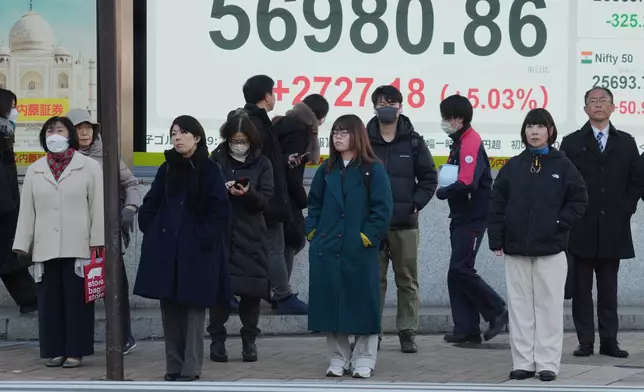
People stand in front of an electronic stock board showing Japan's Nikkei index at a securities firm, Monday, Feb. 9, 2026, in Tokyo. (AP Photo/Eugene Hoshiko)

People stand in front of an electronic stock board showing Japan's Nikkei index at a securities firm, Monday, Feb. 9, 2026, in Tokyo. (AP Photo/Eugene Hoshiko)

A person walks in front of an electronic stock board showing Japan's Nikkei index at a securities firm Monday, Feb. 9, 2026, in Tokyo. (AP Photo/Eugene Hoshiko)

A person walks in front of an electronic stock board showing Japan's Nikkei index at a securities firm Monday, Feb. 9, 2026, in Tokyo. (AP Photo/Eugene Hoshiko)

The relatively modest moves followed a 3.9% burst higher for Japan’s Nikkei 225 to a record. Stocks rallied there following a landslide victory for the prime minister’s political party in a parliamentary election. The thought is that will give Sanae Takaichi more power to push through reforms that will boost the economy and market.

On Wall Street, the U.S. stock market was coming off its best day since May to close last week, but several concerns still hang over the market. That includes criticism that stocks have simply become too expensive following their run to records.

Worries are also heavy about whether all the huge spending by Big Tech and other companies on artificial-intelligence technology will produce enough profit to make the investments worth it.

Some of the winners from that rush into AI drove the market higher on Monday. Chip companies rose, for example, with Nvidia up 2.4% and Broadcom up 3.3%. They were two of the strongest forces pushing the S&P 500 upward.

Kroger climbed 3.9% after the grocer named a former Walmart executive as its new chief executive officer.

Transocean reversed an early loss and rose 5.9% after the offshore drilling company said it would buy Valaris in an all-stock deal valued at $5.8 billion. Valaris leaped 34.3%.

On the losing end was Hims & Hers, which sank 16% after Novo Nordisk filed a lawsuit and alleged Hims & Hers is unlawfully selling versions of its weight-loss treatments. The suit follows a move by the U.S Food and Drug Administration to restrict access to the ingredients needed to copy popular weight-loss medications.

Hims & Hers said, “Big Phama is weaponizing the US judicial system to limit consumer choice” in a post on the X account for the company’s communications team.

Novo Nordisk’s stock that trades in the United States rose 3.6%.

Workday fell 5.1% after the AI platform said its CEO, Carl Eschenbach, is stepping down. Company co-founder Aneel Bhusri is returning as chief executive.

All told, the S&P 500 rose 32.52 points to 6,964.82. The Dow Jones Industrial Average added 20.20 to 50,135.87, and the Nasdaq composite gained 207.46 to 23,238.67.

In the bond market, Treasury yields held relatively steady ahead of potentially market-moving reports coming later in the week. The U.S. government will offer the latest monthly update on the health of the job market on Wednesday. Friday will bring the latest monthly reading of inflation at the consumer level.

Either report could sway expectations for what the Federal Reserve will do with interest rates. The Fed has put its cuts to interest rates on hold, but a weakening of the job market could push it to resume more quickly. Too-hot inflation, on the other hand, could keep it on hold for longer.

One of the reasons the U.S. stock market remains close to records is the expectation that the Fed will continue cutting interest rates later this year. Lower rates can give the economy a boost, though they can also worsen inflation.

The yield on the 10-year Treasury eased to 4.20% from 4.22% late Friday.

Other markets that had whipped through more violent moves over recent weeks showed some more strength or stability.

Gold rose 2% to settle at $5,079.40 per ounce. It’s been swinging sharply after roughly doubling in price over 12 months, and it has bounced between $4,500 and nearly $5,600. Silver, whose price has been even wilder, jumped 6.9% Monday.

Bitcoin was hanging just below $71,000 after drifting above the level during the weekend. It had dropped close to $60,000 last week, more than halfway below its record set in October.

In stock markets abroad, indexes jumped across Asia with Japan’s surge. South Korea’s Kospi leaped 4.1%, while stocks rose 1.8% in Hong Kong and 1.4% in Shanghai.

The gains were more modest in Europe, where Germany’s DAX returned 1.2% and France’s CAC 40 rose 0.6%.

AP Videojournalist Mayuko Ono and AP Business Writer Elaine Kurtenbach contributed.
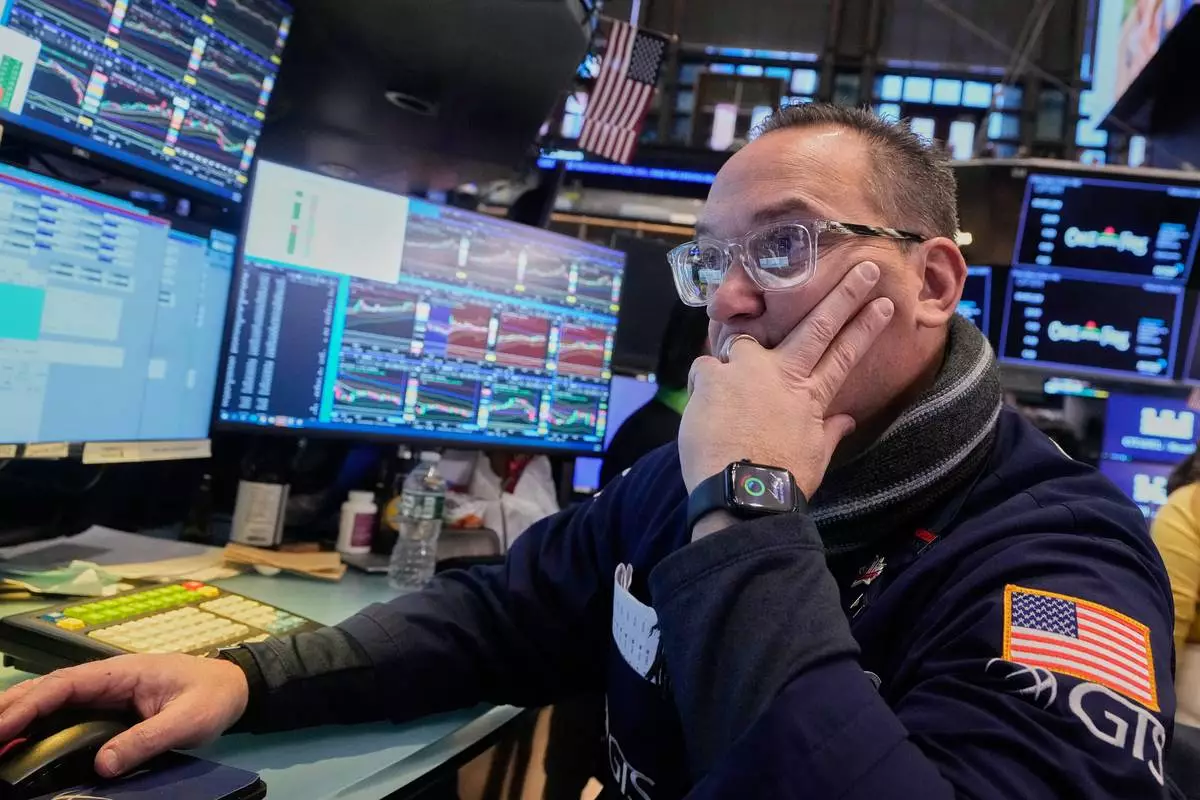
Specialist Anthony Matesic works at his post on the floor of the New York Stock Exchange, Friday, Feb. 6, 2026. (AP Photo/Richard Drew)

Specialist Anthony Matesic works at his post on the floor of the New York Stock Exchange, Friday, Feb. 6, 2026. (AP Photo/Richard Drew)

A security guard stands guard at the gate of Tokyo Stock Exchange building, Monday, Feb. 9, 2026, in Tokyo. (AP Photo/Eugene Hoshiko)
A security guard stands guard at the gate of Tokyo Stock Exchange building, Monday, Feb. 9, 2026, in Tokyo. (AP Photo/Eugene Hoshiko)

People walk in front of an electronic stock board showing Japan's Nikkei index at a securities firm Monday, Feb. 9, 2026, in Tokyo. (AP Photo/Eugene Hoshiko)
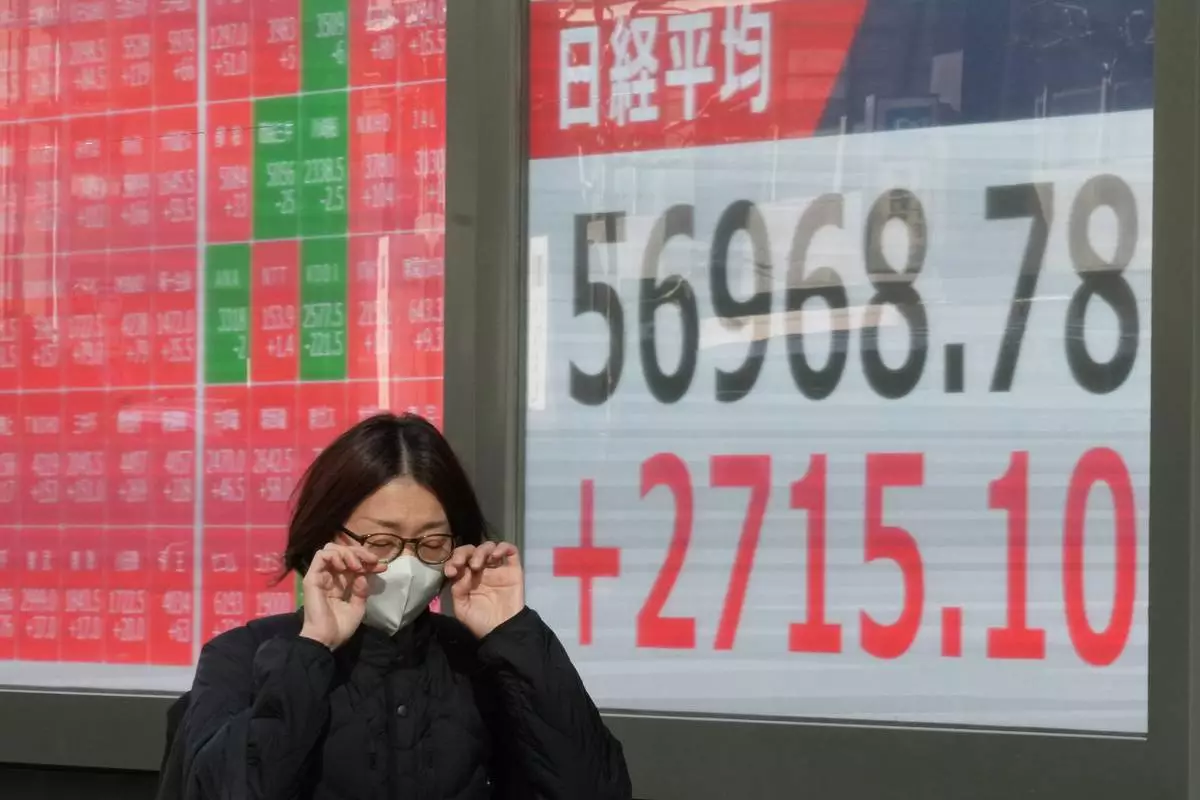
People walk in front of an electronic stock board showing Japan's Nikkei index at a securities firm Monday, Feb. 9, 2026, in Tokyo. (AP Photo/Eugene Hoshiko)

A person walks in front of an electronic stock board showing Japan's Nikkei index at a securities firm, Monday, Feb. 9, 2026, in Tokyo. (AP Photo/Eugene Hoshiko)
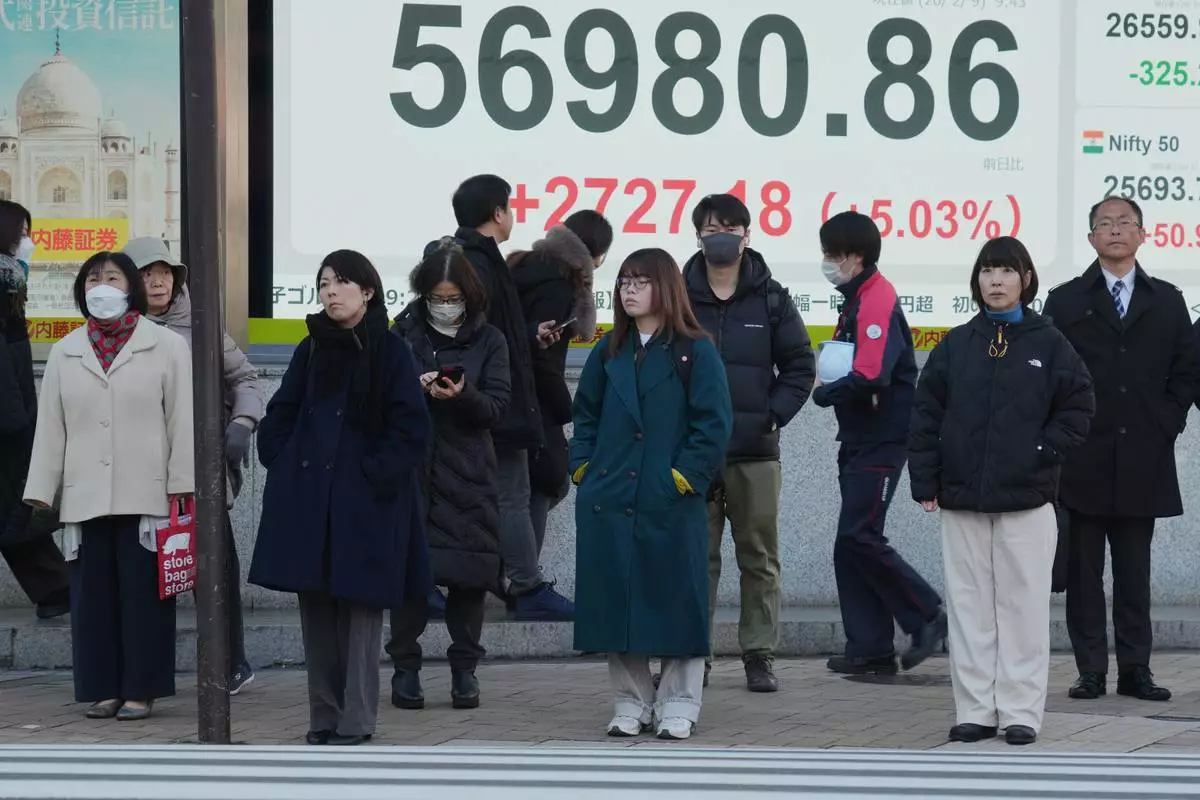
A person walks in front of an electronic stock board showing Japan's Nikkei index at a securities firm, Monday, Feb. 9, 2026, in Tokyo. (AP Photo/Eugene Hoshiko)
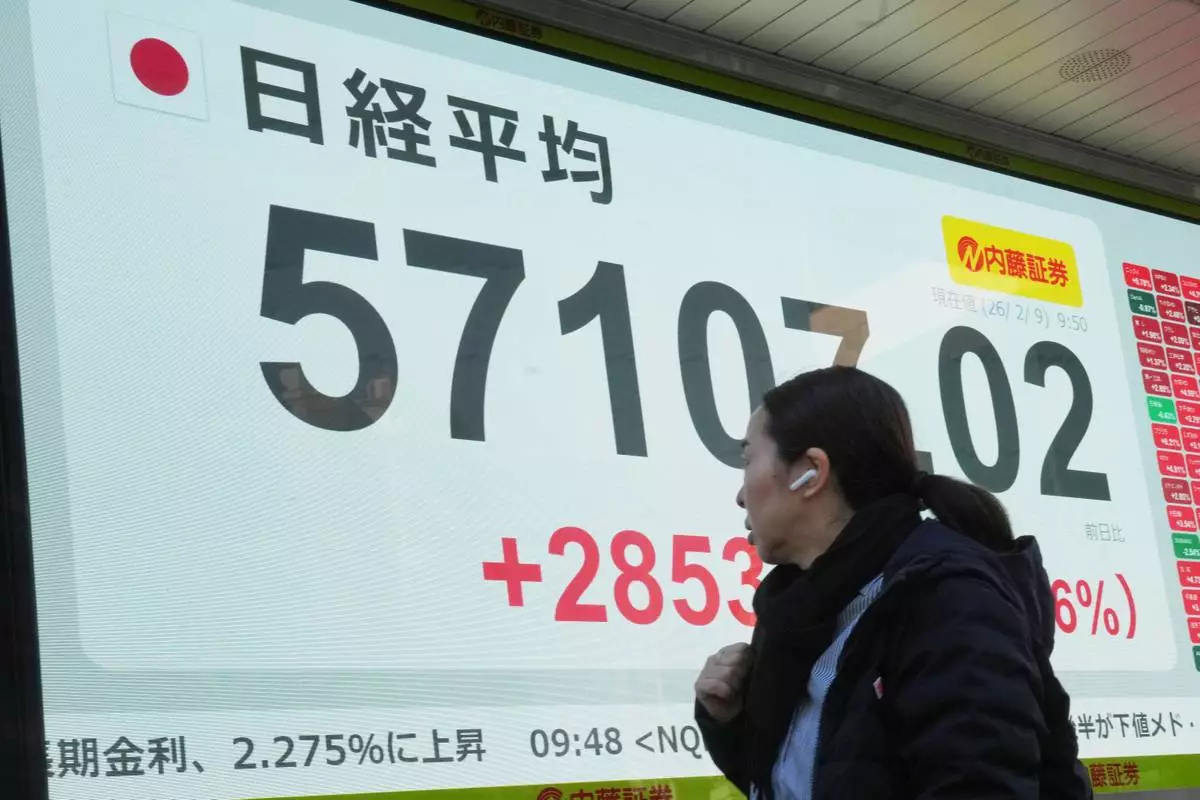
People stand in front of an electronic stock board showing Japan's Nikkei index at a securities firm, Monday, Feb. 9, 2026, in Tokyo. (AP Photo/Eugene Hoshiko)

People stand in front of an electronic stock board showing Japan's Nikkei index at a securities firm, Monday, Feb. 9, 2026, in Tokyo. (AP Photo/Eugene Hoshiko)

A person walks in front of an electronic stock board showing Japan's Nikkei index at a securities firm Monday, Feb. 9, 2026, in Tokyo. (AP Photo/Eugene Hoshiko)
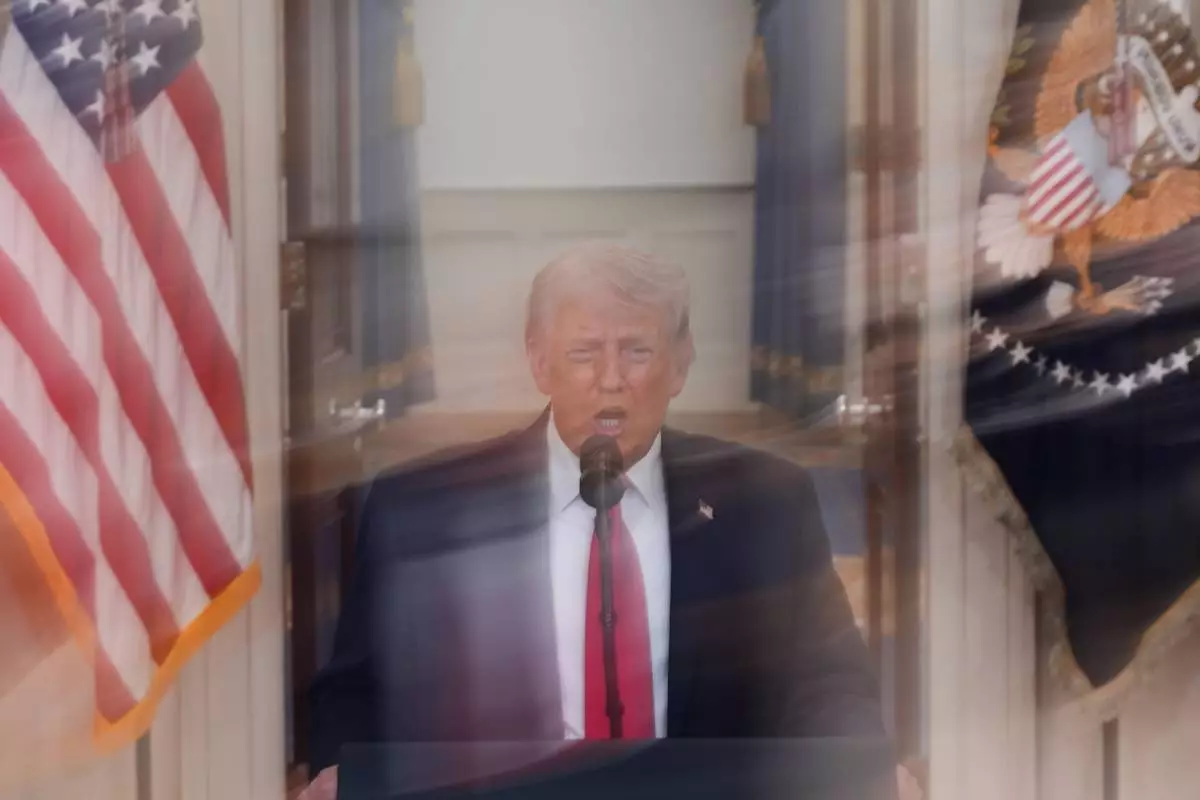

A person walks in front of an electronic stock board showing Japan's Nikkei index at a securities firm Monday, Feb. 9, 2026, in Tokyo. (AP Photo/Eugene Hoshiko)
NEW YORK (AP) — This is not the run-up to the midterm elections that Republicans wanted.

A year and a half after winning the White House by promising to lower costs and end wars, Donald Trump is a wartime president overseeing surging energy costs and an escalating overseas conflict.

The war in Iran was largely unpopular even before an American fighter jet was shot down in Iran, a development that dominated headlines on Friday and contradicted Trump’s claim that Tehran's military capabilities have been all but destroyed. One crew member has been rescued.

Earlier in the week, the Republican president offered little clarity to a nation eager for answers during a prime-time address from the White House, his first since the U.S. and Israel attacked Iran more than a month ago, simultaneously suggesting that the war was ending and expanding.

“Thanks to the progress we’ve made, I can say tonight that we are on track to complete all of America’s military objectives shortly, very shortly,” Trump said. “We’re going to hit them extremely hard over the next two to three weeks.”

Trump's comments come roughly six months before voters across the nation begin to cast ballots in elections that will decide control of Congress and key governorships for Trump’s final two years in office. For now, Republicans, who control all branches of government in Washington, are bracing for a painful political backlash.

“You’re looking at an ugly November,” warned veteran Republican pollster Neil Newhouse. “At a point in time when we need every break possible to hold the House and Senate, our edge is being chipped away.”

It’s hard to overstate how dramatically the political landscape has shifted.

At this time last year, many Republican leaders believed there was a path to preserve their narrow House majority and easily hold the Senate. Now they privately concede that the House is all but lost and Democrats have a realistic shot at taking the Senate.

Republicans are also struggling to coalesce around a clear midterm message on Iran.

The Republican National Committee has largely avoided the war in talking points issued to surrogates over the last month. The leaders of the party's campaign committees responsible for the House and Senate declined interview requests. Many vulnerable Republican candidates sidestep the issue, unwilling to defend or challenge Trump publicly.

The president remains deeply popular with Republican voters, and he has vocal supporters like Sen. Lindsey Graham of South Carolina.

“That was the best speech I could’ve hoped for,” he wrote on social media after Trump's address on Wednesday evening. Graham said Trump “gave the American people a clear and coherent pathway forward.”

Trump made little effort to sell the conflict to Americans before the initial attack. Five weeks later, at least 13 U.S. service members have been killed and hundreds more injured. Thousands more troops have converged on the region, and the Pentagon requested $200 billion in new funding.

The Strait of Hormuz, a key passage for a fifth of the world’s oil, remains closed. The average price for a gallon of gasoline in the U.S. was $4.08 on Thursday, according to AAA, almost a full dollar higher than on President Joe Biden's last day in office.

On Wednesday, Trump insisted that gas prices would fall quickly once the war concluded but offered no solution for reopening the Strait of Hormuz. Instead, he invited skeptical U.S. allies to do it themselves.

He insisted that the war would be worth it.

“This is a true investment in your grandchildren and your grandchildren’s future,” Trump said. “When it’s all over, the United States will be safer, stronger, more prosperous and greater than it has ever been before.”

Former Rep. Marjorie Taylor Greene, a Georgia Republican who was once among Trump's most vocal allies in Congress, lashed out against his Iran policy.

“I wanted so much for President Trump to put America First. That’s what I believed he would do. All I heard from his speech tonight was WAR WAR WAR,” she wrote on social media. “Nothing to lower the cost of living for Americans.”

About 6 in 10 U.S. adults say the U.S. military action in Iran has “gone too far,” according to AP-NORC polling from March. Roughly a third approve of how he’s handling Iran overall.

The possibility of sending U.S. forces into Iran also appears politically unpalatable.

About 6 in 10 adults are “strongly” or “somewhat” opposed to deploying U.S. troops on the ground to fight Iran. That includes about half of Republicans. Only about 1 in 10 favor deploying troops.

At the same time, Trump’s approval ratings have remained consistently weak. About 4 in 10 Americans approve of how he’s handling the presidency, roughly in line with how it’s been throughout his second term.

Republican strategist Ari Fleischer, a senior aide in former President George W. Bush’s administration, acknowledged that Trump has not received the polling bump in this war that Bush got after invading Iraq.

Bush, of course, worked to build public backing for the Iraq War before going in. Immediately after the 2003 invasion, Bush's popularity soared, as did the stock market.

Public sentiment and the economy soured only after the conflict stretched on. It ultimately spanned more than eight years, spawning a generation of anti-war Republicans — and sowing the seeds of Trump's “America First” foreign policy.

“My hope is that the Trump experience is the exact opposite of the Bush experience,” Fleischer said.

He said Trump must win the war decisively and quickly to avoid a further backlash, saying there could be a “very significant political upside if things end well, oil comes down and markets rally.”

Fleischer added that Trump's actions will matter much more than his words.

“Ultimately, he is not going to get judged on his persuasion or his explanations or his assertions, he’s going to get judged on results,” he said.

Associated Press writer Linley Sanders in Washington contributed to this report.

In this image made with a long exposure, President Donald Trump speaks about the Iran war from the Cross Hall of the White House on Wednesday, April 1, 2026, in Washington. (AP Photo/Alex Brandon, Pool)

In this image made with a long exposure, President Donald Trump speaks about the Iran war from the Cross Hall of the White House on Wednesday, April 1, 2026, in Washington. (AP Photo/Alex Brandon, Pool)

Recommended Articles