Skip to Content Facebook Feature Image

Trump's immigration crackdown is straining federal courts. Judges are raising the alarm

News

Trump's immigration crackdown is straining federal courts. Judges are raising the alarm
News

News

Trump's immigration crackdown is straining federal courts. Judges are raising the alarm

2026-02-10 02:21 Last Updated At:02:31

ATLANTA (AP) — Federal judges around the country are scrambling to address a deluge of lawsuits from immigrants locked up under the Trump administration's mass deportation campaign.

Under past administrations, people with no criminal record could generally request a bond hearing before an immigration judge while their cases wound through immigration court unless they were stopped at the border. President Donald Trump 's White House reversed that policy in favor of mandatory detention.

Immigrants by the thousands have been turning to federal courts by using another legal tool: habeas corpus petitions. While the administration scored a major legal victory Friday, here's a look at how that's affecting federal courts and what some judges have done in response:

In one federal court district in Georgia, the enormous volume of habeas petitions has created “an administrative judicial emergency,” a judge wrote in a court order on Jan. 29. U.S. District Judge Clay Land in Columbus said the Trump administration was refusing to provide bond hearings to immigrants at Georgia's Stewart Detention Center despite his ”clear and definitive rulings" against mandatory detention. Instead, the court had to order the hearing in each individual case, wrote Land, a nominee of Republican President George W. Bush.

In Minnesota, where the administration's immigration enforcement surge continues, U.S. District Chief Judge Patrick Schiltz said in a Jan. 26 order Trump officials had made “no provision for dealing with the hundreds of habeas petitions and other lawsuits that were sure to result.” The court had received more than 400 habeas petitions in January alone, according to a filing by the government in a separate case.

Schiltz, who was also nominated by Bush, said in a separate order two days later that the government since January had failed to comply with scores of court decisions ordering it to release or provide other relief to people arrested during Operation Metro Surge.

And in the Southern District of New York, U.S. District Judge Arun Subramanian said in an opinion in December that the district had been “flooded” with petitions for relief from immigrants who posed no flight risk or danger but were nonetheless imprisoned indefinitely. Subramanian, who was nominated by President Joe Biden, a Democrat, and presides in New York City, granted a 52-year-old Guinean woman's habeas petition and ordered her release.

“No one disputes that the government may, consistent with the law’s requirements, pursue the removal of people who are in this country unlawfully,” he wrote. “But the way we treat others matters.”

The Department of Homeland Security said in a statement on Friday that the administration was “more than prepared to handle the legal caseload necessary to deliver President Trump’s deportation agenda for the American people.”

DHS and the Justice Department, which also emailed a statement, slammed the judiciary.

“If rogue judges followed the law in adjudicating cases and respected the Government’s obligation to properly prepare cases, there wouldn’t be an ‘overwhelming’ habeas caseload or concern over DHS following orders,” the Justice Department statement said.

On Friday, a federal appeals court backed the administration's policy of detaining immigrants without bond. The 2-1 ruling by a panel of the 5th U.S. Circuit Court of Appeals marked a major legal victory for the government and countered a slew of recent lower court decisions that argued the practice was illegal.

In November, a federal judge in California ruled that the Trump administration's mandatory detention policy was illegal. U.S. District Judge Sunshine Sykes in Riverside, who was also nominated by Biden, later expanded the scope of the decision to apply to detained immigrants nationwide.

But plaintiffs' attorneys said the administration continued to deny bond hearings.

"This was a clear cut example of blatant defiance, blatant disregard of a court’s order,” Matt Adams, lead attorney for the plaintiffs, told The Associated Press in January.

According to Sykes, the government argued her decision was “advisory” and told immigration judges, who work for the Justice Department and are not part of the judicial branch, to ignore it. The judge said she found the latter instruction “troubling.”

In its statement, DHS said “activist judges have attempted to thwart President Trump from fulfilling the American people’s mandate for mass deportations.”

Land, the federal judge in Georgia, directed other judges in his district to immediately order the government to provide bond hearings to immigrants who meet criteria established by two previous habeas cases.

Maryland District Court Chief Judge George L. Russell III has ordered the administration not to immediately remove any immigrants who file habeas petitions with his court, under certain conditions. Russell, who was nominated by President Barack Obama, a Democrat, said in an amended order in December that the court had received an influx of habeas petitions after hours that “resulted in hurried and frustrating hearings.”

In Tacoma, Washington, U.S. District Judge Tiffany Cartwright ordered the administration last month to give immigrants detained at a processing center in Tacoma notice of her ruling that the mandatory detention policy was illegal. Cartwright, who was also nominated by Biden, said the high volume of habeas filings had put a “tremendous strain” on immigration attorneys and the court.
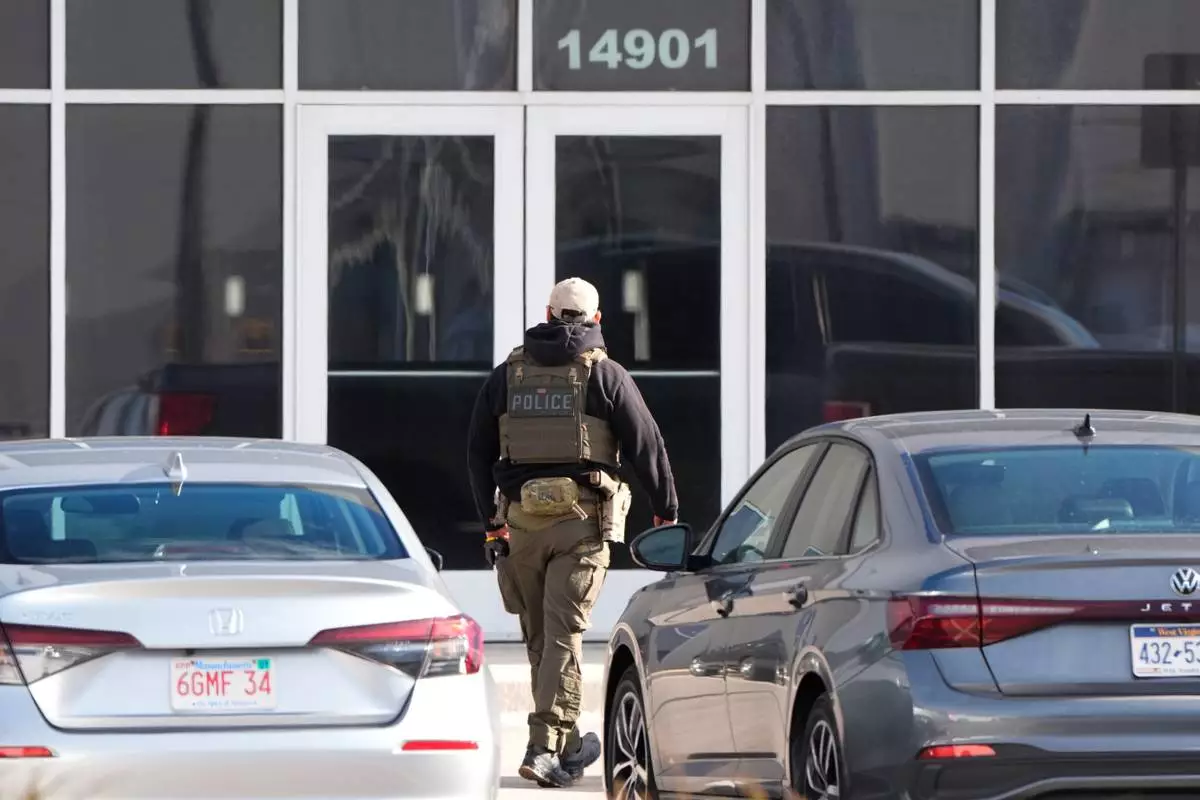
FILE - An ICE agent stands outside a warehouse as federal officials tour the facility to consider repurposing it as an ICE detention facility, Jan. 15, 2026, in Kansas City, Mo. (AP Photo/Charlie Riedel, file)
FILE - An ICE agent stands outside a warehouse as federal officials tour the facility to consider repurposing it as an ICE detention facility, Jan. 15, 2026, in Kansas City, Mo. (AP Photo/Charlie Riedel, file)

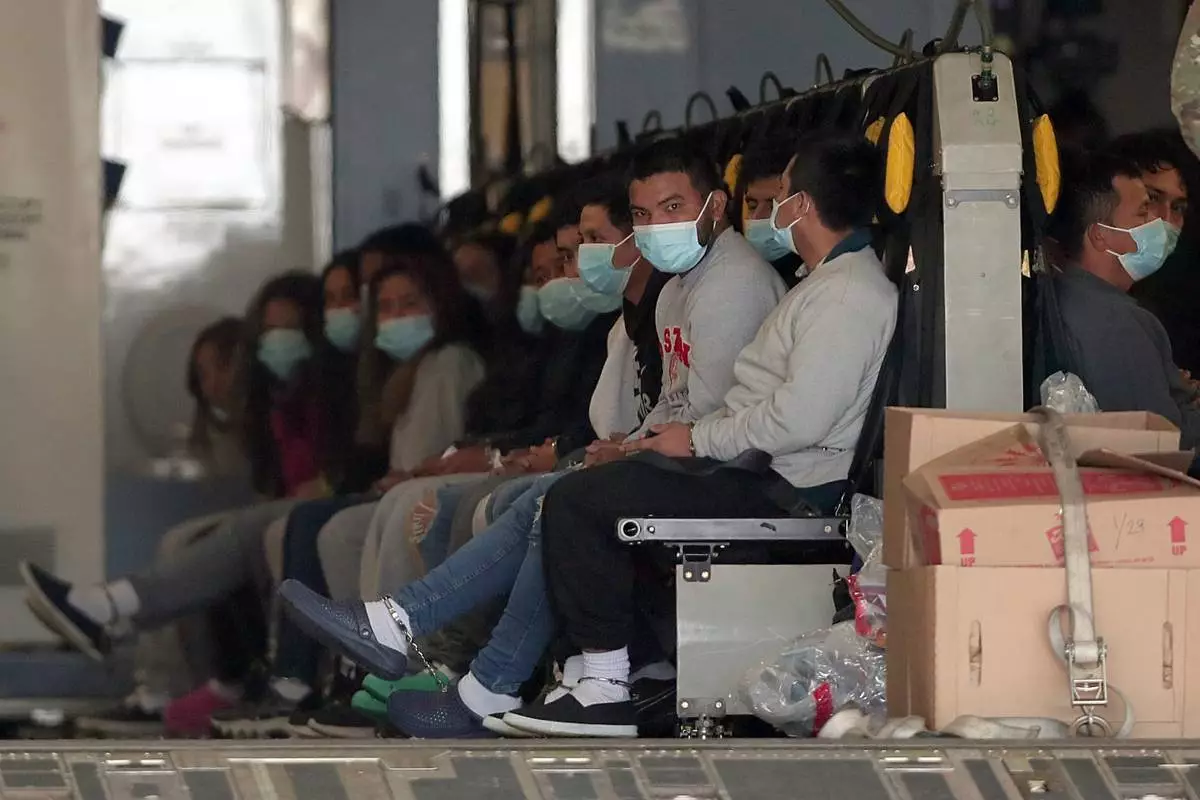
FILE - Migrants wearing face masks and shackles on their hands and feet sit on a military aircraft at Fort Bliss in El Paso, Texas, Jan. 30, 2025, awaiting their deportation to Guatemala. (AP Photo/Christian Chavez, File)
FILE - Migrants wearing face masks and shackles on their hands and feet sit on a military aircraft at Fort Bliss in El Paso, Texas, Jan. 30, 2025, awaiting their deportation to Guatemala. (AP Photo/Christian Chavez, File)

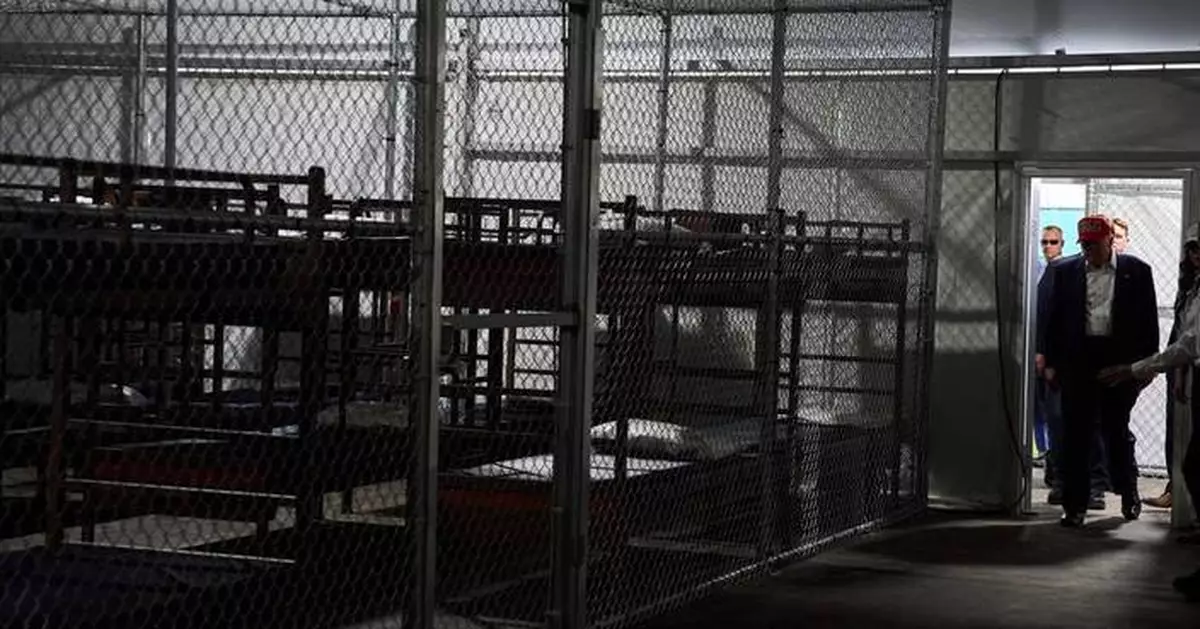
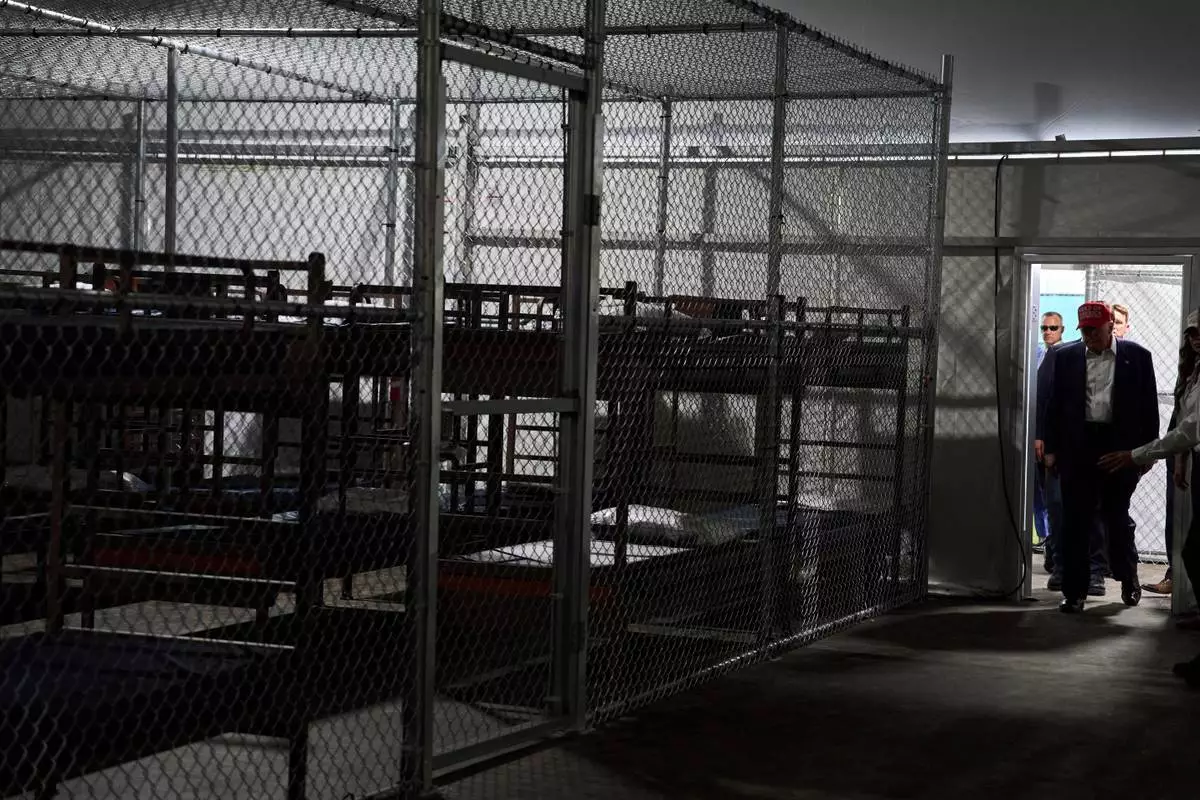
FILE - President Donald Trump tours "Alligator Alcatraz," a new migrant detention facility at Dade-Collier Training and Transition facility, on July 1, 2025, in Ochopee, Fla. (AP Photo/Evan Vucci, File)


FILE - President Donald Trump tours "Alligator Alcatraz," a new migrant detention facility at Dade-Collier Training and Transition facility, on July 1, 2025, in Ochopee, Fla. (AP Photo/Evan Vucci, File)
SAN FRANCISCO (AP) — About 6,000 public schoolteachers in San Francisco went on strike Monday, the city's first such walkout in nearly 50 years.

The strike comes after teachers and the district failed to reach an agreement over higher wages, health benefits, and more resources for students with special needs. The San Francisco Unified School District closed all 120 of its schools and said it would offer independent study to some of its 50,000 students.

“We will continue to stand together until we win the schools our students deserve and the contracts our members deserve," Cassondra Curiel, president of the United Educators of San Francisco, said at a Monday morning news conference.

Teachers with the union were joining the picket line after last-ditch negotiations over the weekend failed to reach a new contract. Mayor Daniel Lurie and Democratic U.S. Rep. Nancy Pelosi of San Francisco had urged the two sides to keep talking rather than shut down schools.

Union members planned a Monday afternoon rally at San Francisco City Hall. Negotiations were scheduled to resume around midday.

“We look forward to receiving the union's counteroffer,” said San Francisco Unified School District Superintendent Maria Su. She told reporters on Monday that the district had put forward a comprehensive package despite entrenched financial difficulties.

“This is a viable offer. It is an offer that we can afford,” Su said. “We will be at the table and we will stay for as long as it takes to get to a full agreement. I do not want a prolonged strike.”

Lily Perales, a history teacher at Mission High School, said many union members can’t afford to live in San Francisco anymore.

“Too many of my colleagues have been pushed out of the city because of the high cost of living, and with our current contract it’s not enough,” she said from a picket line Monday. “We’re willing to be on strike until all of our demands are met.”

Her colleague Aaron Hart, a photography and media arts teacher at Mission High, said schools are understaffed. “That’s why we’re out here. We just really want stability for our students,” he said.

The union and the district have been negotiating for nearly a year, with teachers demanding fully funded family health care, salary raises and the filling of vacant positions impacting special education and services.

The teachers also want the district to enact policies to support homeless and immigrant students and families.

The union is asking for a 9% raise over two years, which would mean an additional $92 million per year for the district. They say that money could come from reserve funds that could be directed back to classrooms and school sites.

SFUSD, which faces a $100 million deficit and is under state oversight because of a long-standing financial crisis, rejected the idea. Officials countered with a 6% wage increase paid over three years. Su said the offer also includes bonuses for all employees if there is a surplus by the 2027-28 school year.

A report by a neutral fact-finding panel released last week recommended a compromise of a 6% increase over two years, largely siding with the district’s arguments that it is financially constrained.

The union said San Francisco teachers receive some of the lowest contributions to their health care costs in the Bay Area, pushing many to leave. Su said the district offered two options: the district paying 75% of family health coverage to the insurance provider Kaiser or offering an annual allowance of $24,000 for teachers to choose their health care plan.

Lurie, who helped broker an agreement that ended a hotel workers union strike after he was elected and before taking office, said that the city agencies were coordinating with the district on how to offer support to children and their families.

“I know everyone participating in these negotiations is committed to schools where students thrive and our educators feel truly supported, and I will continue working to ensure that,” Lurie said in a social media post Sunday.

Teachers in other major California cities were also preparing to strike. San Diego teachers indicated they're ready to walk off the job next month for the first time in 30 years over a stalemate with the school district about special education staffing and services. And members of United Teachers Los Angeles voted overwhelmingly last month to authorize their leadership to call a strike if negotiations with the LA Unified School District fall apart.

A similar strike-authorization vote by the school system’s other largest union, Local 99 of Service Employees International Union, is scheduled to begin next week.

Associated Press reporter Christopher Weber contributed from Los Angeles.

Teachers picket in front of Mission High School in San Francisco on Monday, Feb. 9, 2026. (Brontë Wittpenn/San Francisco Chronicle via AP)

Teachers picket in front of Mission High School in San Francisco on Monday, Feb. 9, 2026. (Brontë Wittpenn/San Francisco Chronicle via AP)

Teachers picket in front of Mission High School in San Francisco on Monday, Feb. 9, 2026. (Brontë Wittpenn/San Francisco Chronicle via AP)

Teachers picket in front of Mission High School in San Francisco on Monday, Feb. 9, 2026. (Brontë Wittpenn/San Francisco Chronicle via AP)

FILE - A pedestrian walks past a San Francisco Unified School District office building in San Francisco, Feb. 3, 2022. (AP Photo/Jeff Chiu, file)

FILE - A pedestrian walks past a San Francisco Unified School District office building in San Francisco, Feb. 3, 2022. (AP Photo/Jeff Chiu, file)

Recommended Articles