Skip to Content Facebook Feature Image

CityUHK project targets 30% higher energy density in EV batteries with lithium-rich cathodes backed by RAISe+ Scheme

TECH

CityUHK project targets 30% higher energy density in EV batteries with lithium-rich cathodes backed by RAISe+ Scheme
TECH

TECH

CityUHK project targets 30% higher energy density in EV batteries with lithium-rich cathodes backed by RAISe+ Scheme

2026-02-10 12:31 Last Updated At:12:31

As the global electric vehicle (EV) market and renewable energy sector continue to expand rapidly, demand for advanced lithium-ion battery technology continues to grow. A research team from City University of Hong Kong (CityUHK) has been awarded funding under the “RAISe+ Scheme” to address the long-standing voltage decay issue associated with lithium-rich cathode materials. This groundbreaking research aims to introduce a new range of battery materials that offer enhanced energy density, extended lifespan and reduced costs.

The project plans to build a 1,000-ton materials production line and is expected to create approximately 100 new jobs.
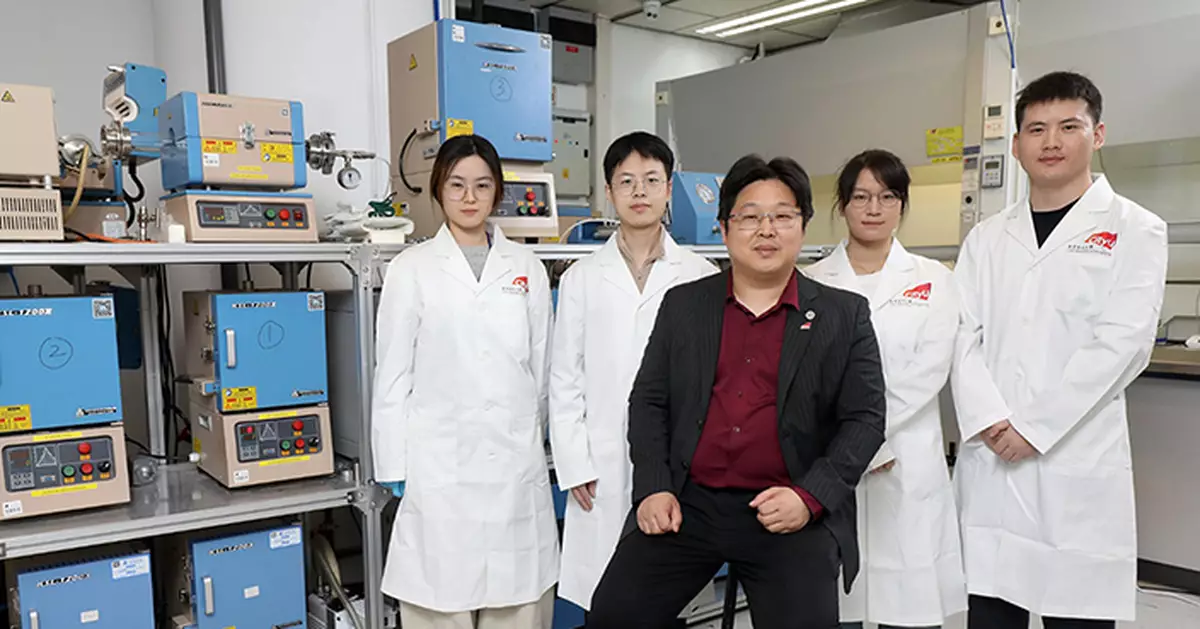
Led by Professor Liu Qi (centre), from the Department of Physics at CityUHK, the project, titled “Breakthrough Cathode Materials for Next-generation Lithium-ion Batteries”, has been awarded funding under the “RAISe+ Scheme”. Photo credit: City University of Hong Kong

Led by Professor Liu Qi (centre), from the Department of Physics at CityUHK, the project, titled “Breakthrough Cathode Materials for Next-generation Lithium-ion Batteries”, has been awarded funding under the “RAISe+ Scheme”. Photo credit: City University of Hong Kong

Led by Professor Liu Qi, from the Department of Physics at CityUHK, the project is titled “Breakthrough Cathode Materials for Next-generation Lithium-ion Batteries”. With the support of the “RAISe+ Scheme”, launched by the Government of the Hong Kong Special Administrative Region of the People’s Republic of China, the team aims to transform this technological breakthrough into industrial-scale applications within three years and optimise the production line for next-generation output.

Lithium-ion batteries (LIBs) have become a cornerstone of the global energy transition, playing an essential role in renewable energy storage systems and smart technologies – from mobile phones to the EV revolution and large-scale solar power stations. With the rapid growth in global demand, the LIB market is projected to reach US$150 billion by 2030, with over US$60 billion coming from cathode materials, the component that contributes most significantly to the overall cost of batteries.

Among various cathode materials, lithium-rich layered oxides (LLOs) stand out for their high capacity, high operating voltage and cost advantages due to abundant raw materials. They are widely regarded as the “ultimate cathode material”, capable of significantly enhancing the performance of lithium-ion batteries.

Despite their theoretical advantages, however, LLOs face critical challenges of voltage and capacity decay, which have long hindered their commercialisation.
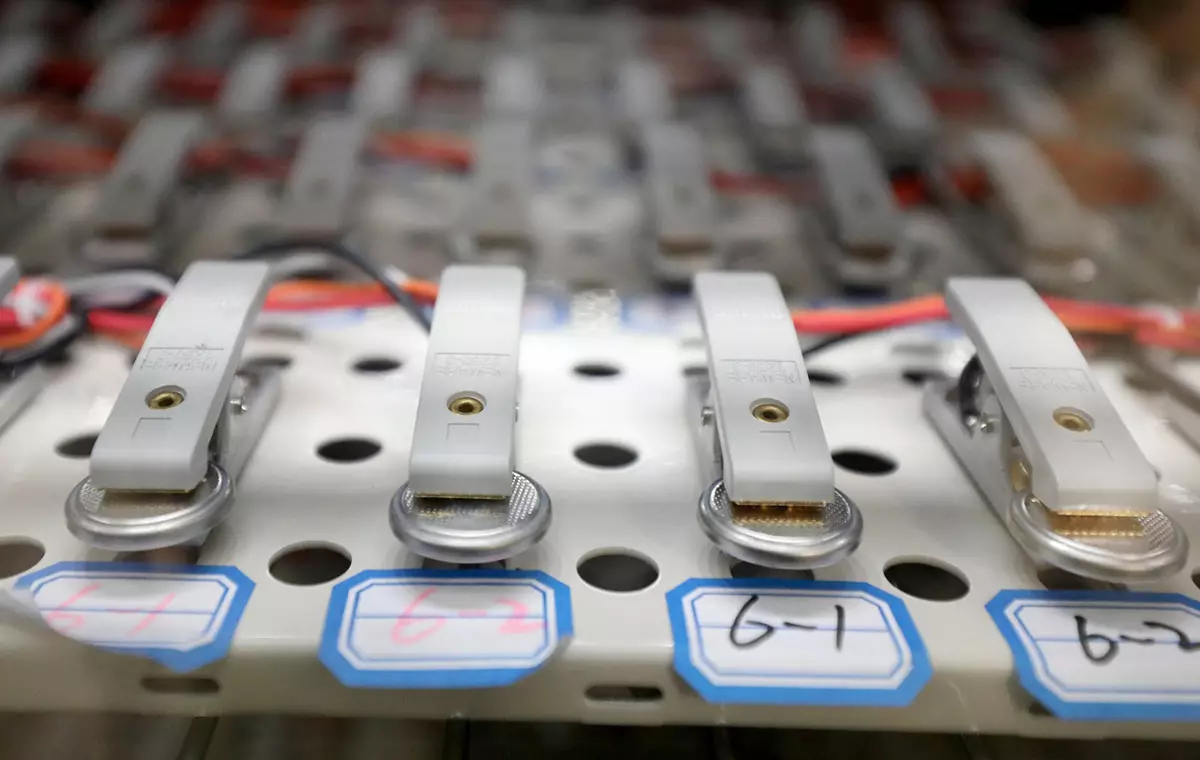
Lithium-rich layered oxides (LLOs) are widely regarded as the “ultimate cathode material for lithium-ion batteries”. Photo credit: City University of Hong Kong

Lithium-rich layered oxides (LLOs) are widely regarded as the “ultimate cathode material for lithium-ion batteries”. Photo credit: City University of Hong Kong

The team’s innovative approach focuses on stabilising the honeycomb structure by incorporating additional transition metal (TM) ions into the cathode material. This modification suppresses oxygen release, cation migration and structural degradation, effectively addressing the core issue of voltage decay. This sets a new benchmark for high-performance LLOs and provides a solid foundation for industrialisation.

Furthermore, the team employs advanced surface engineering techniques to tackle capacity decay caused by surficial degradation, TM ion dissolution, structural deterioration and electrolyte corrosion. The team introduced protective agents, such as carbon coating layers, during the calcination process. This protective layer ensures long-term stability, marking a significant step in energy storage technology.

These groundbreaking technologies were published in Nature Energy in 2023. Building on these laboratory breakthroughs, the team aims to accelerate the commercialisation process by focusing on the development of two product lines: 1) LLOs for traditional LIBs, aiming to increase the energy density of traditional LIBs by over 30%, while reducing costs; and 2) LLOs for solid-state batteries.
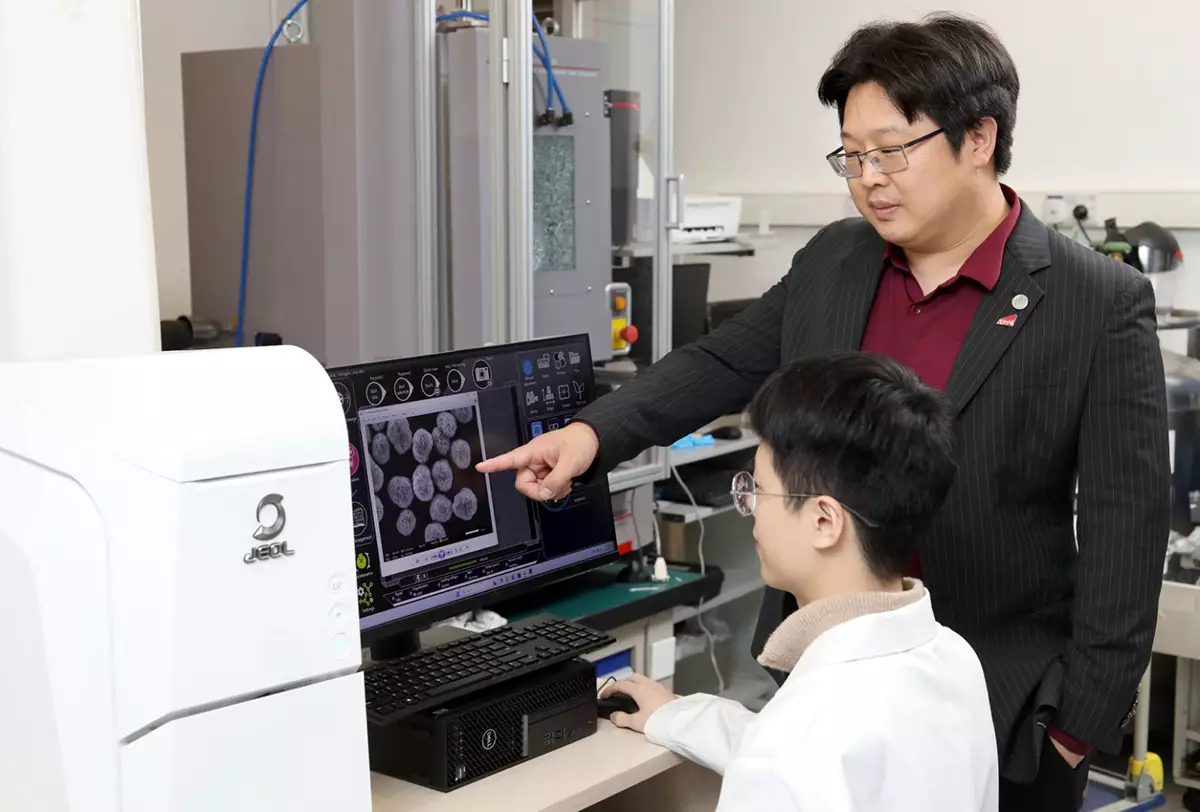
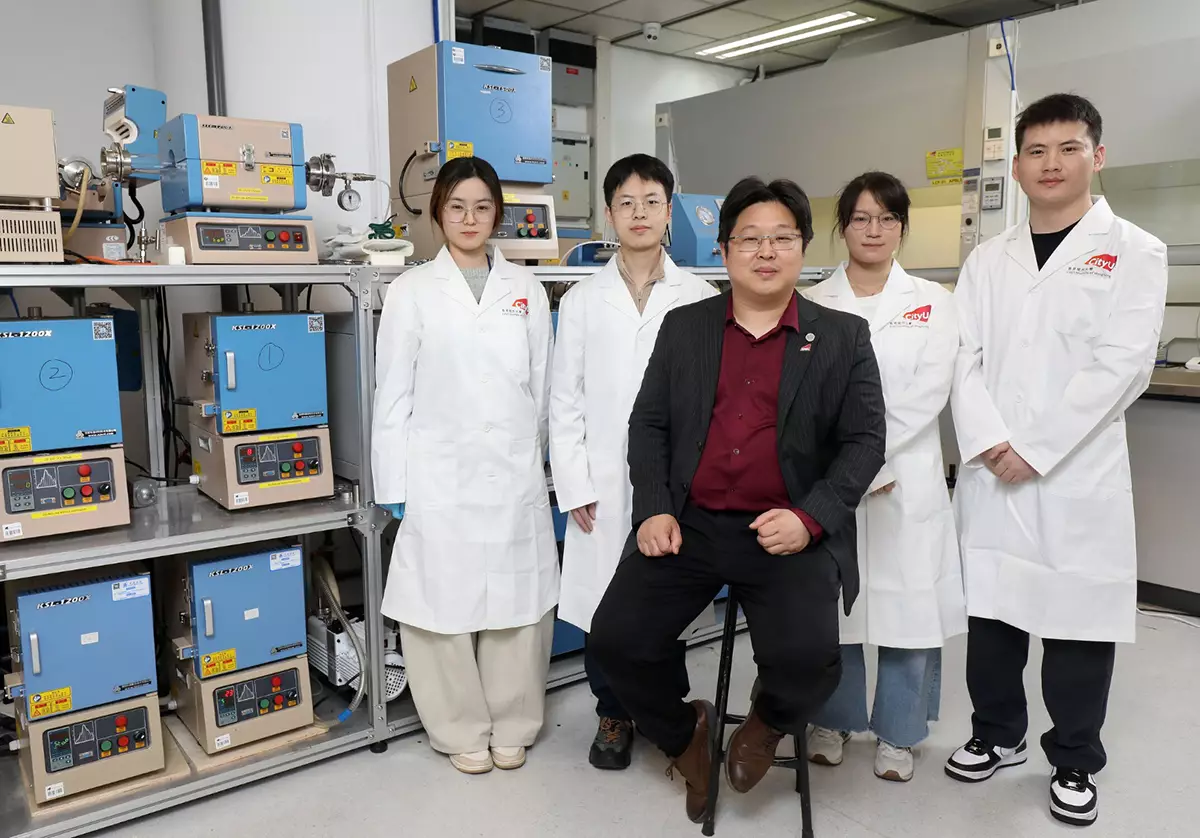
Professor Liu Qi (right), from the Department of Physics at CityUHK. Photo credit: City University of Hong Kong

Professor Liu Qi (right), from the Department of Physics at CityUHK. Photo credit: City University of Hong Kong

“Our research team has enabled LLOs, a cathode material, to realise their true commercial potential. This technology allows batteries to deliver higher energy density at a lower cost, opening new possibilities for EVs and energy-storage applications," said Professor Liu. “This project also demonstrates Hong Kong’s strengths in next-generation energy technologies and reinforces Hong Kong’s leading position in the globally competitive high-tech ecosystem.”

The team established SuFang New Energy Technology Co., Ltd. and built a production line with annual capacity of 100 tons, dedicated to the industrialisation of high-performance LLOs.

With the support of RAISe+ Scheme, the project plans to build a 1,000-ton materials production line in Southeast Asia or Korea and is expected to create about 100 new jobs in research, manufacturing and engineering over the next three years.


NEW YORK (AP) — Tesla’s annual profit plunged to its lowest level since the pandemic five years ago as it lost the title of the world’s biggest electric vehicle maker to a Chinese rival and boycotts hammered sales.

The EV company run by Elon Musk reported Wednesday that net income last year dropped 46% to $3.8 billion. It was the second year in a row of steep declines. The drop came despite the introduction of cheaper models and Musk's promise to remain laser-focused on the company after a foray into U.S politics.

Still, Tesla investors have kept the faith in Musk. The stock is up 9% in the past year.

Musk has been urging investors to focus less on car sales and more on what he considers a bright new artificial intelligence future of robotaxis ferrying millions in cars without drivers, or even steering wheels, and robots watering plants and taking care of elderly parents.

On a conference call, Musk underlined that shift by announcing Tesla had decided to close down production of two older car models, S and X, in the second quarter and convert a Fremont, California, factory to produce its Optimus robots instead.

Making those future ambitions a reality will take money. Officials said Tesla would spend big on AI and others new projects this year, more than doubling capital expenditures to $20 billion. And the company revealed it had recently invested $2 billion in the artificial intelligence company xAI, raising potential conflicts of interest issues as Musk holds big stakes in both companies.

That AI business, known for its Grok AI assistant, has courted controversy for echoing Musk’s views on race, gender, and politics and, recently, producing nonconsensual sexualized deepfake images.

Tesla's fourth quarter profit also fell sharply, dropping 61% to $840 million, or 24 cents. But excluding one-time charges, net income totaled 50 cents per share, compared to analysts' forecasts of 45 cents.

“They’ve got aging product that is less and less competitive as other manufacturers come out with new models, then there is the general brand destruction," said Telemetry analyst Sam Abuelsamid. "Musk‘s involvement in politics has turned off customers.”

There were hopeful signs in the report, too. Tesla's energy storage business, though small compared to the car sales, posted strong numbers last quarter with revenues surging 25% to $3.8 billion reflecting demand from new datacenters sucking up energy around the U.S.

Tesla's gross profit margins were another bright spot, leaping to 20% last quarter from 16% a year ago.

“Tesla’s ability to show improving profitably was a surprise,” said Morningstar analyst Seth Goldstein.

Goldstein said he was also encouraged by plans outlined in Tesla’s earnings report to roll out robotaxi service in Houston, Miami and five other cities in the first half of this year. In the conference call, the company also said that it would begin producing its two-seated Cybercab with no wheels or pedals in the same time frame.

But Musk is well know for making promises with deadlines he never meets.

Musk said that European regulators would approve its partial self-driving software in the first three months last year, a potential big boost to Tesla sales there. But that hasn't happen yet. And a strong revival in sales Musk heralded midway through the year also failed to materialize.

The robotaxi program has progressed slowly, which Musk told investors is due to Tesla being extremely cautious to avoid mishaps. Tesla promised robotaxi rides without anyone driving the car, but until recently the cars had supervisors inside to grab the controls in case something went wrong. Tesla has now removed the safety drivers in Austin where it launched the service in June.

For some on Wall Street that is enough to keep pushing the stock up.

One of Wall Street’s most bullish analysts, Dan Ives of Wedbush Securities, expects robotaxis will be in more than 30 cities by the end of this year, and that Tesla will capture 70% of the global market for self-driving cars in a decade.

Ives and others are also encouraged that Musk has shifted his focus back to the company after spending months as head of a government cost-cutting team in Washington.

But it’s not clear his attention will remain as undivided in the new year. He has plans to take his rocket company SpaceX public, possibly in June, in what many expect to be a blockbuster IPO that make him the world’s first trillionaire — but also possibly distract him.

FILE - A Tesla Model S is pictured at the Paris Auto Show, in Paris, Oct. 14, 2024. (AP Photo/Michel Euler, File)

FILE - A Tesla Model S is pictured at the Paris Auto Show, in Paris, Oct. 14, 2024. (AP Photo/Michel Euler, File)

Elon Musk attends the Annual Meeting of the World Economic Forum in Davos, Switzerland, Thursday, Jan. 22, 2026. (AP Photo/Markus Schreiber)

Elon Musk attends the Annual Meeting of the World Economic Forum in Davos, Switzerland, Thursday, Jan. 22, 2026. (AP Photo/Markus Schreiber)

Recommended Articles