MILAN (AP) — Much like the Olympic flame, there is another symbol of triumph and transcendence — far less known — that graces one host city after another: a one-of-a-kind, wooden cross.
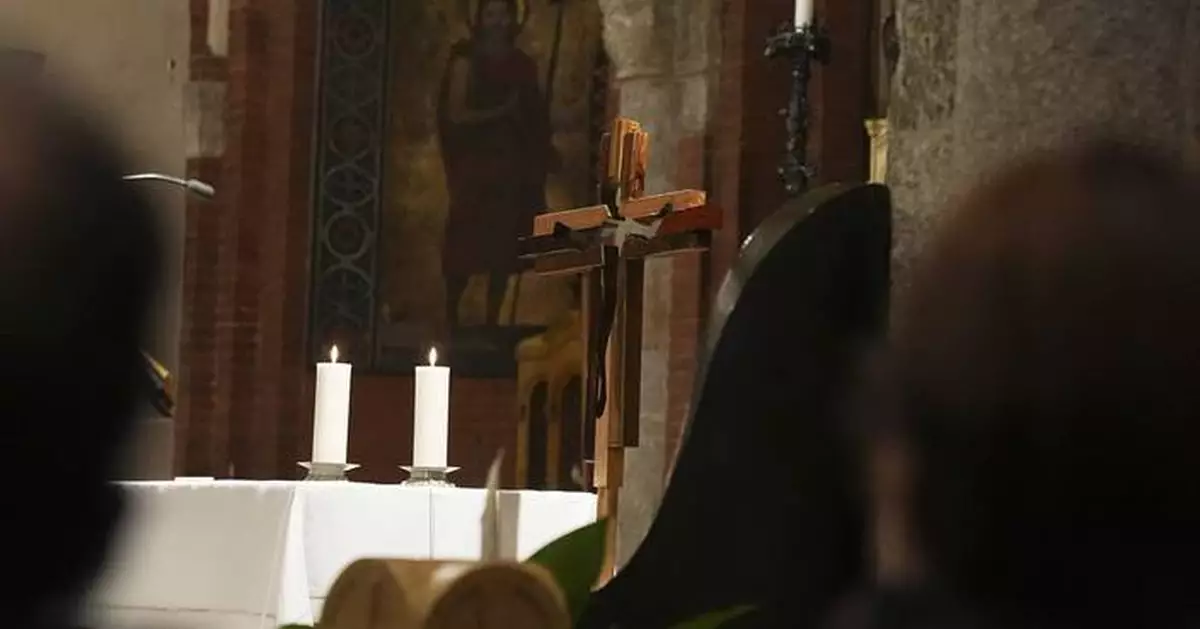
The Cross of the Athletes has arrived in Milan for the Winter Games and holds pride of place beside the main altar in the Basilica of San Babila. It is one of the city's oldest churches that — for a few weeks, while the cross is within its walls — holds the title of Church of Athletes.
The presence of the cross at the Games is a tangible sign of the Catholic Church ’s belief that sport is a powerful way to bring people together. And this cross is unique in that it is made from pieces of wood sourced in five continents, an apparent nod to the five Olympic rings that convey the same sentiment.
“We think of sport not as an instrument that separates, but as one that unites,” said the Rev. Stefano Guidi, who heads the Archdiocese of Milan’s Service for Oratories and Sport. “The cross represents this precisely through the way it was created.”
English artist Jon Cornwall used 15 pieces of wood from continents around the world to craft the cross, which made its grand debut at the London Olympics in 2012.
Since then, special ceremonies have marked its arrival to host cities for both the Summer and Winter Games. (The exception was Tokyo, when pandemic travel restrictions were in place.) Last June, it was in the Vatican for the Jubilee of Sport, celebrated with Pope Leo XIV, who has a long-standing personal connection to sport. And the cross is expected to travel to Los Angeles for the 2028 Games.
“The cross — carrying the prayers and hopes of athletes — is a Christian message addressed to the entire world of sport, a sign of hope for humanity, and a proposal of peace among peoples,” according to a document from the Vatican’s culture ministry, which includes a sports department.
Leo said in a message entitled “Life in Abundance” issued on the same day as the Milan Cortina opening ceremony, that sport brings people together and values the journey as well as the end result.
“It teaches us that we can strive for the highest level without denying our own fragility; that we can win without humiliating others; and that we can lose without being defeated as individuals,” he wrote.
On a recent February morning, Giovanna Spotti and her husband attended Mass at San Babila and took a moment to closely admire the cross.
“The Cross of the Athletes moves us a great deal, because it is displayed and venerated here,” said Spotti, who lives nearby. “And San Babila is important because it is a very old church, truly characteristic of Milan.”
The Romanesque basilica sits in the heart of the city near Piazza San Babila, a major transit and meeting point. Milan’s Catholic archdiocese has designated it the Church of Athletes during the Olympics and Paralympics.
As part of the church's activities for this period, it is celebrating some Masses in Italian, English, French and German.
The church was packed during the first Mass on Feb. 8, in Italian. The homily focused on the importance of embracing fraternity over individualism and fostering a spirit of unity beyond divisions.
Later, the Rev. Stefano Chiarolla celebrated a German-language Mass. All attendees were Italian, but Chiarolla said the initiative is important nonetheless.
“Multilingual Masses are a sign of welcome,” said Chiarolla, who asked German speakers to raise their hands at the end of his homily and smiled when merely one Italian man did. “People can always attend Mass in Italian, but the diocese wants to offer a visible sign of hospitality that reflects the international nature of the event.”
Marino Parodi, who raised his hand, said he attended because family issues prevented him from coming to the earlier service.
“I searched on the web and I found this option,” he said. “I was glad to find it.”
Both the display of the cross and the multilingual Masses are part of the Milan archdiocese's efforts to promote unity during the 2026 Winter Olympics. That broader program includes a youth-focused “Tour of Sports Values,” cultural exhibitions, a theatrical performance, concerts and inclusive sports initiatives, as well as art routes through some of Milan’s historic churches.
AP Olympics: https://apnews.com/hub/milan-cortina-2026-winter-olympics
Associated Press religion coverage receives support through the AP’s collaboration with The Conversation US, with funding from Lilly Endowment Inc. The AP is solely responsible for this content.
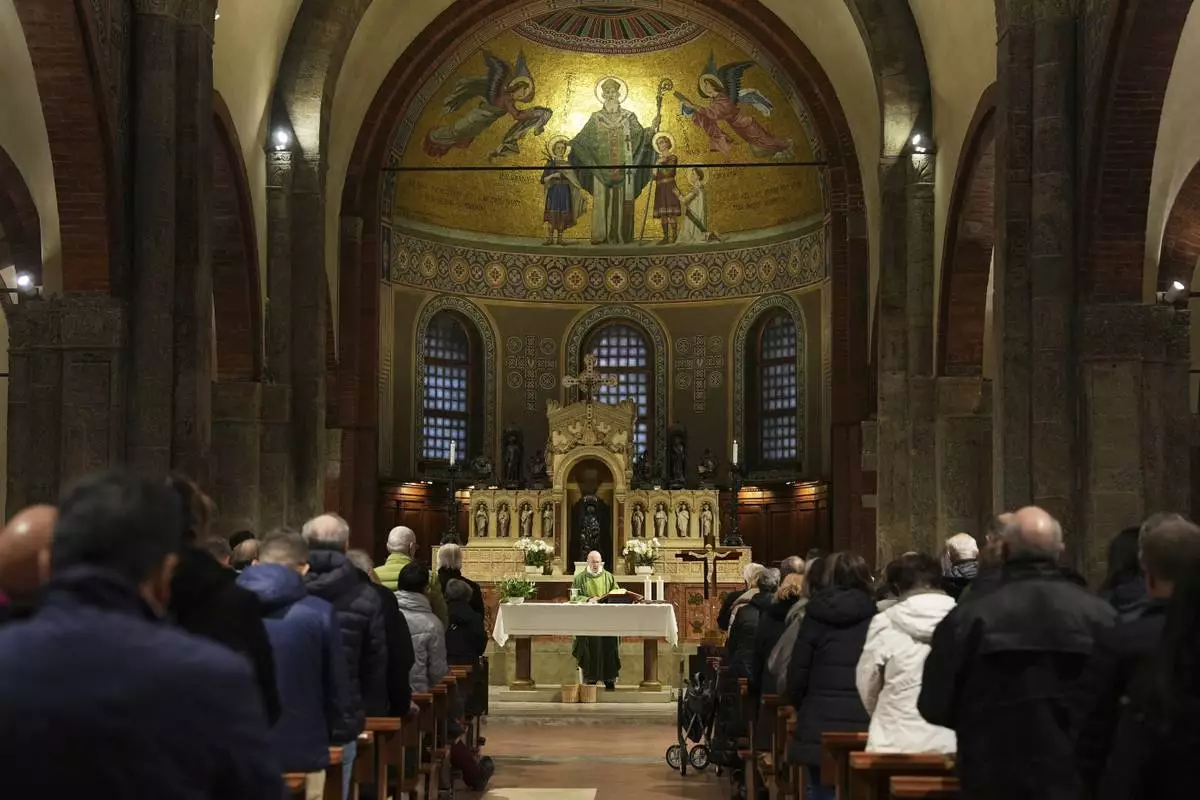
Worshippers attend one of several multilingual Masses at the Basilica of San Babila, also known as the Church of Athletes during the 2026 Winter Olympics, in Milan, Italy, Saturday, Feb. 8, 2026. (AP Photo/María Teresa Hernandez)
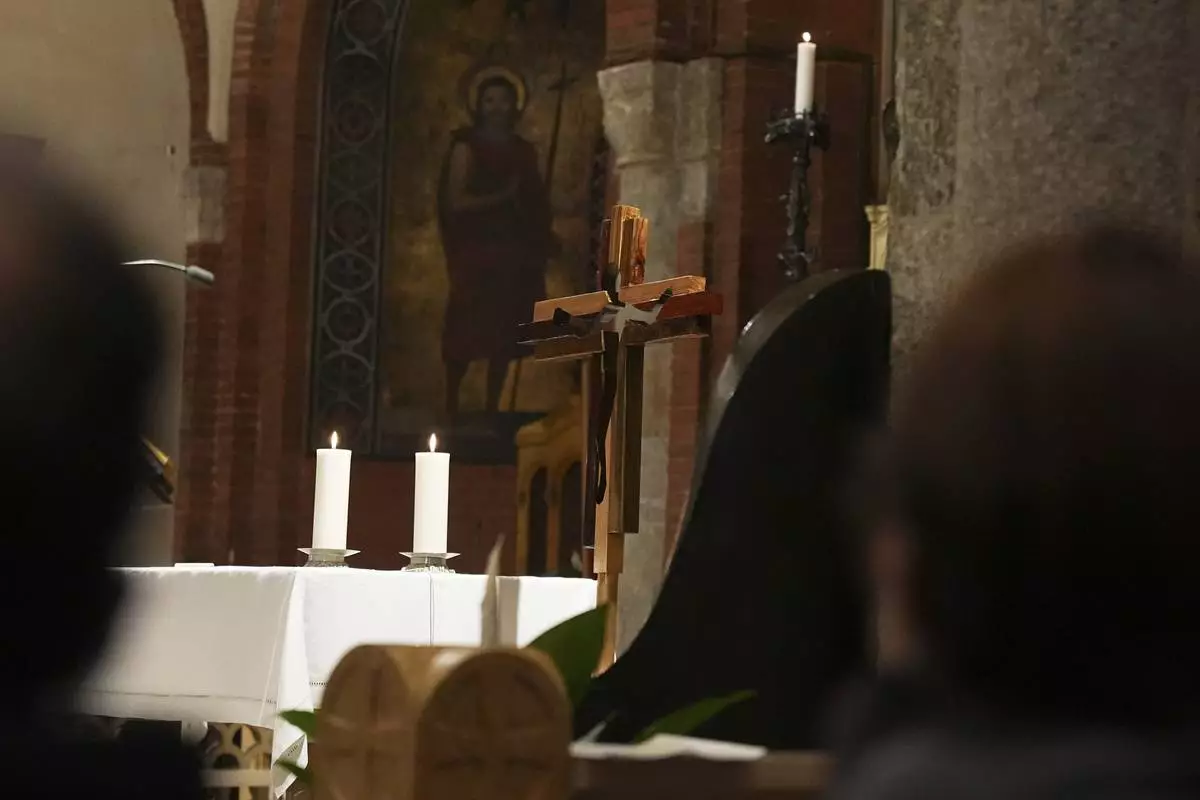
The “Cross of Athletes” is seen during a Mass at the Basilica of San Babila, known as the Church of Athletes during the 2026 Winter Olympics, in Milan, Italy, Saturday, Feb. 8, 2026. The cross travels to Olympic host cities as a symbol of faith, unity, and the values of sport. (AP Photo/María Teresa Hernandez)
Luka Doncic is almost certainly going to win the NBA scoring title this season. And it's now very possible that he doesn't make the All-NBA team.
That's rare, but it might be this season's reality.
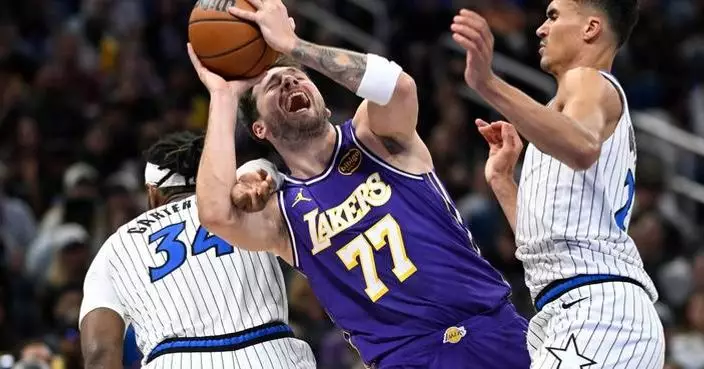
The roster of award-caliber players who won't be winning awards this season continues to grow, with Doncic — the Los Angeles Lakers standout guard and MVP candidate — now out with a Grade 2 left hamstring strain that will force him to miss the rest of the regular season. Minnesota guard Anthony Edwards is certain to miss the league's 65-game award eligibility threshold as well after he was held out Thursday because of illness.
Doncic has played 64 games, one shy of the threshold. It's worth noting that BetMGM Sportsbook, among others, took Doncic off the list of MVP betting options following his injury Thursday.
“At this juncture of the season, it’s the last thing you want to see,” Lakers star LeBron James told reporters in Oklahoma City after Thursday's game, long before an MRI was performed Friday to determine the extent of Doncic's injury. “Especially anybody on our team, but when you have an MVP candidate on your team, the last thing you want to see is somebody go down with a hamstring injury."
Edwards can now only reach a maximum of 64 games as well, so he won’t be on the ballot for most major NBA awards either.
It was collectively bargained — meaning the league and the players association agreed on the terms — and this is the third season of it being part of the NBA rules.
It applies to player eligibility for five awards — MVP, Defensive Player of the Year, Most Improved Player, the All-NBA Team and the All-Defensive Team. Players have to either play in 65 regular-season games (with some minutes-played minimums in there as well), or at least 62 games before suffering a “season-ending injury."
But even with Doncic's hamstring hurt badly enough that he'll miss the rest of the regular season, it wouldn't be classified as “season-ending” unless a doctor — jointly selected by the NBA and the National Basketball Players Association — says he wouldn't be able to play again through May 31.
There is a grievance process and even a way to challenge the rule citing extraordinary circumstances, but neither would be easily utilized.
Five of the league's six highest-paid players this season — Golden State's Stephen Curry and Jimmy Butler, Philadelphia's Joel Embiid, Milwaukee's Giannis Antetokounmpo and Boston's Jayson Tatum — aren't eligible for awards. Denver's Nikola Jokic is the exception on the highest-paid list, and he'd likely be ineligible if he misses more than one more game down the stretch.
There were 23 players on the list of those winning MVP, MIP, DPOY, All-NBA and All-Defense last season. Of those, at least 10 are out of the running for honors this season: Antetokounmpo, Curry, Edwards, James, Tatum, Detroit's Cade Cunningham, Indiana teammates Tyrese Haliburton and Ivica Zubac, Utah's Jaren Jackson Jr. and Oklahoma City's Jalen Williams. (Most of those 10 have been out of the awards mix because of injuries for some time; Tatum and Haliburton both tore Achilles in last season's playoffs and it was obvious then that they wouldn't hit 65-game marks this year.)
Another four award winners from a year ago — Jokic, Oklahoma City's Lu Dort, Golden State's Draymond Green and Cleveland's Evan Mobley — aren't at 65 games yet this season but, for now anyway, seem on pace to get there.
Never say never. The union wants changes to the policy, and it's certain to come up in their conversations with the league office. But many players — and even Andre Iguodala, now the head of the players' association — have said in recent years that the 65-game rule is a good thing.
The league doesn't seem inclined to make a change based solely on what would appear to be an extraordinary number of award candidates not hitting the threshold in one year.
“I think it is working,” NBA Commissioner Adam Silver said last month. “I think if you look at the numbers, the pre-implementation of this rule, numbers were going in the wrong direction. I may have this a little bit off: I think the three years before we adopted this rule, almost a third of the All-NBA players had not played 80% of the games. That was a huge issue for the league.”
As we said, it's rare, but it has happened. Twice, to be exact.
— 1968-69: Elvin Hayes won the scoring title as a rookie, then wasn't even All-NBA — and didn't win Rookie of the Year, either.
— 1975-76: Bob McAdoo won his third consecutive scoring title and was second in the MVP race — but didn't make All-NBA. Players voted for MVP in those days, and McAdoo was an extremely close second behind Kareem Abdul-Jabbar. Dave Cowens was third in the MVP vote but got the second-team All-NBA nod at center, with Abdul-Jabbar the first-team pick.
Doncic now seems likely to join that list. It's not mathematically certain yet that he wins the scoring title, but it would take something extraordinary for it not to happen.
He's averaging 33.5 points per game, with Gilgeous-Alexander at 31.6 per game. For Gilgeous-Alexander — last season's scoring champion — to overtake Doncic, he would need to go on an unbelievable run. An example: He'd need to score 292 points over the final five games to take over the top spot, and nobody other than Wilt Chamberlain has had a five-game run like that.
Of the previous 79 scoring champions, 64 were first-team All-NBA and 13 were second-team.
Jokic is going to win the league's rebounding and assist titles, while averaging a triple-double yet again. But he's also not assured yet of being on the award ballots.
The thresholds are different.
While the award mandate is 65 games in most cases, players are eligible for most statistical awards if they play in 58 games (or 70% of the season). There are different standards for some stat awards, such as field-goal percentage (minimum 300 made), free-throw percentage (minimum 125 made) and 3-point percentage (minimum 82 made).
A player can win a stat award while appearing in less than 58 games.
For example, last season, San Antonio's Victor Wembanyama played only 46 games but still won the blocked shot title. Even if he played in the minimum 58 games and recorded no blocks in the 12 games needed to reach that number he still would have been ahead of the runner-up, Utah's Walker Kessler.
AP NBA: https://www.apnews.com/hub/NBA
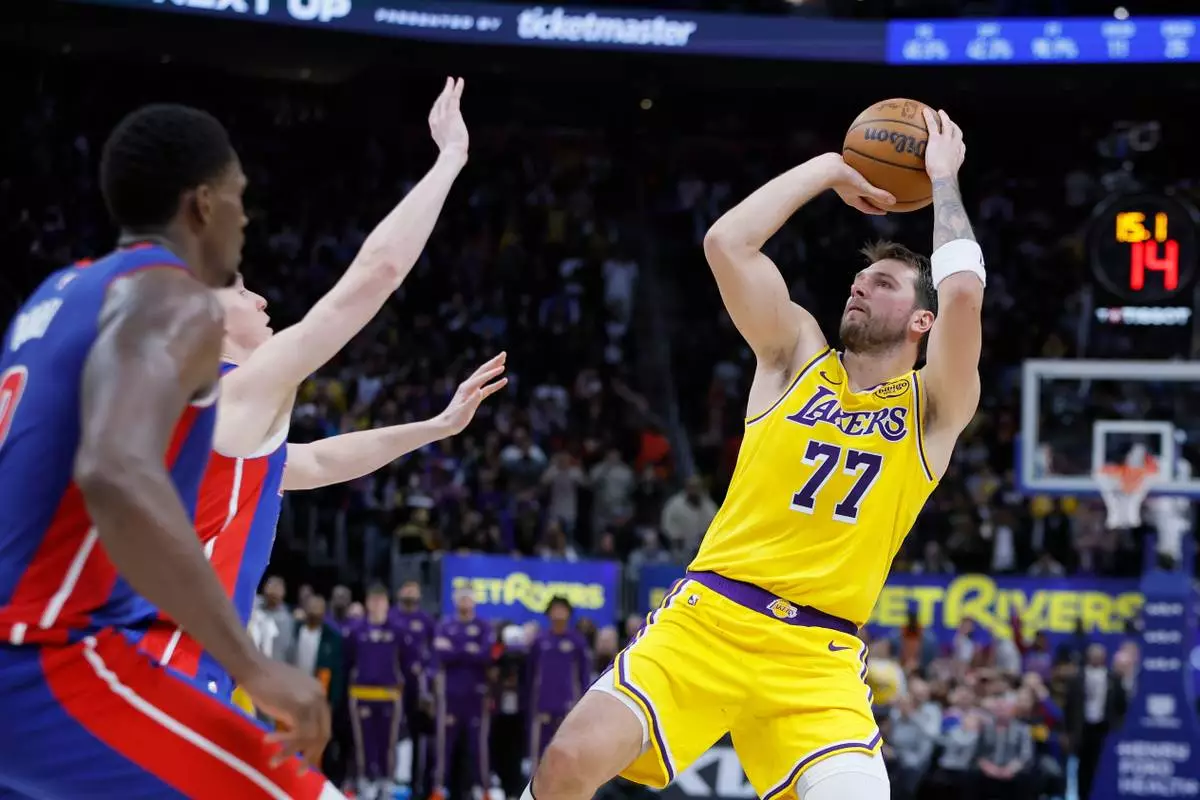
Los Angeles Lakers guard Luka Doncic (77) looks to make a shot-attempt in the fourth quarter of a loss to the Detroit Pistons in an NBA basketball game Monday, March 23, 2026, in Detroit. (AP Photo/Duane Burleson)
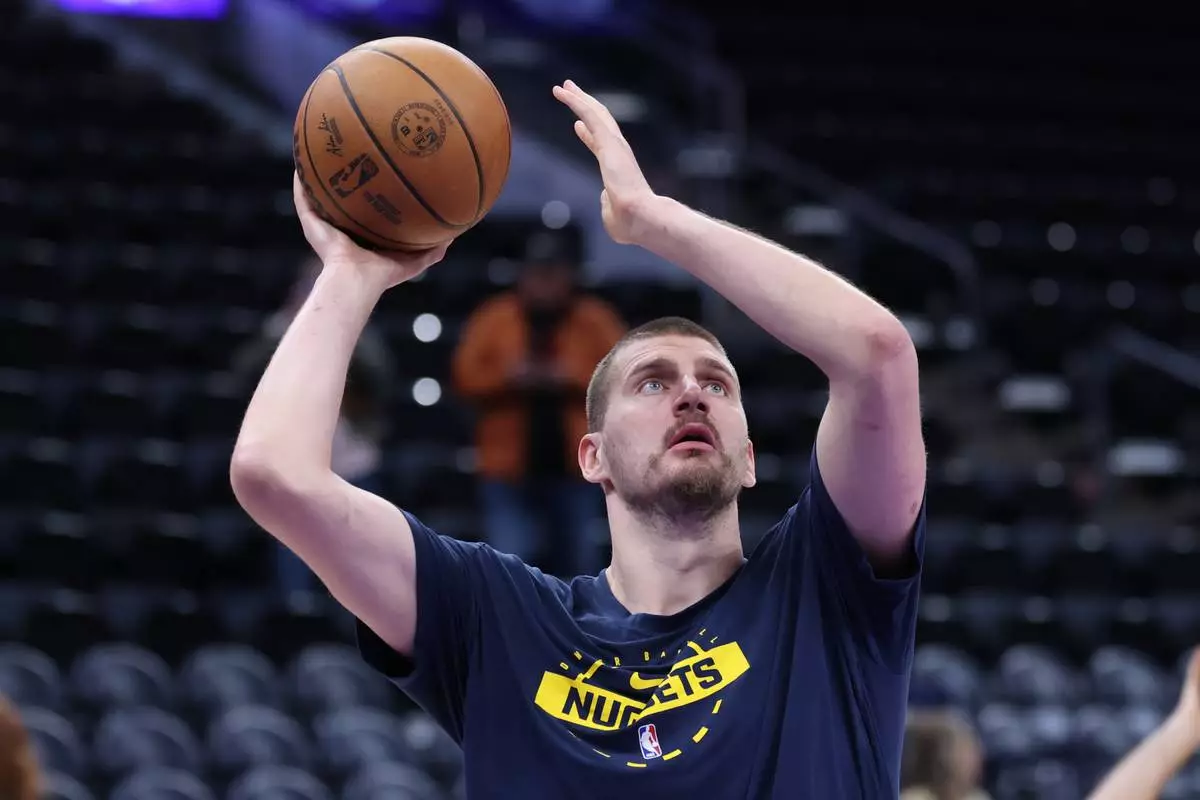
Denver Nuggets center Nikola Jokic warms up before an NBA basketball game against the Utah Jazz, Wednesday, April 1, 2026, in Salt Lake City. (AP Photo/Rob Gray)
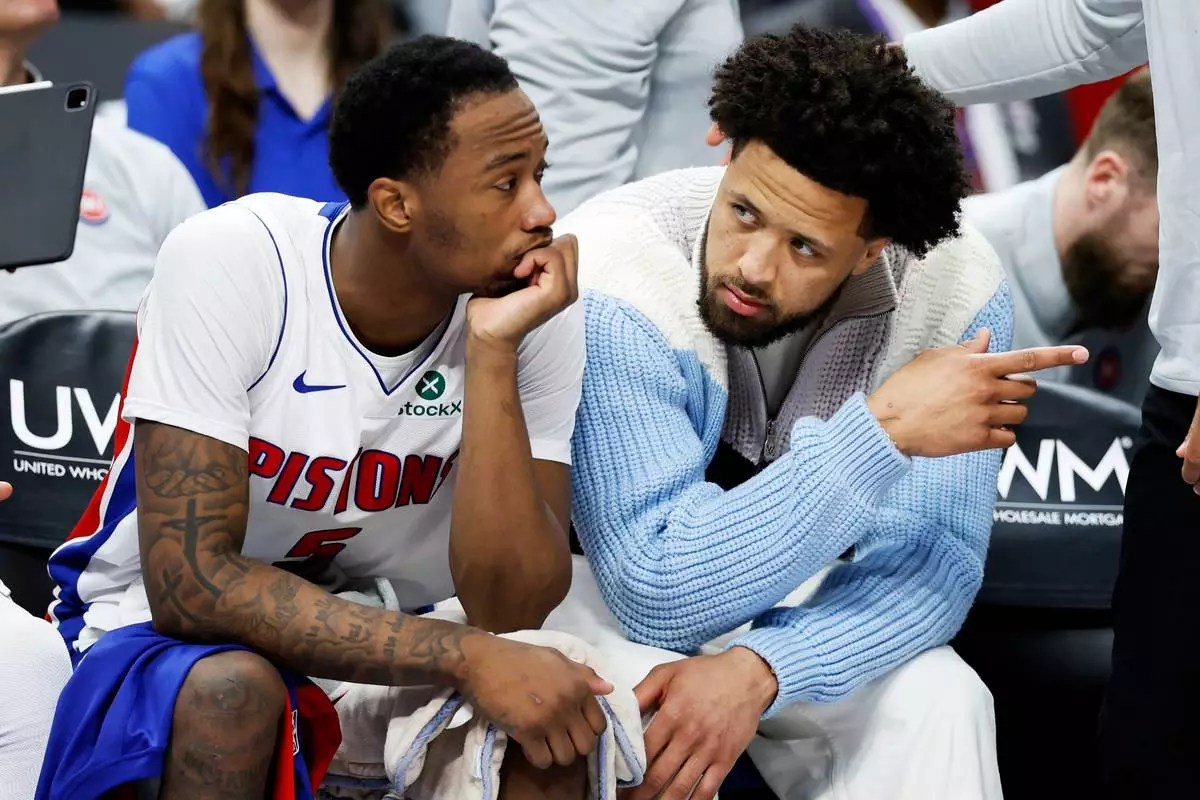
Detroit Pistons forward Ronald Holland II (5) talks with guard Cade Cunningham (2), who did not play due to an injury, during the second half of an NBA basketball game against the Toronto Raptors Tuesday, March 31, 2026, in Detroit. (AP Photo/Duane Burleson)
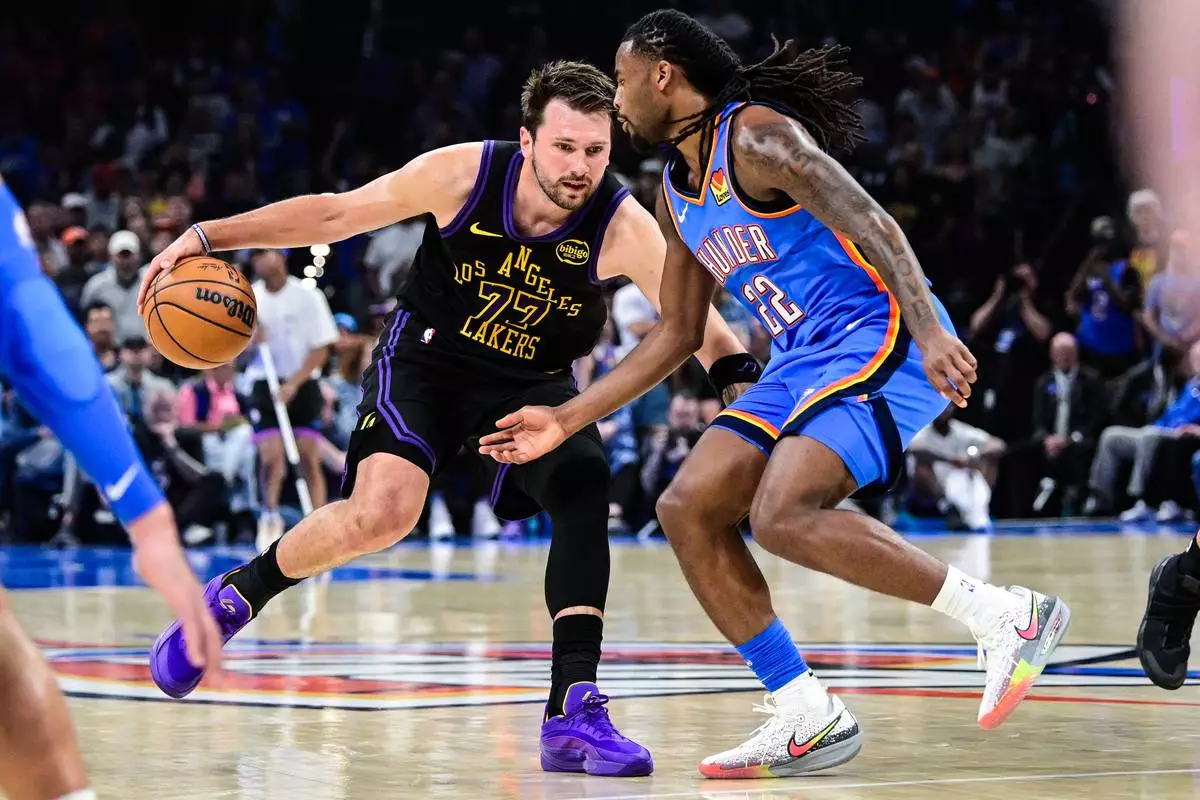
Los Angeles Lakers forward/guard Luka Dončić (77) drives against Oklahoma City Thunder guard Cason Wallace (22) during the first half of an NBA basketball game Thursday, April. 2, 2026, in Oklahoma City. (AP Photo/Gerald Leong)