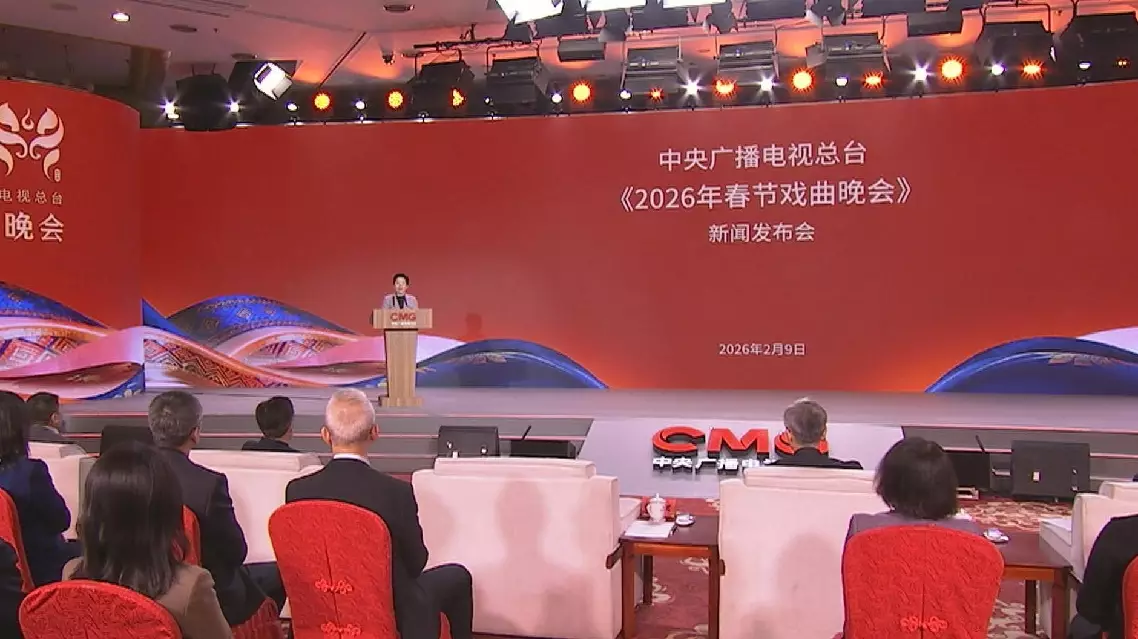
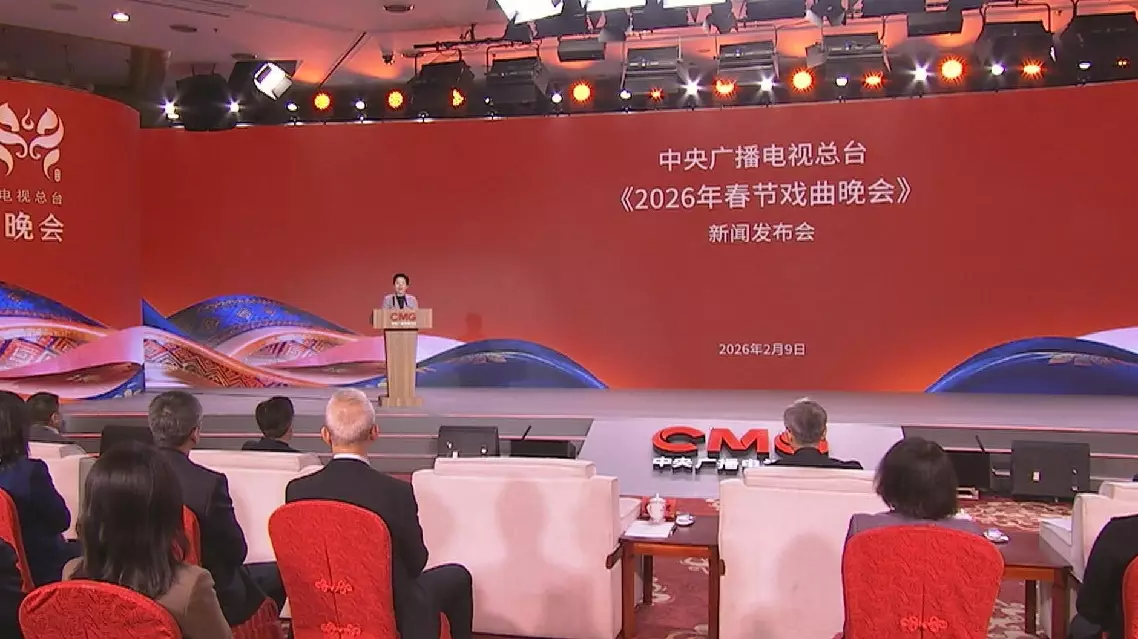
Over 30 types of traditional operas will be showcased at the 2026 Spring Festival Chinese Opera Gala, the China Media Group (CMG) announced at a press conference in Beijing on Monday.
Recorded in south China's Guangxi Zhuang Autonomous Region for the first time, the gala aims to present traditional Chinese operas in a younger, more fashionable and visually engaging way, aligning classic art forms with contemporary aesthetics during the upcoming Spring Festival holiday.
This year's gala has brought together nearly 80 opera troupes from across the country, showcasing more than 30 varieties of traditional operas.
Over 1,000 performers, including renowned opera masters, young inheritors of traditional arts, and crossover singers and actors, have taken part.
The program features 14 performances in innovative formats that range from short fantasy-themed dramas, immersive scene-based shows, to the fusion of poetry, music and opera.
Film-style storytelling and digital visual effects are used to highlight the vitality of traditional culture in the modern era.
Leveraging Guangxi's role as China's gateway to ASEAN, the gala will also showcase diverse cultural expressions, such as performances themed on cultures of multiple ethnic groups in China, alongside art forms from neighboring countries including Indonesia, Thailand, Vietnam and Malaysia, reflecting cultural exchanges and mutual appreciation among civilizations.
Over 30 types of traditional operas to be showcased at 2026 Spring Festival Chinese Opera Gala
Over 30 types of traditional operas to be showcased at 2026 Spring Festival Chinese Opera Gala
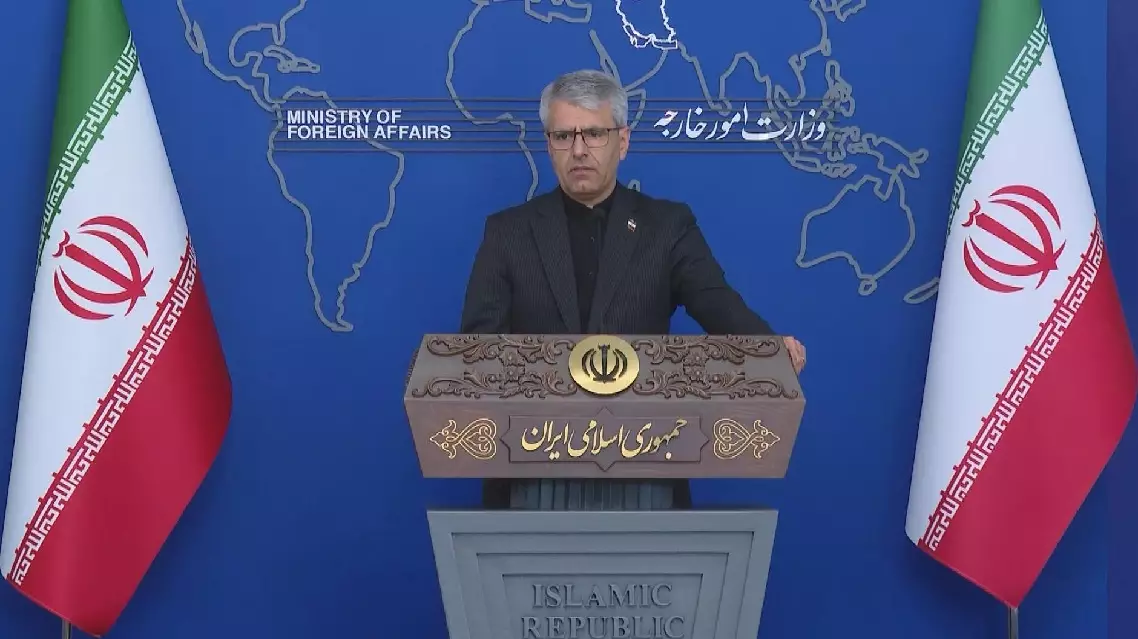
Iran has received U.S. feedback on its latest peace proposal through Pakistani mediators, and talks between the two sides are still underway, Iranian Foreign Ministry spokesman Esmaeil Baghaei said Monday.
Speaking at a press conference in Tehran, Baghaei said that although the United States had publicly rejected Iran's 14-point peace proposal aimed at ending the conflict, Tehran had still received revisions and concerns through mediator Pakistan.
Such dialogue is continuing through the mediator, he said, stressing that although Iran does not trust the United States, it is still participating in the negotiations based on national interests.
Baghaei said that Iran has submitted its response to U.S. revisions to the conflict resolution plan.
"We approach every diplomatic process with deep distrust and serious skepticism in order to safeguard the national interests of Iran. Iran is aware that, given the United States' track record of undermining negotiations, it may repeat the same actions at any moment," Baghaei said.
Baghaei also said the current situation in the Strait of Hormuz stems from military actions launched by the United States and Israel against Iran, as well as what he described as violations of international law by the two countries.
Iran has taken relevant measures to ensure safety of navigation in the region, he said, adding that communication between Iran and Oman over issues related to the Strait of Hormuz is ongoing.
Baghaei said Iran harbors no hostility toward any country in the Middle East and called on all parties to remain vigilant against attempts by external forces to create division in the region.
Responding to repeated U.S. threats that military action against Iran could resume if no agreement is reached, Baghaei said threats and pressure have long been Washington's standard approach, but such tactics would not work on Iran.
He said Iran would continue advancing negotiations while closely monitoring developments and preparing for all possible scenarios.
Baghaei stressed that Iran would not abandon the rights granted to it under the Treaty on the Non-Proliferation of Nuclear Weapons (NPT) and that the country is currently focused on efforts to end the conflict.
Also on Monday, Iran's semi-official Tasnim news agency, citing sources close to the Iranian negotiating team, said that Tehran had handed over its newest 14-point proposed plan for ending the war with the United States to Pakistan.
Pakistan will convey the plan to the United States, the report said.
The new proposal was submitted after Tehran revised its earlier 14-point draft in response to a recent U.S. proposal, the sources added.
According to the sources, Iran's new draft focuses on negotiations to end the war, as well as on "trust-building" measures.
In a separate report on Monday, Tasnim quoted another source close to the Iranian negotiating team as saying that, unlike previous U.S. drafts, Washington had agreed in its latest proposal to waive sanctions on Iranian oil during the negotiation period.
On the same day, however, a U.S. official said claims by the Iranian side that the U.S. had agreed to lift sanctions during the negotiations were false.
Iran, the United States and Israel reached a ceasefire on April 8 after 40 days of fighting that started with U.S. and Israeli attacks on Tehran and other Iranian cities on Feb 28.
Following the truce, Iranian and U.S. delegations held one round of peace talks in Pakistan's capital Islamabad on April 11 and 12, which failed to yield an agreement.
Over the past weeks, the two sides have reportedly exchanged several proposed plans outlining conditions for ending the conflict through Pakistan.
Iran's foreign ministry says talks with US still underway