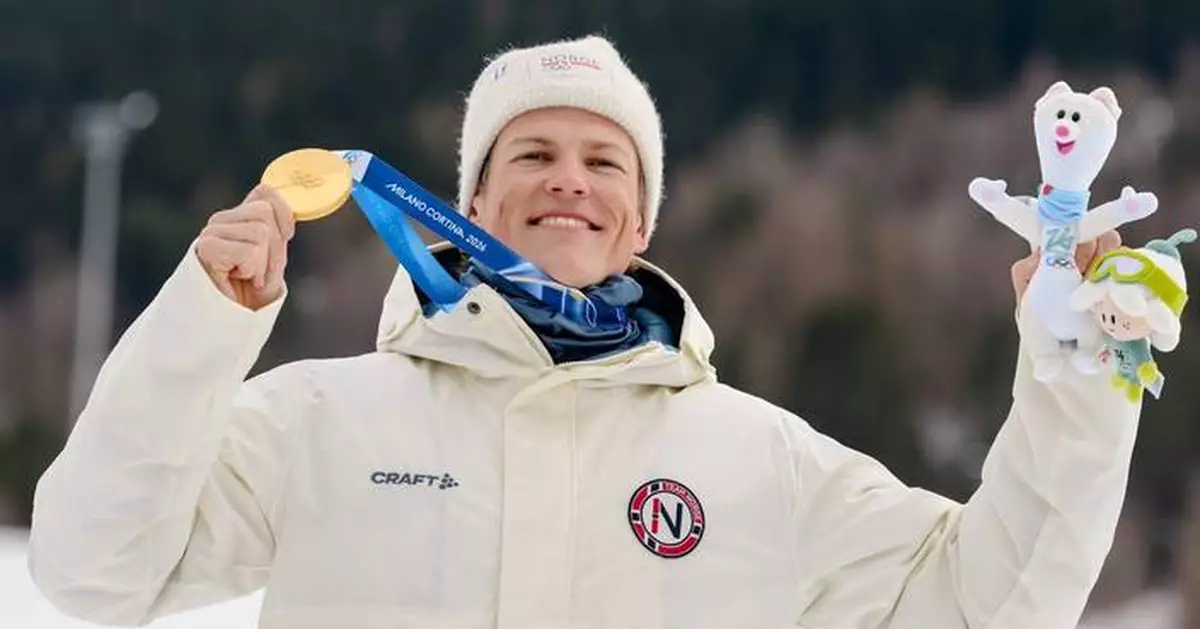
TESERO, Italy (AP) — Competitors find it hard to fault Johannes Hoesflot Klaebo because he has it all: Technique, tactics, power and speed.
On Tuesday, the Norwegian cross-country skiing phenomenon was unstoppable again as he earned his second Olympic gold medal in his second outing at the Milan Cortina Games, comfortably winning the preliminary rounds and final of the classic sprint.
Click to Gallery
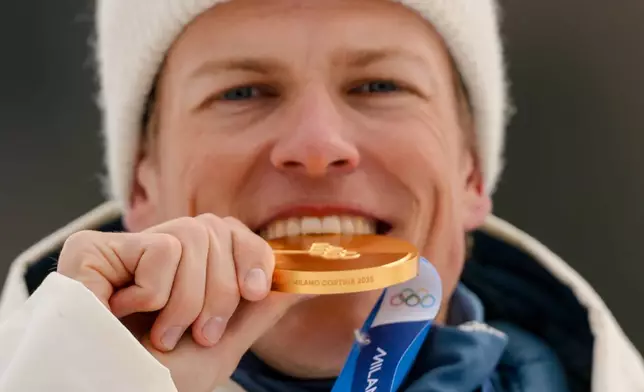
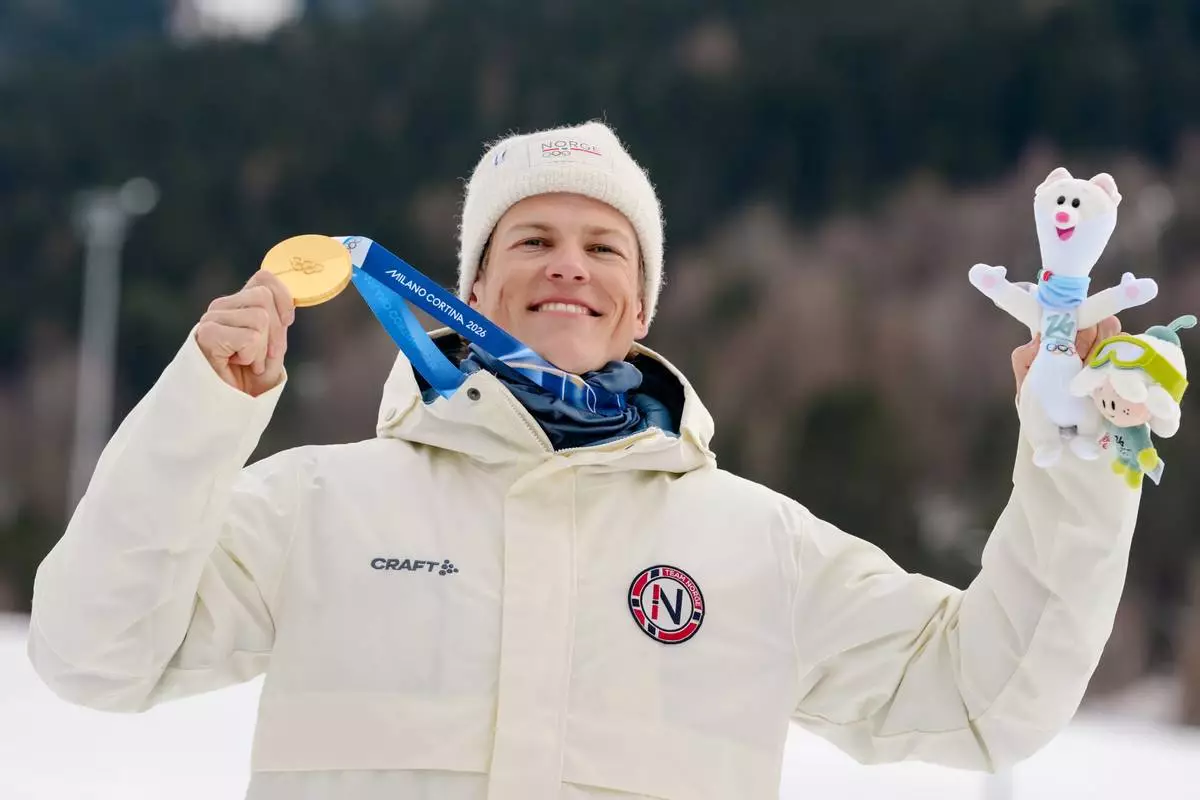
Johannes Hoesflot Klaebo, of Norway, poses after winning the gold medal in the cross-country skiing men's sprint classic at the 2026 Winter Olympics, in Tesero, Italy, Tuesday, Feb. 10, 2026. (AP Photo/Evgeniy Maloletka)
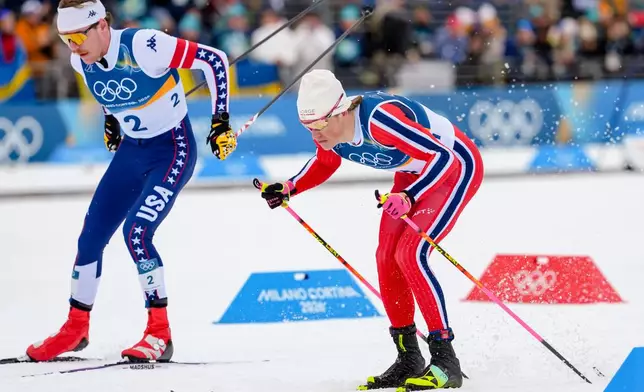
Ben Ogden, of the United States, left, and Johannes Hoesflot Klaebo, right, compete in the cross-country skiing men's sprint classic at the 2026 Winter Olympics, in Tesero, Italy, Tuesday, Feb. 10, 2026. (AP Photo/Kirsty Wigglesworth)
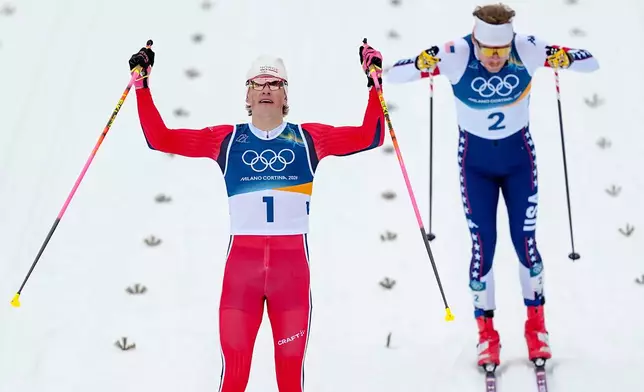
Johannes Hoesflot Klaebo, of Norway, crosses the finish line to win the gold medal in the cross-country skiing men's sprint classic at the 2026 Winter Olympics, in Tesero, Italy, Tuesday, Feb. 10, 2026. (AP Photo/Matthias Schrader)
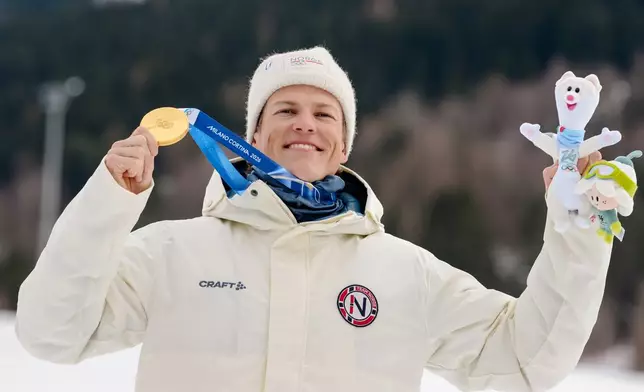
Gold medalist Johannes Hoesflot Klaebo, of Norway, poses on the podium of the cross-country skiing men's sprint classic at the 2026 Winter Olympics, in Tesero, Italy, Tuesday, Feb. 10, 2026. (AP Photo/Evgeniy Maloletka)
The 29-year-old is one medal away from the Winter Olympics all-time record tally of eight golds, shared by three retired Norwegian greats of cross-country skiing and biathlon.
A formidable sprinter, Klaebo won five golds, one silver and one bronze at the Winter Olympics in Beijing and Pyeongchang. He has evolved to dominate every aspect of cross-country skiing, winning his first distance race in the skiathlon Sunday.
Added to his explosive finish is his breathtakingly fast hill climb — a brutal run that left other racers far behind on Tuesday in northern Italy.
Klaebo has taken the technical part of the sport to a new level, according to Ole Haldor Ensrud, a Norwegian coach with South Africa’s Olympic team, who spoke to the AP.
“What makes him a bit unique is how flexible he is in his technique. In skiing, unlike running for example, you have to adjust the technique all the time to the different terrains.”
Rival athletes add that his unmatched reserves of energy can be tapped in the late stages.
“I like to go to every race thinking that it’s a race for the win. But these days, a lot of the time it’s a race for second,” U.S. silver medalist Ben Ogden said on Tuesday. “I’m proud to at least win (silver) in that race.”
Klaebo’s skillset was not always so complete. Early in his career, he appeared more vulnerable in longer races. That has changed dramatically thanks to his relentless training and reputation as a meticulous race planner.
His skills were honed on fast roller-ski tracks and through varied training that includes summer stints in the United States at Park City, Utah.
That earned him the ability to switch techniques quickly, maintaining speed while offering few openings for challengers.
“I put a lot of pressure on myself,” Klaebo admitted. “It feels good to be in a place where we kind of know the tracks. We have raced here many times before and I kind of know what I’m capable of doing. We’ve had some really good days so far.”
After blowing away the competition on the final hill on Tuesday, Klaebo eased off and coasted home, smiling and waving to fans that included members of his family, even as Ogden drew dangerously close.
Back in Norway, where skiing is a prime-time sport, praise flooded in.
“What an athlete!” the country’s prime minister, Jonas Gahr Stoere, wrote moments after the win in an online post. “Johannes Hoesflot Klaebo is virtually unbeatable in the sprint. Congratulations!”
A sporting hero at home, his flowing hair and easy smile are splashed across billboards and TV ads. A feature documentary about his life hit Norwegian cinemas last December.
But Klaebo, a medal away from the history books, is enjoying a moment of calm in Italy.
“I’m just going out there and really enjoying it and it’s amazing,” he said. “Now I’m just trying to enjoy the moments.”
AP Winter Olympics: https://apnews.com/hub/milan-cortina-2026-winter-olympics
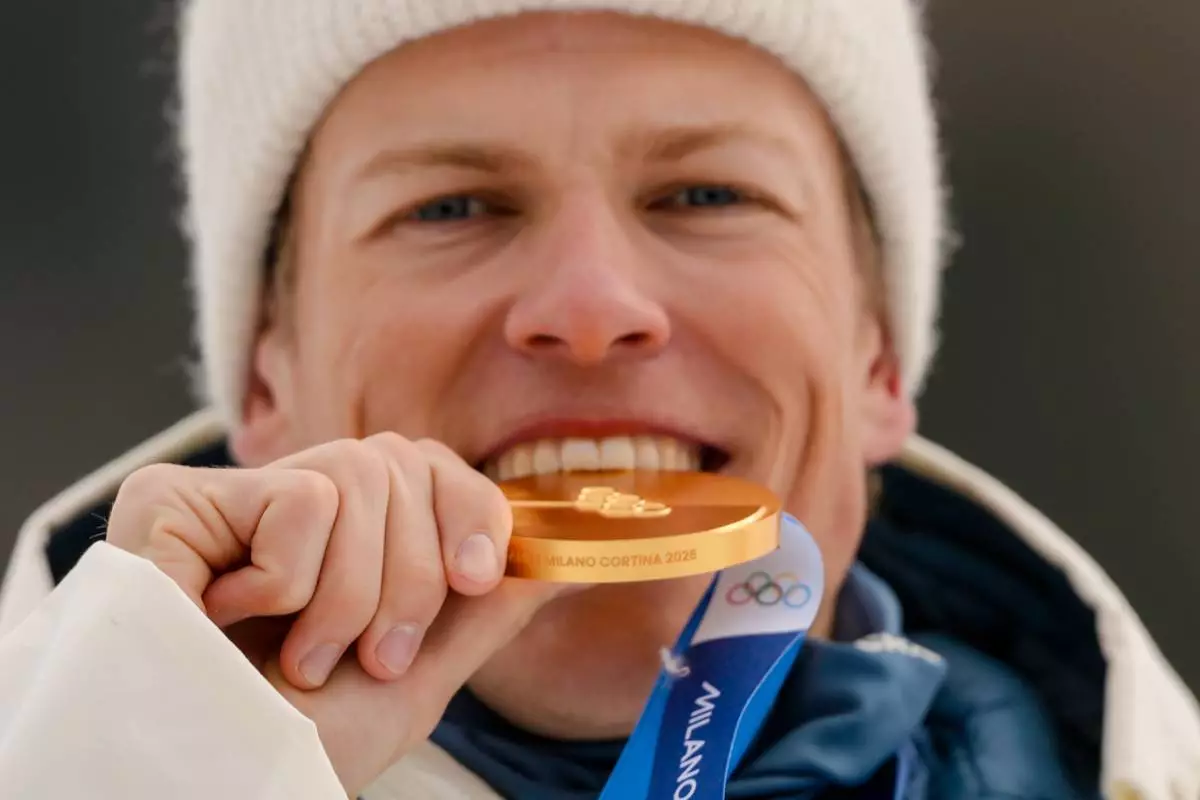
Johannes Hoesflot Klaebo, of Norway, poses after winning the gold medal in the cross-country skiing men's sprint classic at the 2026 Winter Olympics, in Tesero, Italy, Tuesday, Feb. 10, 2026. (AP Photo/Evgeniy Maloletka)
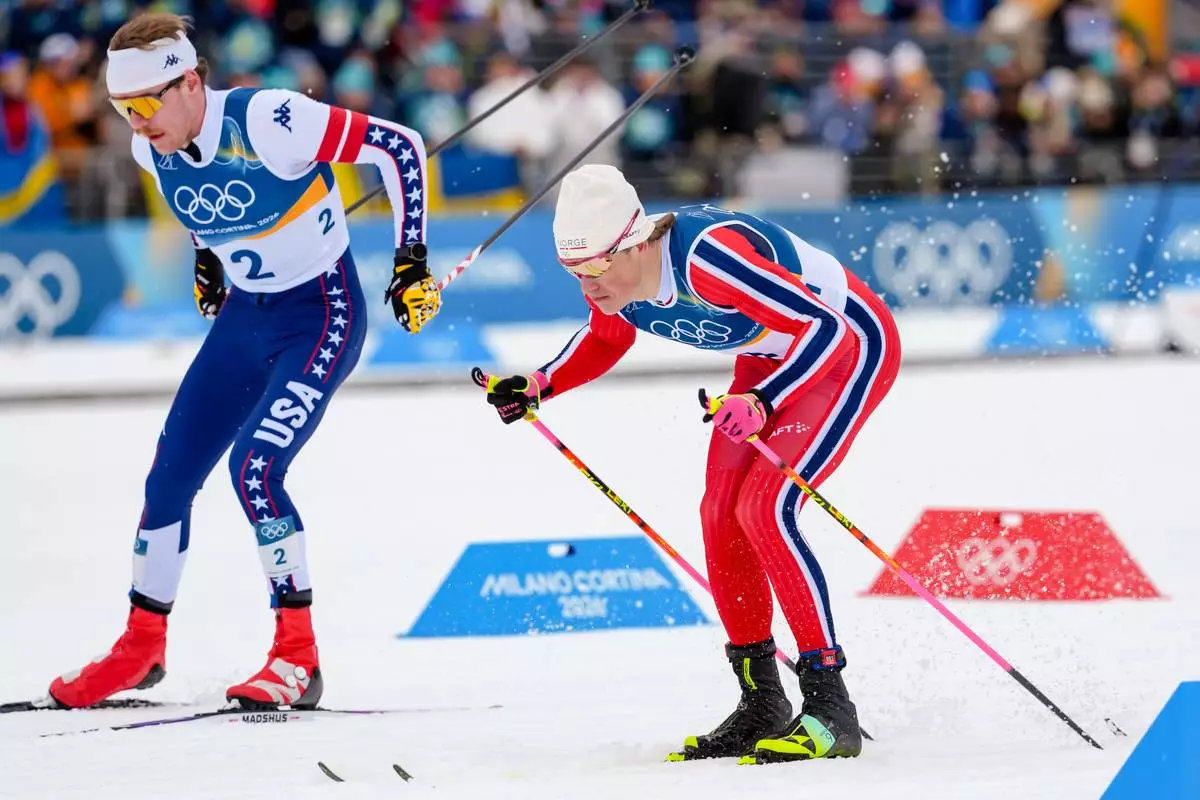
Ben Ogden, of the United States, left, and Johannes Hoesflot Klaebo, right, compete in the cross-country skiing men's sprint classic at the 2026 Winter Olympics, in Tesero, Italy, Tuesday, Feb. 10, 2026. (AP Photo/Kirsty Wigglesworth)
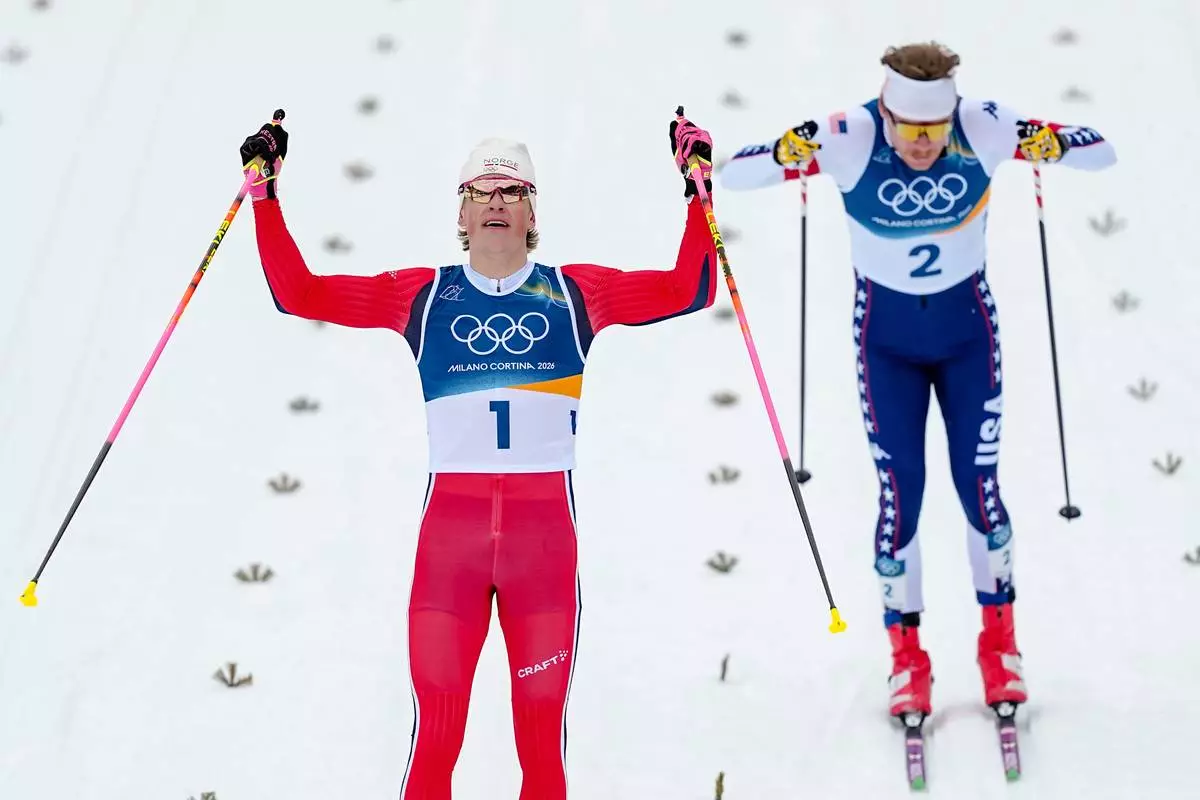
Johannes Hoesflot Klaebo, of Norway, crosses the finish line to win the gold medal in the cross-country skiing men's sprint classic at the 2026 Winter Olympics, in Tesero, Italy, Tuesday, Feb. 10, 2026. (AP Photo/Matthias Schrader)
Gold medalist Johannes Hoesflot Klaebo, of Norway, poses on the podium of the cross-country skiing men's sprint classic at the 2026 Winter Olympics, in Tesero, Italy, Tuesday, Feb. 10, 2026. (AP Photo/Evgeniy Maloletka)