Skip to Content Facebook Feature Image

Republican lawmakers grill telecom officials over phone records access in Trump investigation

News

Republican lawmakers grill telecom officials over phone records access in Trump investigation
News

News

Republican lawmakers grill telecom officials over phone records access in Trump investigation

2026-02-11 08:35 Last Updated At:08:40

WASHINGTON (AP) — Republican lawmakers decried Tuesday what they said were invasive tactics in the investigation of President Donald Trump’s efforts to overturn the 2020 election, pressing representatives from leading telecommunications companies about their role in providing prosecutors with phone records of certain sitting members of Congress.

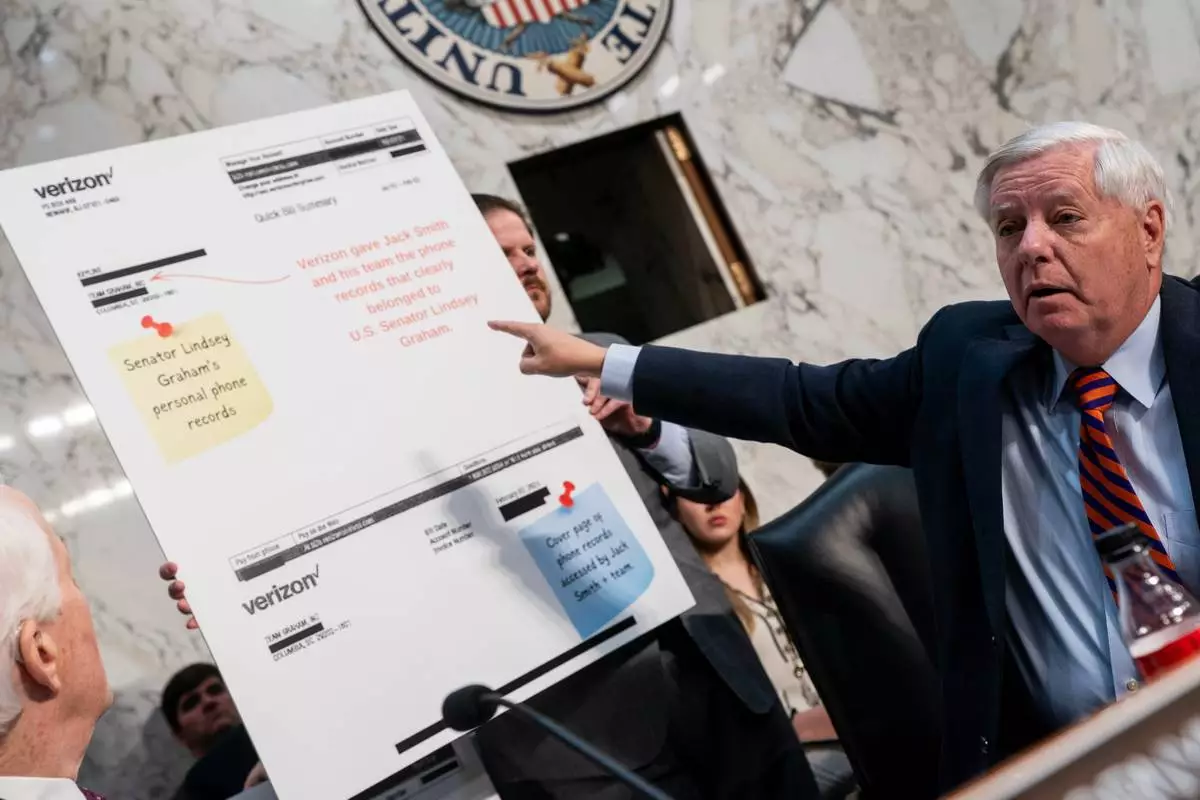
"If the shoe were on the other foot, it'd be front-page news all over the world that Republicans went after sitting Democratic senators' phone records,” said Republican Sen. Lindsey Graham of South Carolina, who was among the Republicans in Congress whose records were accessed by prosecutors as they examined contacts between the president and allies on Capitol Hill.

“I just want to let you know," he added, “I don't think I deserve what happened to me.”

Lawyers for the companies defended their actions at a Senate Judiciary subcommittee hearing, stressing that they had simply followed the law by turning over records under a subpoena even as they also acknowledged that more could be done to respect lawmakers' expectations of privacy.

“We were compelled to provide this information under the law, and we complied. No matter who is the target of a subpoena Verizon cannot ignore a valid legal demand or a court order," said Chris Miller, the senior vice president and general counsel of Verizon's consumer group. “But our processes could have been better suited to meet what was a new and unique set of circumstances for us, and for other companies.”

The hearing afforded Republican lawmakers their first opportunity to confront phone company representatives over the revelation that special counsel Jack Smith's team obtained the records of GOP lawmakers whom Trump was imploring on Jan. 6, 2021 to halt the congressional certification of his election loss to Democrat Joe Biden. The records showed when the calls were placed and how long they lasted but did not capture the content of the conversations.

All told, subpoenas were issued for phone records of 20 current or former Republican members of Congress, said Sen. Chuck Grassley, the chairman of the Senate Judiciary Committee.

Democrats called the Republican outrage misplaced in light of the violence of Jan. 6, when pro-Trump rioters stormed the Capitol, and noted that the tactic used by Smith was standard in criminal investigations and was understandable in this instance given outreach to lawmakers by Trump and his associates.

“Let me start by rejecting the notion that the Department of Justice's investigation into the attack on the Capitol was worse than the attack on the Capitol,” said Democratic Sen. Sheldon Whitehouse of Rhode Island.

That point was echoed by Michael Romano, a former Justice Department prosecutor who helped oversee prosecutions of Capitol rioters.

“When I first first learned of this hearing, I was surprised. I was surprised because from my perspective as a long-serving federal prosecutor, there is nothing remotely scandalous or controversial about the collection of toll records,” Romano said.

He added: “I understand that some of you had your records collected and are unhappy about that, and that’s understandable. Nobody enjoys having the government collect their information. But apart from that, I’m happy to say you were not harmed.”

Smith himself has defended the phone records collection, telling lawmakers in a private deposition in December that "if Donald Trump had chosen to call a number of Democratic senators, we would have gotten toll records for Democratic senators.”

Lawyers for the telecommunications companies stressed that the Smith subpoenas were treated like the hundreds of thousands of similar demands they receive from law enforcement each year. They also noted that the subpoenas from Smith's team offered limited information and context.

Miller, the Verizon representative, testified that the subpoenas his company received “did not include any names or any other information identifying these numbers as belonging” to members of Congress and that a non-disclosure order from a judge barred the company from alerting the targeted lawmakers.

A representative for T-Mobile similarly said none of the subpoenas the company fielded sought records from Senate business lines.

Two subpoenas in January 2023 to AT&T sought records about a personal account belonging to a sitting member of Congress, listed only a phone number and gave no indication that the requested information involved lawmakers, said David McAtee, a senior executive vice president and general counsel. The records were produced, with the company not knowing that the names associated with the accounts were sitting members of Congress

In a separate instance, the company's legal team responded to a subpoena from prosecutors by seeking information from Smith's team about how a legal protection afforded to lawmakers, known as the Constitution's “speech or debate” clause, might apply, McAtee said.

“The special counsel’s office never responded to that email — at least not substantively — and ultimately the office abandoned the subpoena and no records were produced," he said.

He said the company was working on a process that would allow it to identify all phone numbers associated with a given member of Congress and not just the official numbers.

And Miller said Verizon was instituting a series of changes, including ensuring that senior company leadership is notified before information about members of Congress is disclosed. The company will also notify a lawmaker, when possible, that their information is being sought — and will challenge any non-disclosure order that prevents it from doing so, Miller said.
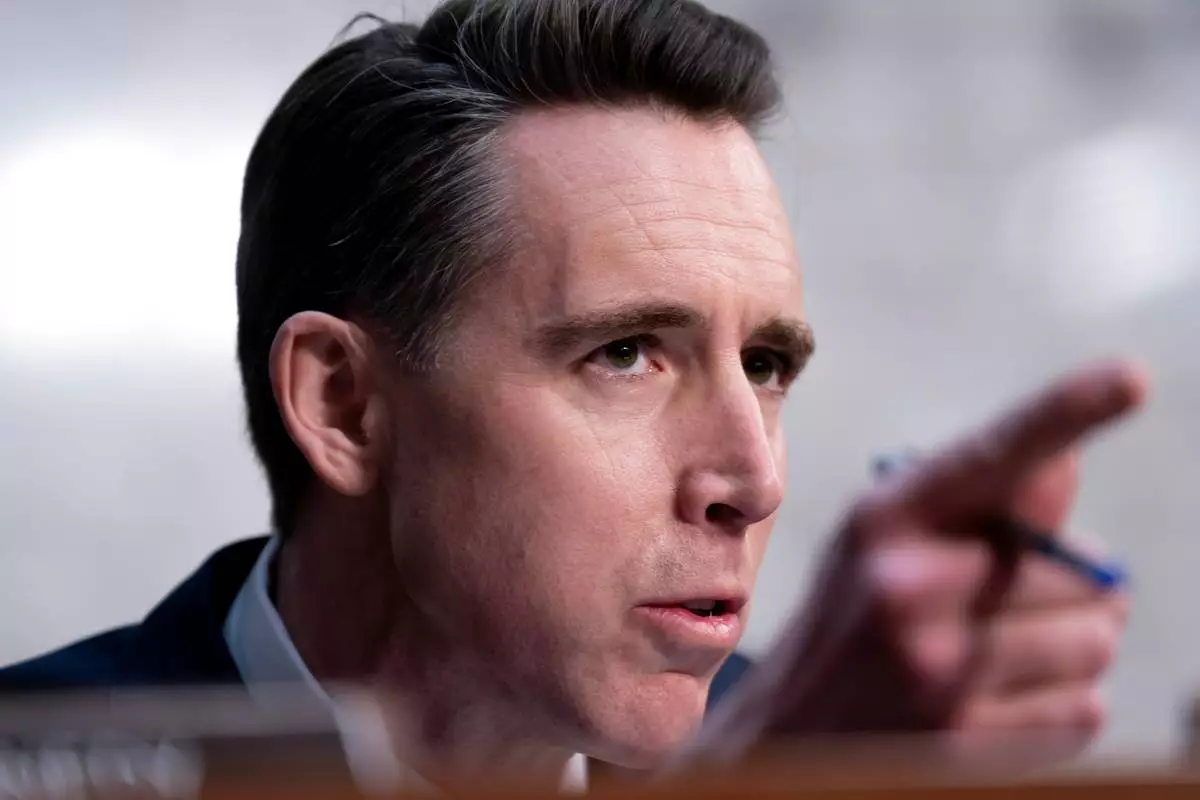
Sen. Josh Hawley, R-Mo., speaks during a Senate Committee on the Judiciary Subcommittee on Privacy, Technology, and the Law hearing to examine Arctic Frost accountability, focusing on oversight of telecommunications carriers on Capitol Hill in Washington, Tuesday, Feb. 10, 2026. (AP Photo/Nathan Howard)
Sen. Josh Hawley, R-Mo., speaks during a Senate Committee on the Judiciary Subcommittee on Privacy, Technology, and the Law hearing to examine Arctic Frost accountability, focusing on oversight of telecommunications carriers on Capitol Hill in Washington, Tuesday, Feb. 10, 2026. (AP Photo/Nathan Howard)
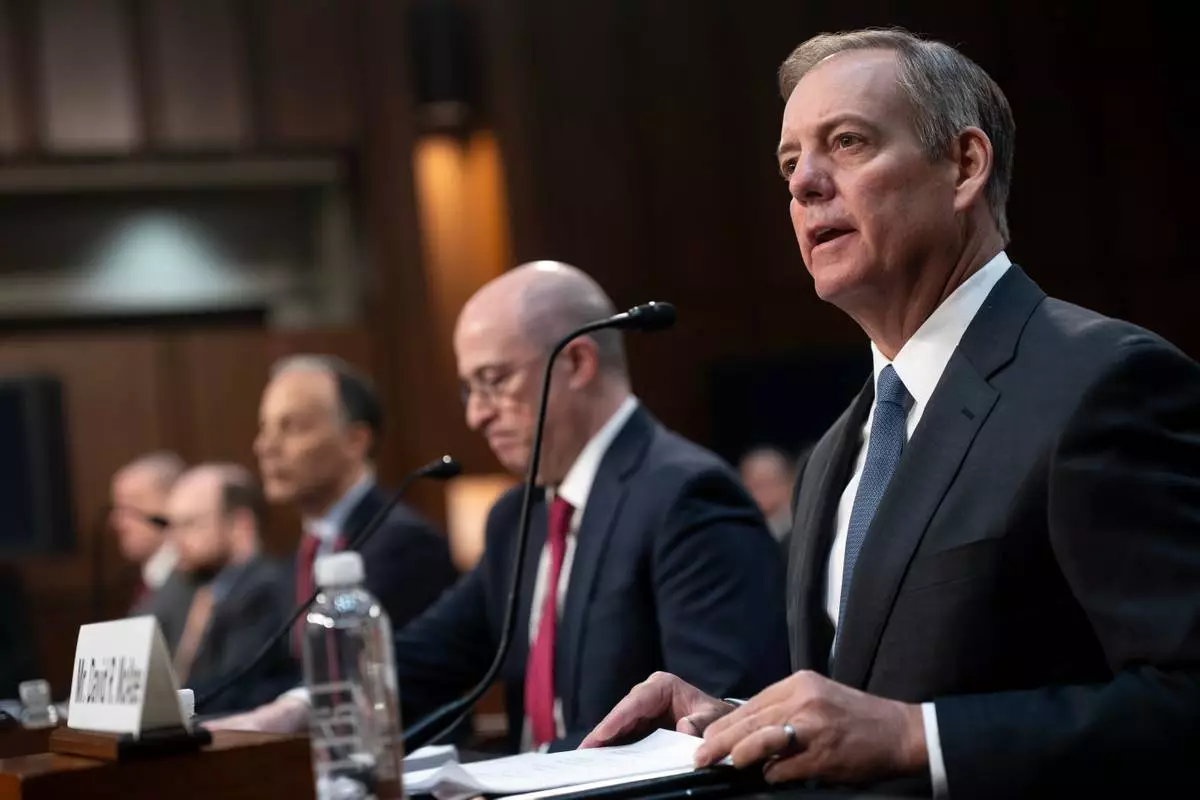
David R. McAtee, right, senior executive vice president and general counsel for AT&T, testifies during a Senate Committee on the Judiciary, Subcommittee on Privacy, Technology, and the Law hearing to examine Arctic Frost accountability, focusing on oversight of telecommunications carriers on Capitol Hill in Washington, Tuesday, Feb. 10, 2026. (AP Photo/Nathan Howard)
David R. McAtee, right, senior executive vice president and general counsel for AT&T, testifies during a Senate Committee on the Judiciary, Subcommittee on Privacy, Technology, and the Law hearing to examine Arctic Frost accountability, focusing on oversight of telecommunications carriers on Capitol Hill in Washington, Tuesday, Feb. 10, 2026. (AP Photo/Nathan Howard)
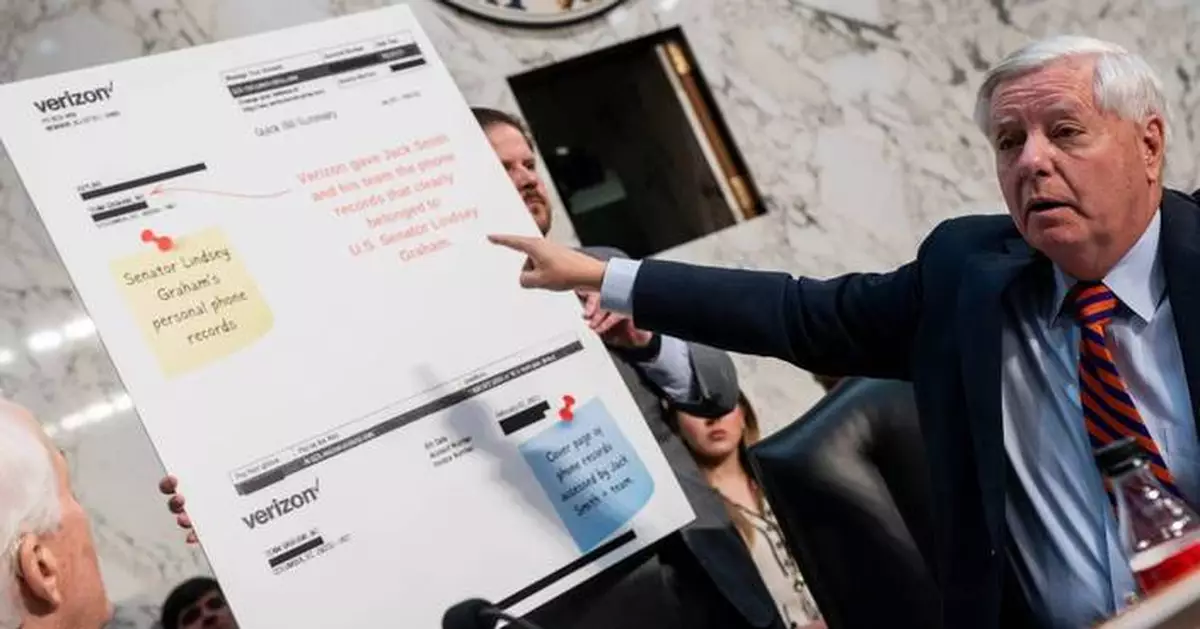
Sen. Lindsey Graham, R-S.C., points to a copy of his Verizon phone bill during a Senate Committee on the Judiciary Subcommittee on Privacy, Technology, and the Law hearing to examine Arctic Frost accountability, focusing on oversight of telecommunications carriers on Capitol Hill in Washington, Tuesday, Feb. 10, 2026. (AP Photo/Nathan Howard)
Sen. Lindsey Graham, R-S.C., points to a copy of his Verizon phone bill during a Senate Committee on the Judiciary Subcommittee on Privacy, Technology, and the Law hearing to examine Arctic Frost accountability, focusing on oversight of telecommunications carriers on Capitol Hill in Washington, Tuesday, Feb. 10, 2026. (AP Photo/Nathan Howard)
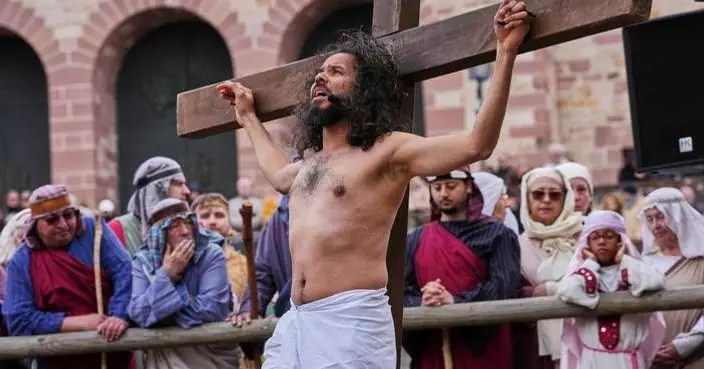
Thousands of Catholic devotees commemorated Good Friday across Latin America with processions and ceremonies re-enacting the crucifixion of Jesus.

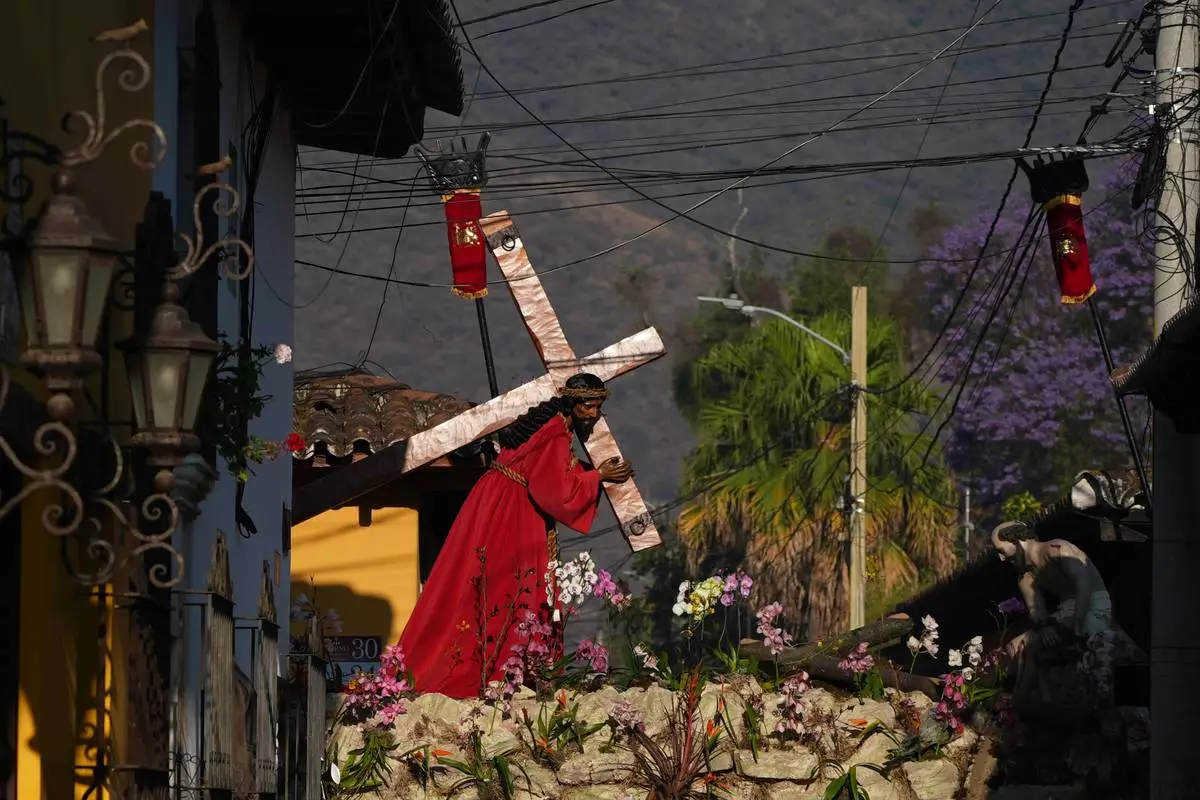
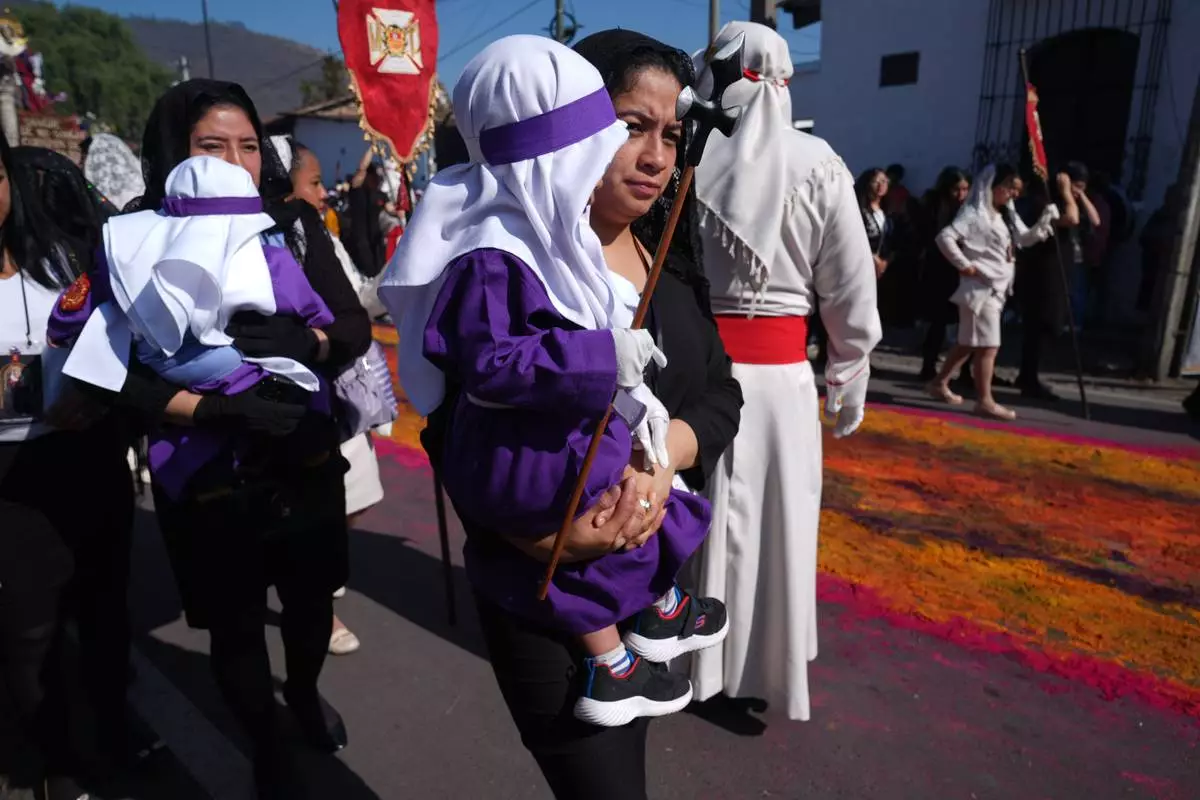
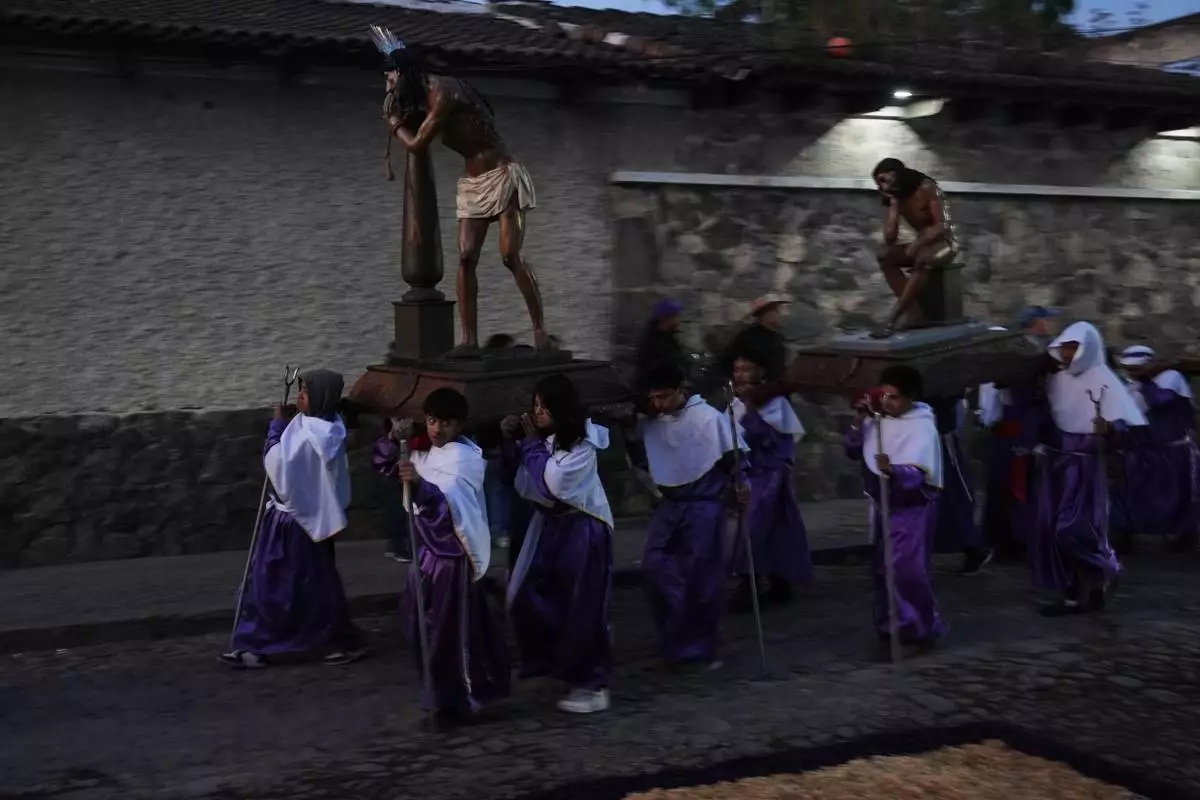
In Antigua, a colonial-era city in southern Guatemala, dozens dressed in purple and white robes and made their way under the early morning sun, many of them penitents known as “cucuruchos.” Others carried centuries-old images of Jesus through cobblestone streets.

The city hosts more than a dozen processions throughout Holy Week, set against a backdrop of volcanoes.

Marcos Bautista, 63, said he has attended the Good Friday observances since his father brought him along as a baby in his arms.

“To describe Holy Week in Antigua, there are no words that can capture what it feels like," Bautista said. “It’s a feeling that, just by speaking about what Jesus has done in our lives, moves me deeply.”

In Bolivia, President Rodrigo Paz traveled to the southern city of Tarija to participate in Good Friday ceremonies.

The country is a secular state under its constitution and its leaders refrained from engaging in any religious events between 2006 and 2025. But Paz — who took office last November — broke with precedent by attending Palm Sunday Mass carrying a palm frond.

In the capital city of La Paz, local authorities and military bands accompanied Good Friday processions, in which hooded penitents carried the Holy Sepulcher through the streets.

Antonio Santamaría, who was holding an image of Jesus, said he welcomed the government’s presence. “I’m glad everyone is here now,” Santamaría said.

Bolivia remains a predominantly Catholic country, alongside strong Indigenous spiritual traditions. In some households, it is customary to eat only fish on Good Friday and prepare up to 12 dishes representing the apostles of Jesus, a tradition that has declined in recent years amid an economic crisis.

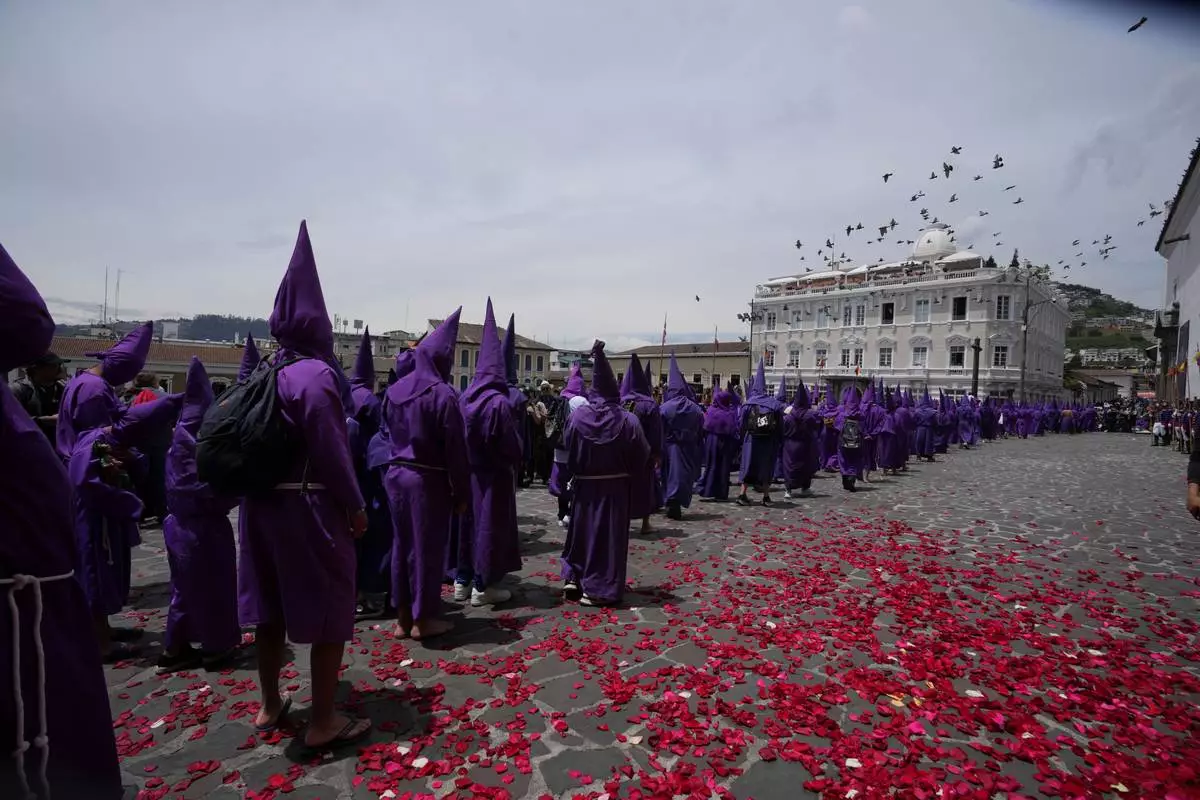
In Ecuador, where about 80% of the population identifies as Catholic, processions were held across major cities. In the capital, Quito, the “Jesús del Gran Poder” procession drew more than 150,000 faithful who filled the historic center’s streets with chants and prayers as they accompanied an image of Jesus carrying the cross.

Thousands more climbed the Monserrate Hill in neighboring Colombia. At more than 10,200 feet (3,100 meters) above sea level, they reached the summit in the capital city of Bogotá to attend Mass at the basilica. Similar observances, including reenactments of the Stations of the Cross, were held in other parts of the country.

Mexicans, too, celebrated Good Friday in a country that’s home to nearly 100 million Catholics.

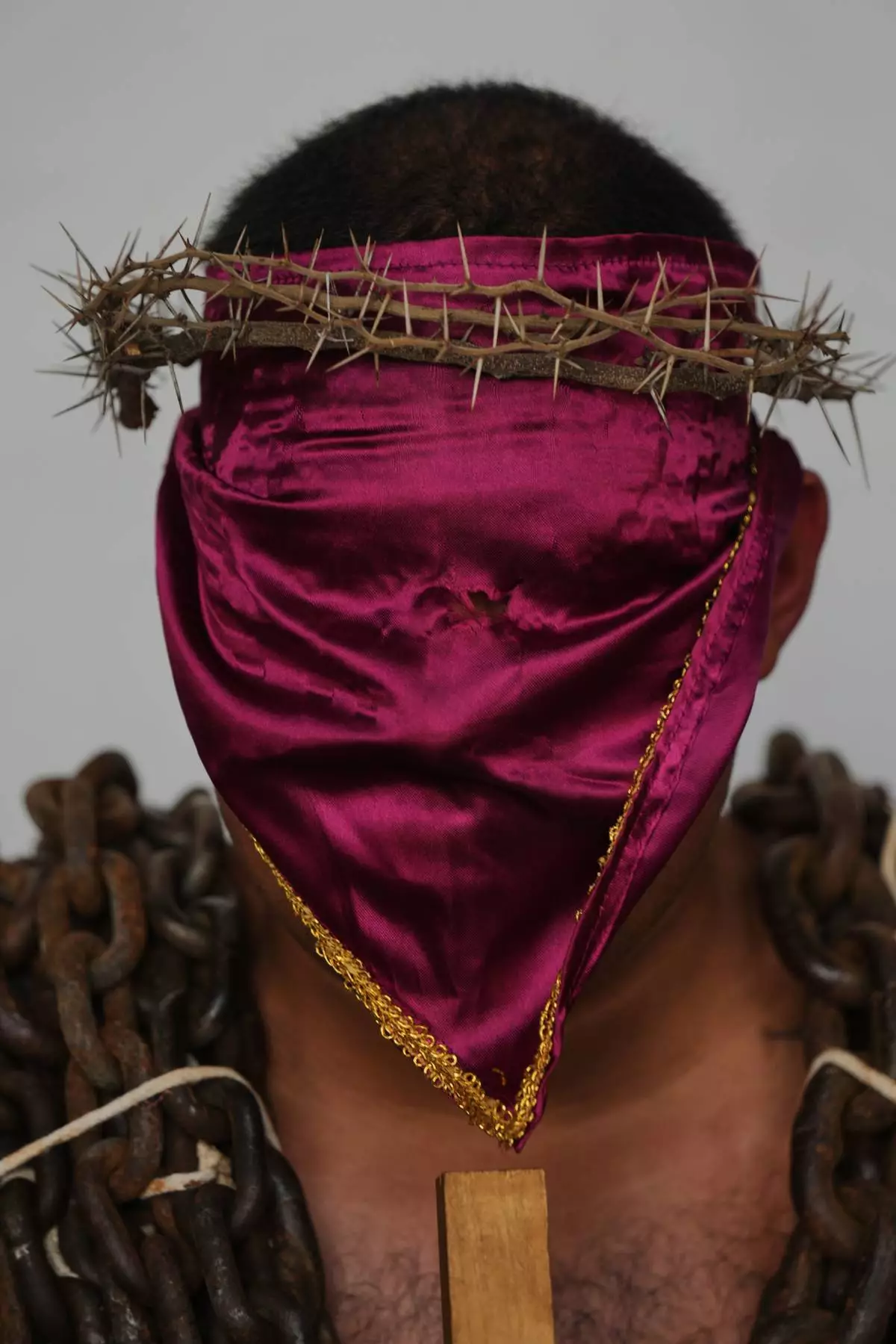
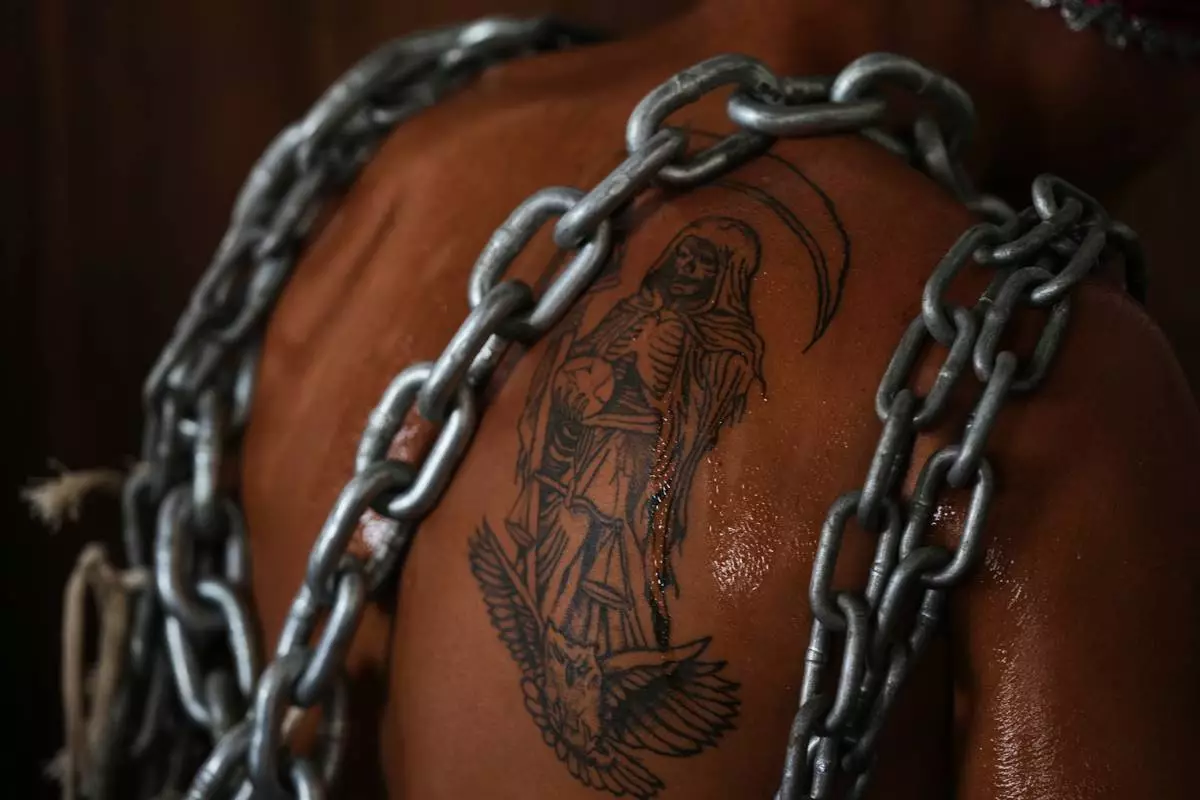
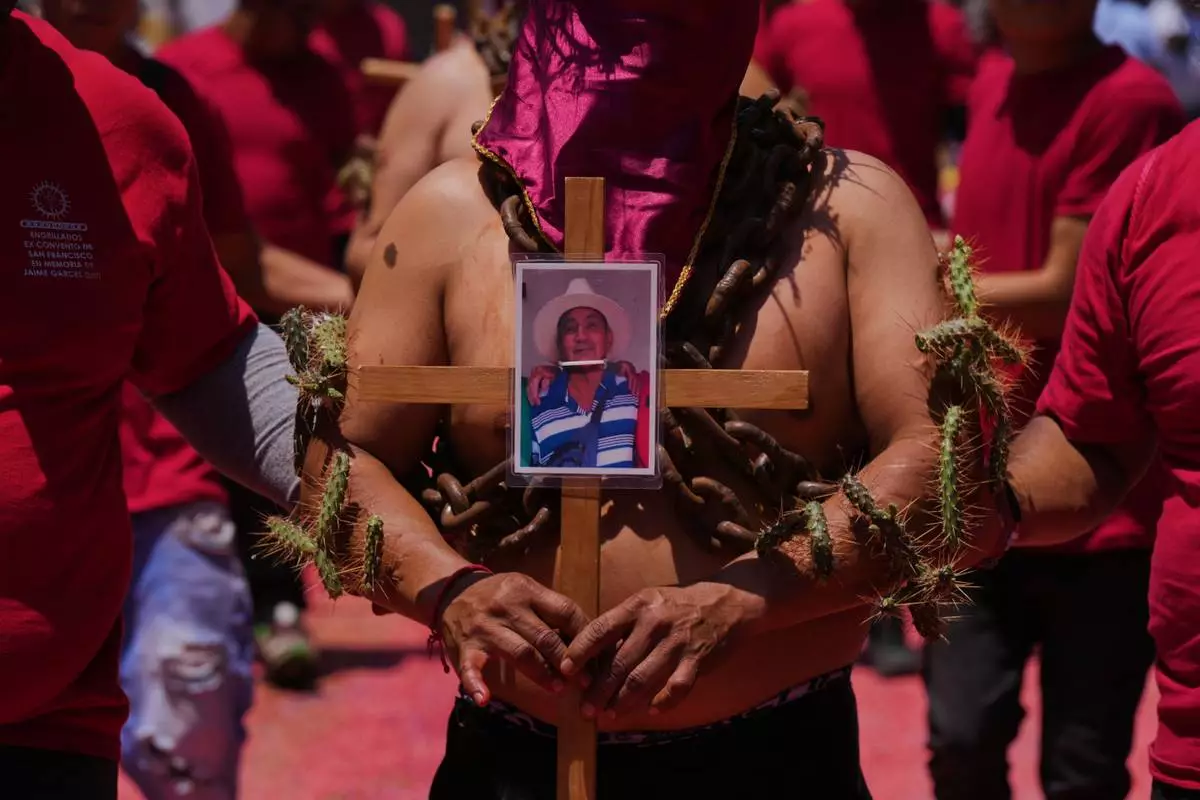
Masked penitents, in chains and with pieces of cactus stuck to their skin, walked through the town of Atlixco, in the central state of Puebla. Known as the “Procession of the Chained," it’s part of a tradition in which some participants pay penance for their sins and others thank God for miracles.

“It’s very beautiful, very sad,” said Marcela Ramírez, a homemaker who attended the procession. “It’s a kind of reverence, and you have to come and accompany them.”

While the share of Catholics in Latin America has declined over the past decade, the faith remains the region’s largest religion.

In several countries, including Peru and Argentina, more than 60% of adults still identify as Catholic, according to 2024 surveys by the Pew Research Center and Latinobarómetro.

AP journalists Moisés Castillo in Antigua, Guatemala; Carlos Valdez and Juan Karita in La Paz, Bolivia; Gonzalo Solano and Gabriela Molina, in Quito, Ecuador; and Martín Silva in Atlixco, Mexico, contributed to this report.

Associated Press religion coverage receives support through the AP’s collaboration with The Conversation US, with funding from Lilly Endowment Inc. The AP is solely responsible for this content.

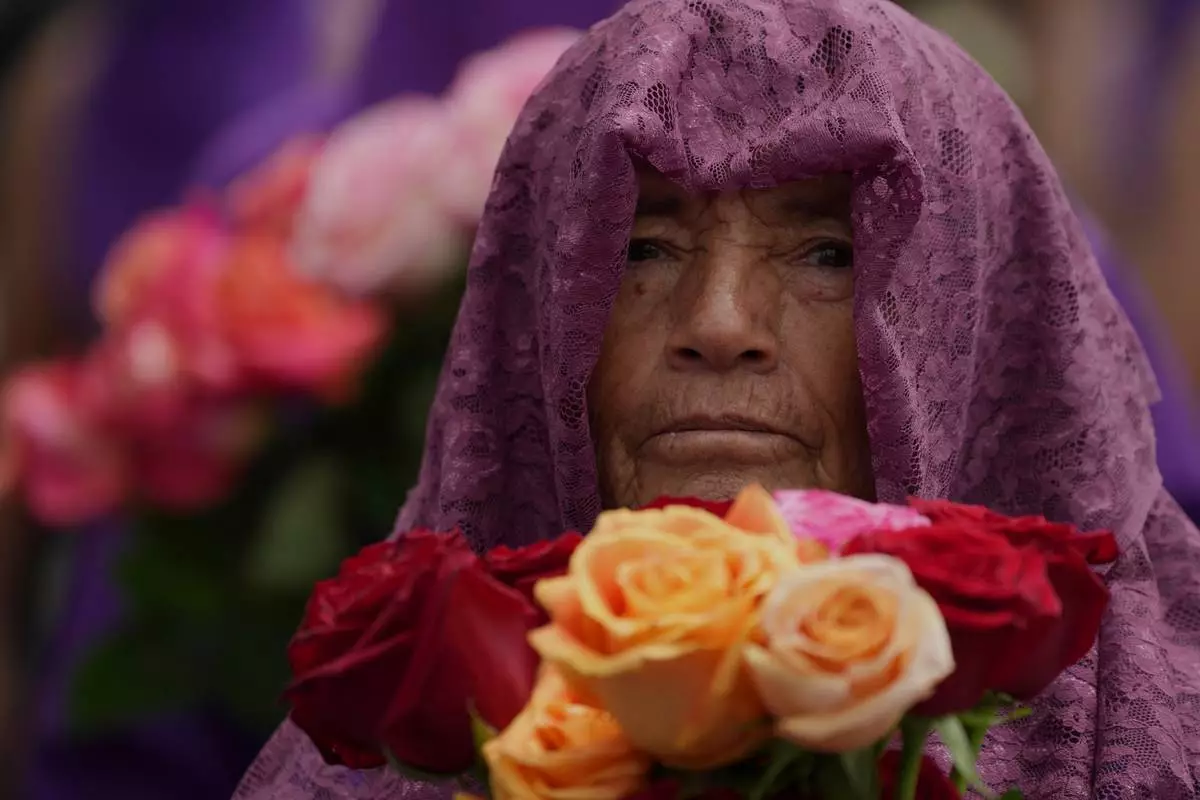
A penitents known as a "Veronica" takes part in the Jesus del Gran Poder procession in Quito, Ecuador, Friday, April 3, 2026. (AP Photo/Dolores Ochoa).

A penitents known as a "Veronica" takes part in the Jesus del Gran Poder procession in Quito, Ecuador, Friday, April 3, 2026. (AP Photo/Dolores Ochoa).

Hooded penitents known as "Cucuruchos" take part in the Jesus del Gran Poder procession in Quito, Ecuador, Friday, April 3, 2026. (AP Photo/Dolores Ochoa).

Hooded penitents known as "Cucuruchos" take part in the Jesus del Gran Poder procession in Quito, Ecuador, Friday, April 3, 2026. (AP Photo/Dolores Ochoa).

A blindfolded penitent wears a crown of thorns before a Good Friday procession during Holy Week celebrations in Atlixco, Mexico, Friday, April 3, 2026. (AP Photo/Fernando Llano)

A blindfolded penitent wears a crown of thorns before a Good Friday procession during Holy Week celebrations in Atlixco, Mexico, Friday, April 3, 2026. (AP Photo/Fernando Llano)

Chains drape over the Santa Muerte tattoo of a penitent before a Good Friday procession during Holy Week in Atlixco, Mexico, Friday, April 3, 2026. (AP Photo/Fernando Llano)

Chains drape over the Santa Muerte tattoo of a penitent before a Good Friday procession during Holy Week in Atlixco, Mexico, Friday, April 3, 2026. (AP Photo/Fernando Llano)

A penitent wearing chains and prickly cactus holds a photo on a cross at a Good Friday procession during Holy Week in Atlixco, Mexico, Friday, April 3, 2026. (AP Photo/Fernando Llano)

A penitent wearing chains and prickly cactus holds a photo on a cross at a Good Friday procession during Holy Week in Atlixco, Mexico, Friday, April 3, 2026. (AP Photo/Fernando Llano)

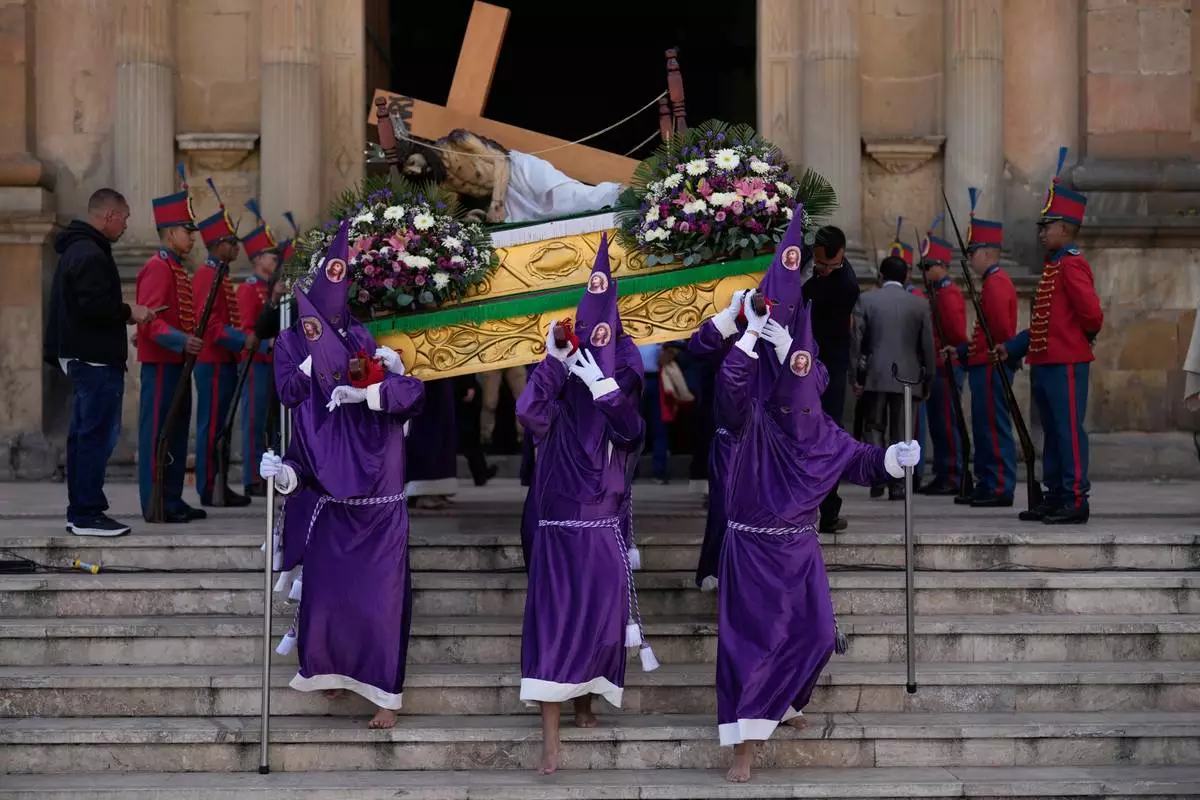
Penitents from the Nazareno brotherhood carry a statue of Jesus down the steps of the Cathedral Basilica of St. James the Apostle for a Good Friday procession during Holy Week in Tunja, Colombia, Friday, April 3, 2026. (AP Photo/Fernando Vergara)

Penitents from the Nazareno brotherhood carry a statue of Jesus down the steps of the Cathedral Basilica of St. James the Apostle for a Good Friday procession during Holy Week in Tunja, Colombia, Friday, April 3, 2026. (AP Photo/Fernando Vergara)

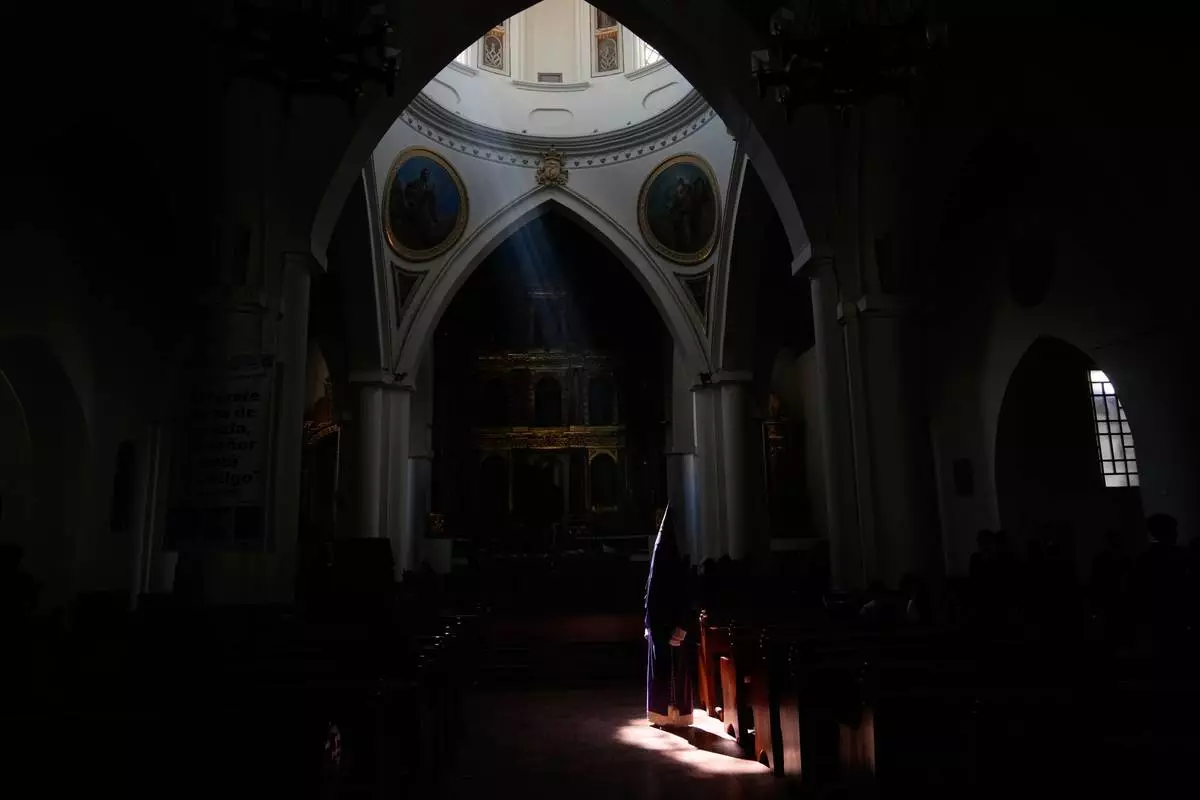
A hooded penitent from the Nazareno brotherhood waits for the Good Friday procession inside the Cathedral Basilica of St. James the Apostle during Holy Week in Tunja, Colombia, Friday, April 3, 2026. (AP Photo/Fernando Vergara)

A hooded penitent from the Nazareno brotherhood waits for the Good Friday procession inside the Cathedral Basilica of St. James the Apostle during Holy Week in Tunja, Colombia, Friday, April 3, 2026. (AP Photo/Fernando Vergara)

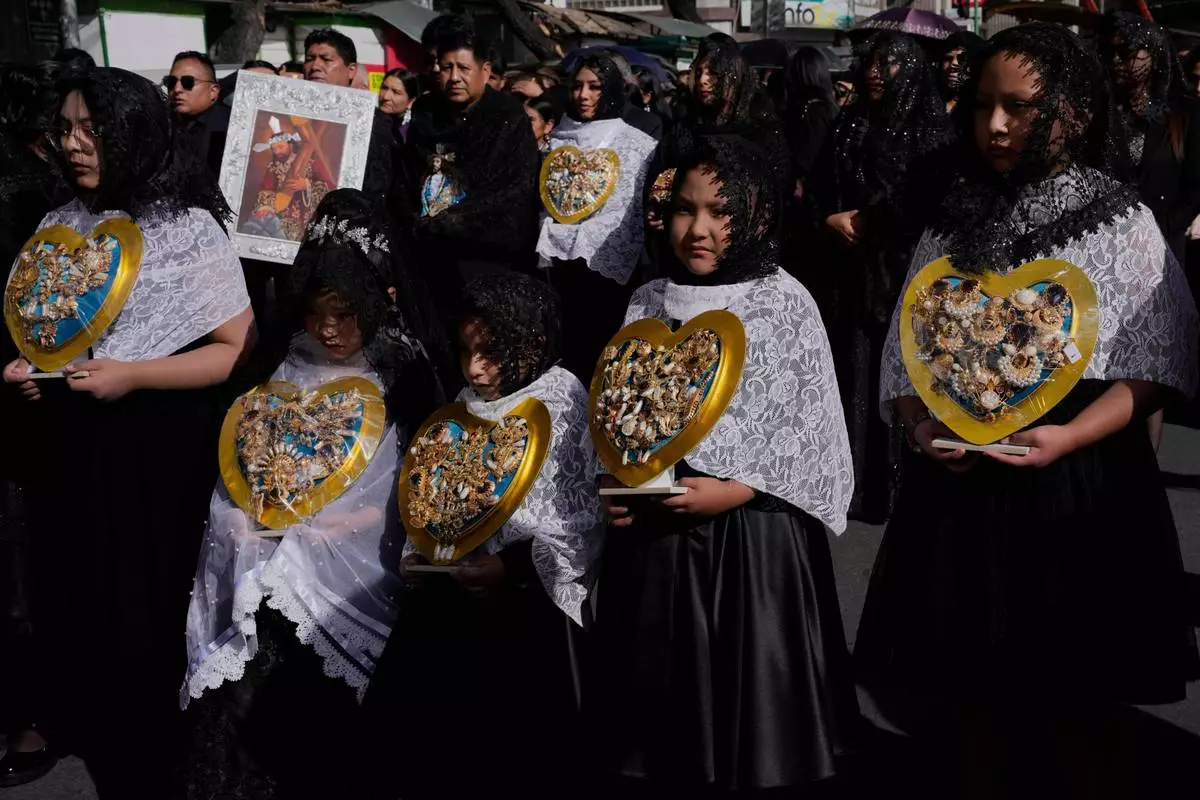
Young women and girls carry jeweled hearts representing the Virgin Mary at a Good Friday procession during Holy Week in La Paz, Bolivia, Friday, April 3, 2026. (AP Photo/Juan Karita)

Young women and girls carry jeweled hearts representing the Virgin Mary at a Good Friday procession during Holy Week in La Paz, Bolivia, Friday, April 3, 2026. (AP Photo/Juan Karita)

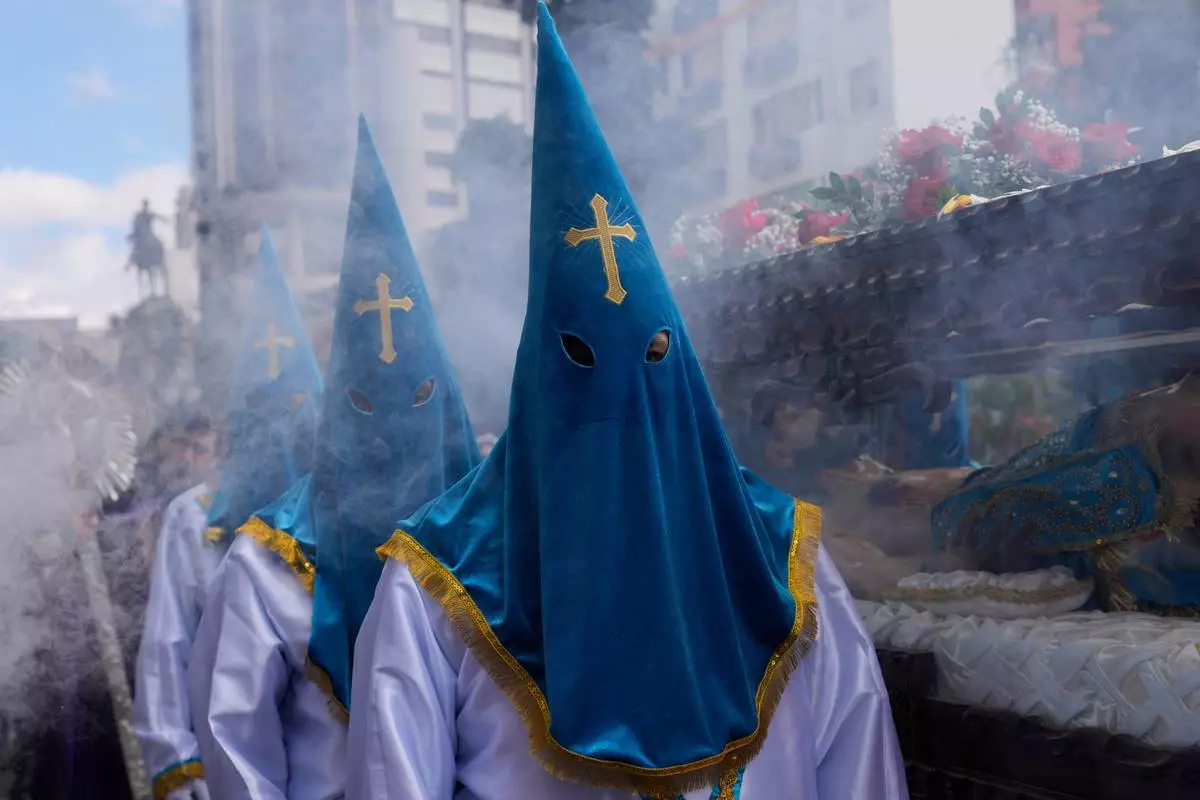
Hooded penitents participate in a Good Friday procession during Holy Week in La Paz, Bolivia, Friday, April 3, 2026. (AP Photo/Juan Karita)

Hooded penitents participate in a Good Friday procession during Holy Week in La Paz, Bolivia, Friday, April 3, 2026. (AP Photo/Juan Karita)

A statue of Jesus Christ with a cross makes its way past electric cables at La Merced church's Good Friday procession during Holy Week in Antigua, Guatemala, Friday, April 3, 2026. (AP Photo/Moises Castillo)

A statue of Jesus Christ with a cross makes its way past electric cables at La Merced church's Good Friday procession during Holy Week in Antigua, Guatemala, Friday, April 3, 2026. (AP Photo/Moises Castillo)

Women carry children dressed as penitents knows as "cucuruchos" on the sidelines of La Merced church's Good Friday procession during Holy Week in Antigua, Guatemala, Friday, April 3, 2026. (AP Photo/Moises Castillo)

Women carry children dressed as penitents knows as "cucuruchos" on the sidelines of La Merced church's Good Friday procession during Holy Week in Antigua, Guatemala, Friday, April 3, 2026. (AP Photo/Moises Castillo)

Penitents carry statues of Jesus Christ representing the Stations of the Cross at a Good Friday procession by La Merced church during Holy Week in Antigua, Guatemala, just before sunrise Friday, April 3, 2026. (AP Photo/Moises Castillo)

Penitents carry statues of Jesus Christ representing the Stations of the Cross at a Good Friday procession by La Merced church during Holy Week in Antigua, Guatemala, just before sunrise Friday, April 3, 2026. (AP Photo/Moises Castillo)

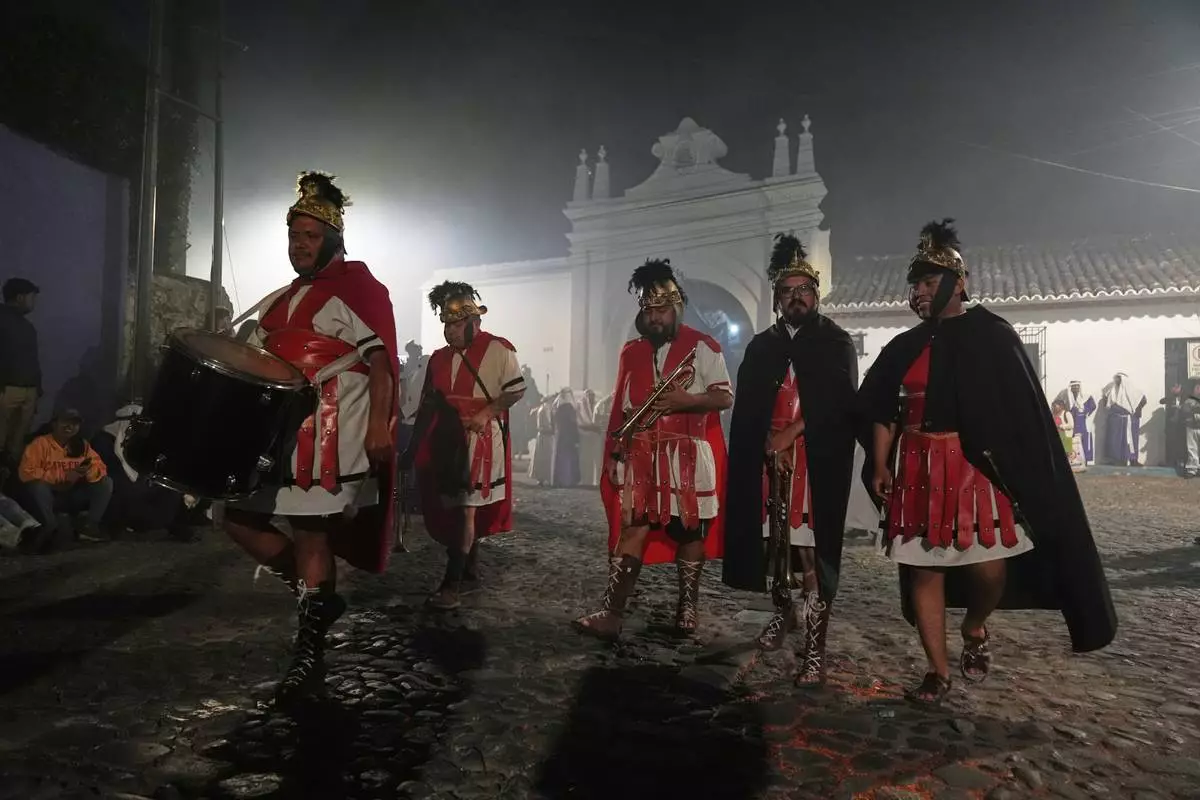
Musicians dressed as Roman soldiers take part in La Merced church's Good Friday procession during Holy Week in Antigua, Guatemala, Friday, April 3, 2026. (AP Photo/Moises Castillo)

Musicians dressed as Roman soldiers take part in La Merced church's Good Friday procession during Holy Week in Antigua, Guatemala, Friday, April 3, 2026. (AP Photo/Moises Castillo)

Recommended Articles