Skip to Content Facebook Feature Image

Privacy activists call on California to remove covert license plate readers

News

Privacy activists call on California to remove covert license plate readers
News

News

Privacy activists call on California to remove covert license plate readers

2026-02-11 13:18 Last Updated At:13:43

More than two dozen privacy and advocacy organizations are calling on California Gov. Gavin Newsom to remove a network of covert license plate readers deployed across Southern California that the groups believe feed data into a controversial U.S. Border Patrol predictive domestic intelligence program that scans the country's roadways for suspicious travel patterns.

"We ask that your administration investigate and release the relevant permits, revoke them, and initiate the removal of these devices," read the letter sent Tuesday by the Electronic Frontier Foundation, Imperial Valley Equity and Justice and other nonprofits.

An Associated Press investigation published in November revealed that the U.S. Border Patrol, an agency under U.S. Customs and Border Protection, had hidden license plate readers in ordinary traffic safety equipment. The data collected by the Border Patrol plate readers was then fed into a predictive intelligence program monitoring millions of American drivers nationwide to identify and detain people whose travel patterns it deems suspicious.

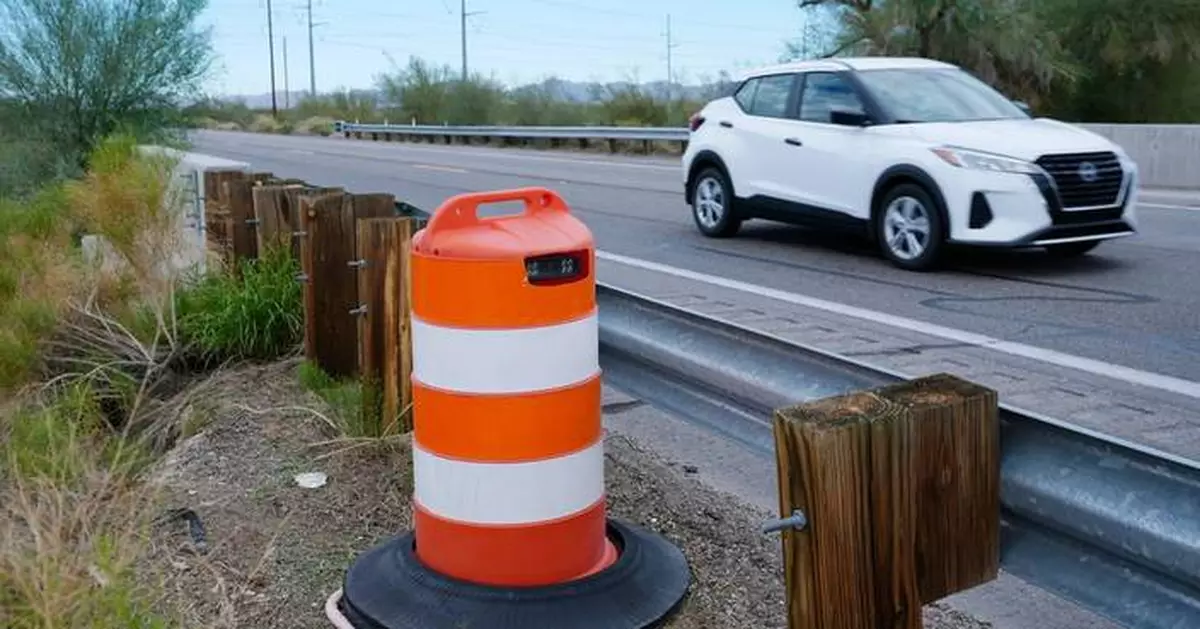
AP obtained land use permits from Arizona showing that the Border Patrol went to great lengths to conceal its surveillance equipment in that state, camouflaging it by placing it inside orange and yellow construction barrels dotting highways.

The letter said the groups' researchers have identified a similar network of devices in California, finding about 40 license plate readers in San Diego and Imperial counties, both of which border Mexico. More than two dozen of the plate readers identified by the groups were hidden in construction barrels.

They could not determine of the ownership of every device, but the groups said in the letter that they obtained some permits from the California Department of Transportation, showing both the Border Patrol and Drug Enforcement Administration had applied for permission to place readers along state highways. DEA shares its license plate reader data with Border Patrol, documents show.

The letter cited the AP's reporting, which found that Border Patrol uses a network of cameras to scan and record vehicle license plate information. An algorithm flags vehicles deemed suspicious based on where they came from, where they were going and which route they took. Agents appeared to be looking for vehicles making short trips to the border region, claiming that such travel is indicative of potential drug or human smuggling.

Federal agents in turn sometimes refer drivers they deem suspicious to local law enforcement who make a traffic stop citing a reason like speeding or lane change violations. Drivers often have no idea they have been caught up in a predictive intelligence program being run by a federal agency.

The AP identified at least two cases in which California residents appeared to have been caught up in the Border Patrol's surveillance of domestic travel patterns. In one 2024 incident described in court documents, a Border Patrol agent pulled over the driver of a Nissan Altima based in part on vehicle travel data showing that it took the driver six hours to travel the approximately 50 miles between the U.S.-Mexican border and Oceanside, California, where the agent had been on patrol.

“This type of delay in travel after crossing the International Border from Mexico is a common tactic used by persons involved in illicit smuggling,” the agent wrote in a court document.

In another case, Border Patrol agents said in a court document in 2023 they detained a woman at an internal checkpoint because she had traveled a circuitous route between Los Angeles and Phoenix. In both cases, law enforcement accused the drivers of smuggling immigrants in the country unlawfully and were seeking to seize their property or charge them with a crime.

The intelligence program, which has existed under administrations of both parties, has drawn scrutiny from lawmakers since the AP revealed its existence last year.

A spokesperson for the California Department of Transportation said state law prioritizes public safety and privacy.

The office of Newsom, a Democrat, did not immediately respond to requests for comment.

Courts have generally upheld license plate reader collection on public roads but have curtailed warrantless government access to other kinds of persistent tracking data that might reveal sensitive details about people's movements, such as GPS devices or cellphone location data. Some scholars and civil libertarians argues that large-scale collection systems like plate readers might be unconstitutional under the Fourth Amendment.

“Increasingly, courts have recognized that the use of surveillance technologies can violate the Fourth Amendment’s protections against unreasonable searches and seizures. Although this area of law is still developing, the use of LPRs and predictive algorithms to track and flag individuals’ movements represents the type of sweeping surveillance that should raise constitutional concerns,” the organizations wrote.

CBP did not immediately respond to a request for comment, but previously said the agency uses plate readers to help identify threats and disrupt criminal networks and their use of the technology is “governed by a stringent, multi-layered policy framework, as well as federal law and constitutional protections, to ensure the technology is applied responsibly and for clearly defined security purposes.”

The DEA said in a statement that the agency does not publicly discuss its investigative tools and techniques.

Burke reported from San Francisco. Tau reported from Washington.

Contact AP’s global investigative team at Investigative@ap.org or https://www.ap.org/tips/.
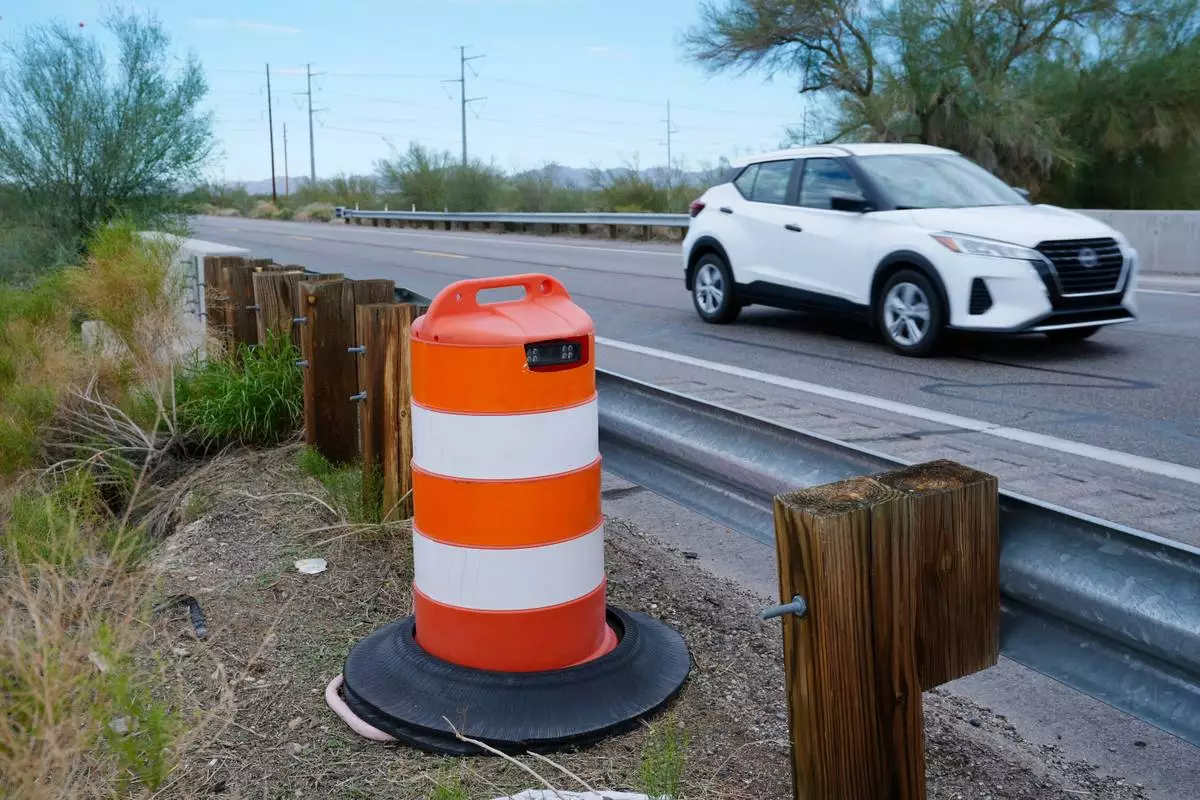
FILE - A license plate reader used by U.S. Border Patrol is hidden in a traffic cone while capturing passing vehicles on AZ Highway 85, Oct. 21, 2025, in Gila Bend, Ariz. (AP Photo/Ross D. Franklin, File)
FILE - A license plate reader used by U.S. Border Patrol is hidden in a traffic cone while capturing passing vehicles on AZ Highway 85, Oct. 21, 2025, in Gila Bend, Ariz. (AP Photo/Ross D. Franklin, File)

NASHVILLE, Tenn. (AP) — A new Tennessee law has eased up on two longstanding financial hurdles for people with felony sentences who want their voting rights back, including a unique requirement among states that they must have fully paid their child support costs.

The Republican-supermajority Legislature approved the Democratic-sponsored change, which now lets people prove they have complied for the last year with child support orders, such as payment plans. The legislation also unties the payment of all court costs from voting rights restoration.

Advocates for years have sought various changes to Tennessee’s voting rights restoration system at the statehouse and in court. They say loosening these two rules marks the biggest rollback of restrictions to voting rights restoration in decades.

“This is huge and this is history,” said Keeda Haynes, senior attorney for the advocacy group Free Hearts led by formerly incarcerated women like her.

Most Republicans voted for it and Democrats supported it unanimously. The law took effect immediately upon Republican Gov. Bill Lee's signature last week.

“I think people are at a point where they want to just remove the barriers out of the way and allow people to be fully functional members of society,” said Democratic House Minority Leader Karen Camper, a bill sponsor.

In 2023, the state decided gun rights were required to restore the right to vote, and shelved a paperwork process that didn't require going to court. Election officials said a court ruling made the changes necessary, though voting rights advocates said officials misinterpreted the order.

Last year, lawmakers untangled voting and gun rights. But voting rights advocates opposed some of the bill's other provisions, such as keeping the process in the courts, where costs can rack up if someone isn't ruled indigent.

Easing up on the financial requirements uncommonly split legislative Republicans. For instance, Senate Speaker Randy McNally voted against it, while House Speaker Cameron Sexton supported it, noting that people aren't getting forgiveness on making their payments.

“They need to continue paying that, and as long as they do, then there’s a possibility (to restore their voting rights)," Sexton said. "I really think that’s harder for people to argue against than maybe what something else was.”

Republican Rep. Johnny Garrett, who voted no, said in committee his vote would hinge on whether “there still can be an (child support) arrearage owed beyond that 12 months.”

For some, backed-up child support payments could reach hundreds or thousands of dollars, and court costs could be hundreds or thousands more, said Gicola Lane, Campaign Legal Center's Restore Your Vote community partnership senior manager.

Advocates credited their narrowed focus, omitting goals such as automatic restoration of rights, no longer tying restitution payments to voting rights, or offering a path for certain people to restore their right who are permanently disenfranchised, including those convicted of voter fraud or most murder charges.

The bill passed the Senate last year and the House this year.

Lawmakers gave the child support requirement final passage in 2006 within an overhaul bill that also created a voting rights restoration process outside of court. Critics said the child support rule penalized impoverished parents.

Democrats were then narrowly hanging onto legislative leadership in both chambers. Republicans held a slim Senate majority but GOP defectors voted for a Democratic speaker.

Last year marked the dismissal of a five-year-old federal lawsuit over Tennessee’s voting-rights restoration system. Free Hearts and the Campaign Legal Center represented plaintiffs in the long-delayed case, which saw some election policy changes along the way.

Roughly 184,000 people have completed supervision for felonies and their offenses don't preclude them from restoring their voting rights, according to a plaintiffs expert’s 2023 estimate in the lawsuit. About one in 10 were estimated to have outstanding child support payments, and more than six in 10 owed court courts, restitution or both, the expert said.

Both Republican and Democratic-led states have eased the voting rights restoration process in recent years. Some states have added complexities.

In Florida, after voters approved a constitutional amendment in 2018 restoring the right to vote for people with felony convictions, the Republican-controlled Legislature watered that down by requiring payment of fines, fees and court costs.

Voting rights are automatically restored upon release in nearly half of states. In 15 others, it occurs after parole, probation or a similar period and sometimes requires paying outstanding court costs, according to the National Conference of State Legislatures. In Maine and Vermont, people with felonies keep their voting rights in prison, the NCSL says.

Ten other states including Tennessee require additional government action. Virginia ’s governor must intervene to restore voting rights of people convicted of felonies. In some states, including Tennessee, certain conviction types render someone ineligible.

However, Virginia lawmakers this year have passed a proposed state constitutional amendment to ask voters whether they want automatic voting rights restoration after someone is released from prison. Kentucky lawmakers have proposed a similar change for voters' consideration that would automatically restore voting rights after certain completed sentences, including probation.

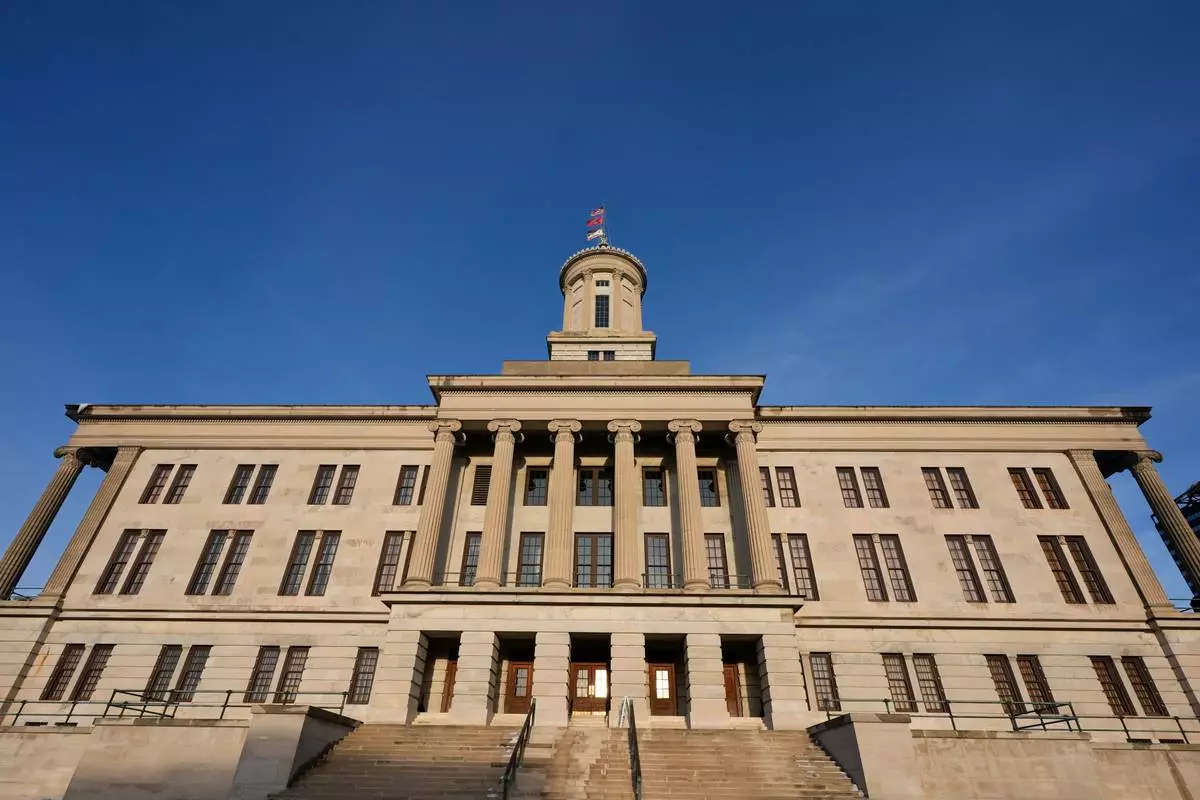
FILE - The Tennessee Capitol is seen, Jan. 22, 2024, in Nashville, Tenn. (AP Photo/George Walker IV, File)

FILE - The Tennessee Capitol is seen, Jan. 22, 2024, in Nashville, Tenn. (AP Photo/George Walker IV, File)

Recommended Articles