MILAN (AP) — Ilia Malinin playfully threw a couple of jabs at a TV camera while skating off the ice Tuesday night, the pressure of his first Olympics having seemingly vanished following a team gold medal and a near-perfect short program to begin the men's competition.
The American wunderkind didn't exactly deliver a knockout blow to the rest of the field.
Click to Gallery
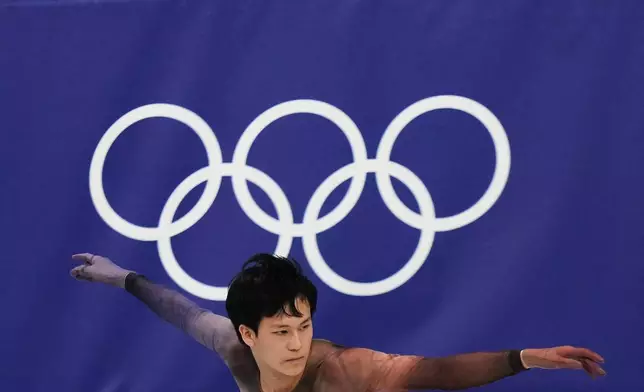
Adam Siao Him Fa of France competes during the men's figure skating short program at the 2026 Winter Olympics, in Milan, Italy, Tuesday, Feb. 10, 2026. (AP Photo/Stephanie Scarbrough)
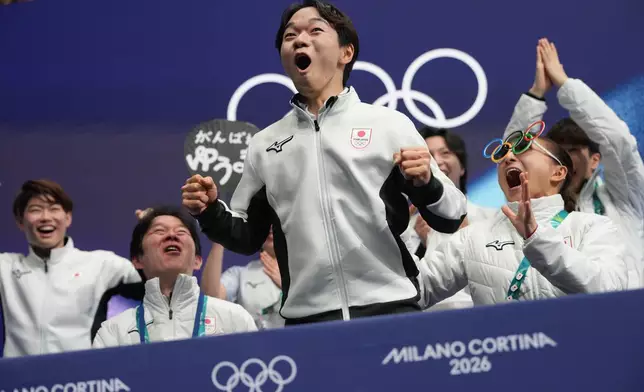
Yuma Kagiyama of Japan reacts to his scores after competing during the figure skating men's team event at the 2026 Winter Olympics, in Milan, Italy, Saturday, Feb. 7, 2026. (AP Photo/Francisco Seco)
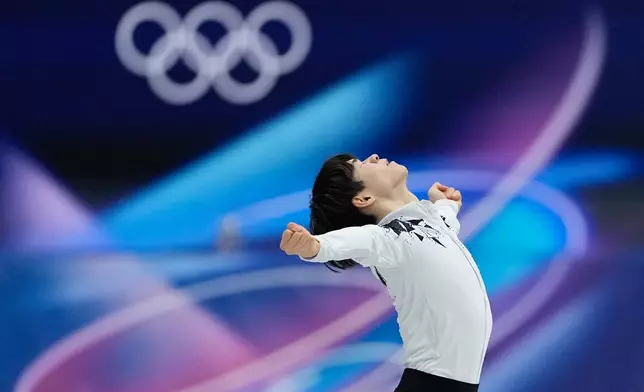
Yuma Kagiyama of Japan competes during the figure skating men's team event at the 2026 Winter Olympics, in Milan, Italy, Saturday, Feb. 7, 2026. (AP Photo/Natacha Pisarenko)
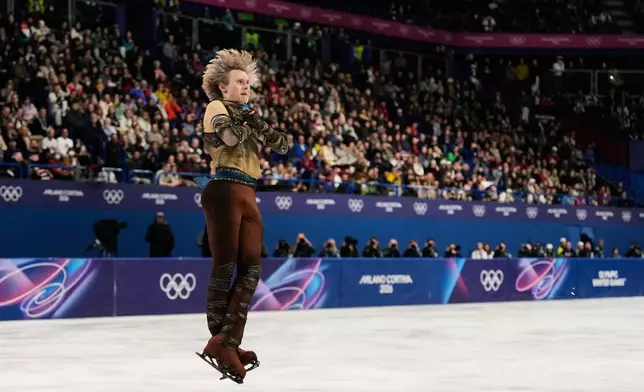
Ilia Malinin of the United States competes during the men's figure skating short program at the 2026 Winter Olympics, in Milan, Italy, Tuesday, Feb. 10, 2026. (AP Photo/Ashley Landis)
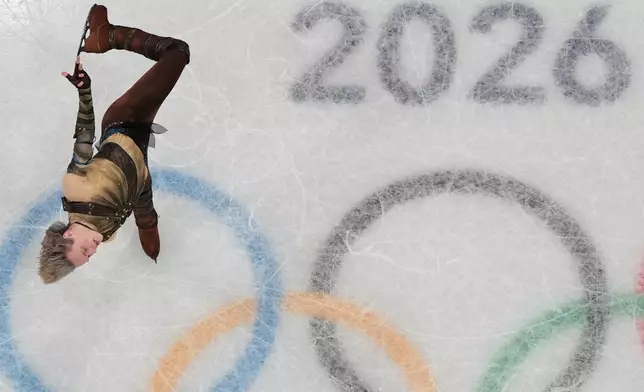
Ilia Malinin of the United States competes during the men's figure skating short program at the 2026 Winter Olympics, in Milan, Italy, Tuesday, Feb. 10, 2026. (AP Photo/Christophe Ena)
He came close, though.
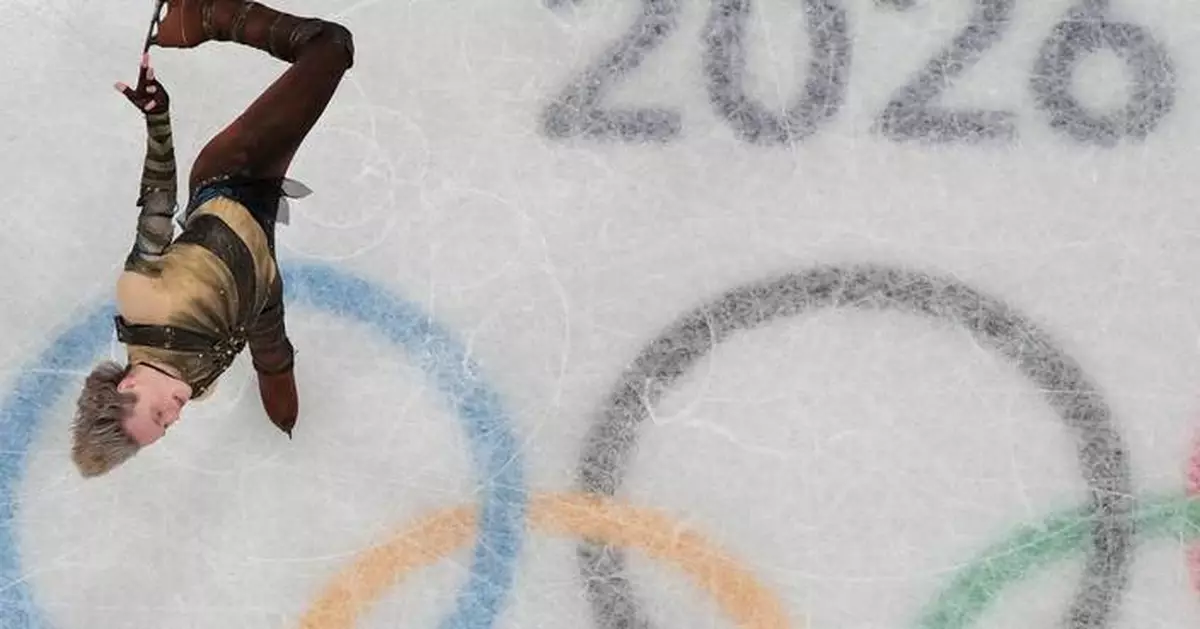
The self-styled “Quad God” landed a pair of quadruple jumps, another jaw-dropping backflip and his signature “raspberry twist,” piling up 108.16 points and taking a five-point lead over Yuma Kagiyama of Japan into the decisive free skate Friday night.
“In the team event, I think I had too much, I’ll call it, ‘Olympic excitement.’ It really just felt like there was so much pressure,” Malinin said. “I was so hyped up, so excited to skate out there and it really came back and beat me.”
In fact, Kagiyama beat Malinin in the short program during the team competition last weekend, leaving many to wonder whether the overwhelming favorite for Olympic gold was letting the pressure get to him. But he bounced back in the free skate to beat Japan’s Shun Sato in a head-to-head battle, clinching a second straight gold for the U.S. and giving him a boost of momentum.
“So coming to this short program,” Malinin said, “in an individual event, I wanted to take things a little more slowly, a little more calm, and honestly just push the auto-pilot button and see what happens.”
Kagiyama scored 103.07 points while Adam Siao Him Fa of France, the last skater to beat Malinin more than two years ago, was third with 102.55. But both face a herculean task in catching him, given Malinin's huge technical advantage over a longer program.
“This is sports,” Kagiyama said through an interpreter. “You never know what is going to happen.”
Except that Malinin is the surest thing in figure skating.
The two-time reigning world champion opened with a big quad flip Tuesday night, landed a perfect triple axel — perhaps saving the quad axel only he has ever landed for the free skate — and a quad lutz-triple toe loop that scored more than 22 points by itself.
By the time he landed the backflip and the raspberry twist, the crowd at the Milano Ice Skating Arena was ready to roar.
“I was definitely pleased that I was able to stay a little more on my feet this time,” Malinin said with a smile. “Usually I feel like I’m just there to do stuff, but this time I felt like I can really enjoy the program and the story behind it.”
Kagiyama was the only skater after Malinin, and he nearly matched him with his own splendid program. But on his final jump, a triple axel, the reigning Olympic silver medalist had to step out, and that cost him some valuable points in the grade of execution.
Now, both Malinin and Kagiyama have two days to think about their free skates.
Asked how he'll pass the time, Malinin replied: “Give myself a mental reset and see how the approach for the free program will be.”
The opening night of men's figure skating packed a little bit of everything.
There was the cheeky fun of a “Minions” program by Spanish skater Tomas-Llorenc Guarino Sabate, who was worried last week that he wouldn't get to perform it because of a copyright issue. There was the artistry of the Japanese skaters, the high-flying aerial acrobatics of the American contingent, and one of the most emotional moments of the entire Winter Games.
U.S. figure skater Maxim Naumov, whose parents Evgenia Shishkova and Vadim Naumov were killed in a plane crash just over a year ago, fulfilled a dream they had shared by performing on Olympic ice. When his program drew to an end, Naumov stayed on his knees the middle of the rink, looking up to the heavens and telling them, “Look at what we’ve done.”
“Whatever life throws at you, if you can be resilient and push a little bit more than you think, you can do so much more,” said Naumov, who carried a picture of his parents to the kiss-and-cry, and whose score of 85.65 easily got him through to the free skate.
“You have to have that willpower and do things you love,” he said, “and that’s exactly what I am going to do.”
The podium fight among the real contenders began with Kao Miura, the former world junior champion. But the Four Continents winner just last month popped his opening quad salchow, fell on a later jump and never really recovered.
Sato, the second of Japan's powerhouse trio, made a mistake of his own when he spun out of the second half of a quad toe-triple toe combo. He got through the rest of the program but scored just 88.70 points, leaving him well out of contention.
It took Kagiyama, their countryman, to finally deliver a memorable performance for Japan in the short program.
Only problem: It still left him trailing the best figure skater of his generation.
“I’m coming in as the favorite, but being the favorite is one thing; actually earning it under pressure is another,” Malinin said. “I don’t take it for granted that I’m getting the gold, of course. I still have to put in the work for the long program.”
AP National Writer Howard Fendrich contributed to this report.
AP Olympics: https://apnews.com/hub/milan-cortina-2026-winter-olympics
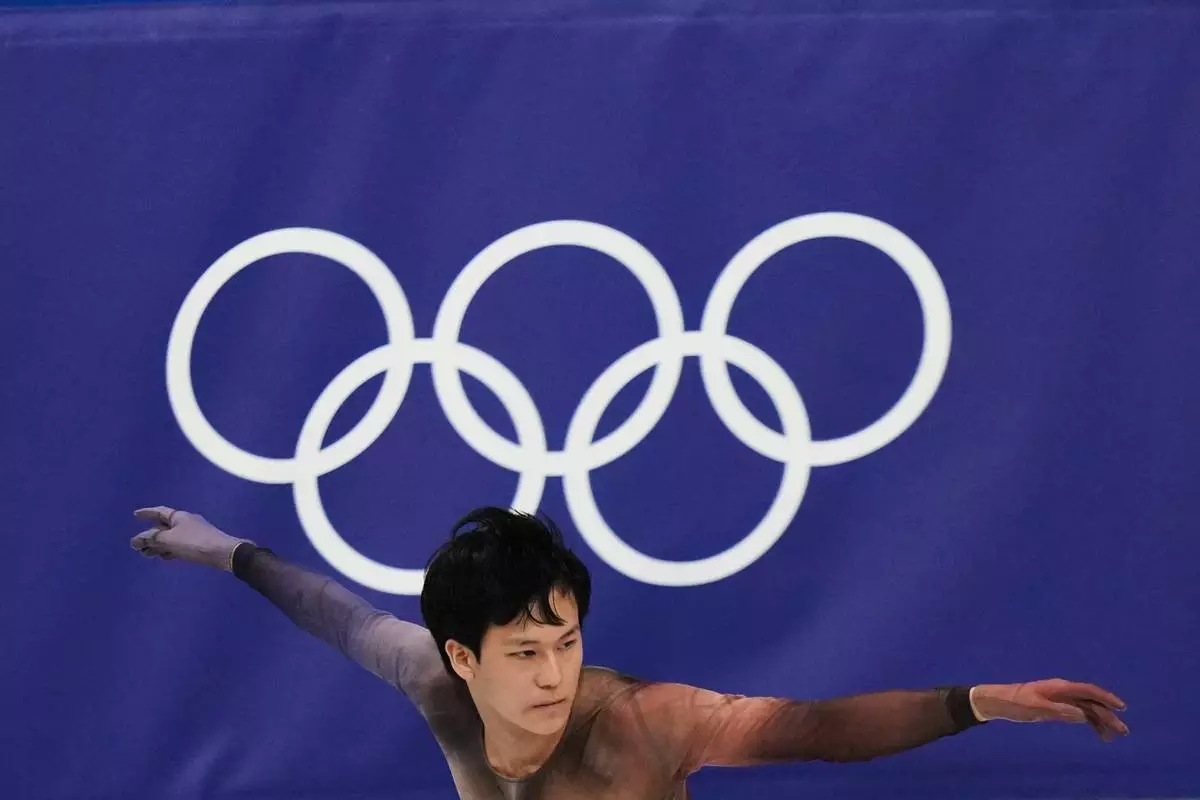
Adam Siao Him Fa of France competes during the men's figure skating short program at the 2026 Winter Olympics, in Milan, Italy, Tuesday, Feb. 10, 2026. (AP Photo/Stephanie Scarbrough)
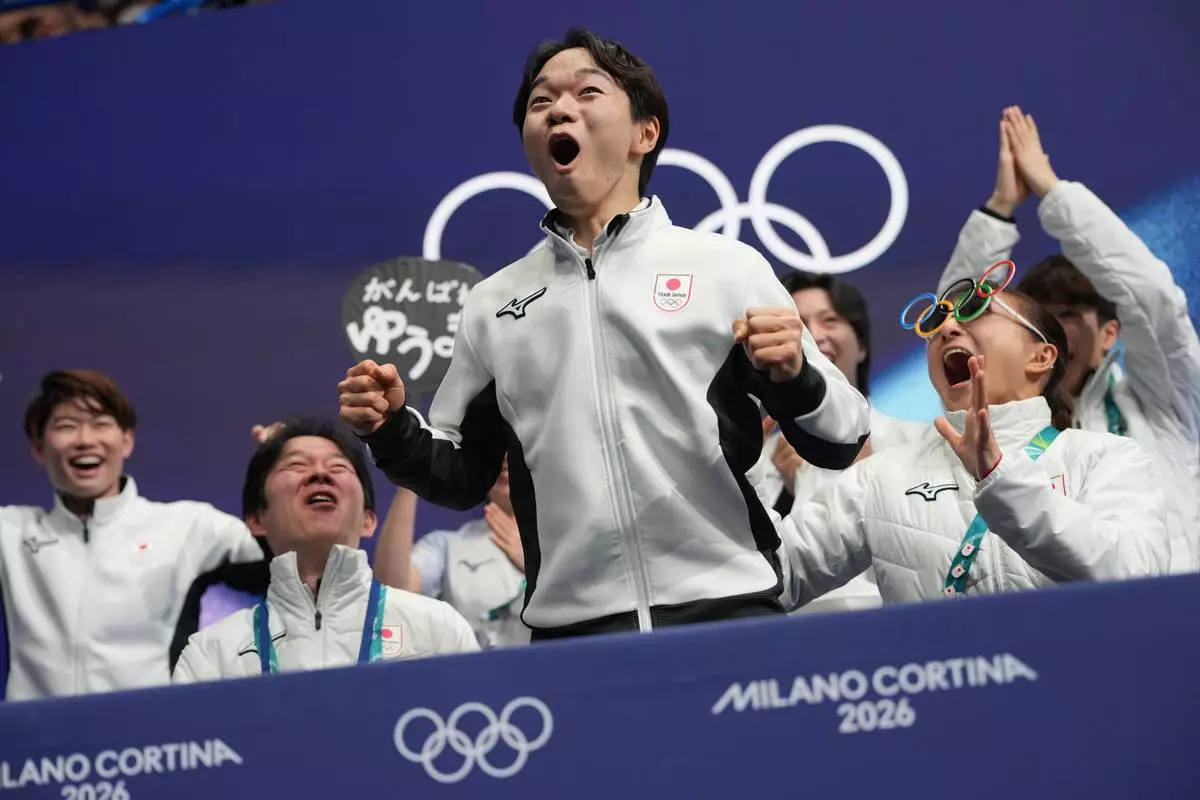
Yuma Kagiyama of Japan reacts to his scores after competing during the figure skating men's team event at the 2026 Winter Olympics, in Milan, Italy, Saturday, Feb. 7, 2026. (AP Photo/Francisco Seco)
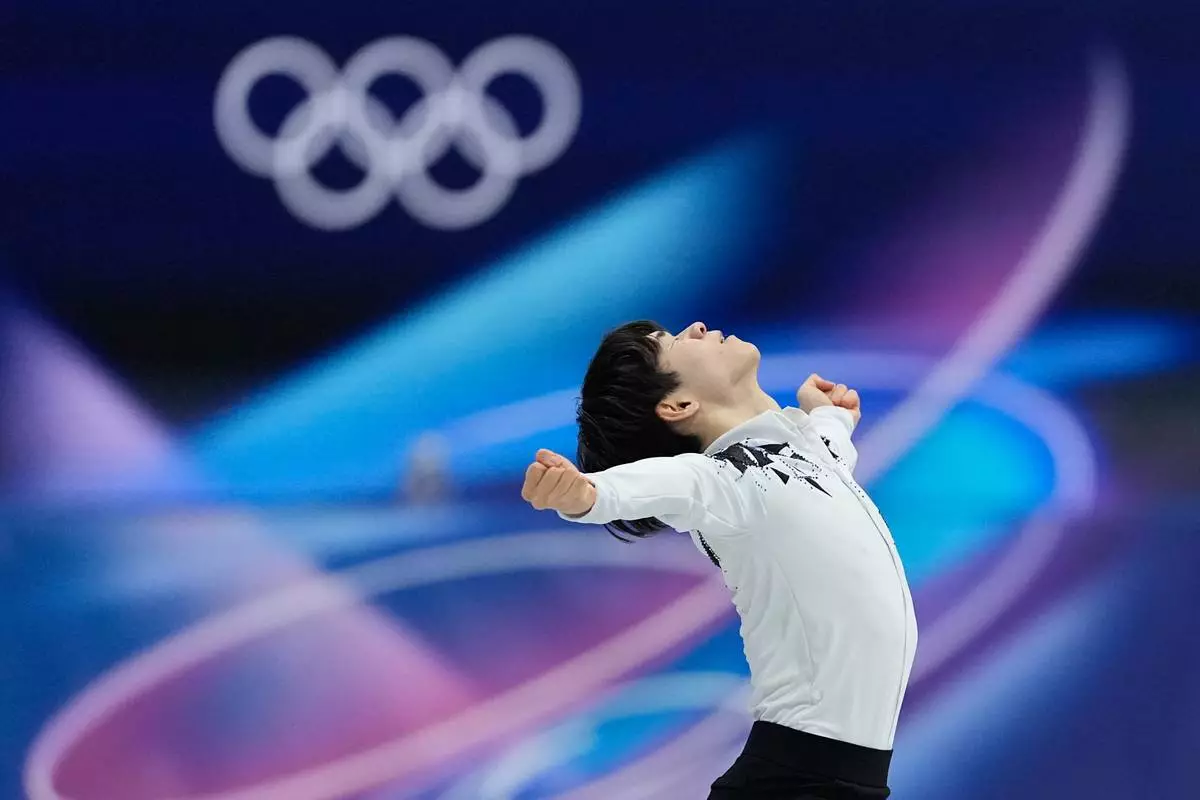
Yuma Kagiyama of Japan competes during the figure skating men's team event at the 2026 Winter Olympics, in Milan, Italy, Saturday, Feb. 7, 2026. (AP Photo/Natacha Pisarenko)
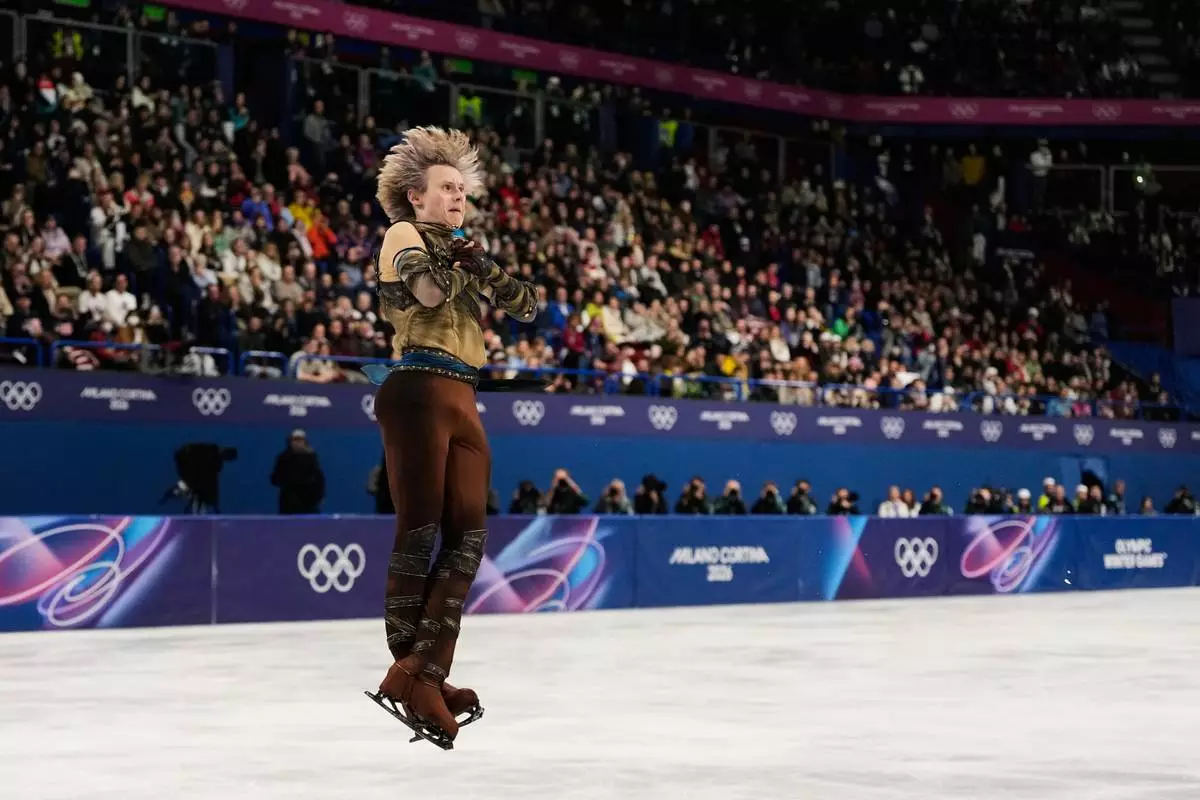
Ilia Malinin of the United States competes during the men's figure skating short program at the 2026 Winter Olympics, in Milan, Italy, Tuesday, Feb. 10, 2026. (AP Photo/Ashley Landis)
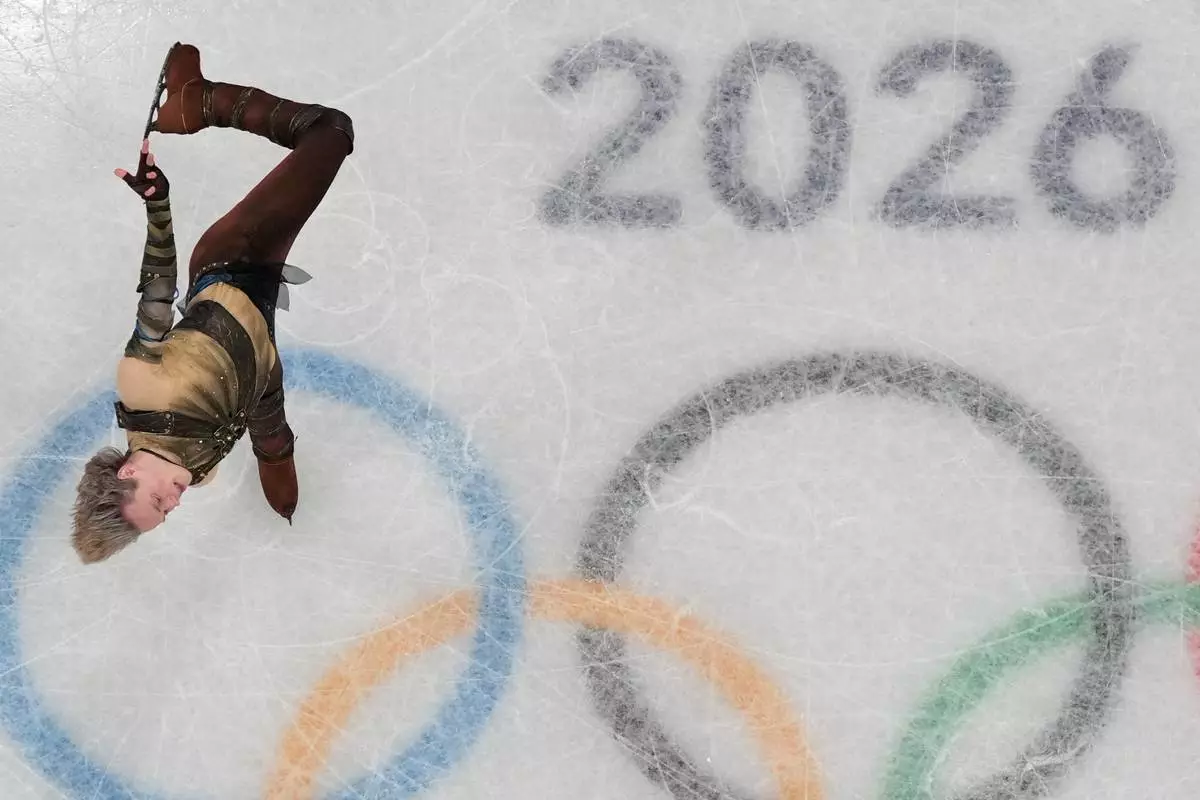
Ilia Malinin of the United States competes during the men's figure skating short program at the 2026 Winter Olympics, in Milan, Italy, Tuesday, Feb. 10, 2026. (AP Photo/Christophe Ena)