MTR stated that to facilitate the public's travel and celebration during the Chinese New Year, services on several heavy rail lines will be enhanced at different times from February 13 to the Chinese New Year period, adding over 600 trains in total.

Photo source: reference image
Especially, on February 16, MTR will provide overnight service. On the evenings of February 17 and 18, the frequency of trains on some lines will also be increased to facilitate the public's enjoyment of the float parade and fireworks displays along Victoria Harbour.

Photo source: reference image
The Hong Kong section of the High Speed Rail will enhance the train services of the lines from the Hong Kong West Kowloon Station to the Futian Station in Shenzhen and the Beijing West Railway Station.
Walk into a Zhengzhou Metro station and a different scene from previous days will greet you. Corners that once sat empty now house breakfast stalls, coffee shops, and convenience stores. Behind this shift is MTR Corporation’s push to "export" its decades of station retail experience to the Mainland.
Aaron Lam, Senior Manager of MTR Corporation and a member of its Mainland Station Commercial Business Development team, noted in an exclusive interview with Bastille Post that MTR has successfully exported its "Secondary Development" model to the Mainland, upgrading existing station spaces in cities including Chengdu and Zhengzhou. The move has driven average rents up by more than threefold, and MTR has signed cooperation intentions with Qingdao, Chongqing and Hangzhou, etc.
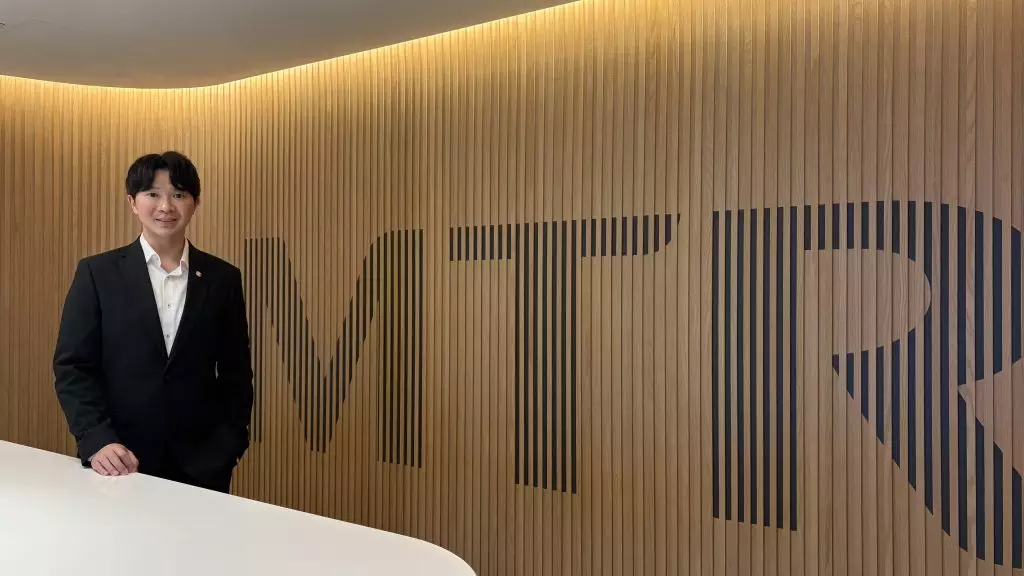
Aaron Lam, Senior Manager of MTR Corporation and a member of its Mainland Station Commercial Business Development team. Photo by Bastille Post
As a vibrant modern metropolis, Chengdu has a resident population exceeding 21 million and a rail transit network ranking fourth nationwide, handling up to 7 million passenger trips a day. Yet the commercial value of its metro stations had long gone untapped. "In many Mainland cities, rail transit is primarily viewed as a public service and transport function, so station interiors often lack planning for retail units or commercial space," Aaron said.
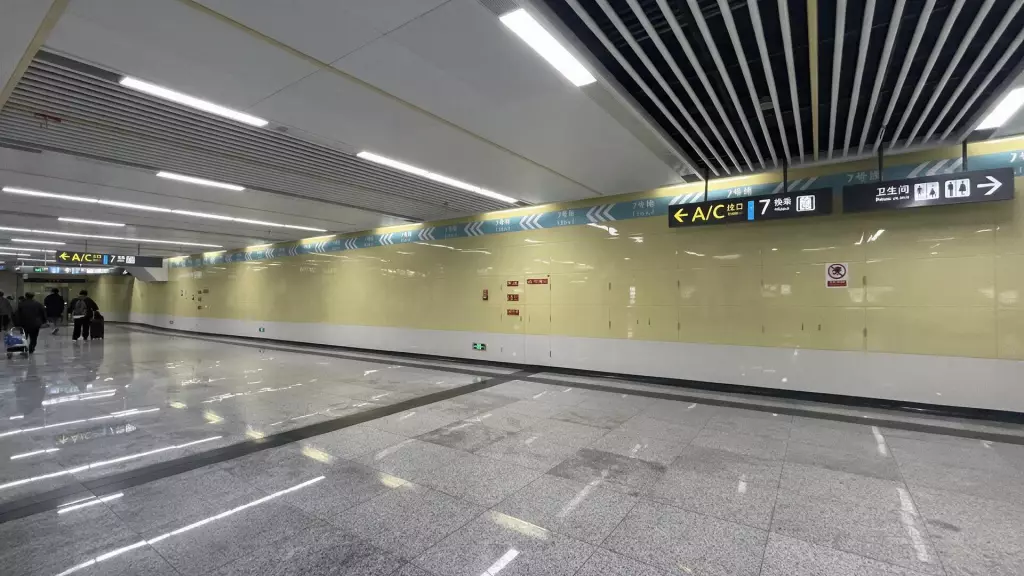
Shenxianshu Station on the Chengdu Metro before its "Secondary Development." Photo source: MTR
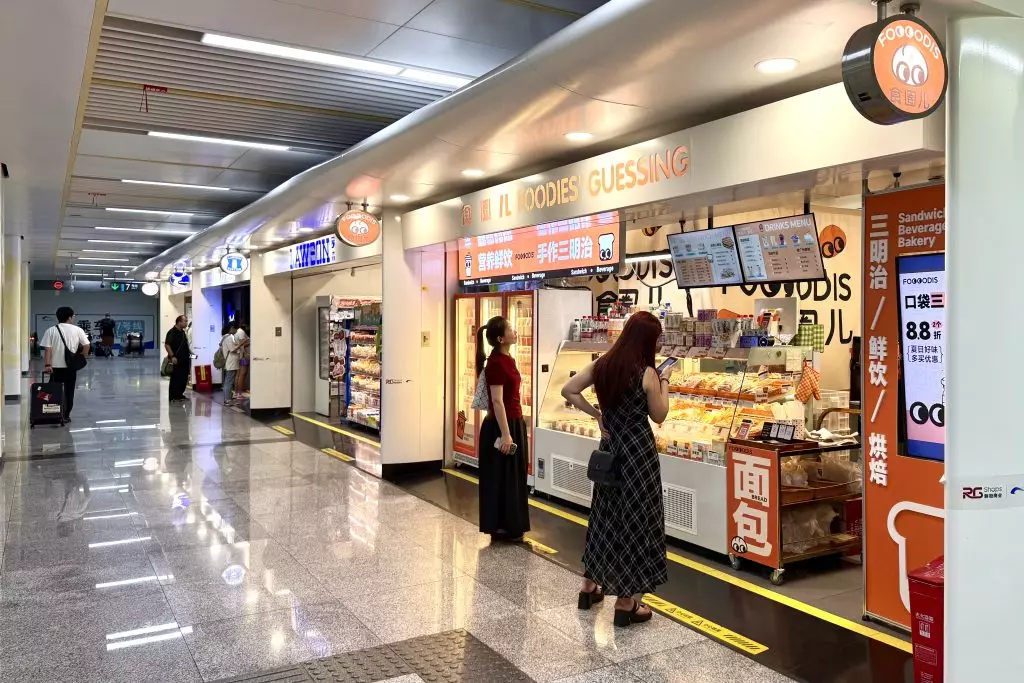
Shenxianshu Station on the Chengdu Metro after its "Secondary Development." Photo source: MTR
Drawing on nearly 50 years of railway operations and more than 20 years of station retail management in Hong Kong, MTR brought its Secondary Development model to Chengdu. For Aaron, the starting point is MTR’s customer-centric approach to improving the passenger experience: "A journey isn’t necessarily just getting from point A to point B. It can also involve everyday needs, like buying something, charging a phone."
In 2020, MTR and Chengdu Rail Transit Group signed a cooperation agreement and established Chengdu Ronggang Commercial Development Company Limited, marking the start of station commercial reform on the Mainland. Without disrupting train operations, MTR upgraded existing station spaces, introduced water, power, and drainage facilities, and brought in suitable tenants.
Average rents for the first batch of "Secondary Development" shops in Chengdu have surged by more than threefold, with prime locations exceeding RMB 1,000 per square metre. Photo source: MTR
Aaron noted that with the widespread adoption of mobile payments such as WeChat Pay and Alipay, surplus physical ticket machines could be removed, freeing up more space for shops. He described the entire process as "very meaningful," since whether it is a breakfast grabbed on the commute, a snack on the way home, or a coffee while waiting for a train, "all of it can make what used to be cold, functional passageways warmer and more convenient."
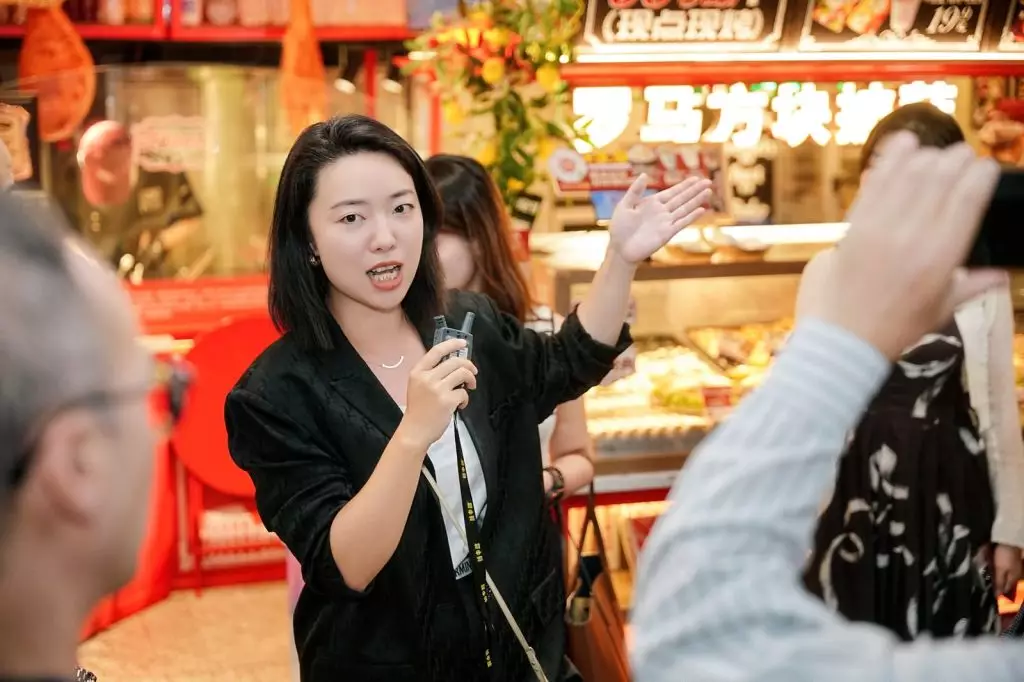
By 2026, Chengdu Ronggang had completed Secondary Development work across 16 stations and 44 shops in Chengdu. The arrival of pizza chain BOBO Pizza was particularly emblematic. MTR’s team not only installed water and drainage pipes to allow freshly baked pizza to be made inside a metro station, but also aligned baking schedules with train arrival frequencies, guiding the shop to pre-bake ahead of peak passenger flows to achieve a "grab-and-go" model. Within months of opening, passenger traffic at the shop rose by 20–30%, and revenue jumped by more than 30%.

BOBO Pizza. Photo source: online image
Building on the Chengdu results, Aaron and his team have replicated the model in Zhengzhou and are seeking cooperation with Qingdao, Hangzhou, Shanghai and Chongqing. Having achieved a "zero to one" breakthrough in Chengdu, he hopes to extend the model to more cities within three to five years, completing the "one to N" expansion.

Aaron was appointed Deputy General Manager of Chengdu Ronggang Commercial Development Company Limited in 2025. Photo source: MTR
For Aaron, Secondary Development is not only about giving idle station space new commercial value, but also about stepping outside his comfort zone and revaluing himself. After secondary school in the UK and a Master in Civil Engineering from a leading university, Aaron joined MTR in 2011. For his first seven years, he focused on engineering, working on signature projects including the design of the West Kowloon Station's Sky Corridor and the LOHAS Park property development. During that time, the corporation arranged for him to learn about metro station operations, ride along with train crews, plan schedules, and even handle procurement, helping him gradually build a whole-system view of railway operations.

During his trainee engineer training, Aaron participated in the design and construction of the West Kowloon Station's Sky Corridor. Photo source: MTR
In 2018, Aaron reached his first career turning point. Under MTR’s training and promotion mechanisms, he moved from engineering into a station retail management role, taking charge of in-station rental, interior fitting-out works and new station openings. Nevertheless, switching tracks was not easy for him at first.
As an engineer who by habit follows procedure, Aaron was used to regarding engineering as about steps and logic. "When we build a project, we have to finish the first floor before the second and the third," he said. But commercial negotiations, by contrast, are full of variables. Different brands put wildly different values on the same shop unit. It was these encounters with "no standard answer" that honed his flexible commercial thinking step by step.

Aaron Lam. Photo source: MTR
He was later posted to Mainland project teams in Beijing, Chengdu and Zhengzhou, where the working environment changed fundamentally. In Hong Kong, he recalled, MTR departments are all "on the same side." In Chengdu, station operations and services are handled by Chengdu Metro, with MTR responsible only for station commercial business. "The people I communicate with shifted from internal colleagues to partners, and both the reporting lines and the logic of collaboration had to be re-adapted."
Despite the cross-sector move, Aaron stressed that he never left engineering behind. "When I took part in new line construction in Chengdu, I still drew on my engineering background in station and shop planning." When communicating with the Chengdu Metro team, he explained that his technical knowledge helped them understand the feasibility of facility adjustments: "For example, where drainage could go, where equipment could be repositioned," strengthening confidence and cooperation between the two sides.

As of the first half of 2026, MTR has been authorized to operate the commercial resources of over 40 metro lines and more than 800 stations in the Mainland, managing over 1,000 station shops. Photo source: MTR
Looking back on 15 years of his career, Aaron reflected: "Every time I step into something new, I’m nervous, but every step is paving the way for the next." His advice to Hong Kong’s young people is to make good use of their trilingual abilities (Chinese, Cantonese, and English) and their unique advantage of bridging Eastern and Western cultures, to venture boldly into new fields and to apply their strengths on a wider stage.