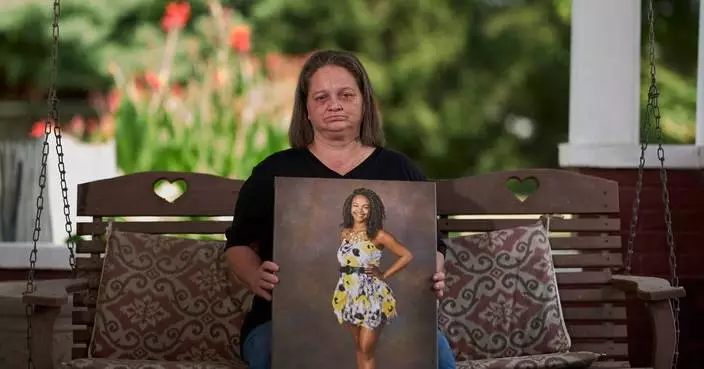
HONG KONG (AP) — The father of a U.S.-based activist wanted by Hong Kong authorities was convicted Wednesday for attempting to deal with his daughter's financial assets in the city, in the first court case of its kind brought under a homegrown national security law.
Kwok Yin-sang's daughter Anna is the executive director of the Washington-based Hong Kong Democracy Council. Authorities in 2023 offered 1 million Hong Kong dollars (about $127,900) for information leading to her arrest and later banned anyone from handling any funds for her — widely seen as part of a yearslong crackdown on challenges against Beijing's rule following the massive, anti-government protests in 2019.
Kwok, 69, was arrested in April 2025 under the security law, locally known as Article 23 legislation, enacted a year before. He was accused of having attempted to obtain funds from an insurance policy under his daughter's name. He pleaded not guilty.
Acting principal magistrate Cheng Lim-chi found him guilty on Wednesday, saying Kwok must have known his daughter was an absconder and he was attempting to handle her assets.
According to previous hearings, Kwok bought the insurance policy for Anna when she was a toddler and she gained control of it when she reached 18 years old. The father in 2025 wanted to cancel the policy and get funds from it, the court heard.
Kwok’s lawyer, Steven Kwan, pleaded for a lesser sentence for his client, saying there was no evidence to show his client was trying to get the money to send to his daughter. He suggested the judge consider a 14-day prison term.
While the maximum sentence for his charge is seven years of imprisonment, but his case was heard at the magistrates’ courts, which normally hands down a maximum sentence of two years.
His sentencing is scheduled for Feb. 26.
Authorities have accused Anna Kwok of demanding for foreign sanctions, blockade and engaging in other hostile activities against China and Hong Kong through meeting foreign politicians and government officials.
“Today, my father was convicted simply for being my father,” said the younger Kwok on X. “This is transnational repression.”
She said his charge was founded on “incoherent fiction” and she had not received or sought funds from her father or anyone in Hong Kong. She added that the moves from the city's government will not discourage her from carrying on her activism.
Amnesty International Hong Kong Overseas spokesperson Joey Siu said the conviction was apparently politically motivated.
Commissioner of Police Joe Chow said at a news conference that he's sure that the father was well aware of the situation.
“Breaking the law is breaking law," he said.
The police’s bounties targeting overseas-based Hong Kong activists, including Siu and pro-democracy former lawmakers Nathan Law and Ted Hui, have drawn criticism from the U.S. and the U.K. governments.
In 2025, Washington sanctioned six Chinese and Hong Kong officials who it alleged were involved in “transnational repression” and acts that threaten to further erode the city’s autonomy. It said Beijing and Hong Kong officials have used Hong Kong's national security laws extraterritorially to intimidate, silence and harass some activists who were forced to flee overseas.
Weeks after that, China said it would sanction U.S. officials, lawmakers and leaders of nongovernmental organizations who it said have “performed poorly” on Hong Kong issues.
After Beijing imposed a 2020 national security law on the city, many leading activists were arrested or silenced. Others fled abroad and continued their advocacy for Hong Kong, a British colony that returned to Chinese rule in 1997.
Both China and Hong Kong governments insist the security laws were crucial for the city's stability.
This story was corrected in an earlier version to reflect that Kwok Yin-sang was arrested in April 2025, not May.
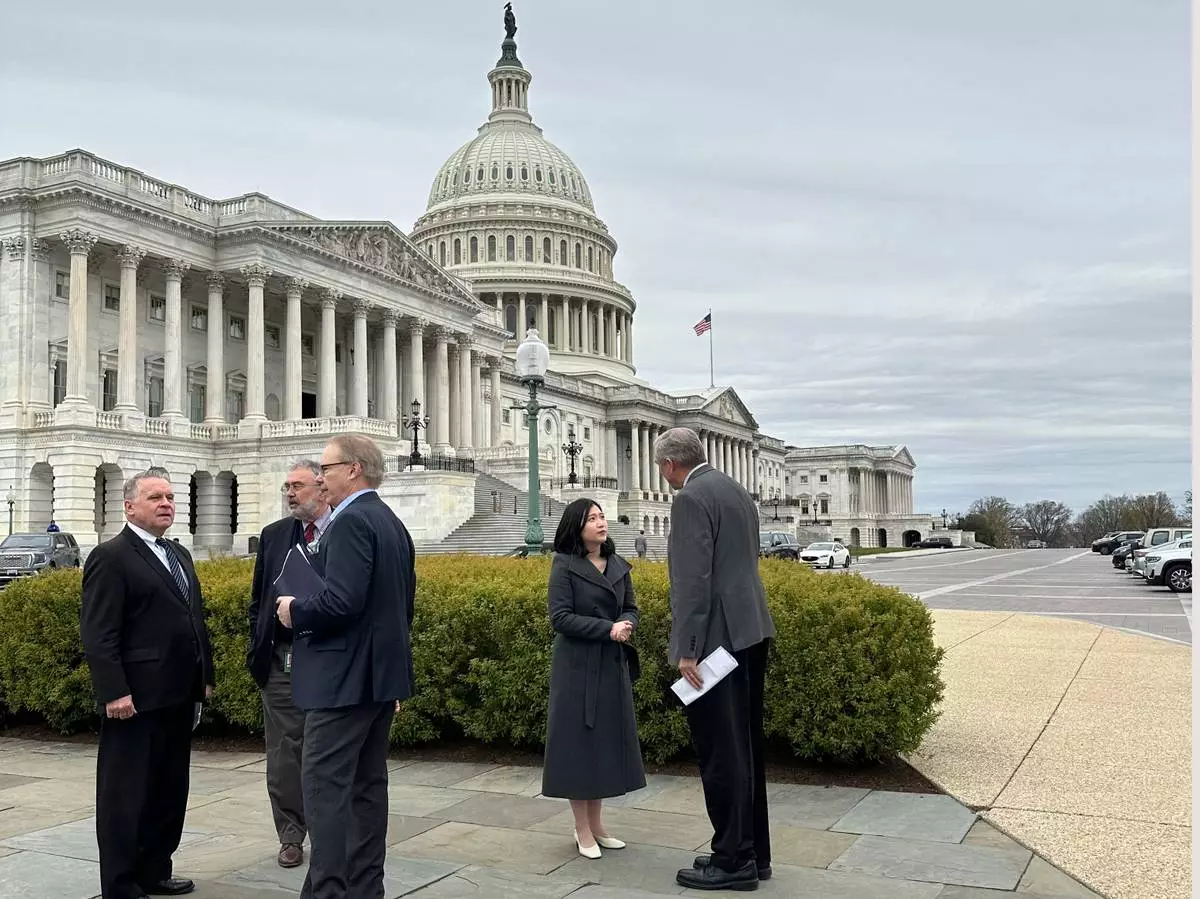
Anna Kwok, second right, speaks to Sen. Jeff Merkley at an event outside of the U.S. Capitol in Washington D.C., on March 22, 2024. (AP Photo/Didi Tang)
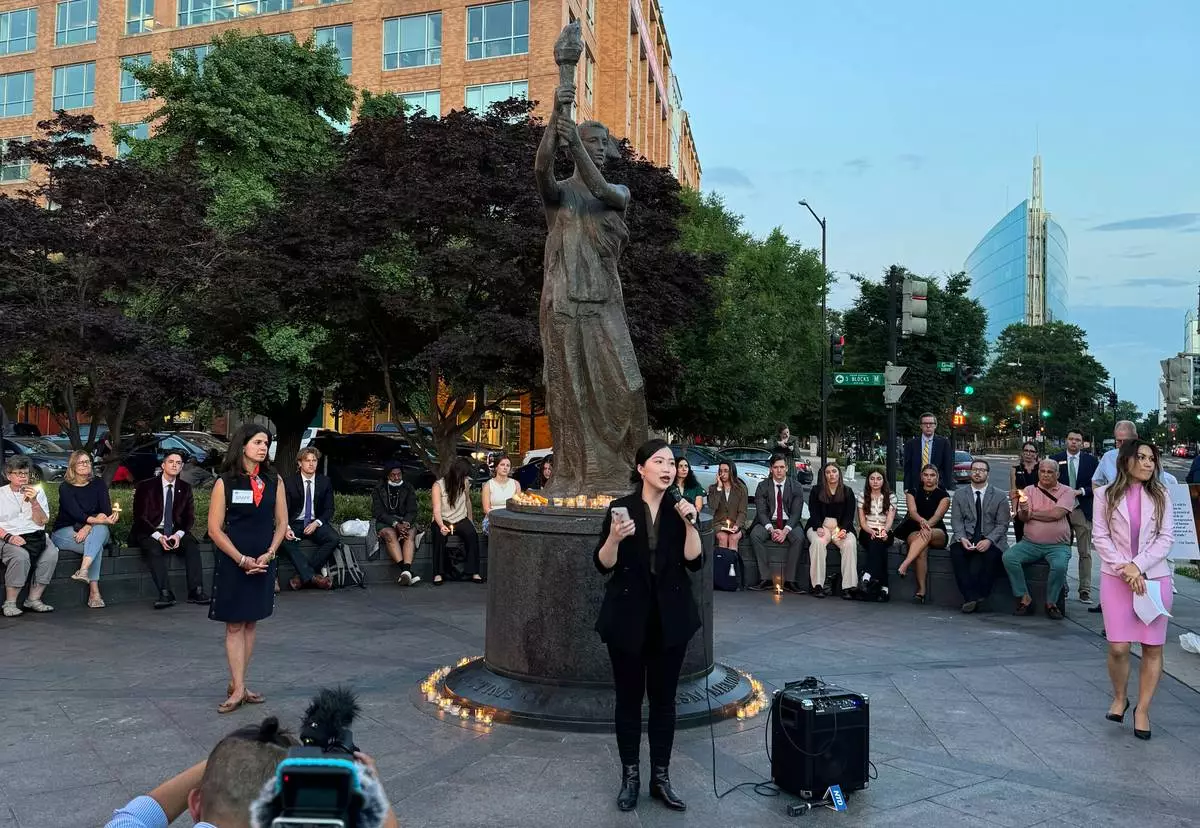
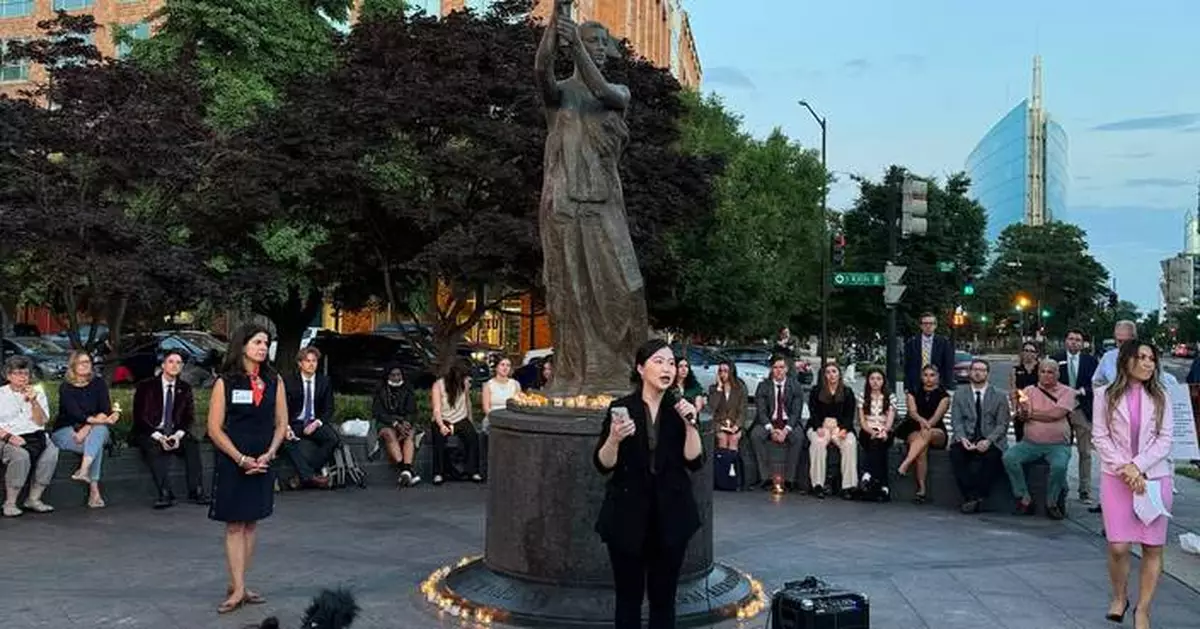
Anna Kwok speaks during an event commemorating China's June 4, 1989 Tiananmen Square crackdown on pro-democracy movement in Washington D.C., on June 3, 2024. (AP Photo/Didi Tang)
Word of an offer from Iran to reopen the Strait of Hormuz and resume talks on its nuclear program is emerging from the sidelines of the U.N. General Assembly. Meanwhile, Saudi Arabia’s top cleric issued a rare statement, calling on the kingdom’s troops to defend the country from neighboring Yemen’s Iran-backed Houthi rebels.
In New York, where the wars in Iran and Gaza have dominated the U.N. agenda, the leaders of Iraq, Lebanon and Egypt were scheduled to address world leaders later Friday.
Here is a look at the latest news from the Middle East. More coverage of the U.N. General Assembly is available here.
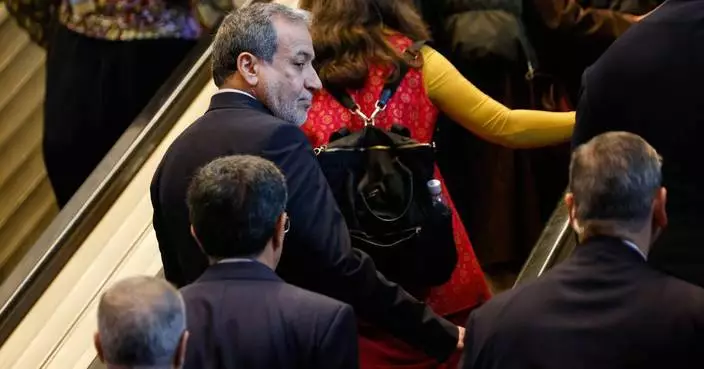
Iranian Foreign Minister Abbas Araghchi confirmed Friday reporting that Tehran has put forth a seven-day plan to reopen the Strait of Hormuz and resume talks on its nuclear program if the U.S. meets the conditions it has laid out. Talking to reporters at the U.N., Araghchi said the plan was delivered to Washington through Qatari mediators on the sidelines of the General Assembly. “If the necessary conditions are met, the strait can be reopened and normal maritime passage restored within seven days,” he said. “The choice now rests with the United States.” The seven-day clock will begin when the U.S. accepts the plan, Araghchi added. The White House said earlier Friday that U.S. officials are having positive and constructive conversations with mediators on the Iran war
With Saudi oil facilities, cities and ships off its coast coming under escalating attacks, the kingdom's top religious authority has called on soldiers to be prepared to defend the country from Iran-backed Houthis.
Grand Mufti Sheikh Saleh al-Fawzan, who traditionally avoids weighing in on politics in a country that holds enormous influence among Muslims worldwide, issued the strongly worded statement. Al-Fawzan addressed his message to soldiers defending the kingdom's borders and members of the Saudi-led coalition fighting the Houthis in Yemen, peppering it with Quranic verses and religious edicts.
“Protecting this great nation, guarding its borders, defending against aggression and punishing those who want to harm any inch of it is one of the greatest duties,” he said.
The head of Yemen's internationally recognized government, Rashad al-Alimi, likewise urged Yemenis to rally behind Saudi-backed armed forces and allied groups in their fight with the Houthis.
Al-Alimi, who chairs the country’s Presidential Leadership Council, also called on Yemenis fighting alongside the Houthis to defect, announcing a general amnesty.
Al-Alimi said the aim of the fighting is to restore his government’s control over Sanaa, the capital, which the Houthis seized in 2014.
His call to arms came during his first speech since his Saudi-backed forces were routed from the western Red Sea coast by the Houthis’ lightning advance on the city of Mokha and islands in the Bab el-Mandeb Strait, where 12% of the world's trade passes.
The swift Houthi advances raised questions about the effectiveness of the Saudi-backed forces in the face of the disciplined, well-armed Houthis. The Houthi assault exploited divisions among the Saudi-backed forces and distrust among its leaders, leading to a chaotic troop withdrawal before the fall of Mokha.
Al-Alimi’s speech came on the 64th anniversary of the military coup that ousted the monarchy ruling northern Yemen, rooted in the Zaydi Shiite sect to which the Houthis also belong. The Houthis battled Yemen’s central government for years before sweeping down from their northern stronghold and seizing Sanaa.
The first joint meeting of the military chiefs of Pakistan, Saudi Arabia and Turkey was held in Riyadh on Friday, following the signing of the Mecca Joint Defense Agreement by the three countries, Pakistan’s military said in a statement.
The chiefs of defense forces and chiefs of general staff from the three countries reviewed the regional security situation and threats facing Saudi Arabia, according to the statement.
“They strongly resented the attacks targeting the Holy City of Mecca and civilian and economic infrastructure,” the statement said.
The military chiefs also praised the vigilance and professionalism of the Saudi armed forces in ensuring the safety of the people and security of the kingdom, it said.
Iranian President Masoud Pezeshkian said Friday in a post on X that Tehran supports Chinese President Xi Jinping’s call for a return to the Islamabad Memorandum of Understanding and renewed diplomacy between Iran and the United States.
Pezeshkian said he appreciated Xi’s “thoughtful and responsible support” for resolving differences through dialogue and diplomacy, adding that Iran backed returning to the understanding and honoring previously agreed commitments.
The post came a day after Pezeshkian met with Pakistani Prime Minister Shehbaz Sharif on the sidelines of the U.N. General Assembly in New York. Sharif said Pezeshkian told him the Islamabad memorandum remained “fully acceptable” to Iran and that Tehran was ready to take it forward.
The 14-point memorandum, mediated by Pakistan and signed in June, provided a framework for ending the conflict.
In a statement approved by its 15 members, the U.N.’s most powerful body condemned Houthi attacks on Saudi Arabia and against commercial shipping in the Red Sea and the Bab el-Mandeb Strait.
The council called for “practical cooperation,” including with Yemen’s internationally recognized government, to prevent the Houthis from obtaining weapons, military material and training enabling them to carry out attacks.
It reminded all countries of their obligation to implement the U.N. arms embargo against the Houthis.
Israel’s military said two of its soldiers were killed in northern Gaza on Thursday while inspecting an unexploded Israeli drone near a military post. They were the first Israeli soldiers killed in Gaza in months.
Five other Israeli soldiers have been killed since last October’s ceasefire that attempted to halt a more than two-year war between Israel and the militant Hamas group.
While the heaviest fighting has subsided, almost daily Israeli fire has continued. Israeli forces have carried out repeated airstrikes and frequently fire on Palestinians near military-held zones and have killed 1,408 Palestinians, according to Gaza health officials.
This report will be updated throughout the day as new developments emerge.

A young man holds a Saudi flag while standing through the sunroof of a vehicle during celebrations marking Saudi Arabia's 96th National Day in Riyadh, Saudi Arabia, Wednesday, Sept. 23, 2026. (AP Photo/Baraa Anwer)
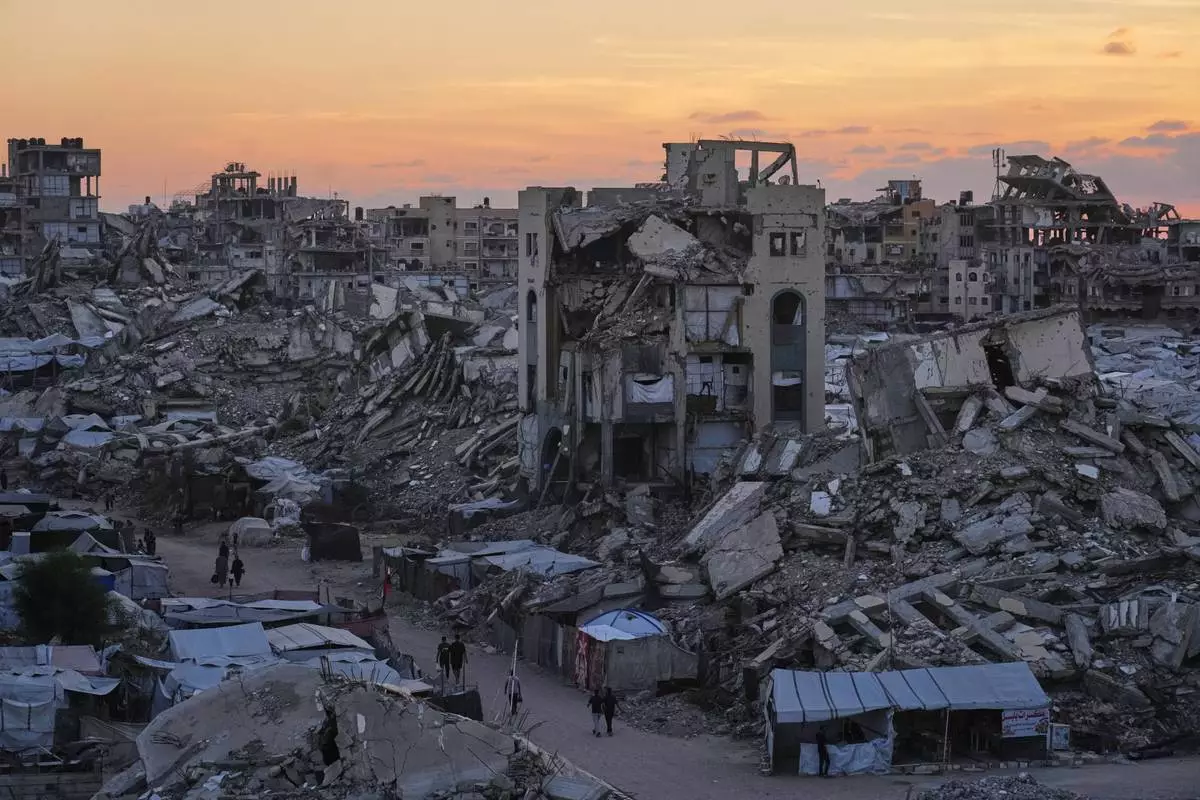
Palestinians walk amid war-damaged buildings in Gaza City, Wednesday, Sept. 23, 2026. (AP Photo/Jehad Alshrafi)
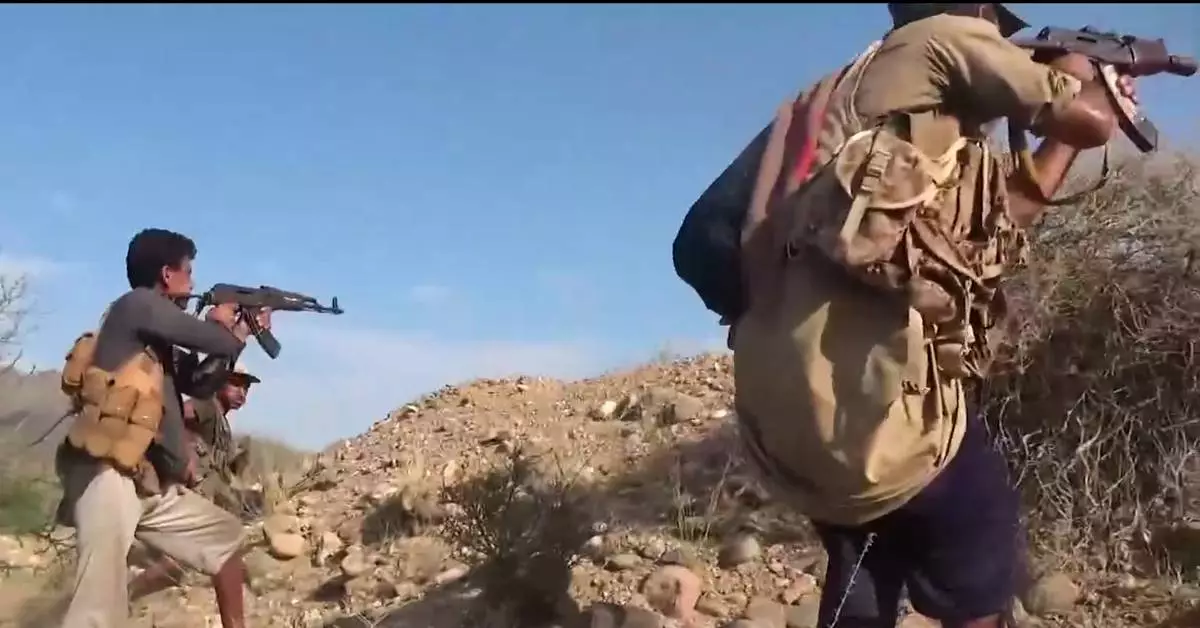
This image taken from undated video released by the Ansar Allah Media Office, the media arm of Yemen's Houthi rebels, on Tuesday, Sept. 22, 2026, shows, according to the group, Houthi fighters firing rifles during clashes with Saudi-backed forces at an undisclosed location in Yemen. (Ansar Allah Media Office via AP)
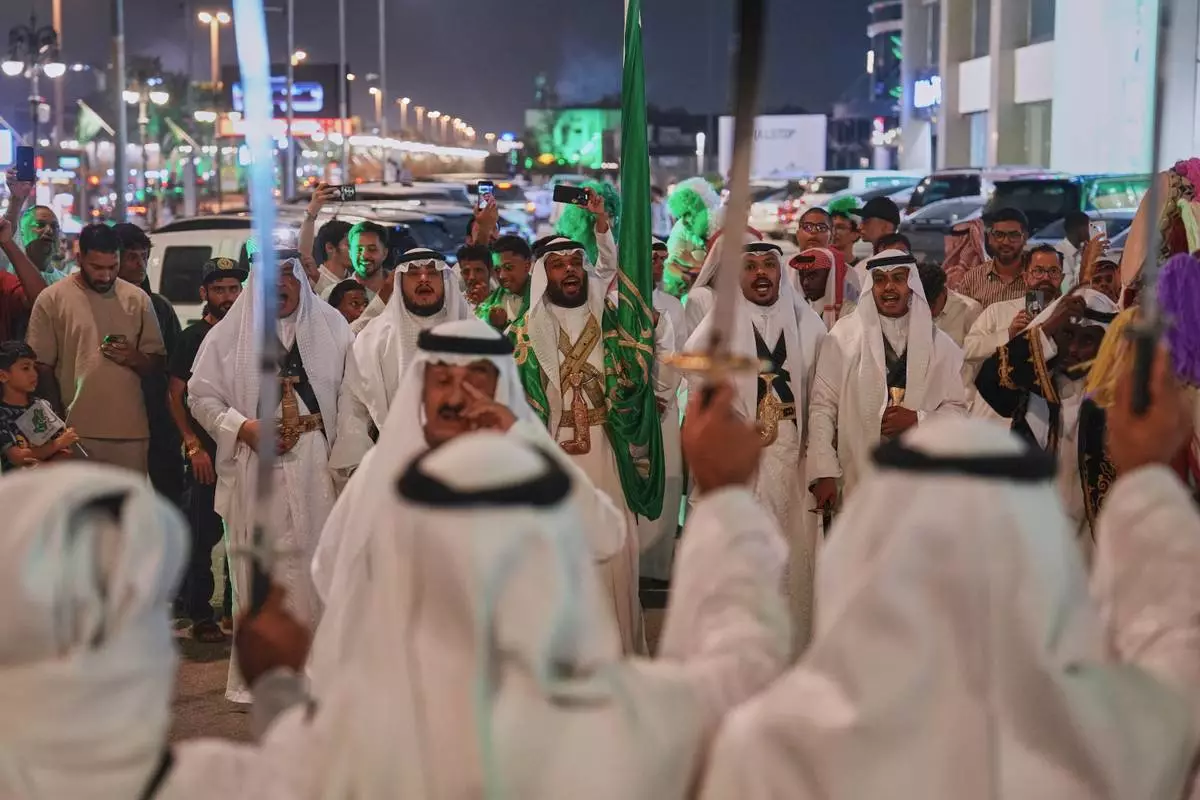
Men perform the traditional Saudi sword dance known as the ardah during celebrations marking Saudi Arabia's 96th National Day in Riyadh, Saudi Arabia, Wednesday, Sept. 23, 2026. (AP Photo/Baraa Anwer)