The ongoing probe revolving around the late U.S. financier and convicted sex offender Jeffrey Epstein has become a powerful symbol of systemic dysfunction in Western political and judicial systems and has significantly eroded public trust, according to analysts.
In the latest episode of the China Global Television Network (CGTN) opinion show 'The Point with Liu Xin' which aired Wednesday, experts debated the ongoing controversies surrounding the latest release of documents in the so-called Epstein files.
The newly-released files totaling some three million pages have sparked serious scrutiny across the Atlantic, prompting the resignation of several political figures over their ties to Epstein, who died under mysterious circumstances in a maximum-security facility in 2019.
Han Hua, the co-founder and secretary general of the Beijing Club for International Dialogue, a Chinese think tank, noted how Epstein, in spite of his conviction, had seemingly built up an expansive network of the rich and powerful, and said the sense of "elite impunity" and the seeming disregard for morality among many of those involved has dealt a huge blow to Western democracy, which is supposedly built upon the basis of the rule of law.
"Right after 2008, Epstein certainly has built an even stronger and much larger Western elite circle including politicians, including academia, including the political and the religious figures like the Dalai Lama. So this actually indicates the 'bankruptcy' of the Western democracy from the moral high ground, from the rule of law. It is systematic damage to the whole system and also to the judicial and legal system. And they are building a circle that can protect Epstein and the elites in this circle from getting [allegations], from getting legally punished, so that the cases [could become] even larger. And there are so many victims, there is no perspective with regard to the victims to be protected," she said.
Josef Mahoney, a professor of politics and international relations at East China Normal University, said the ongoing Epstein saga has deeply flamed public distrust, exposing uncomfortable truths about how power operates behind closed doors.
"We've also seen, as has been raised, the question about whether or not the system can be trusted. There's intense distrust now in the system. But at the same time, I think the other point to be raised about moral authority is that what you see are leaders, figures from different fields, from across the political spectrum, essentially working together in a way, so they represent and they stoke divisions in society that exploit and suppress the people. But at the same time we see them, the left wing, the right wing, the center, all sort of having these extreme parties or relationships with each other, which really begs the question of whether or not there's a true democracy to begin with," he said.
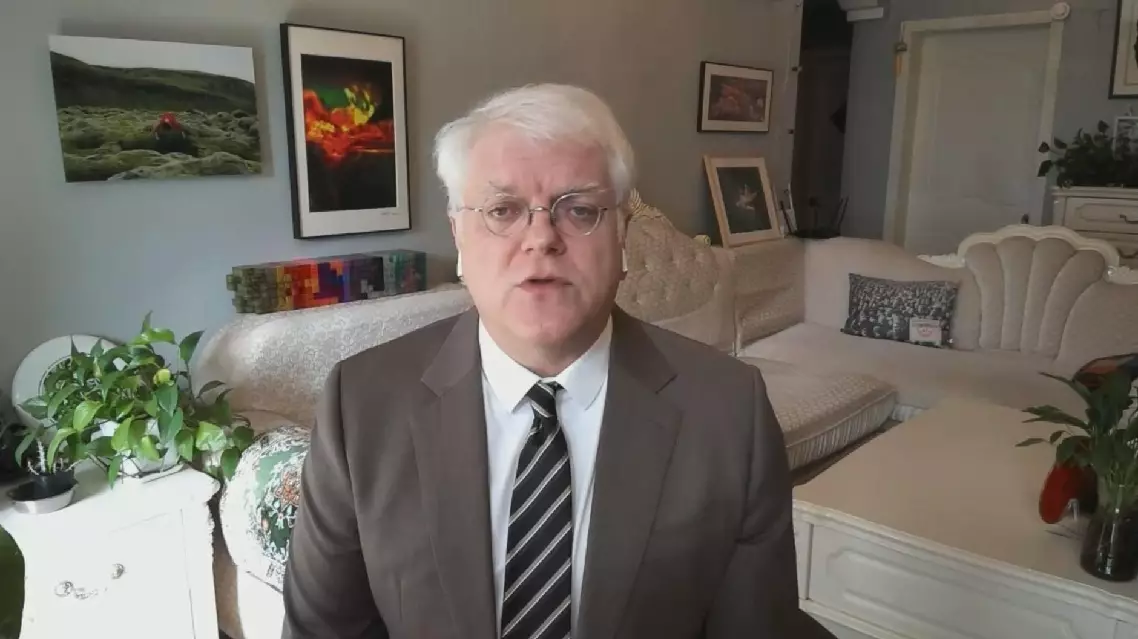
Epstein case sows deeper distrust in Western politics, judicial systems: analysts
South China's Guangdong Province is accelerating its transformation into an international medical tourism hub, positioning itself as a destination for patients worldwide seeking affordable, high-quality care.
The push follows a joint initiative announced in late March by nine Chinese government departments, including the Ministry of Commerce, aimed at boosting spending by foreign tourists and enhancing exports of tourism services as part of broader efforts to expand the country's service sector.
Every day, some of the most complex surgeries are performed here. Li Zilun, deputy director of the division of vascular surgery at the First Affiliated Hospital of Sun Yat‑sen University, is among the doctors capable of carrying out these intricate procedures.
He recently completed surgery on a patient with an aortic aneurysm, a condition often described as a "time bomb" in the body’s main artery, increasingly common in aging societies around the globe. Li also specializes in highly difficult and pioneering procedures, including repairing leaks caused by failed grafts.
"This was a very challenging case. And then, we implanted the covered stent to eliminate the endoleak. Actually, the outcome was pretty good. The patient will be discharged today," said Li Zilun.
The ability to handle such complex cases -- combining international techniques with domestically produced devices -- is drawing patients from around the world to seek treatment. In addition, high safety standards and low costs are also major draws.
"Our government is encouraging innovation. So, lots of physicians -- including our vascular surgeons -- we are actively involved in the innovation that helps to increase the effectiveness and safety, and also bring down the cost," said Li.
This hospital is one of the first in Guangdong to be designated by the provincial health commission as a pilot site for building an international medical service hub.
The growing number of patients has pushed the hospital to explore new ways to transform every step -- from treatment to payment and everything in between -- into a seamless experience, reducing waiting times and delivering better care for patients.
"I think it's fast. When the patient come here for just about, I think, one week, you can solve the problem," said Xiao Haipeng, president of the First Affiliated Hospital of Sun Yat-sen University.
The hospital is also deepening its international cooperation with top-tier medical institutions, including those at Harvard University.
"Not just for China, for the whole globe, we are facing health care challenges -- emerging infectious disease and chronic, lung infectious diseases, and also the aging population, also the shortage of healthcare workforce," said Xiao.
In response to these challenges, China is promoting its own solutions, including aggressive innovation in artificial intelligence (AI)-driven workflows, while stepping up research and development investment and global engagement along the way.
"In recent years, the innovation in Western medicine is dramatically growing. An example of my hospital -- in the past few years, we have 140 innovations and seven of them are international leading innovations," said Xiao.
As global demand for medical tourism grows, China is positioning itself as a new destination. Official data shows that the number of foreign patients in Guangdong increased by 20 percent last year. Among them, the growth in inpatient admissions was even faster, rising by 76 percent.
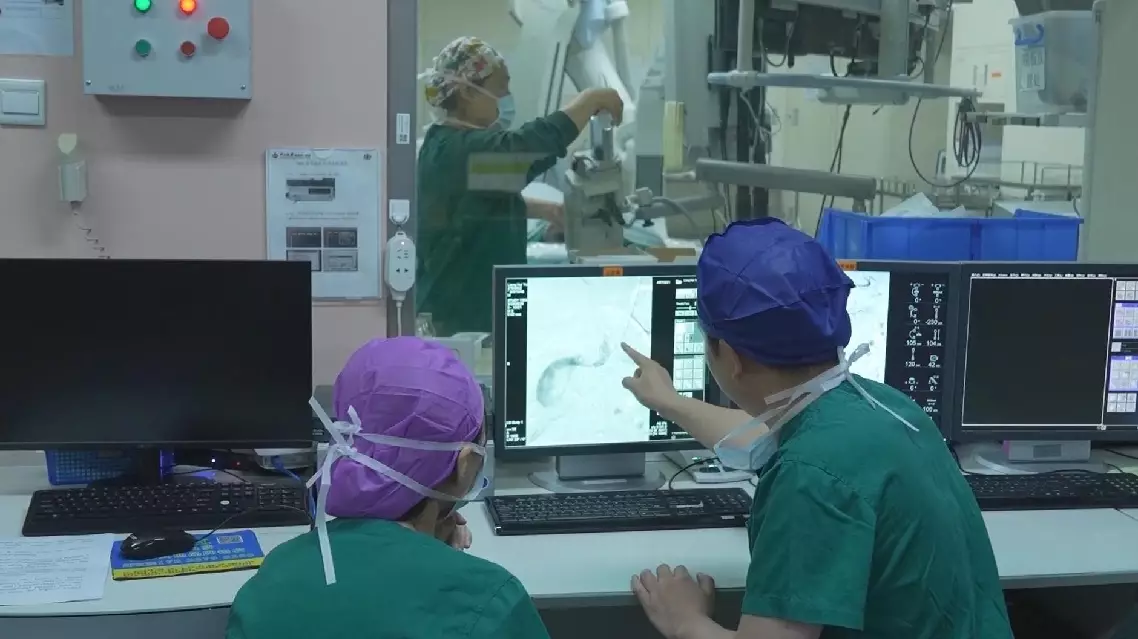
Guangdong fast-tracks pilot for int'l medical service hub