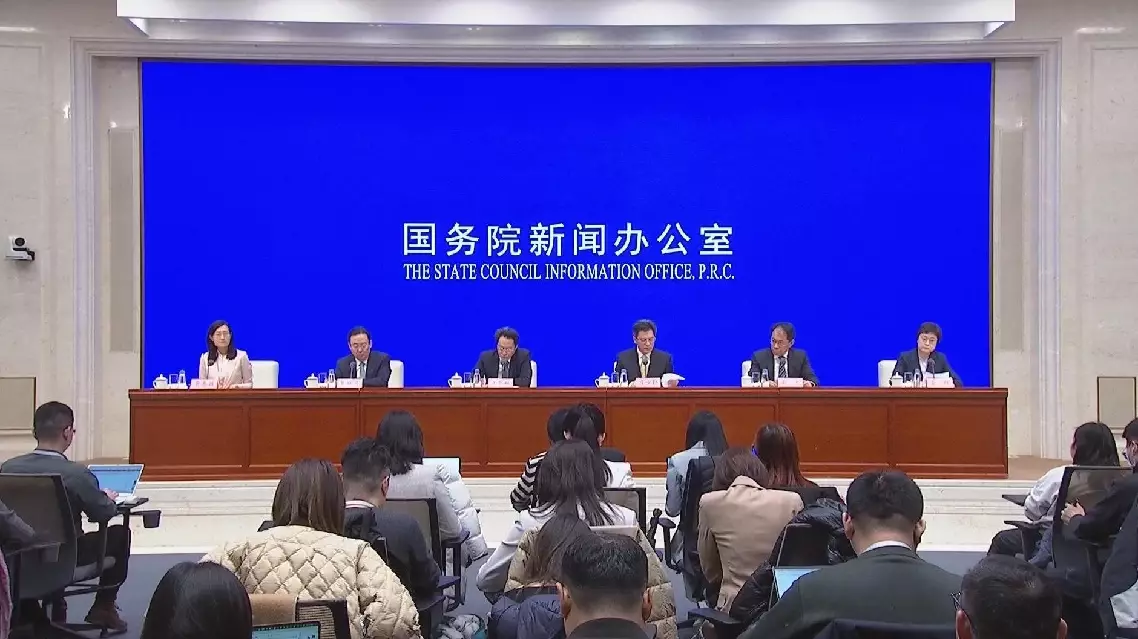
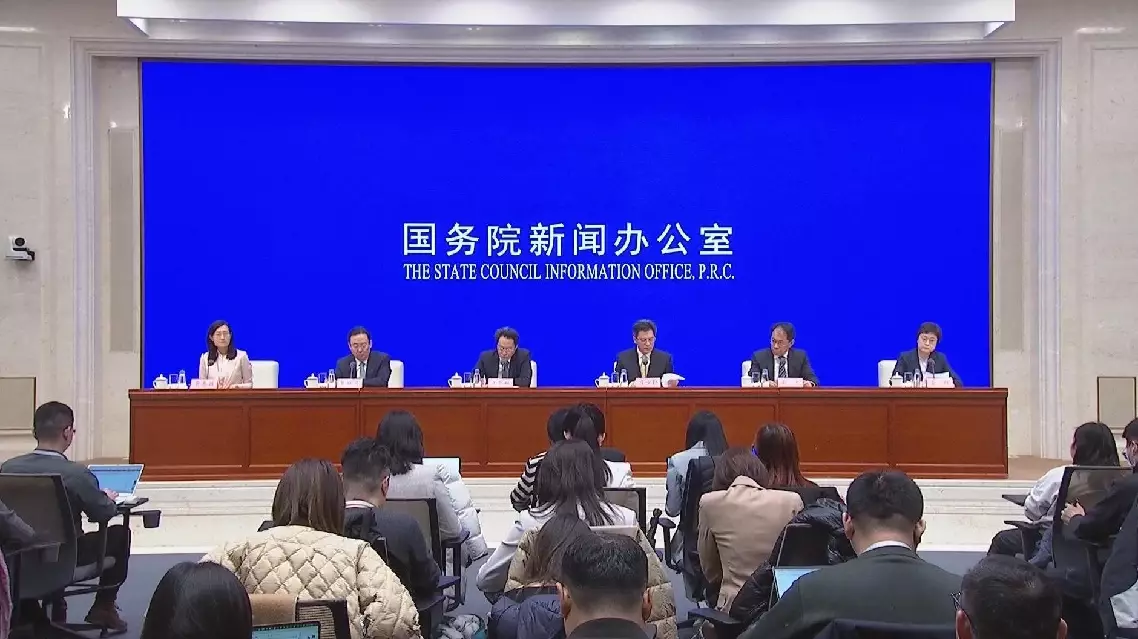
China’s capital metropolitan area, spanning Beijing, Tianjin, and Hebei, will be structured around three nested circles comprising commuting, function, and industrial coordination, marking a departure from the conventional one-hour commuting model, Beijing executive vice mayor Xia Linmao said Thursday.
The framework aims to ease congestion, strengthen regional integration, and provide a coordinated blueprint for long-term development across the capital region, according to Xia.
He detailed the plan at a press conference in the city, held ahead of the release of the 2023-2035 spatial coordination blueprint.
"The spatial scale of the capital metropolitan area and the delineation of its three circles are not limited to the one-hour commuting circle. Instead, they are grounded in the unique characteristics of Beijing and the strong driving force of its 'four centers' positioning, innovatively forming a multi-layered, nested, and collaborative 'concentric circles' spatial model," Xia said.
"Among the three circles, the commuting circle is delineated by current cross-region commuting rates and one-hour accessibility via integrated transportation. It covers areas with high-frequency movement of resident populations for both living and work. This circle is generally based on a radius of about 50 kilometers, covering the entire administrative area of Beijing and 12 surrounding counties and districts, with a total area of about 27,000 square kilometers," he said.
Xia went on to outline the distinct roles of the other two circles, which together define the broader scope of the capital metropolitan area's development.
"The function circle emphasizes decongestion and improvement. It represents the primary area of focus and the main planning framework for the capital metropolitan area's development. This circle covers Beijing, Tianjin, as well as the Xiong'an New Area and parts of Langfang, Baoding, and Zhangjiakou in Hebei, spanning about 42,000 square kilometers. The industrial coordination circle is an open area driven by the development radiation of the capital metropolitan area. It strengthens the division of labor and collaboration, with its influence extending across the entire Beijing-Tianjin-Hebei city cluster," Xia said.
The three circles are not laid out as simple concentric rings but as nested, overlapping zones. The function circle encompasses and extends beyond the commuting circle, while the industrial coordination circle builds on this foundation and expands even further, the official explained.
China's capital metropolitan area to adopt three-circle framework for integration, growth: official
China's capital metropolitan area to adopt three-circle framework for integration, growth: official
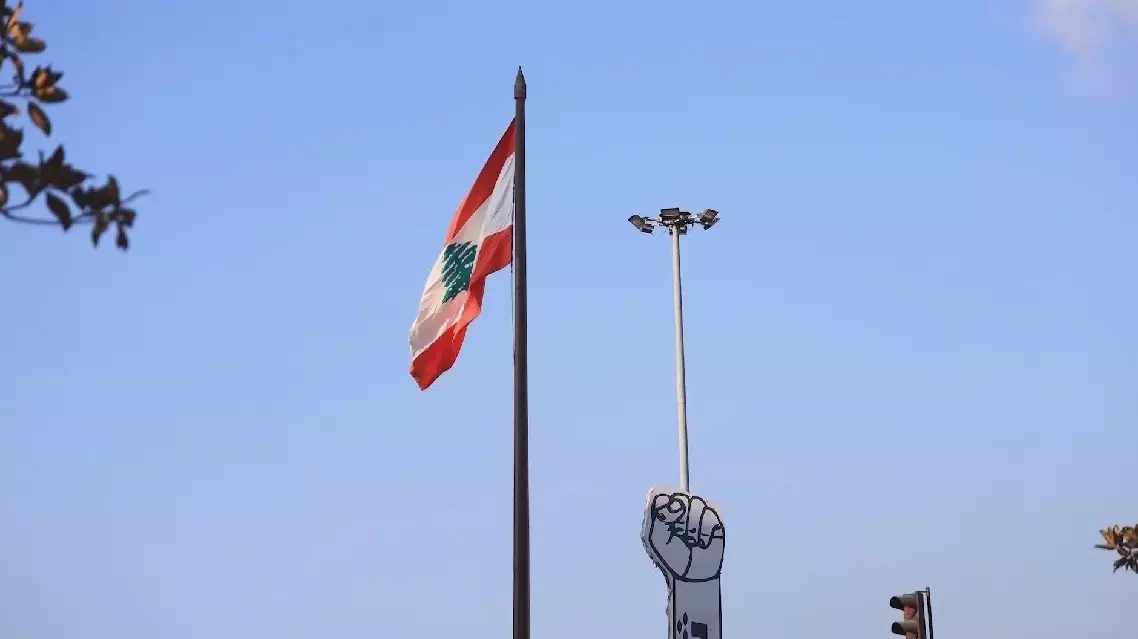
European countries and international organizations have widely condemned Israeli air strikes on Lebanon which have resulted in more than 1,000 civilian casualties, including children, and have caused damage to civilian infrastructure.
Israel launched large-scale air raids across Lebanon on Wednesday, saying it had carried out 100 strikes within a matter of minutes on positions they claimed belonged to the Hezbollah group.
Lebanon's Ministry of Public Health reported more than 300 had been killed in the attacks, with roughly 1,150 wounded.
The attacks came after a two-week ceasefire agreement was reached by the United States and Iran. However, both Israel and the United States have maintained Lebanon is not included in the truce.
Spanish Foreign Minister Jose Manuel Albares on Thursday accused Israel of violating international law to carry out the air strikes on Lebanon, calling the attacks "a shame on the conscience of all humanity".
Earlier on Thursday, Albares announced that Spain would reopen its embassy in Tehran in the hope of achieving peace in the region.
Italian Prime Minister Giorgia Meloni said that Israel had "disrespected" the two-week ceasefire with Iran by carrying out the strikes.
Meloni also warned of further economic turmoil if U.S.-Israeli strikes on Iran flare up again, and said the European Union should consider a temporary suspension of the Stability and Growth Pact, an agreement which ensures economic stability within the European Union, in order to handle the potential monetary consequences.
Meanwhile, German Chancellor Friedrich Merz on Thursday warned that Israel's military operations in Lebanon could cause the entire peace process as a whole to fail, telling a press conference in Berlin "that must not happen."
Merz announced that the German government will resume direct talks with Iran in order to support the newly agreed two-week ceasefire between Washington and Tehran.
He also stated that a window of opportunity for a negotiated solution has opened for the first time since the outbreak of the conflict, though he cautioned that the situation in the Middle East remains "fragile."
The UK's Foreign Secretary Yvette Cooper said on Thursday that she is "deeply troubled" by Israel's escalating attacks on Lebanon, expressing hope that Lebanon will be included in the current ceasefire arrangement.
Cooper also reiterated the importance of reopening the Strait of Hormuz, saying that the effective closure of the vital shipping chokepoint had been "deeply damaging for the world", while stressing how crucial the passageway is to the entire global economy.
French Foreign Minister Jean-Noel Barrot described the Israeli strikes on Lebanon as "intolerable."
In a radio interview, Barrot said France strongly condemns "the massive strikes" which seriously undermine the temporary ceasefire reached earlier between the United States and Iran. The European Union's foreign policy chief Kaja Kallas said Thursday that Israel's latest strikes on Lebanon, which killed hundreds overnight, could not be considered as an act of self-defense.
"Israel's right to defend itself does not justify inflicting such massive destruction," Kallas said in a post on the social media platform X. She warned that the strikes risk further destabilizing the region and added that Israel's actions were putting the U.S.-Iran ceasefire under severe strain.
Despite this widespread criticism, Israeli Prime Minister Benjamin Netanyahu insisted on Thursday there would be no ceasefire in Lebanon, signaling that Israel will continue its military operations while pursuing planned negotiations with Beirut.
"There is no ceasefire in Lebanon," Netanyahu said in a video address to residents of northern Israel, adding: "We continue to strike Hezbollah with force and we will not stop until we restore your security."
Netanyahu said he had instructed his cabinet to open direct talks with Lebanon following what he described as repeated requests from the Lebanese government.
The negotiations, which are expected to begin next week in Washington, aim to disarm Hezbollah and reach a "historic and lasting" peace agreement, Netanyahu added. Delegations will be led by the Lebanese and Israeli ambassadors to the United States.
Israel and Lebanon have no formal diplomatic relations and technically remain in a state of war.
European Leaders widely condemn Israeli attacks on Lebanon