Forge advancement through connectivity and visionary innovation
The Commissioner of Customs and Excise, Mr Chan Tsz-tat, chaired Customs' 2025 year-end press conference held at the Customs Headquarters Building today (February 12) to review the department's efforts in the past year. The department continued to spare no efforts in guarding the southern gateway to the country, intercepting various smuggling activities on all fronts, combatting illicit cigarette and dangerous drug activities, and preventing prohibited/controlled items into or out of Hong Kong, as well as strengthening collaboration with the Chinese Mainland, different countries and regions in implementing various measures to facilitate trade and clearance. All these help Hong Kong proactively capitalise on its role as a bridge linking the country and the world, hence contributing to the high-level opening up and high-quality economic development of the country.
Overall enforcement situation
---------------------------------
In 2025, Customs detected a total of 38 869 cases, an increase of 24 per cent from the 2024 figure. About 75 per cent of the cases are related to illicit cigarettes, followed by cases related to dangerous drugs and intellectual property rights infringement.
Illicit cigarettes
--------------------
On the anti-illicit cigarette operation front, 29 037 cases were detected and 28 580 persons were arrested in 2025, increases of 36 per cent and 39 per cent from 2024 respectively, with 604 million cigarettes seized, which was about the same as the 2024 figure.
The significant increase in the number of cases and arrestees mainly stemmed from a huge surge in cases of inbound persons bringing in cigarettes exceeding the duty-free concessions by imposing a penalty on offences compoundable at passenger clearance channels, in which about 27 000 inbound persons were involved. This showed an increase of 41 per cent from 2024. Customs also noticed that syndicates exploited travelers and adopted an "ant-moving-home" approach to smuggle tobacco products into Hong Kong.
In addition, 2 600 cases involving alternative smoking products, with seizures of about 9.35 million pieces of relevant products, including electronic cigarettes and heat-not burn products, were detected last year. 2 559 persons were also arrested.
Customs also stepped up enforcement actions to combat illicit cigarettes at source last year and detected numerous cross-boundary cigarette smuggling cases through collaboration with customs administrations of the Chinese Mainland and overseas via intelligence exchanges and joint operations. Moreover, through international intelligence exchanges, the department also assisted overseas law enforcement agencies in Europe and the Asia-Pacific region in detecting 52 cigarette smuggling cases with 240 million illicit cigarettes seized.
The Tobacco Control Legislation (Amendment) Bill 2025 (Amendment Bill) was passed by the Legislative Council on September 11, 2025, to raise the maximum penalty for offences relating to duty-not-paid tobacco and to implement a duty stamp system. While efforts have been made through various channels to raise the awareness of members of the public and passengers on the increased penalties relating to illicit cigarettes, Customs also launched the Pilot Run of the Duty Stamp System between last October and this January to simulate the workflow and related technology in practical operations. Customs plans to implement the first phase of the Duty Stamp System in the fourth quarter this year, with full implementation in the second quarter of 2027, thus achieving the goal of enabling members of the public to distinguish duty-paid cigarettes from duty-not-paid ones, and to combat "cheap whites" effectively.
Illicit fuel
------------
In view of the increasing trend of illicit fuel activities, Customs has strengthened enforcement actions and detected 39 cases related to illegal fueling stations, which was 1.6-fold higher than that of 2024, and seized 96 211 litres of illicit motor spirit. Customs also detected 17 illicit fuel cases and seized 22 776 litres of illicit fuel, representing an increase of about 90 per cent and close to three-fold from 2024 respectively. The cases included smuggling illicit fuels by means of sea and land.
Customs will closely monitor the situation, step up inspections and adjust its enforcement strategies and measures in a timely manner. The department will also carry out stringent enforcement action against vehicles patronising illegal fueling stations, and vehicles involved will be detained and may be liable to confiscation.
Dangerous drugs
-----------------------
In 2025, 961 drug cases were detected, which was a decrease of 29 per cent from 2024. A total seizure of about 7.5 tonnes of drugs was made, representing an increase of 19 per cent from 2024.
The three major drug seizures in order of quantity were cannabis (2 977 kilograms, a 4 per cent increase), methamphetamine (1 664.4kg, a 50 per cent increase) and ketamine (1 486.1kg, a 24 per cent increase) compared to the figure for 2024. Meanwhile, 43 cases involving etomidate were detected last year, with about 25.2kg of etomidate and 4 387 capsules containing etomidate seized, and 43 persons arrested.
Apart from using large cargos, airmail and express cargo, Customs noticed a trend that drug syndicates also traffic drugs by exploiting inbound air passengers, and the number of such cases and the seizure quantity noticeably increased by about 71 per cent and 1.5-fold from 2024 to 192 cases and 2 462.7kg of drugs seized last year. The drugs seized by such means even accounted for close to one-third of the department's total drug seizures.
Smuggling
------------
A total of 286 smuggling cases were detected last year, an increase of 22 per cent from 2024, with a seizure value of $4.217 billion in total made, representing a drop of 2 per cent from 2024.
Smuggling syndicates still mainly conduct smuggling activities by sea, making use of barges, speedboats, fishing vessels and river trade vessels to smuggle large amounts of goods to nearby Mainland cities and Macao. Hong Kong Customs also found criminals using ocean-going vessels and adopting more circuitous routes by shipping goods overseas and then re-exporting them to the Chinese Mainland to evade the department's detection. Last year, 33 and nine smuggling cases involving ocean-going vessels and river trade vessels were detected respectively.
Customs also detected various smuggling cases involving precious metals last year, in which a total of 393kg of gold with an estimated market value of about $320 million were seized. Moreover, 573 endangered species smuggling cases were detected last year, with about 84.5 tonnes of seizures and 374 arrests made. Such figures showed an increase from 2024.
Money laundering
--------------------
Customs last year detected 12 money laundering cases with 24 persons arrested and $12.8 billion involved. The number of cases showed an increase of 9 per cent while the number of arrests and amount involved dropped 27 per cent and 33 per cent respectively.
Intellectual property rights
------------------------------
Customs detected 723 intellectual property rights infringement cases last year with about 970,000 infringing goods seized. The seizure value of infringing items increased 35 per cent to around $420 million as compared to the figure for 2024.
With the opening of the Kai Tak Sports Park in March last year, numerous major events and international games were held in Hong Kong. To prevent lawbreakers from taking advantage on the fervour of major events to sell infringing goods, Customs officers stringently enforced the law before festivals and during international mega events to safeguard Hong Kong's reputation as a shopping paradise for genuine goods.
Consumer protection
------------------------
Customs last year received 10 775 complaints regarding suspected cases of violating the Trade Descriptions Ordinance, a drop of 13 per cent from 2024. Among them, more than half of the complaints were related to services.
Last year, Customs received 3 404 complaints related to the winding up of businesses, the majority of which involved closure of physical shops while 90 cases were related to closure of online shops.
Customs is also committed to conducting promotion of consumer rights to visitors through multiple channels, apart from promotion via social media platforms, promotional videos on consumer rights were also broadcast on cross-boundary coaches between Hong Kong and Shenzhen. Mobile promotional booths were set up at various exhibitions to remind consumers to give prudent consideration before making decisions for consumption involving prepayments, and the risks and potential loss caused by a sudden business closure. Customs officers also visited elderly centres to conduct promotion and education work to raise the awareness of consumer rights among the elderly.
Clearance and trade facilitation
-----------------------------------
Customs has continued to facilitate clearance and trade, and implement various related measures.
Clearance
Boundary control points recorded about 330 million in passenger traffic, representing an increase of 12 per cent from 2024. There were 11.9 million and 4.8 million trips of inbound and outbound private cars and goods vehicles respectively last year, showing an increase of 24 per cent and 6 per cent respectively. Customs also flexibly deployed manpower to ensure smooth operations of boundary control points before major festivals and holidays.
Trade facilitative measures
(1) The Single E-lock Scheme was extended to the Fuzhou Customs District in July last year, increasing the number of Customs clearance points under the scheme to 99. Thousands of cross boundary routes were provided to the industry and a "green lane" for facilitating logistics flows between Hong Kong and Guangdong was built.
(2) The Commerce and Economic Development Bureau and the General Administration of Customs of the People's Republic of China signed the Cooperation Arrangement on Single Window in May last year to further strengthen collaboration and exchanges on the Single Window between Hong Kong and the Mainland, as well as to enhance system connectivity between the two places. Phase 3 services of the Single Window will be implemented in batches, and the first batch of the service will be rolled out in the middle of this year and will replace the existing Road Cargo System.
(3) On January 12, Hong Kong Customs extended the Free Trade Agreement Transhipment Facilitation Scheme (FTA Scheme) to cover transshipment cargoes from the Mainland to Peru via Hong Kong, further helping enterprises to extend new markets and consolidate Hong Kong's leading position as a logistics hub. The scope of service of the FTA Scheme now covers cargoes of 71 economies to be transshipped via Hong Kong to the Mainland, and the Mainland transshipment cargoes heading for China's Taiwan region, Korea, Singapore, Vietnam, Nicaragua, Myanmar, Australia and Peru via Hong Kong.
Strengthen Mainland and international co-operation
----------------------------------------------------------
Hong Kong Customs last year continued to reinforce connections with both the Mainland and the world, promoting regional and global exchanges and co-operation.
Customs last year actively expanded the global network of the Hong Kong Authorized Economic Operator (AEO) Mutual Recognition Arrangement (MRA) and achieved significant progress, including the signing of AEO MRAs with Saudi Arabia Customs and Peruvian Customs. The one signed with Peruvian Customs marked the first MRA signed between Hong Kong Customs and South American authorities. As of now, there are a total of 18 MRAs ratified between Hong Kong Customs and other economies. Discussions about MRAs with the United Arab Emirates, Qatar, Kazakhstan, Chile, Philippines and other countries along the Belt and Road Initiative is ongoing.
Since assuming the office of the Vice-Chairperson for the Asia/Pacific (A/P) region of the World Customs Organization (WCO) in July last year, Hong Kong Customs has hosted a series of global and regional international conferences, joint enforcement operations, forums and workshops, including the 26th WCO A/P Regional Heads of Customs Administrations Conference and the Conference on Simplification of Procedures and Best Practices for E-commerce jointly held with the Association of Southeast Asian Nations Secretariat.
Hong Kong Customs also actively promoted the application of technology in the region, leading the design and development of "ValidAP", a blockchain-based validation platform for digital documents, with an aim to facilitate Hong Kong and A/P regions' logistics and commercial development, as well as enhance digitalisation and a paperless process.
Hong King Customs' tenure as the Vice-Chairperson for the A/P region of the WCO will end in June this year. The department is actively considering running for re-election, hoping to continue to advance the regional development agenda, co-ordinate regional affairs, and lead the members in addressing various challenges.
New uniform
-----------------
To enhance occupational safety, work efficiency, and the department's professional image, Hong Kong Customs has designed a new uniform. The new design fully considers feedback from frontline staff, meeting their needs for comfort, functionality, and aesthetics. Customs has been replacing the uniforms of 4 500 frontline officers with the new ones starting last June, and the full implementation will be completed in the second quarter of this year, hoping to give the department a refreshed image while improving the work efficiency of staff.
New mindset
------------------
Last year, trial runs of the Guangzhou-Hong Kong Motor Vehicle Export Facilitation Scheme and the Shenzhen-Hong Kong Motor Vehicle Export Facilitation Scheme were conducted among Hong Kong Customs, the Guangzhou Customs District, the Shenzhen Customs District and other relevant departments, removing barriers and restrictions for the motor vehicle industry by improving the procedures of clearance, registration and licensing of electric private cars exported from the Mainland to Hong Kong. These helped greatly reduce the time for scrutiny and storage costs after the vehicles were imported into Hong Kong. The schemes were well received by the industry.
In addition, Hong Kong Customs, relevant departments and mainland authorities have bee actively taking forward the Air-Land Fresh Lane and the scheme was fully launched last year. The scheme utilises the strengths of the Hong Kong-Zhuhai-Macao Bridge (HZMB) and Hong Kong International Airport (HKIA), and the temperature-controlled facilities for cargo at HKIA and further promotes the Intermodal Transhipment of Air and Land Cargo, thus making the HZMB a "green channel" for fresh food. It is hoped to take forward the fresh food trade between overseas and the Greater Bay Area and make good use of the HZMB.
With the significant increase in drug seizures by Customs in recent years, the drugs pending for disposal and the administrative and storage costs have also risen accordingly. To improve efficiency and save public resources, Customs, with the support of relevant departments and swift amendment of relevant regulation, has been disposing drug seizures since April last year. Such measures significantly reduce the drug disposal time and storage cost of the Government.
Conclusion
--------------
Mr Chan said that the department will embrace changes and be bold in promoting trade and clearance measures, as well as in executing daily tasks, so as to pursue the most ambitious goals.
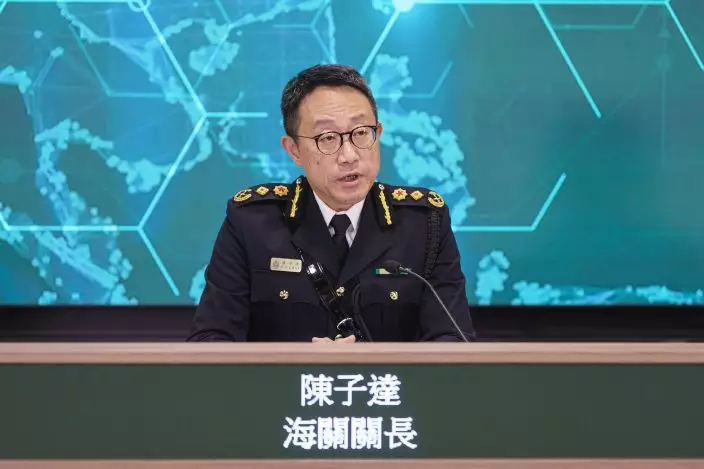
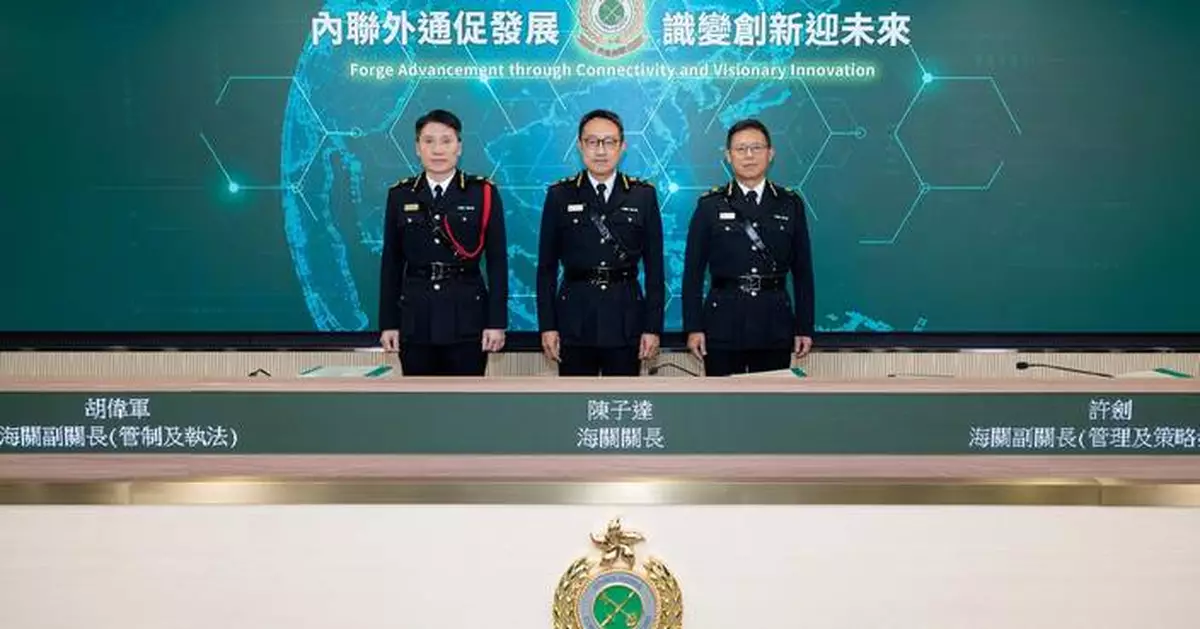
The Commissioner of Customs and Excise, Mr Chan Tsz-tat, chaired Customs' 2025 year-end press conference held at the Customs Headquarters Building today (February 12). Source: HKSAR Government Press Releases
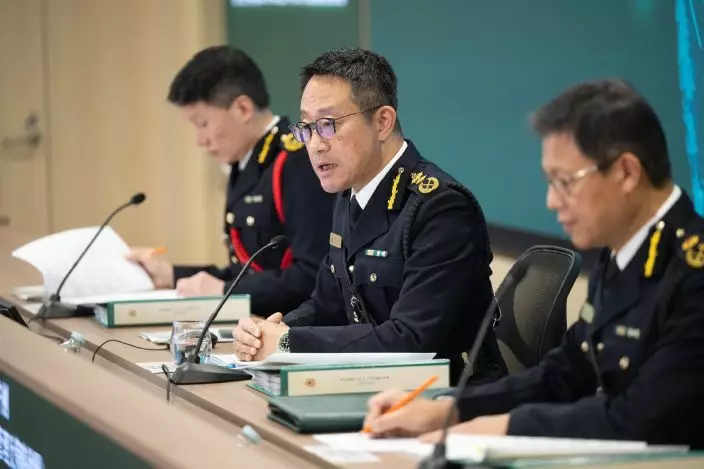
The Commissioner of Customs and Excise, Mr Chan Tsz-tat (centre), chaired Customs' 2025 year-end press conference held at the Customs Headquarters Building today (February 12). Source: HKSAR Government Press Releases
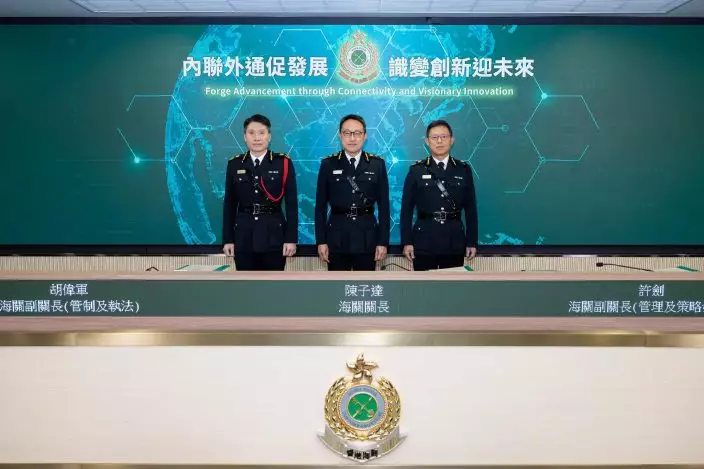
The Commissioner of Customs and Excise, Mr Chan Tsz-tat (centre), chaired Customs' 2025 year-end press conference held at the Customs Headquarters Building today (February 12). The Deputy Commissioner (Control and Enforcement) of Customs and Excise, Mr Mark Woo (left), and the Deputy Commissioner (Management and Strategic Development) of Customs and Excise, Mr Rudy Hui (right), also attended. Source: HKSAR Government Press Releases