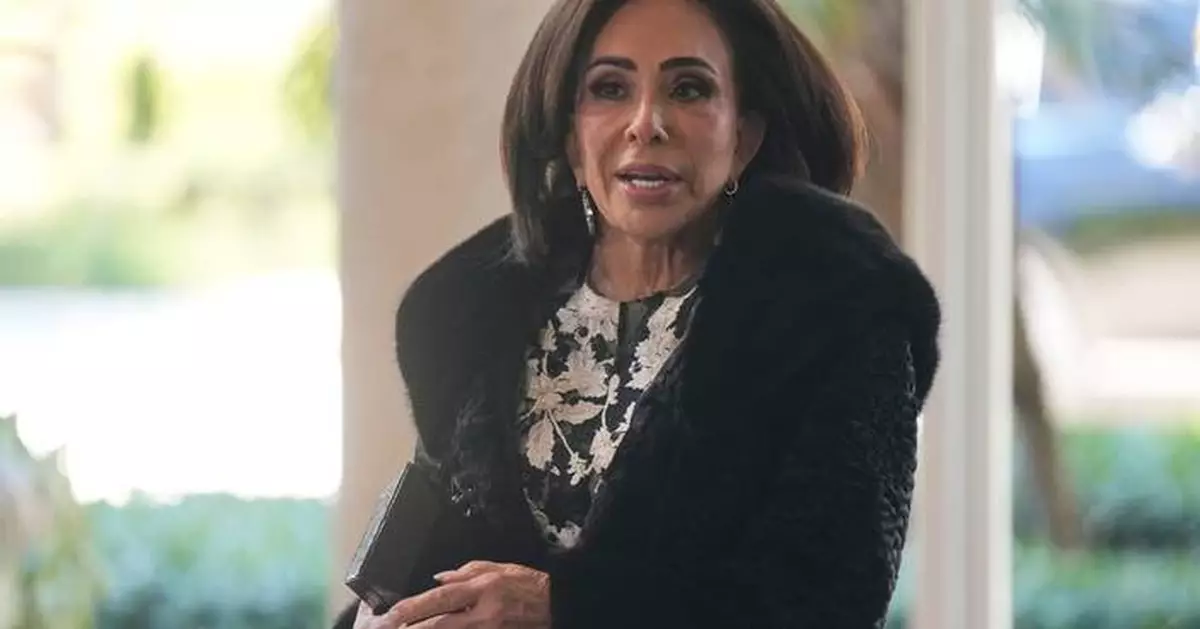
RYE, N.Y. (AP) — Jeanine Pirro, the U.S. Attorney for the District of Columbia, has filed a $250,000 negligence lawsuit against her suburban hometown north of New York City and a power utility after claiming she tripped and fell while out walking.
Pirro said she tripped over a large wooden block protruding from a steel plate in a roadway on Aug. 28 in the Westchester County city of Rye, just weeks after she was confirmed as the Trump administration’s top prosecutor for the District of Columbia.
The plate was covering excavation related to gas-main work for Consolidated Edison, according to an amended complaint filed Wednesday in state court.
“As a result of defendants’ negligence, Ms. Pirro sustained serious personal injuries, including but not limited to bruises and contusions to the head, eye, face, and shoulder areas, together with pain, discomfort, and limitation of movement,” according to the complaint, initially filed last month.
The 74-year-old former Fox News host was confined to bed, required medical attention and “continues to experience pain and suffering,” according to the filing.
Representatives for Pirro, Con Ed and Rye declined to comment on the pending litigation Thursday.
In a motion to dismiss the claim, an attorney for Rye wrote that it “can hardly be said that the City was negligent in a duty to pedestrians at a location that was not a pedestrian walkway.” An attorney for Con Ed wrote in a separate court filing seeking dismissal that all the dangers and risks related to the incident “were open, obvious and apparent.”
Pirro has served as both a judge and the district attorney for Westchester County.
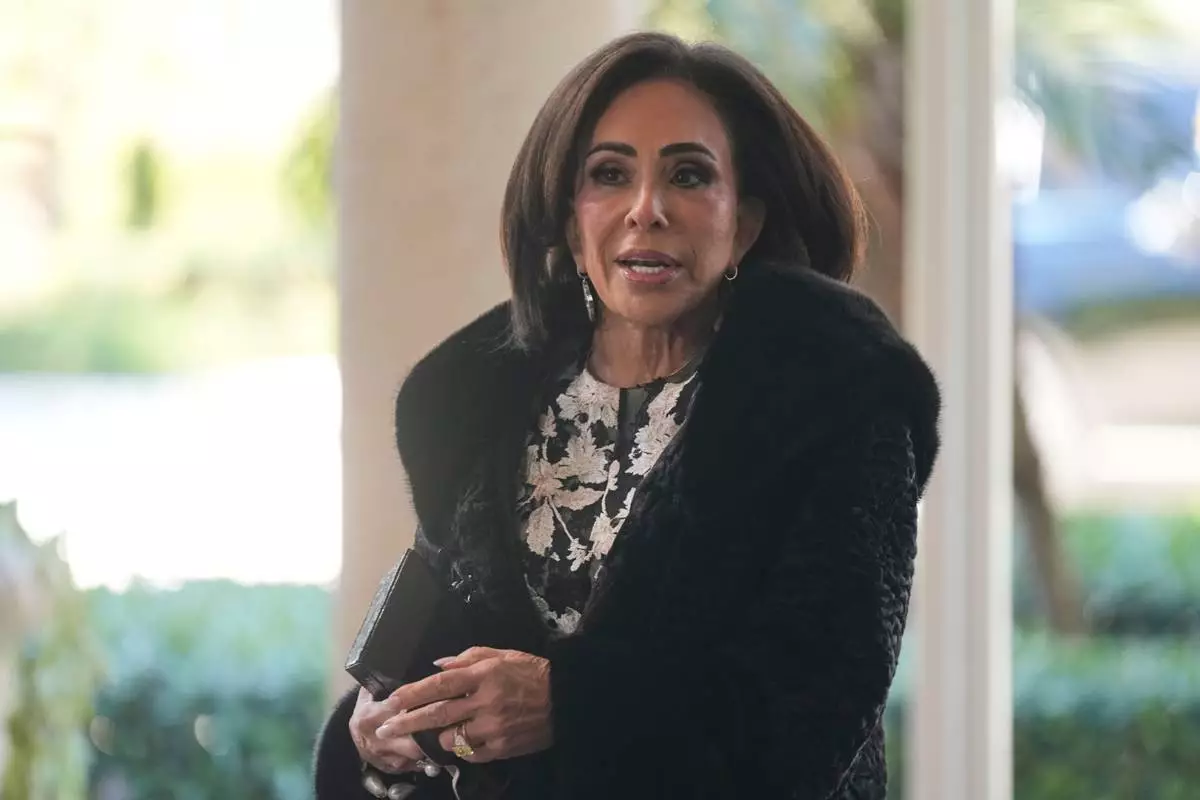
U.S. Attorney for the District of Columbia Jeanine Pirro arrives at The Mar-a-Lago Club, Sunday, Feb. 1, 2026, in Palm Beach, Fla., to attend the wedding of White House deputy chief of staff Dan Scavino and Erin Elmore, the director of Art in Embassies at the U.S. Department of State. (AP Photo/Mark Schiefelbein)
WASHINGTON (AP) — Washington, D.C., Attorney General Brian Schwalb filed a lawsuit Thursday using an expansive racketeering law — originally crafted to prosecute organized crime — to put a landlord accused of providing unsuitable living conditions to his renters out of business.
Speaking at a press conference, Schwalb announced his office was using the Racketeer Influenced and Corrupt Organizations Act, or RICO, to dismantle the real estate operation of Ali “Sam” Razjooyan, his brother Eimon “Ray” Razjooyan, and their mother Houri Razjooyan. Schwalb said it was the first time D.C. has used the statute in a housing case.
The law is designed for complex investigations that involve legitimate entities, like an LLC or corporations that are used to mask criminal activities. It is especially useful in tracking through multiple corporations and other legal entities to reach the source of alleged illegal activity. Its use in Washington highlights one way cities may fight back against fraud and other actions that deplete already-slim inventories of affordable housing around the country.
Schwalb said that “for every 100 extremely low income renters in the District of Columbia there are only 32 affordable and available homes.” He said the Razjooyans allegedly took advantage of the system through a “sprawling illegal enterprise, a complex web of shell LLCs, unlicensed property management and construction companies and straw purchasers.” Those were all designed to conceal the true ownership and condition of the properties to defraud lenders and take advantage of the district’s affordable housing subsidy programs.
The family owns 70 primarily rent controlled properties, the lawsuit said. The lawsuit accuses them of deceiving lenders with false promises to renovate buildings and then rent them to tenants who receive housing subsidies paid by the D.C. government. The buildings were allowed to fall into disrepair, leaving hundreds of residents living in terrible conditions, the lawsuit said.
“I strongly disagree with the Attorney General’s allegations. These claims have not been proven, yet they are being represented to the public as though they already have been. That is not how our legal system is supposed to function. This case should be decided in a courtroom based on evidence, not through dramatic headlines,” Ali Razjooyans said in a text.
He added that Schwalb has suggested this is about protecting residents when it is imposing substantial costs on property owners and the housing system without producing meaningful solutions. “I will address these allegations in court, where they belong. When the full record is developed and the evidence is tested, I am confident it will demonstrate that the accusations do not reflect the facts.”
Thursday’s lawsuit is a continuation of the action Schwalb’s office took in 2024 when it filed lawsuits on behalf of residents of two properties. The continuing investigation uncovered an intricate array of LLCs, unlicensed property management and construction companies, and straw purchasers designed to conceal the true ownership of certain properties, Schwalb said.
Schwalb said the racketeering statute allows his office to move beyond individual properties and target the “foundation of the Razjooyan's vast operation, the web of fraud and deception that is core to their business mode.”
Palmer Heenan, a longtime housing expert and civil rights attorney, called the use of RICO in a housing lawsuit “novel and important” because determining the identity of the actual owner of a property can be complicated when it involves multiple layers of corporate ownership.
“One of the advantages is it lets you go backwards into these networks, so it makes it easier to go after all of the companies involved,” he said. “It will also make it easier for tenants to obtain justice for the horrific conditions they’re all too often been exposed to.”
In one allegation that appears in the lawsuit, Razjooyan, while attempting to obtain a refinancing loan, claimed to build 10 new units in one property and showed pictures of new doors and apartment numbers to lenders. The doors opened to “concrete block walls, apparently to deceive appraisers and generate a higher property evaluation,” the lawsuit alleges.
Conditions for tenants in actual apartments were dire, with some living in rodent- and cockroach-infested properties while others suffered noxious smells from basements full of standing water that collected for days, and some who lived without heat during the entire winter, the lawsuit alleges.
Schwalb said at the press conference that some of those apartments became uninhabitable, worsening the affordable housing crisis in the city.
The lawsuit seeks restitution for impacted tenants and to “enjoin the defendants from doing business in the District.”
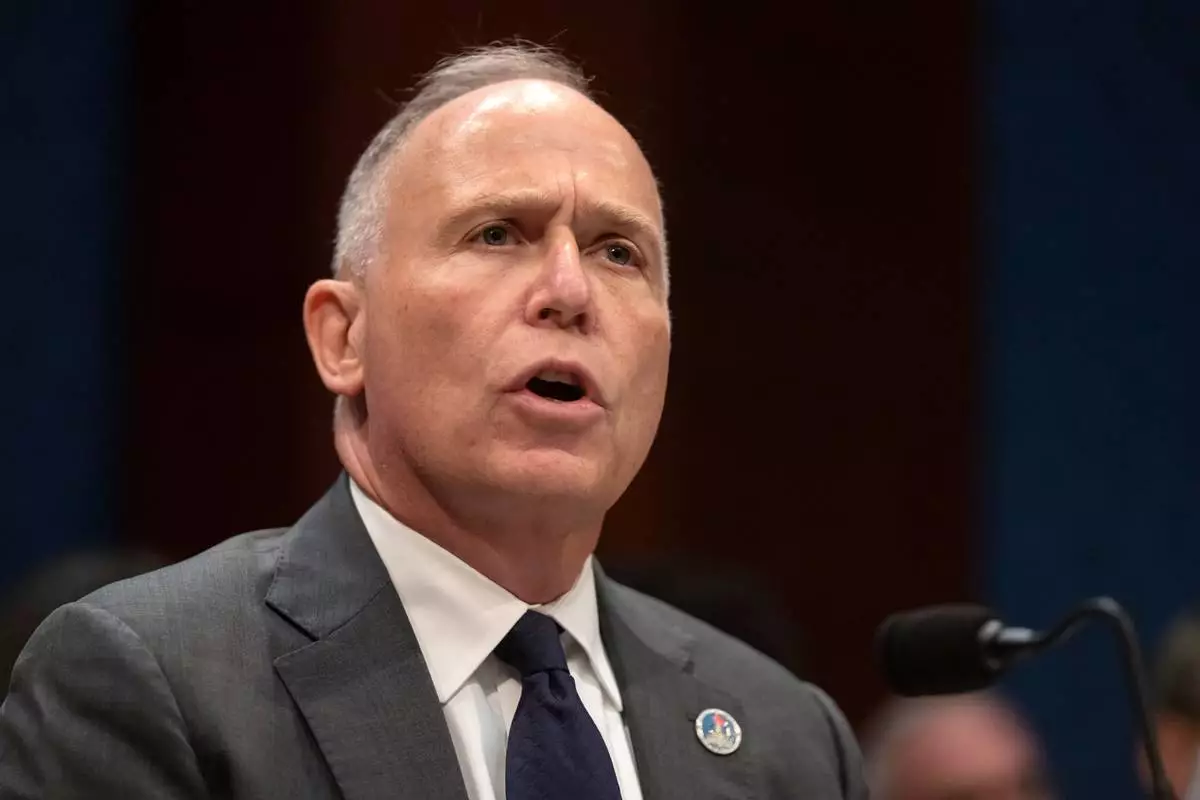
FILE - District of Columbia Attorney General Brian Schwalb speaks during a hearing of the House Committee on Oversight and Government Reform on Capitol Hill, Sept. 18, 2025, in Washington. (AP Photo/Mark Schiefelbein, File)