Skip to Content Facebook Feature Image

Africa leads growth in solar energy as demand spreads beyond traditional markets, report says

News

Africa leads growth in solar energy as demand spreads beyond traditional markets, report says
News

News

Africa leads growth in solar energy as demand spreads beyond traditional markets, report says

2026-02-13 12:57 Last Updated At:16:28

NAIROBI, Kenya (AP) — Africa was the world’s fastest-growing solar market in 2025, defying a global slowdown and reshaping where the momentum in renewable energy is concentrated, according to an industry report released in late last month.

The report by the Africa Solar Industry Association says the continent's solar installed capacity expanded 17% in 2025, boosted by imports of Chinese-made solar panels. Global solar power capacity rose 23% in 2025 to 618 GW, slowing from a 44% increase in 2024.

“Chinese companies are the main drivers in Africa’s green transition,” said Cynthia Angweya-Muhati, acting CEO of the Kenya Renewable Energy Association. “They are aggressively investing in and building robust supply chains in Africa green energy ecosystem.”

Some of that capacity has yet to be rolled out. Africa has only 23.4 gigawatts peak (GWp) of working solar capacity even though nearly 64 GWp of solar equipment has been shipped to the continent since 2017. A gigawatt peak represents 1 billion watts of maximum, optimum power output under ideal conditions.

“Africa's growth is driven by changing policies and enabling conditions in a number of countries, "said John Van Zuylen, CEO of the Africa Solar Industry Association.

“Solar energy has moved beyond a handful of early adopters to become a broader continental priority,” he said recently on the sidelines of the Inter Solar Africa summit in Nairobi. “What we are seeing is not temporary. It is policies aligning with market dynamics.”

Historically, South Africa dominated solar imports in Africa, at one point accounting for roughly half of all panels shipped to the continent. The latest data show its share has slipped below a third as demand surged elsewhere. Last year, 20 African nations set new annual records for solar imports, as 25 countries imported a total of at least 100 megawatts of capacity.

Nigeria has overtaken Egypt as Africa's second-largest importer as solar energy and battery storage provide a practical and affordable alternative to diesel generators and unreliable grid power. In Algeria, solar imports soared more than 30-fold year-on-year. Imports also surged in Zambia and Botswana.

At least 23 African countries, including South Africa, Tunisia, Kenya, Chad and the Central African Republic, are now generating over 5% of their electricity from solar energy, the report said.

Prices have fallen both for solar panels and batteries, mostly from China, enabling households and businesses to rely on solar plus batteries for round-the-clock electricity, the report said. Battery storage costs in Africa fell to $112 per kilowatt-hour in 2025 from an average of $144 per kilowatt-hour in 2023 as improved technology made storage systems more flexible and longer lasting.

“This ever-decreasing price of storage has game-changing implications for Africa, which has a dire need for stable and baseload power,” said Van Zuyken.

The gradual removal of diesel subsidies in Nigeria in the past two years also has helped accelerate adoption of solar energy. The policy was implemented sector by sector to cushion its impact, making diesel increasingly expensive and nudging businesses and households toward solar. In September, Nigeria announced plans for a 1 GW solar panel factory, the largest in West Africa. Similar facilities are under construction in Egypt, South Africa and Ethiopia.

As Africa moves to build its own manufacturing capacity, the industry is looking to China to transfer knowhow to help alleviate Africa’s dependence on imported equipment and technology.

Jobs won't be confined to manufacturing.

“The solar jobs boom is occurring in services including installation, maintenance, distribution and financing, where thousands of small and medium enterprises are emerging to meet rising demand,” Van Zuylen said.

Unlike regions such as the Middle East, where governments publish clear 10 or 20-year energy roadmaps, many African markets lack consistent policy signals. So, uncertainty over policies remains a challenge. Solar firms operating across Africa say unpredictable tax regimes, shifting import duties and unclear long-term energy plans undermine investor confidence.

“The problem is not the opportunity. It’s visibility,” said Amos Wemanya, senior analyst on renewable energy at Powershift Africa. “If a government announces a plan, companies need to trust that it will remain in place.”

The Associated Press’ climate and environmental coverage receives financial support from multiple private foundations. AP is solely responsible for all content. Find AP’s standards for working with philanthropies, a list of supporters and funded coverage areas at AP.org.
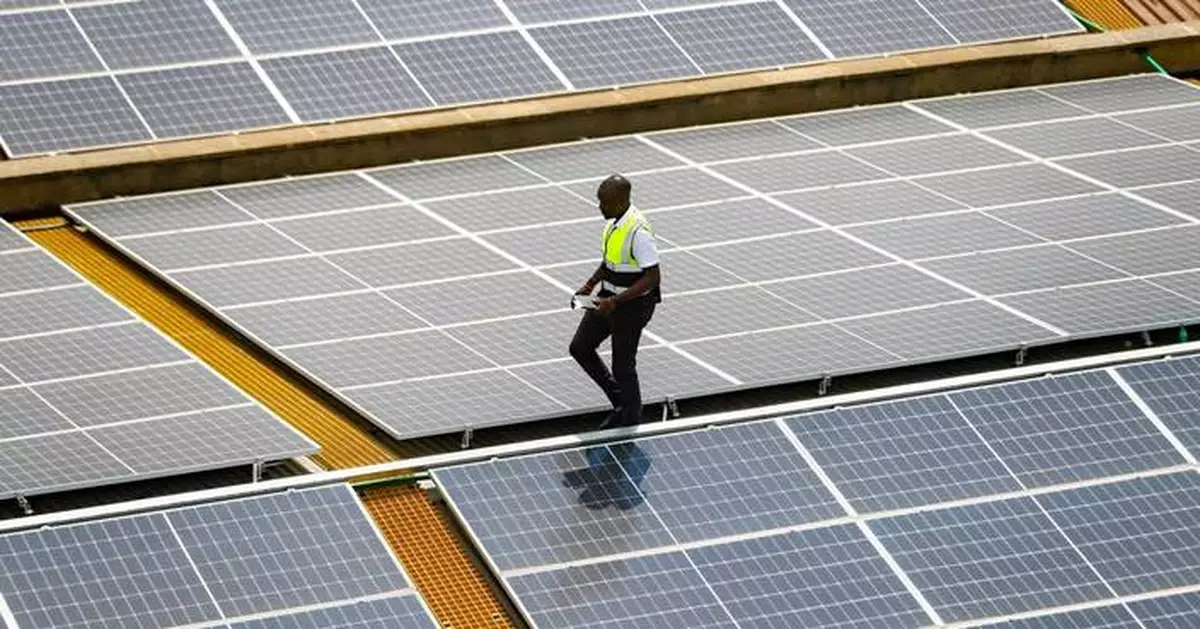
FILE - Mark Munyua, CP solar's technician, examines solar panels on the roof of a company in Nairobi, Kenya, Sept. 1, 2023. (AP Photo/Brian Inganga, File)
FILE - Mark Munyua, CP solar's technician, examines solar panels on the roof of a company in Nairobi, Kenya, Sept. 1, 2023. (AP Photo/Brian Inganga, File)

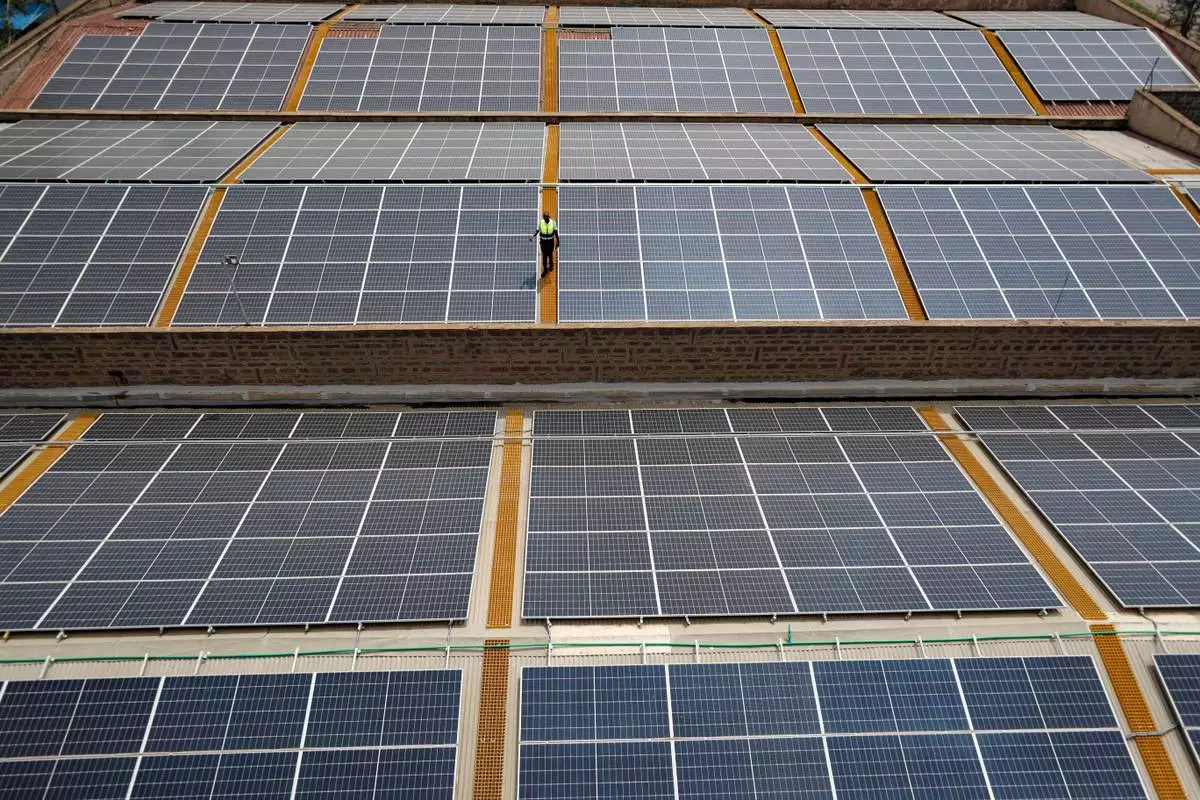
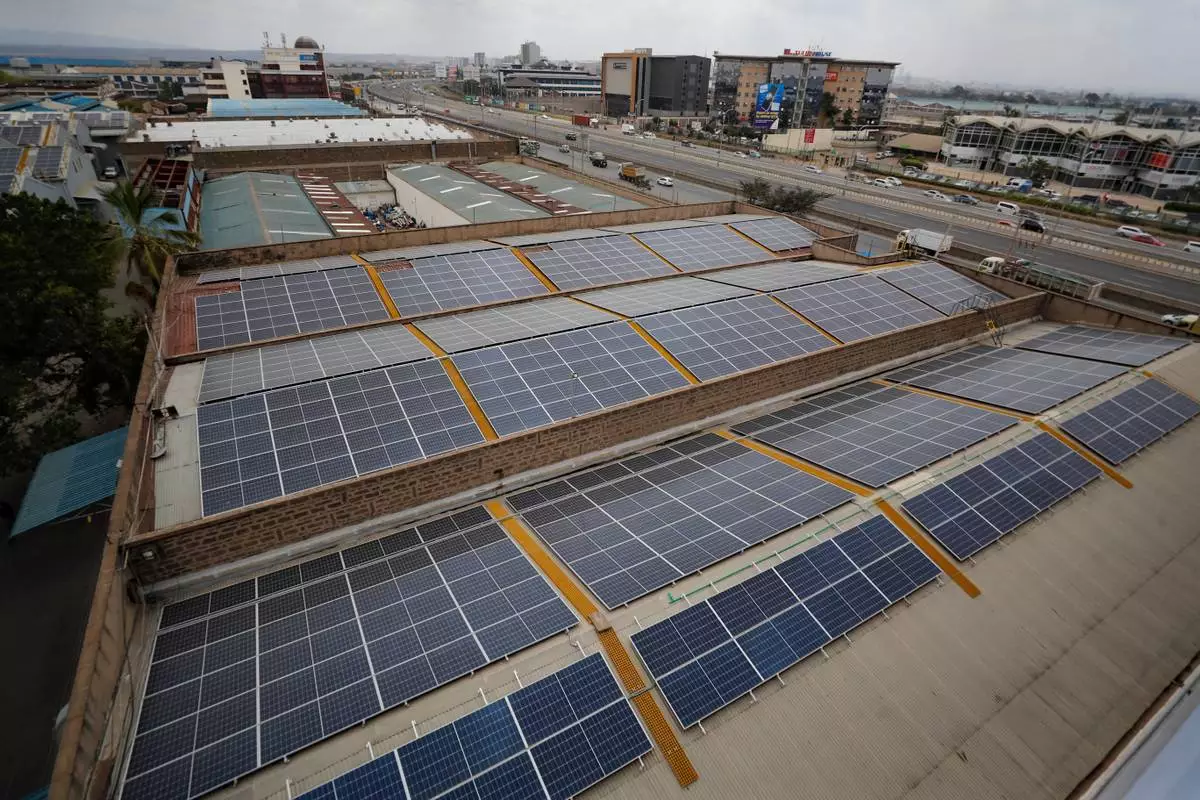
FILE - Solar panels are seen on the roof of a company in Nairobi, Kenya, on Sept. 1, 2023. (AP Photo/Brian Inganga, File)
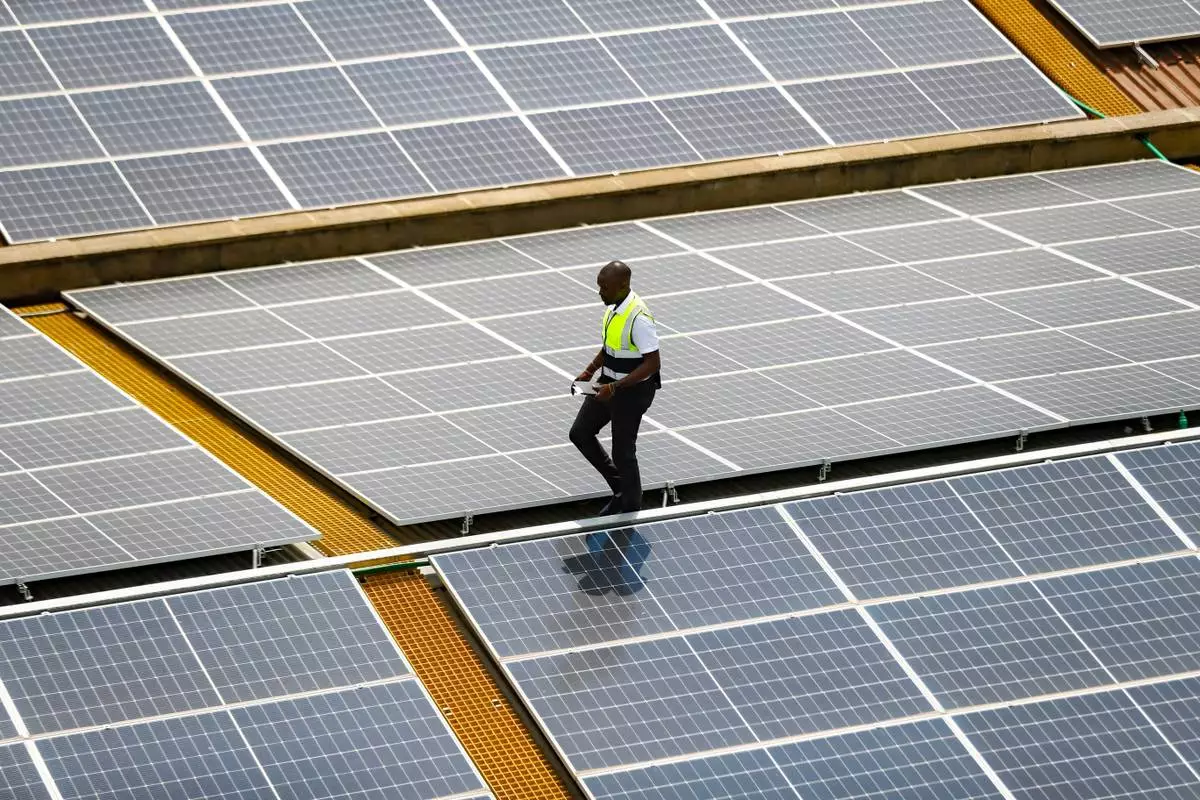
FILE - Solar panels are seen on the roof of a company in Nairobi, Kenya, on Sept. 1, 2023. (AP Photo/Brian Inganga, File)

FILE - Mark Munyua, CP solar's technician, examines solar panels on the roof of a company in Nairobi, Kenya, Sept. 1, 2023. (AP Photo/Brian Inganga, File)

FILE - Mark Munyua, CP solar's technician, examines solar panels on the roof of a company in Nairobi, Kenya, Sept. 1, 2023. (AP Photo/Brian Inganga, File)

DHAKA, Bangladesh (AP) — Tarique Rahman spent 17 years in self-imposed exile. Now, he is poised to become the prime minister of Bangladesh — and follow in the footsteps of his mother.

Thursday’s national election seemed to hand Rahman’s Bangladesh Nationalist Party a majority, according to local media reports, marking a significant political shift in the South Asian nation of more than 170 million people. The BNP has also claimed victory.

For Rahman, the turnaround is dramatic.

The 60-year-old returned from London in December to a country in turmoil. Within days, his mother, former Prime Minister Khaleda Zia, died from long illness. In the election, he faced a rising religious conservative party that had gained momentum after a 2024 student-led uprising toppled Zia's longtime rival, former Prime Minister Sheikh Hasina.

And yet his biggest challenge may still lie ahead.

The path from the 2024 uprising to Thursday’s election has been marked by turmoil. Bangladesh grappled with unrest after a student leader’s death, a resurgence of Islamist groups, the fraying of the rule of law, attacks on Hindu minorities and the press, as well as a struggling economy.

“Rahman has said all the right things, pledging to eliminate corruption and bring the country together. That all sounds well and good. But the BNP has a poor track record from when it was last in power — there was repression and corruption,” said Michael Kugelman, a Senior Fellow for South Asia at the Atlantic Council.

Rahman is a key figure in the Zia political dynasty.

His mother served two five-year terms as prime minister, the last time from 2001 to 2006. His father, Ziaur Rahman, rose from the army to become Bangladesh’s sixth president before his assassination in 1981.

He is married to Zubaida Rahman, a physician and daughter of a former Bangladesh Navy chief.

His BNP, one of the country’s longstanding political forces, alongside Hasina's now-banned Awami League party, has for decades dominated Bangladesh’s political landscape. In recent years, the BNP boycotted several elections, including the 2024 vote, citing widespread fraud.

Rahman’s political career has been controversial.

Targeted by multiple criminal cases under Hasina’s government, he spent 17 years in self-imposed exile in London. In 2018, he was sentenced to life in prison in connection with a 2004 grenade attack on Hasina that killed at least 24 people. Hasina narrowly survived the attack. Rahman denied he was involved in the attack and denounced the verdict, along with his party, terming it politically motivated.

Rahman left Bangladesh in 2008, officially for medical treatment, after enduring torture while in custody during the military-backed administration that governed from 2006 to 2008, following Zia's failure to peacefully hold a new election and hand over power.

Though he never held office in his mother’s governments, Rahman wielded significant influence within the BNP, serving as acting chairman, senior vice chairman, and senior joint secretary.

A leaked set of U.S. diplomatic cables described him as “phenomenally corrupt.”

After the collapse of Hasina’s government, the charges and convictions against Rahman were dropped, clearing the way for his return from exile.

In the run-up to the election, he sought to reshape his image, promising job creation, financial aid for poor families, greater freedom of speech, stronger law enforcement, and an end to corruption. His campaign cast him as a defender of democracy in a country long shaped by entrenched parties, military interventions and allegations of vote rigging.

After Hasina's ouster, the country's interim leader Nobel Peace Prize laureate Muhammad Yunus held a meeting with Rahman in London, an event that apparently led to his return to the country.

However, his rise is expected to rankle many in Bangladesh, particularly those who took part in the uprising and wanted their country free of dynastic politics and the old political guard they blame for the country’s problems.

The Atlantic Council's Kugelman said a key test for Rahman will be how he treats Hasina’s Awami League party, which has been accused of cracking down on the BNP in the past, including arrests of its senior leaders and party workers. Rahman’s mother was arrested and imprisoned during Hasina’s government.

Hasina has been in exile in India since August 2024, and a special tribunal in Dhaka sentenced her to death last year over crimes against humanity related to her crackdown that killed protesters during the uprising that ousted her. She denies all charges. Meanwhile, her party was barred from participating in the election, and thousands of its members remain in hiding due to fears of persecution.

“If Rahman leans on retribution, it shows the old politics haven’t disappeared,” said Kugelman. “But a focus on unity would be an encouraging sign.”

Security personnel guard near the chairman office of the Bangladesh Nationalist Party (BNP) before the national parliamentary election result is announced in Dhaka, Bangladesh, Thursday, Feb. 12, 2026. (AP Photo/Anupam Nath)

Security personnel guard near the chairman office of the Bangladesh Nationalist Party (BNP) before the national parliamentary election result is announced in Dhaka, Bangladesh, Thursday, Feb. 12, 2026. (AP Photo/Anupam Nath)

Bangladesh Nationalist Party Chairperson Tarique Rahman talks to media after casting his vote during the national parliamentary elections in Dhaka, Bangladesh, Thursday, Feb. 12, 2026. (AP Photo/Mahmud Hossain Opu)

Bangladesh Nationalist Party Chairperson Tarique Rahman talks to media after casting his vote during the national parliamentary elections in Dhaka, Bangladesh, Thursday, Feb. 12, 2026. (AP Photo/Mahmud Hossain Opu)

Tarique Rahman, the son of former Prime Minister Khaleda Zia and chairman of the Bangladesh Nationalist Party (BNP), attends an election rally ahead of national election in Dhaka, Bangladesh, on Feb. 8, 2026. (AP Photo/Anupam Nath)

Tarique Rahman, the son of former Prime Minister Khaleda Zia and chairman of the Bangladesh Nationalist Party (BNP), attends an election rally ahead of national election in Dhaka, Bangladesh, on Feb. 8, 2026. (AP Photo/Anupam Nath)

Recommended Articles