MILAN (AP) — Puerto Rico is making its mark this week on two monumental stages: the Super Bowl halftime show and — with a single athlete — the Winter Olympics.
Music and sport are among the island's few opportunities to wave its flag for the world to see. But the question of which people get to represent Puerto Rico remains a complicated one, tied up in its history, identity and status as a U.S. territory, rather than a full-fledged state. Reactions to the performances this week show the evolution of who is welcome to do so.
Click to Gallery
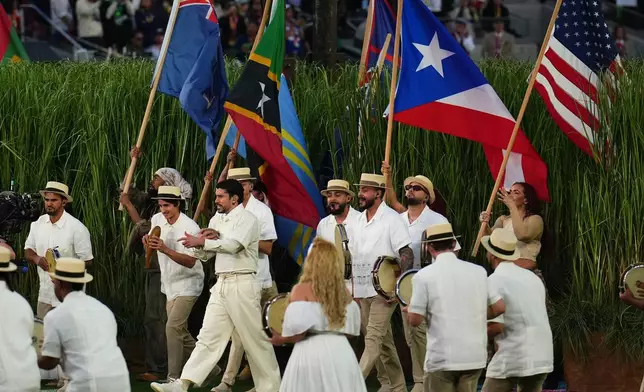
Bad Bunny performs during halftime of the NFL Super Bowl 60 football game between the New England Patriots and the Seattle Seahawks, Sunday, Feb. 8, 2026, in Santa Clara, Calif. (AP Photo/Godofredo A. Vásquez)
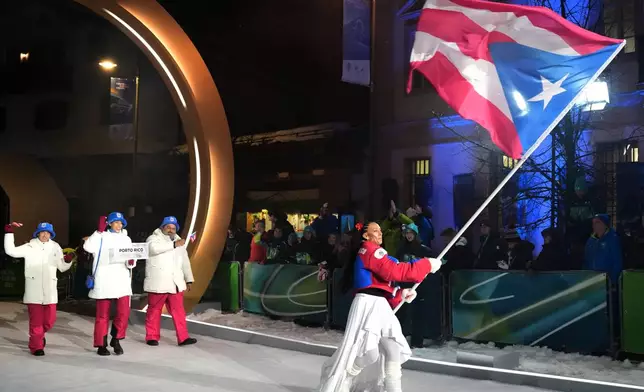
Kellie Delka, flag bearer of Puerto Rico, leads her team in during the Olympic opening ceremony at the 2026 Winter Olympics, in Cortina d'Ampezzo, Italy, Friday, Feb. 6, 2026. (AP Photo/Misper Apawu)
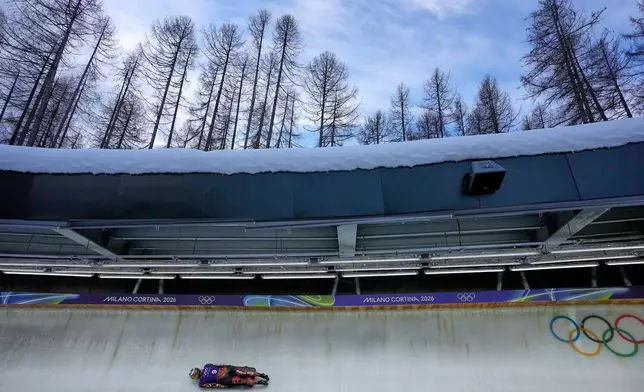
Puerto Rico's Kellie Delka slides down the track during a women's skeleton training session at the 2026 Winter Olympics, in Cortina d'Ampezzo, Italy, Monday, Feb. 9, 2026. (AP Photo/Aijaz Rahi)
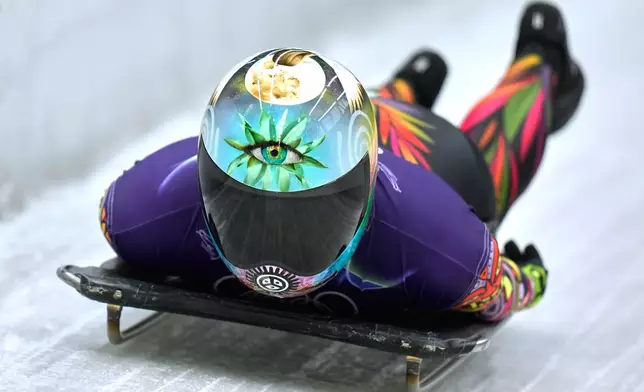
Puerto Rico's Kellie Delka arrives at the finish during a women's skeleton training session at the 2026 Winter Olympics, in Cortina d'Ampezzo, Italy, Tuesday, Feb. 10, 2026. (AP Photo/Alessandra Tarantino)
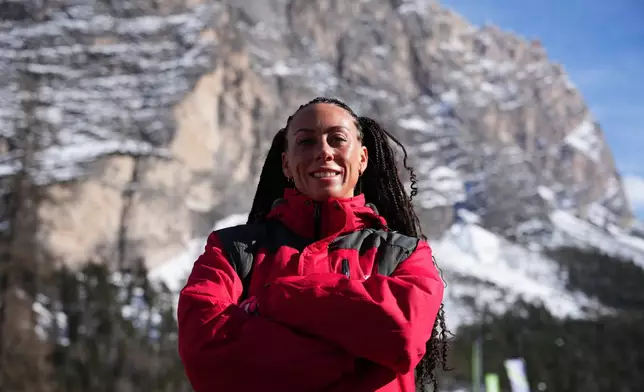
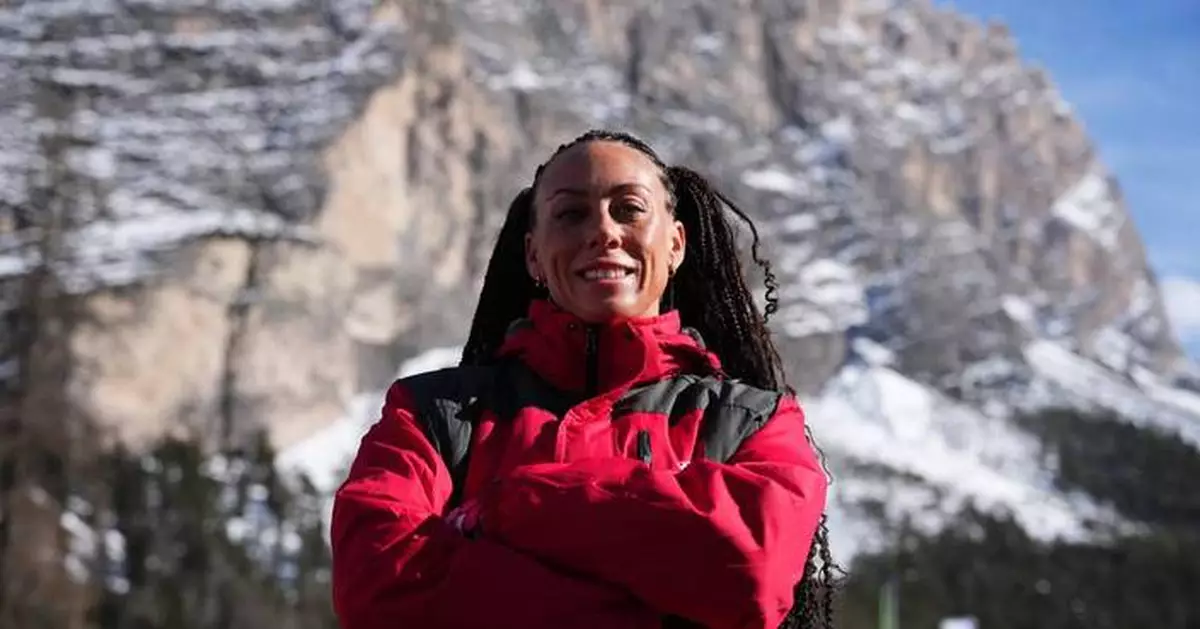
Puerto Rico's Kellie Delka poses at the 2026 Winter Olympics, in Cortina d'Ampezzo, Italy, Sunday, Feb. 8, 2026. (AP Photo/Alessandra Tarantino)
Bad Bunny, a six-time Grammy award winner, keeps Puerto Rican culture at the forefront of his music; he sings and raps in Spanish, uses Puerto Rican slang and frequently references politics and everyday island life. Yet he and his music have exploded into the U.S. mainstream.
By contrast, Kellie Delka is a native Texan who had no prior ties to the island when she moved there eight years ago. She carried Puerto Rico’s massive flag at the Olympics opening ceremony. Even though people born in Puerto Rico are U.S. citizens, it fields its own Olympic team. And this year, that entire team is Delka, who will compete in skeleton on Friday and Saturday.
After training runs in Cortina d’Ampezzo, Delka told The Associated Press that her need to focus ahead of race day prevented her from tuning in for the halftime show, but "hopefully Bad Bunny’s watching me at the Games.”
“I hope the whole island's watching,” she added.
Decades before Delka, there was Michael “Mike” González. Also an American, he was a member of the 2002 bobsled team, but it came to light just before the Games in Salt Lake City that he couldn't prove that he met Puerto Rico’s residency requirement.
Puerto Rico's Olympic committee didn’t just withdraw its two-man team; the ensuing scandal prompted it to nix recognition for the island’s entire winter sports federation. No athlete would represent the territory in the Winter Games for another 16 years.
There has always been a debate about who counts as Puerto Rican, especially as more generations grow up off-island and never learn Spanish, according to Antonio Sotomayor, associate professor of Latin American and Caribbean Studies at the University of Illinois Urbana-Champaign.
“When you have the athletes that do not speak the one element that mostly differs us from the U.S., it rubs the wrong way for many people,” said Sotomayor, who is Puerto Rican and author of the book “ The Sovereign Colony: Olympic Sport, National Identity, and International Politics in Puerto Rico.”
There are 6 million people in the U.S. who identify as Puerto Rican, behind only Mexican for specific Latin American places of origin, according to latest U.S. census data, from 2024. That's double the number of Cubans, Salvadorans or Dominicans. Despite being U.S. citizens, Puerto Ricans cannot vote in presidential elections and have limited voting representation in Congress.
The island's Olympic committee requires its athletes either be born in Puerto Rico, have a parent or grandparent born there, or live there for at least two consecutive years. Its Olympians usually come from Puerto Rico, but not always.
Hurdler Jasmine Camacho-Quinn competed for Puerto Rico at the Tokyo Olympics in 2020 as an homage to her mom’s heritage. She said at the time she always had Puerto Rican influences around the house in South Carolina — music, food, celebrations. And she took gold, but some Puerto Ricans raised eyebrows.
The opposite has happened, too. Puerto Rico-born tennis star Gigi Fernández chose not to represent her island, but rather the U.S. for both Olympics in 1992 and 1996. At the time, she said the decision wasn’t easy, but that she was unsure Puerto Rico could qualify for doubles — her specialty.
She won, and promptly took fire from fans back home for depriving the island of what could have been its first Olympic gold in any sport. Criticism of Fernández flared up again in 2016, when Puerto Rican tennis player Mónica Puig finally achieved this feat.
The same dynamic can be found in Puerto Rican music. Ricky Martin – whose birth name is Enrique Martín Morales – sang in English in order to cross over into the U.S. market. The “Livin’ la Vida Loca” singer penned a letter in Puerto Rican newspaper El Nuevo Día on Feb. 3, praising Bad Bunny for staying true to himself.
“You won without changing the color of your voice. You won without erasing your roots. You won by staying true to Puerto Rico,” Martin wrote.
During his halftime show, Bad Bunny invited Martin to perform “Lo Que Le Pasó a Hawaii,” (“What Happened to Hawaii”), a rallying cry that presents Hawaii as a cautionary tale of American cultural colonization and widespread gentrification.
Delka, a former track and field athlete in Denton, Texas, moved to Puerto Rico after being recruited by leaders of the island’s winter sports federation.
This isn’t unique to Puerto Rico; tropical countries cast a wide net to field Winter Games competitors. Nicolas Claveau-Laviolette was born in Venezuela and is the nation’s sole representative, despite having lived in Canada most of his life. Richardson Viana, on Haiti's team this year, was adopted and raised by an Italian family in France at age 3. He skied for France before the Haitian ski federation approached him.
Delka doesn’t claim to be Puerto Rican, but she has made the island her home and is “trying so hard to learn Spanish."
“I think I just get so much stage fright and when someone starts talking I forget everything that I learned,” Delka said.
What doesn't scare her? Careening head-first down the skeleton track at 80 mph (129 kph), her chin just inches from the ice. Most of the year, she’s several thousand miles from any such frozen terrain — weightlifting and running under the tropical sun, often in just a bikini.
“For offseason, it doesn’t really matter where you live because you are just working on getting more powerful," she said.
On race day, the eye atop her helmet is meant to be watching over Puerto Rico from space. Her goal is to make the top 15, and Delka says she can surprise in a sport where winners and losers are separated by mere seconds.
“I believe in myself more than anybody should,” she said.
Acceptance in Puerto Rico of foreign-born athletes has been slowly growing – at least for diaspora Puerto Ricans like Camacho-Quinn, said Sotomayor.
“Even if they don’t know the Spanish language, they still uphold, protect, defend, celebrate many other cultural markers of Puerto Rico,” he said. “That’s mostly what matters at this point.”
For her part, Delka says neighbors — once they find out how long she has lived on the island — embrace her as one of their own.
That was visible on social media after the opening ceremony, at which Delka waved the flag and wore a skirt inspired by clothing worn during traditional dances.
At a watch party for Bad Bunny’s halftime show in San Juan two days later, Alexandra Núñez told the AP that she was aware of an Olympian representing Puerto Rico, but not who or what sport. Juan Carlos Lugo, a resident of Guaynabo, knew Delka would be sliding for Puerto Rico and said her ethnicity doesn't matter.
“As long as she wears the Puerto Rican flag on her chest and represents, I am proud.”
AP reporter Jennifer McDermott contributed from Cortina and videojournalist Alejandro Granadillo from San Juan, Puerto Rico.
AP Olympics: https://apnews.com/hub/milan-cortina-2026-winter-olympics
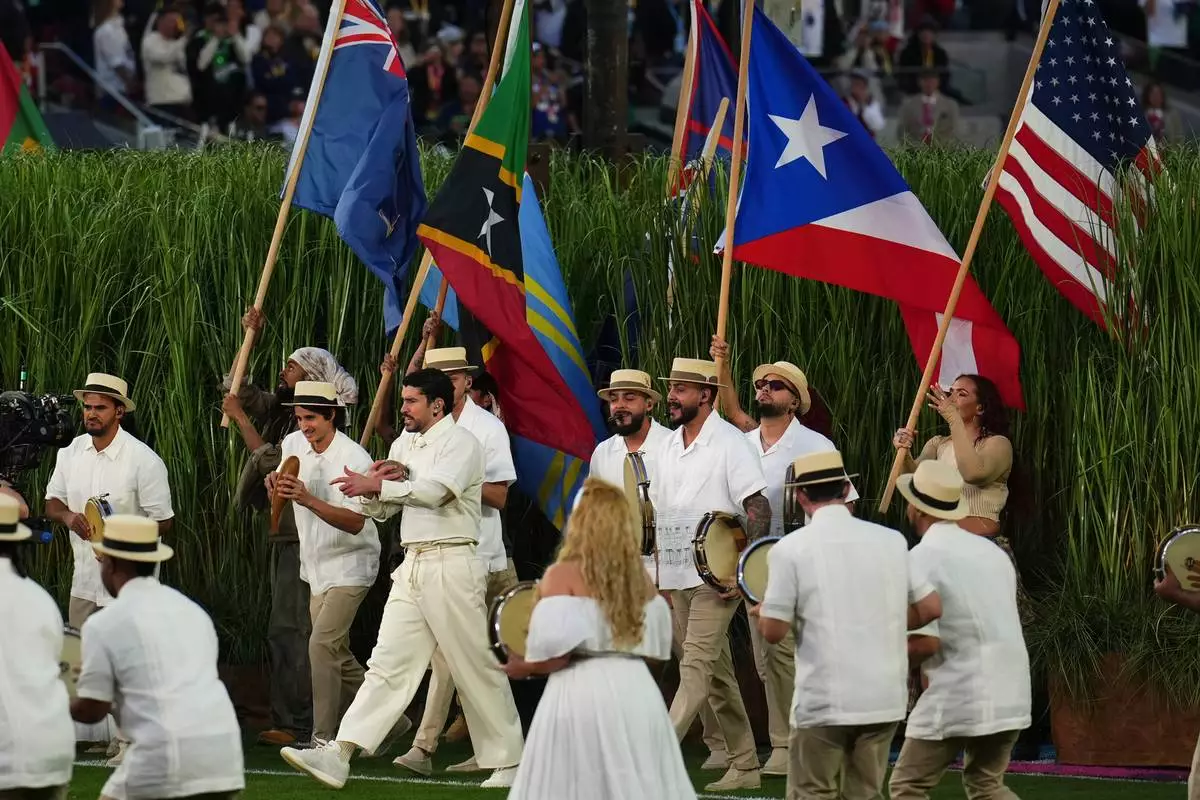
Bad Bunny performs during halftime of the NFL Super Bowl 60 football game between the New England Patriots and the Seattle Seahawks, Sunday, Feb. 8, 2026, in Santa Clara, Calif. (AP Photo/Godofredo A. Vásquez)
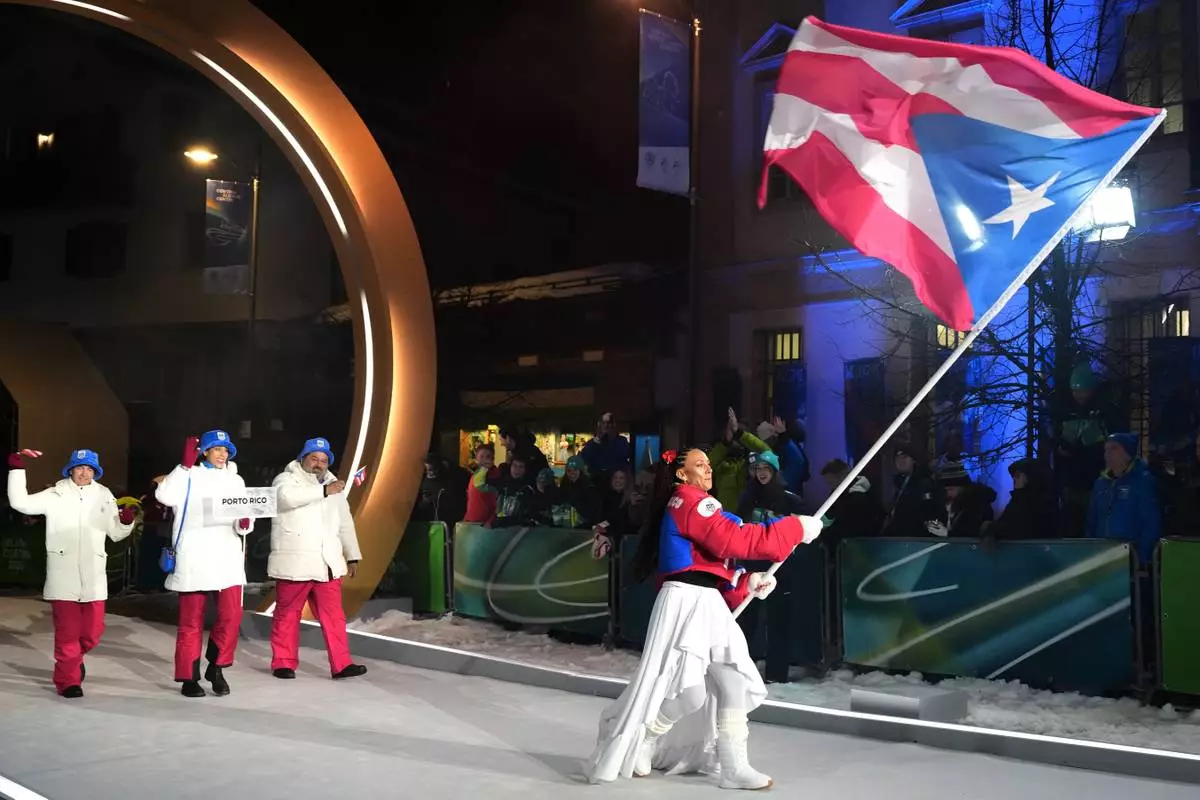
Kellie Delka, flag bearer of Puerto Rico, leads her team in during the Olympic opening ceremony at the 2026 Winter Olympics, in Cortina d'Ampezzo, Italy, Friday, Feb. 6, 2026. (AP Photo/Misper Apawu)
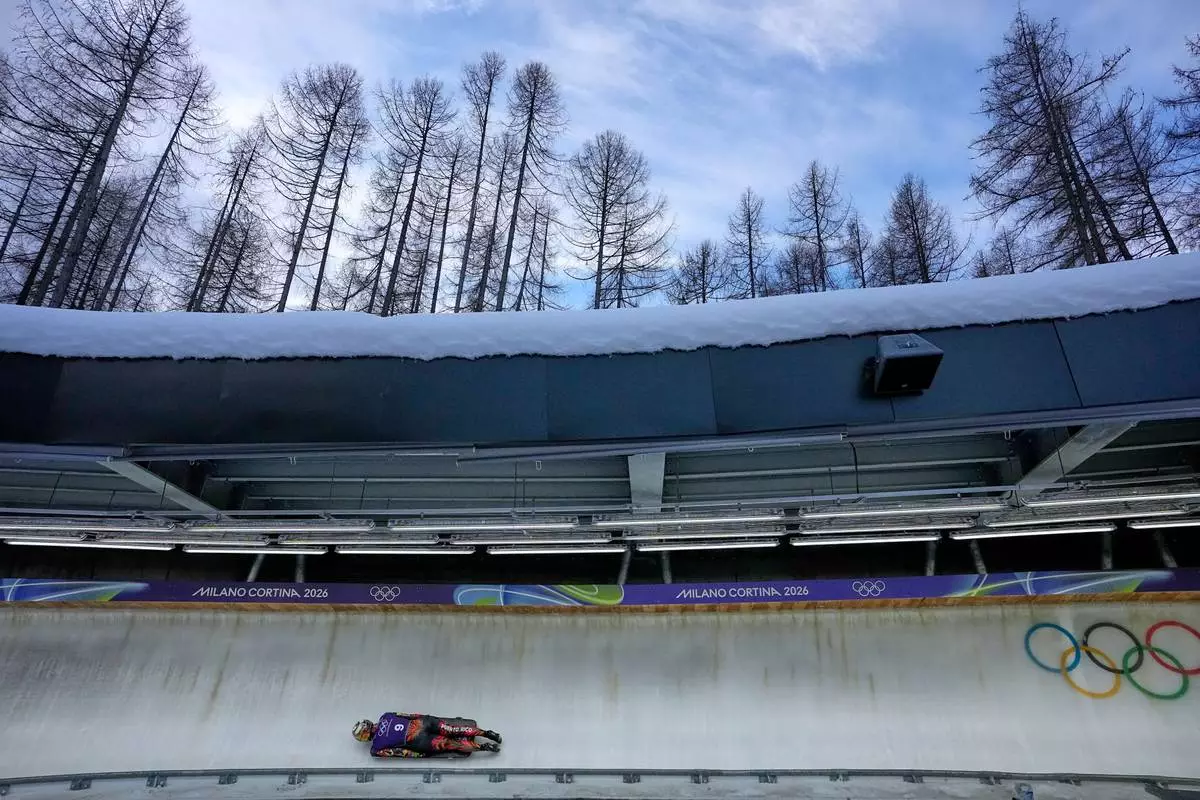
Puerto Rico's Kellie Delka slides down the track during a women's skeleton training session at the 2026 Winter Olympics, in Cortina d'Ampezzo, Italy, Monday, Feb. 9, 2026. (AP Photo/Aijaz Rahi)
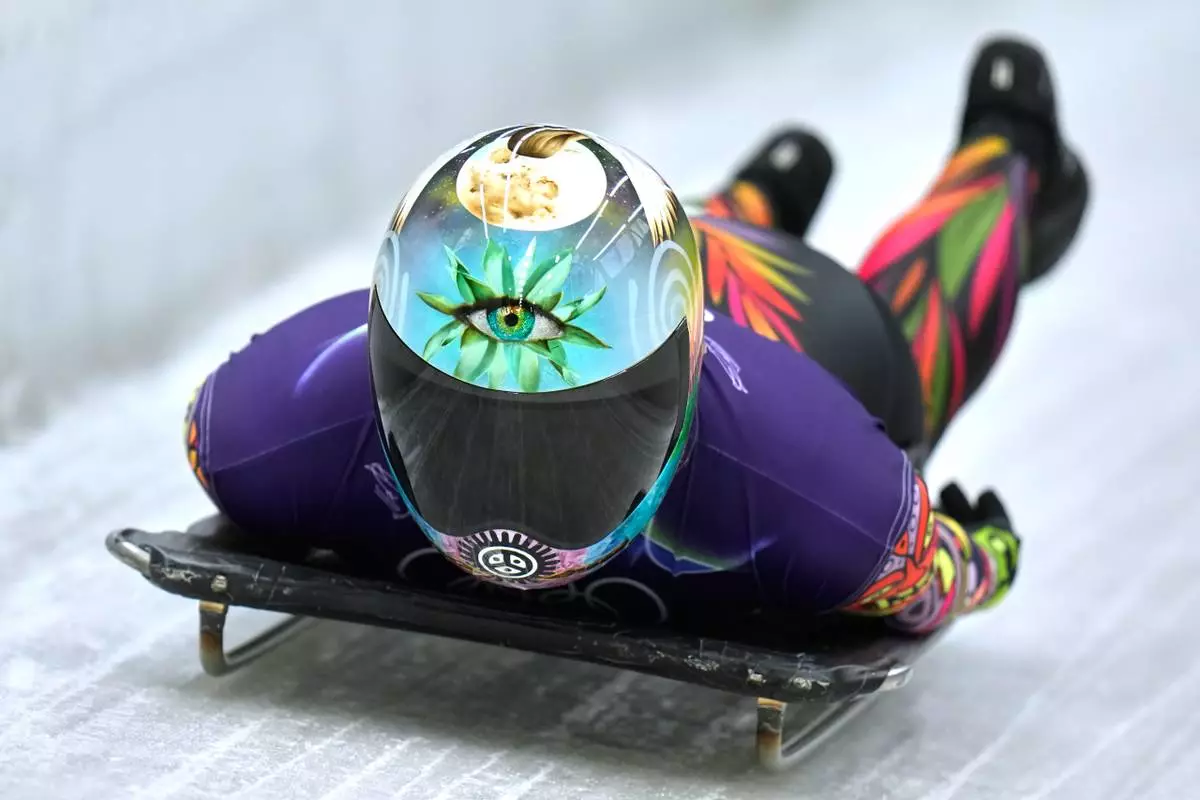
Puerto Rico's Kellie Delka arrives at the finish during a women's skeleton training session at the 2026 Winter Olympics, in Cortina d'Ampezzo, Italy, Tuesday, Feb. 10, 2026. (AP Photo/Alessandra Tarantino)
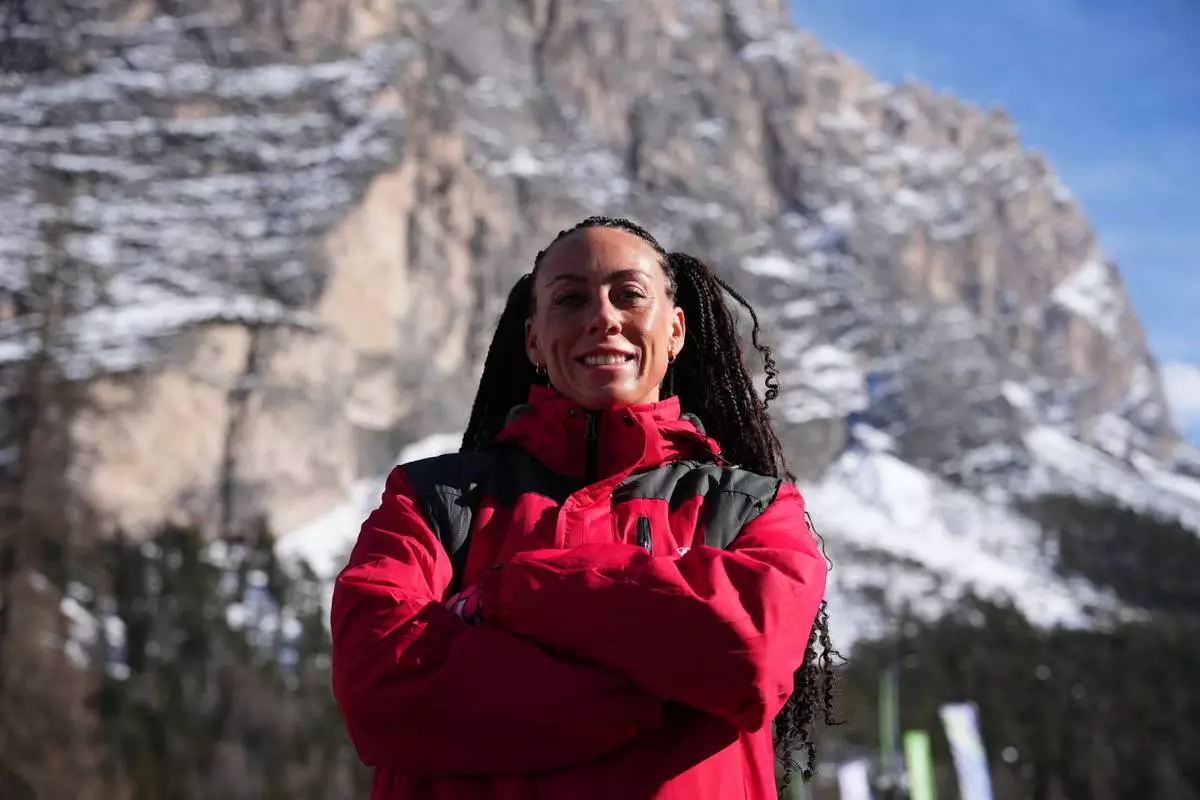
Puerto Rico's Kellie Delka poses at the 2026 Winter Olympics, in Cortina d'Ampezzo, Italy, Sunday, Feb. 8, 2026. (AP Photo/Alessandra Tarantino)