WASHINGTON (AP) — President Donald Trump has bragged about building a political war chest exceeding $1.5 billion — a staggering sum that he can wield at his whim to shape November’s midterms and the 2028 race to succeed him.
Trump's stockpile — which dwarfs any amounts raised by his predecessors in their second terms — is not easy to precisely calculate given that much of it is being collected by groups that aren’t required to file regular financial disclosures.
Click to Gallery
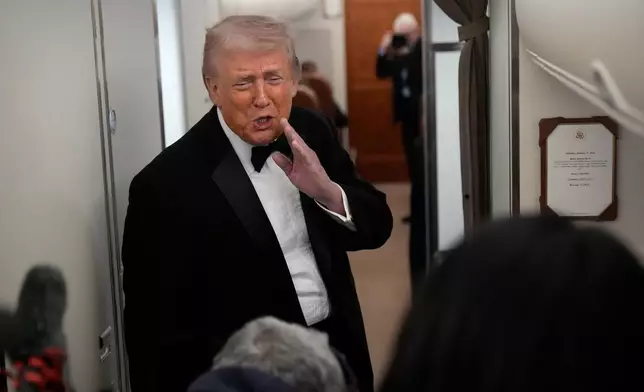
President Donald Trump speaks with reporters aboard Air Force One as he travels from Joint Base Andrews, Md. to West Palm Beach, Fla., Saturday, Jan. 31, 2026. (AP Photo/Mark Schiefelbein)
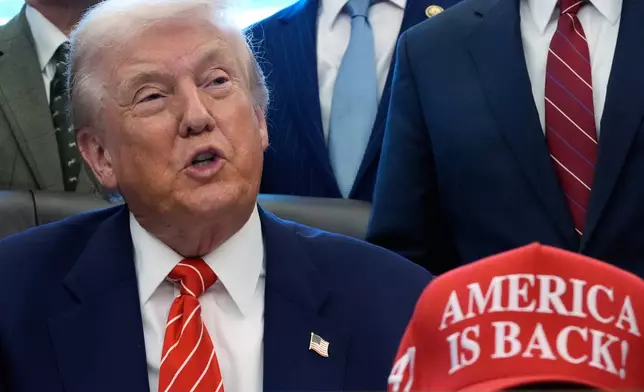
President Donald Trump speaks in the Oval Office of the White House, Tuesday, Feb. 3, 2026, in Washington, before signing a spending bill that will end a partial shutdown of the federal government. (AP Photo/Alex Brandon)
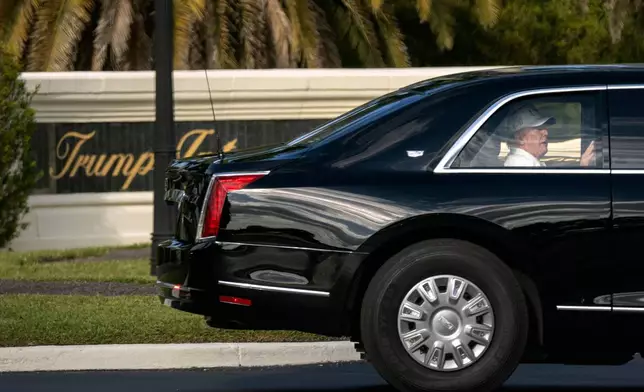
President Donald Trump rides in his limousine as he leaves the Trump International Golf Club, Sunday, Feb. 8, 2026, in West Palm Beach, Fla. (AP Photo/Mark Schiefelbein)
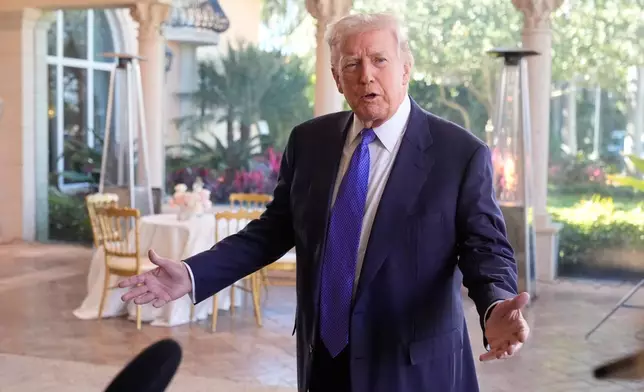
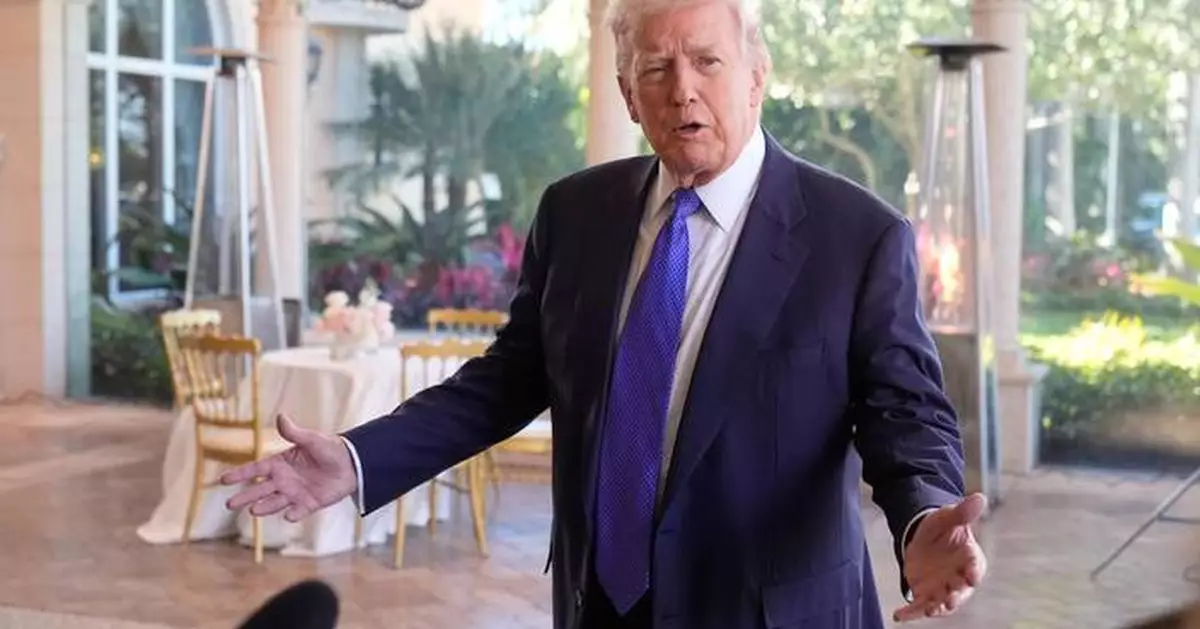
President Donald Trump speaks to reporters at his Mar-a-Lago club, Sunday, Feb. 1, 2026, in Palm Beach, Fla. (AP Photo/Mark Schiefelbein)
Current and former staffers, as well as others in Trump’s orbit, wouldn’t say exactly where his political bank account stands six months after the president announced on social media that he’d raised, just since Election Day 2024, “in various forms and political entities, in excess of 1.5 Billion Dollars.”
But what is not in question is that it represents a mountain of cash that could reshape Republican politics for years to come — if he chooses. He’s been reluctant to spend money on other people’s races in the past, and he’s even found ways to funnel some cash to his own businesses.
The $1.5 billion Trump claimed is roughly equal to what he and outside groups spent on his successful 2024 reelection bid, according to OpenSecrets, a nonpartisan group that tracks political spending.
By comparison, Democratic President Joe Biden’s various super PACs, political groups and nonprofits, as well as the Democratic National Committee, raised roughly $97 million during his first year in office, according to public disclosures. That's only about 7% of Trump’s total, and Biden was gearing up for a reelection run Trump isn’t allowed to make.
“I think a lot of people are asking, ‘What is it all for?’” said Saurav Ghosh, federal campaign finance reform director at the Washington nonprofit Campaign Legal Center.
People close to Trump say the main benefit of all that cash is unmatched influence heading into November. They insist Trump is eager to help Republicans so his political agenda isn’t stymied, like when Democratic victories derailed his first-term agenda after 2018's midterms. His stockpile has helped the GOP build a sizable cash advantage over Democrats ahead of November, at least so far.
“One of the main reasons a lame-duck president might want to amass this much money is to maintain political relevance,” said Daniel Weiner, a former Federal Election Commission attorney and current director of the Brennan Center’s Elections and Government Program. “Certainly he’s been far more aggressive about this than any of his predecessors.”
Trump on Wednesday vowed political consequences for Republicans opposing his tariff policies, and could spend big to hurt them in GOP primaries. Chief among his targets is Kentucky Rep. Thomas Massie, who opposed Trump’s tax and spend package and defied the White House in helping force the release of federal files on Jeffrey Epstein.
Trump has also endorsed a primary opponent of Sen. Bill Cassidy, R-La., after he voted to convict Trump during his 2021 impeachment trial over the mob attack on the U.S. Capitol. Still, the extent to which Trump will open his pocketbook in congressional races remains to be seen.
“What I’m a little surprised about is that Trump has not leveraged — at least overtly — the money he controls going into that election on his congressional agenda,” said Jason Roe, a Republican strategist in Michigan.
Indeed, Trump has a history of not spending big on races where he isn’t running. In 2018, Trump’s America First Action super PAC spent less than $30 million — a pittance given that super PACs spent about $820 million that cycle, according to OpenSecrets.
He doesn’t always follow through on his threats, either. Despite pledging to travel to Alaska to help defeat Republican Alaska Sen. Lisa Murkowski in 2022, a Trump-affiliated PAC instead gave $1.5 million to a group opposing her. Murkowski was reelected anyway.
The president also has made no major moves so far to oppose state lawmakers in Indiana who refused to back new congressional maps championed by the White House.
Trump’s campaign bank account also would let him play a decisive role in the next presidential race. Vice President JD Vance and Secretary of State Marco Rubio are the early favorites, with Trump suggesting pairing them on a GOP ticket he says would be formidable.
Much of Trump's political cash comes from the MAGA Inc. super PAC, which raised $100-plus million in the last six months of 2025 and entered this year with more than $300 million. The Republican National Committee reported raising $172 million last year.
There's also a constellation of pro-Trump nonprofits, including Securing American Greatness, which are only required to release limited information about their finances. Donations to one Trump entity can be moved through the various nonprofits and super PACs, making it difficult to track what's spent where.
“Because there are virtually no restrictions on what super PAC money can be used for, it essentially can be operated as a slush fund at the disposal of whoever controls it,” Weiner said.
There are many ways Trump has used political funds to enrich his businesses in the past, including billing his campaign for the use of his own airplane. He could also stage political events at his properties in Florida or New Jersey, or his golf club outside Washington.
At least $26 million has been spent by conservative groups and Republican committees at Trump properties since 2015 — and the actual figure is likely higher since some groups don't have to offer detailed spending figures.
Though federal rules govern the ways political donations can be spent, they can also be skirted. In 2020, Trump's campaign paid tens of millions of dollars to limited liability companies controlled by aides, a move that satisfied federal disclosure rules, but masked the ultimate recipient of the money. In 2024, his political operation clawed back millions of dollars in donations it made to a super PAC supporting Trump's run and used the money to instead pay legal bills that mounted after his indictments in four federal criminal cases while also facing civil trials.
“As with so many things Donald Trump, he is sometimes pushing the envelope on what’s permitted, sometimes blowing right through what are pretty clear legal limits,” said Ghosh, of the Campaign Legal Center.
Trump’s fundraising efforts are tireless. The day after his 2024 election win, he ordered staff to begin fundraising anew, and he's since attended frequent fundraisers. His allies send out emails seeking donations constantly, often multiple times daily.
“I’m sitting here. Alone. In the war room. Fighting for you,” Trump wrote in one such message last month. In another, a Trump-affiliated group tried to spur on donors to give by asking, “Does ICE need to come and track you down?”
During his first presidential run, Trump relied heavily on small donations. But much of his operation now relies on large checks from uber-wealthy donors and well-connected businesses.
Greg Brockman, co-founder of OpenAI, and his wife, Anna, donated $25 million to MAGA Inc. last year, as Trump talked constantly about helping ensure U.S. companies dominate the artificial intelligence field globally.
Other big donations came from crypto interests that have had federal investigations dropped and big tobacco companies hoping to ease regulations.
The parents of Howard Brodie, Trump’s ambassador to Finland, donated $500,000 to MAGA Inc., while Isabela Herrera gave $3.5 million before her father, Venezuelan banker Julio Herrera Velutini, was pardoned by Trump on bribery charges.
“Each of these wealthy individuals. corporations, they are ponying up for a purpose,” Ghosh said. “What we’re seeing with Trump’s administration is just an unprecedented level of pay-to-play.”
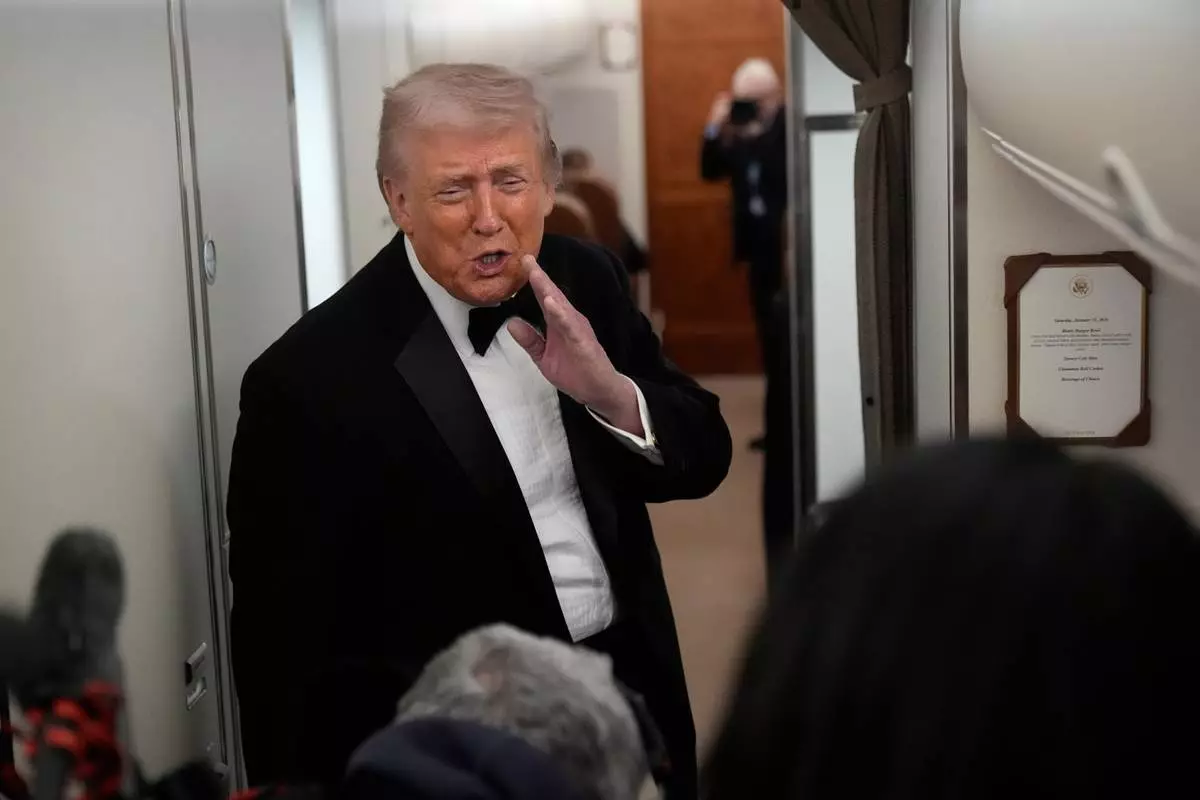
President Donald Trump speaks with reporters aboard Air Force One as he travels from Joint Base Andrews, Md. to West Palm Beach, Fla., Saturday, Jan. 31, 2026. (AP Photo/Mark Schiefelbein)
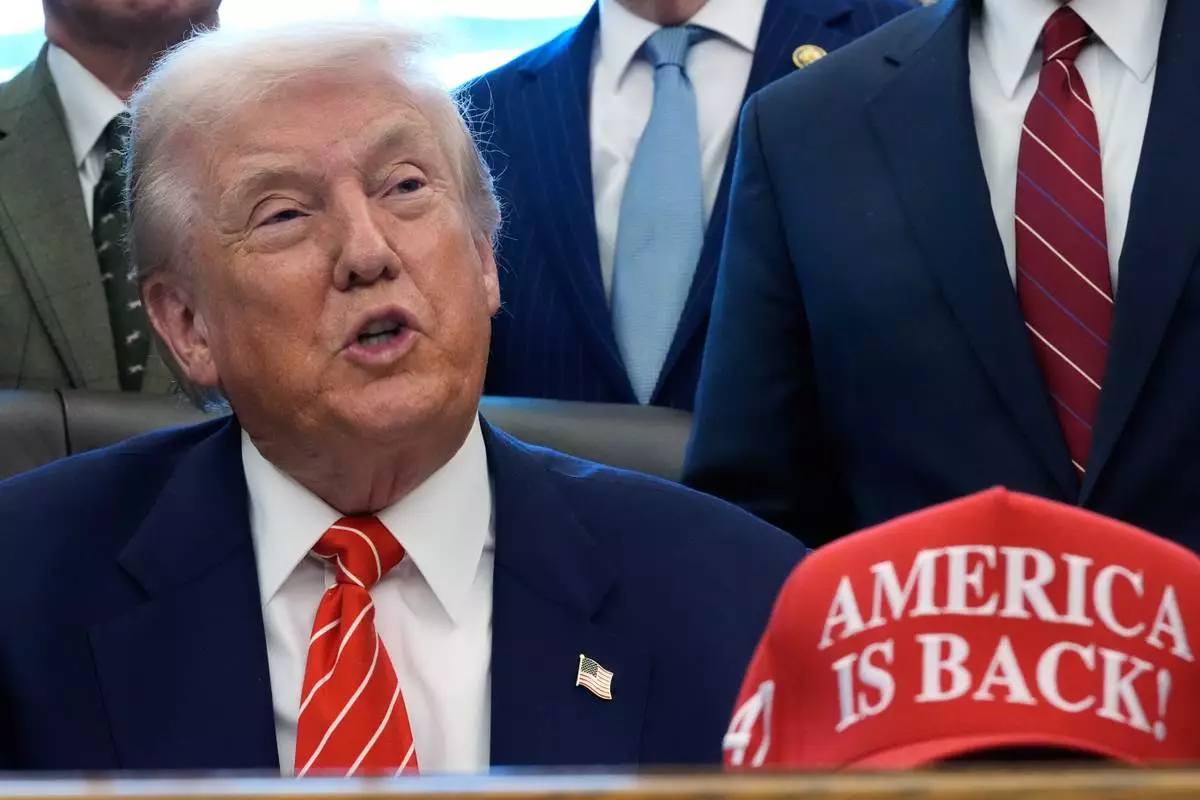
President Donald Trump speaks in the Oval Office of the White House, Tuesday, Feb. 3, 2026, in Washington, before signing a spending bill that will end a partial shutdown of the federal government. (AP Photo/Alex Brandon)
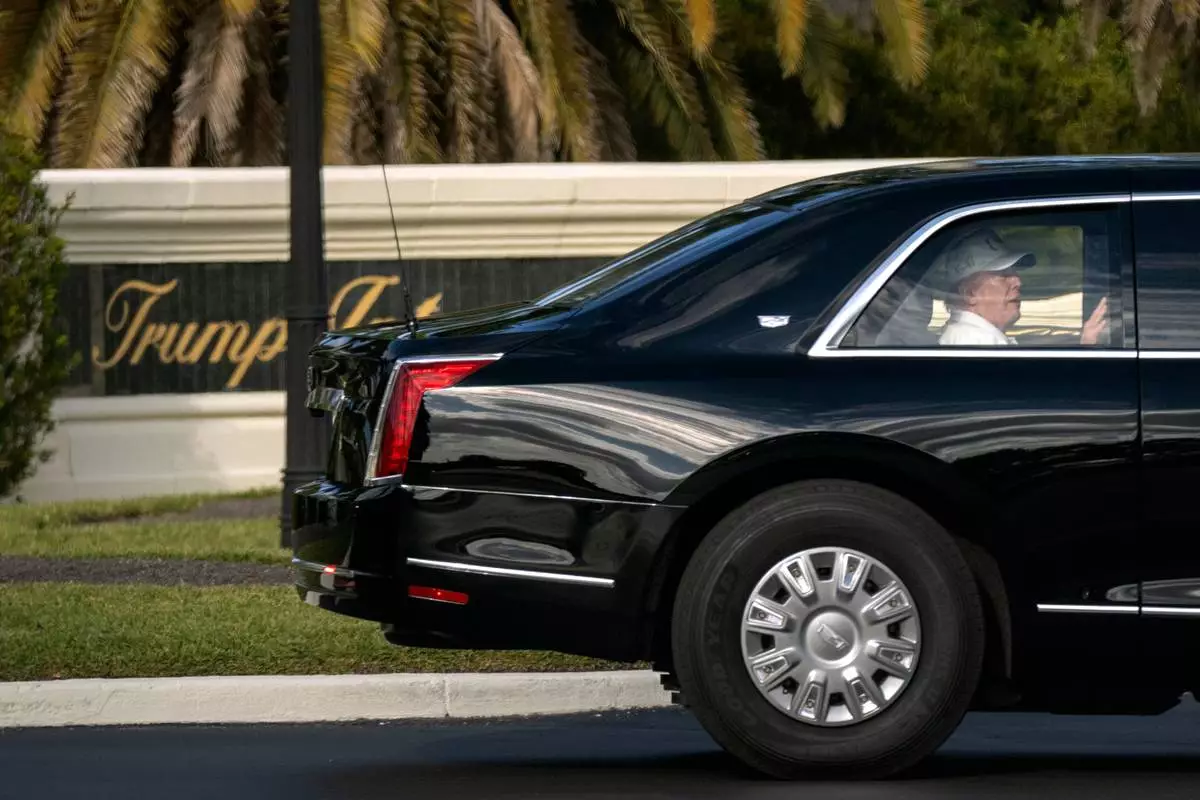
President Donald Trump rides in his limousine as he leaves the Trump International Golf Club, Sunday, Feb. 8, 2026, in West Palm Beach, Fla. (AP Photo/Mark Schiefelbein)
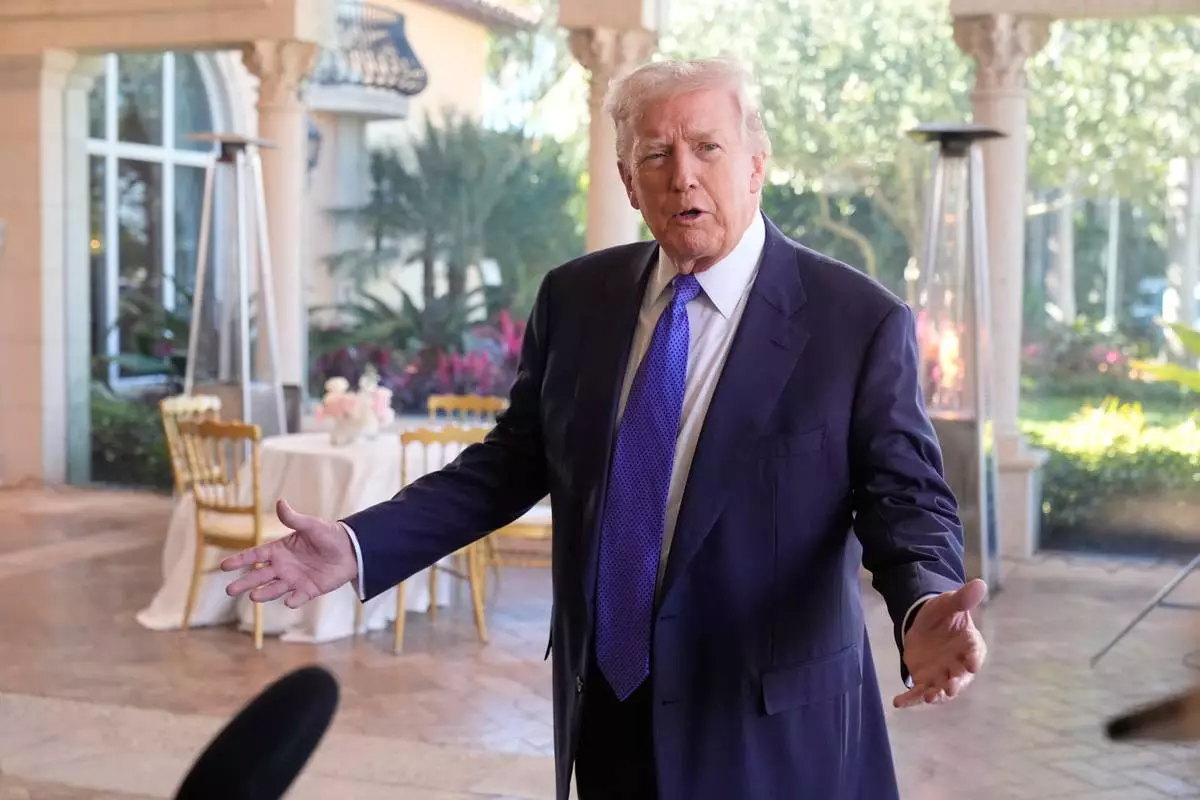
President Donald Trump speaks to reporters at his Mar-a-Lago club, Sunday, Feb. 1, 2026, in Palm Beach, Fla. (AP Photo/Mark Schiefelbein)