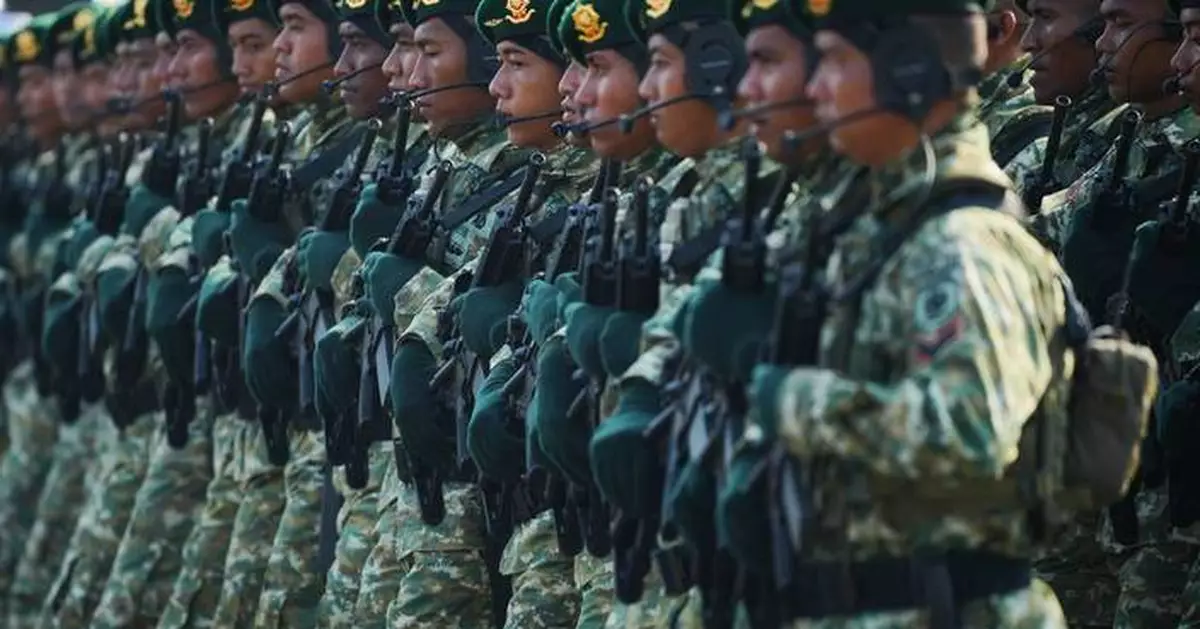
JAKARTA, Indonesia (AP) — Indonesia has begun training a contingent of up to 8,000 soldiers it plans to send as part of an international peacekeeping force to Gaza, the first firm commitment to a critical element of U.S. President Donald Trump's postwar reconstruction plan.
Indonesia has experience in peacekeeping operations as one of the top 10 contributors to United Nations missions, including in Lebanon, and has been deeply involved in providing humanitarian aid to Gaza, including funding a hospital.
But many Indonesians are skeptical of President Prabowo Subianto 's plans to join Washington's proposed Board of Peace and participate in the International Security Force with only vague details so far on how they will operate, seeing it as simply kowtowing to Trump's agenda as the two countries negotiate a trade deal.
“We need to be careful to ensure that our military personnel are not supporting the Israeli military forces," said Muhammad Zulfikar Rakhmat, a Middle East expert with Jakarta's Center of Economic and Law Studies. "We need to be careful that our military forces are not fighting against wrong actors.”
U.N. peacekeeping forces all have clear and strict mandates, but since the Board of Peace and ISF will operate outside the U.N., many wonder how the troops will be used, and who will pay for them. Last year's ceasefire agreement broadly says that the ISF will “provide support to vetted Palestinian police forces in Gaza” and will “work with Israel and Egypt to help secure border areas.”
Indonesia currently is paid by the U.N. for the troops it sends to serve as peacekeepers, but people fear it will have to pick up the tab for the troops sent to Gaza, as well as a possible $1 billion payment for a permanent place on the Board of Peace, as outlined in a draft charter.
Indonesia is the world's most populous Muslim country and firmly supports a two-state solution in the Mideast, and officials have justified joining the Board of Peace by saying it was necessary to defend Palestinian interests from within, since Israel is included on the board but there is no Palestinian representation.
“Indonesia sees the importance of the involvement of the parties to the conflict as part of the process towards peace,” Foreign Ministry spokesperson Yvonne Mewengkang said this week.
She said Indonesia would use its membership to “ensure that the entire process remains oriented towards the interests of Palestine and respects the basic rights of the Palestinian people, as well as encouraging the realization of a two-state solution.”
The Jakarta Post slammed that kind of reasoning in an editorial, however, saying that an “independent Palestinian state, if it emerges at all, is likely decades away.”
“Indonesia will end up paying $1 billion long before any meaningful outcome is achieved,” Abdul Khalik wrote. “And if Indonesia eventually withdraws in frustration, it will have already spent vast resources; financial, diplomatic and political, for nothing.”
The Board of Peace was initially envisioned as a small group of world leaders overseeing Trump's plan for Gaza’s future. But the U.S. president has since said he sees the board as a mediator of worldwide conflicts, sidestepping the mandate of the U.N.
Prabowo, a former army general who has been keen to raise Indonesia’s profile on the world stage, quickly accepted Trump's offer for a place on the Board of Peace and made an initial pledge of 20,000 Indonesian troops as peacekeepers during his speech at the United Nations General Assembly.
An online petition started by a group of Muslim scholars and activists questions joining a body that ostensibly promotes peace, but whose proposed chairman for life will be Trump, citing his threats to take Greenland, the seizure of then-Venezuelan President Nicolás Maduro, and the American veto of a U.N. Security Council resolution calling for a Gaza ceasefire last year.
“In our belief, peace will be difficult to achieve by a country or a leader of a country who repeatedly uses his veto power to prevent the occurrence of peace itself,” reads the petition, which calls for Indonesia to withdraw from the Board of Peace and has gotten more than 9,000 signatures so far.
“The BoP faces serious legitimacy problems, both normatively, structurally and morally.”
About 100 protesters against Indonesia’s involvement gathered outside the U.S. Embassy in Jakarta on Friday, holding signs with slogans like “Bored of peace?” and “Free Gaza.”
Earlier this week, Indonesian Army Chief of Staff Gen. Maruli Simanjuntak said that training had begun for the peacekeepers, even though Indonesia has yet to receive any guidance on what types of personnel were needed.
He said Indonesia now envisions sending between 5,000 to 8,000 troops.
“We have started training personnel who might later serve as peacekeepers,” he said. “So that means engineering, medical units - the types often deployed.”
Despite the skepticism at home, the idea of Indonesians serving as peacekeepers in Gaza is seen in the region as a good one, said Hassan Jouni, a Qatar-based analyst who was formerly a Lebanese army general. Indonesia, he said, is viewed as an “honest and acceptable broker” by both sides in the conflicts in Lebanon and Gaza.
“Indonesia is a Muslim country... and its religious identity gives it a large distinction in its security participation as part of the peacekeeping forces in the Arab region,” he said. “At the same time, it does not pose a strategic threat to Israel.”
While Indonesia and Israel do not have formal diplomatic ties and Indonesia has been supportive of the rights of the Palestinians, it has not taken a directly confrontational stance toward Israel similar to some other Muslim-majority powers such as Turkey and Iran.
“From this point of view, the participation of Indonesian forces in southern Lebanon comes in a balanced and effective manner,” he said, and it may be expected to do the same in Gaza.
Many are looking for clarity toward the inaugural meeting of the Board of Peace next week in Washington, where other countries are expected to announce troop commitments of their own.
Prabowo plans to attend in person and is expected to also sign the new trade deal while there, and the Center of Economic and Law Studies' Rakhmat said he didn't think he would be swayed by public sentiment.
“I don't think the domestic opposition would significantly change the decision of Indonesia in joining the BoP,” he said.
Rising reported from Bangkok. Abby Sewell in Beirut contributed to this story.
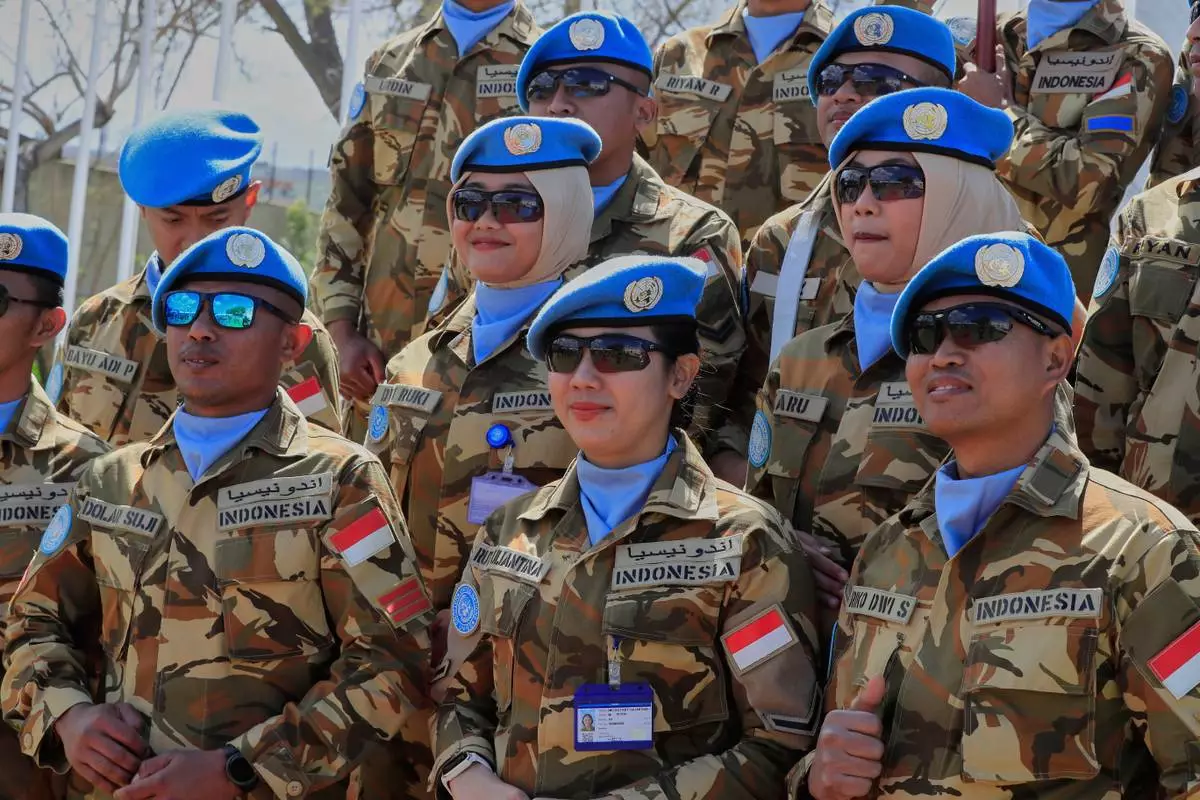
FILE - Indonesian U.N. peacekeepers attend a ceremony to mark the 47th anniversary of UNIFIL Establishment Day, at the United Nation Peacekeepers headquarters in the southern Lebanese town of Naqoura, Lebanon, Wednesday, March 19, 2025. (AP Photo/Mohammed Zaatari, File)
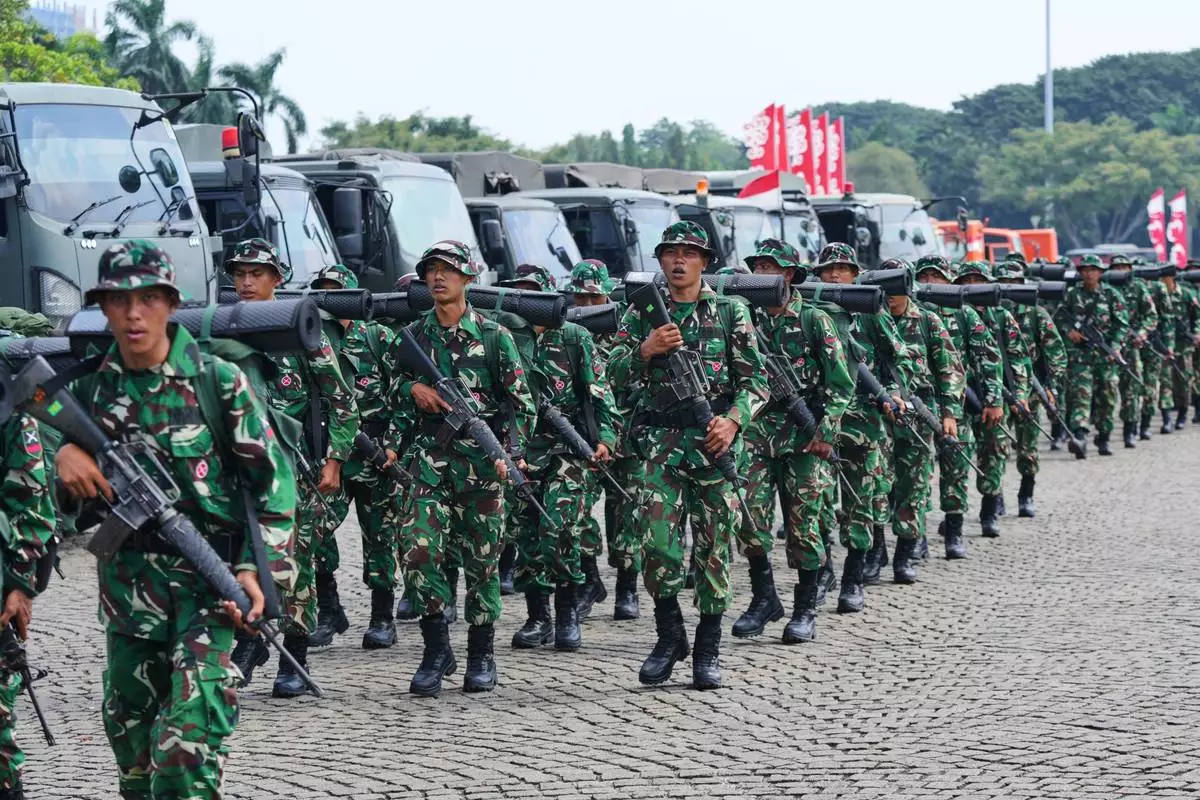
FILE - Army soldiers are deployed following violent protests against lawmakers' perks and privileges, in Jakarta, Indonesia, Sept. 1, 2025. (AP Photo/Tatan Syuflana, File)
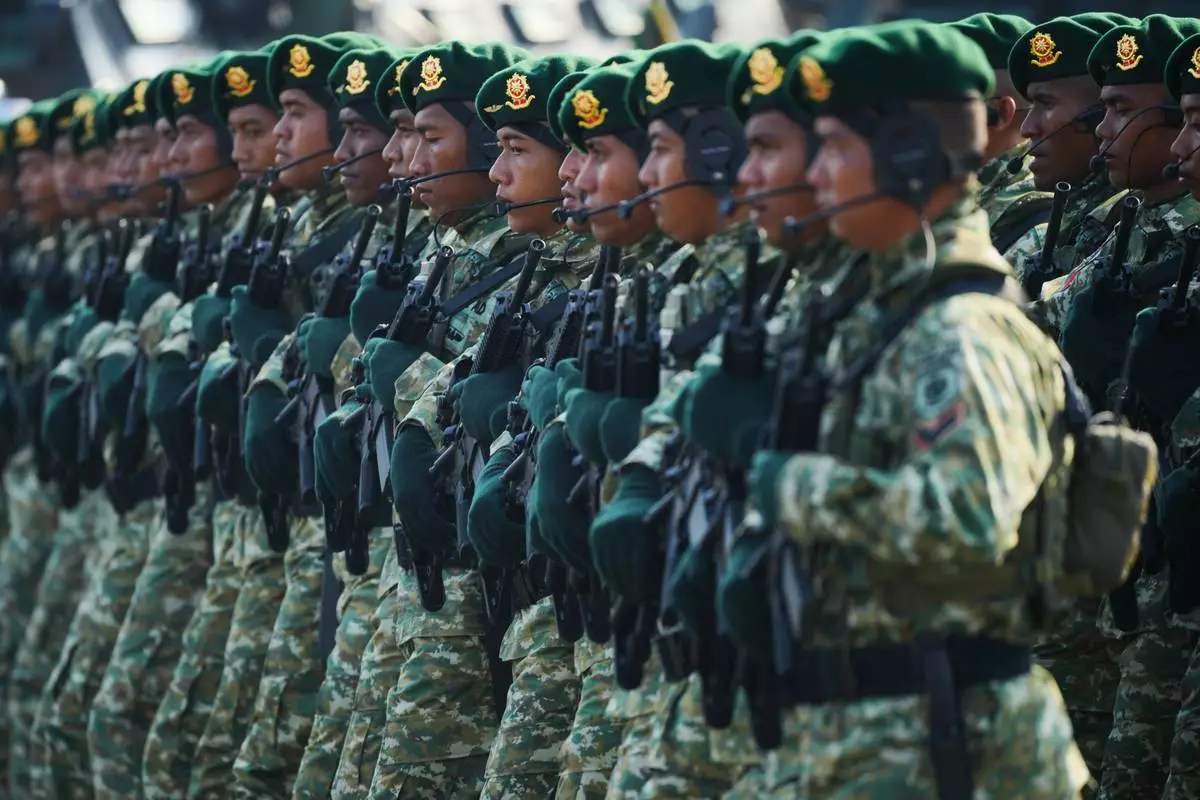
FILE - Indonesian soldiers march during a ceremony commemorating the 80th anniversary of the Indonesian Armed Forces in Jakarta, Indonesia, Sunday, Oct. 5, 2025. (AP Photo/Tatan Syuflana, File)
DHAKA, Bangladesh (AP) — The Bangladesh Nationalist Party has claimed victory in the country’s first election since the 2024 uprising, positioning itself to form the next government and potentially reshape Bangladesh’s political landscape after years of intense rivalry and disputed polls.
The party’s media unit said on X Friday it had secured enough seats in Parliament to govern on its own, though rival group Jamaat-e-Islami raised concerns over delayed results.
The final tally has not yet been announced by the Election Commission, but several local media outlets reported the BNP crossing the 151-seat threshold needed for a majority in the 350-member Parliament, which includes 50 reserved seats for women that are proportionately distributed among the winning parties.
The Election Commission said Friday the voter turnout in Thursday’s election stood at 59.44%. More than 127 million voters were eligible, with almost half of them women and 5 million first-timers.
The BNP is headed by the 60-year-old Tarique Rahman, its prime ministerial candidate who returned to Bangladesh in December after 17 years in self-exile in London. He is the son of former Prime Minister Khaleda Zia, who died in December.
Ruhul Kabir Rizvi, senior joint secretary-general of the BNP, extended congratulations to the people of Bangladesh on the party’s electoral victory in a statement. Separately, Saleh Shibly, press secretary to Rahman, said the BNP leader called on his supporters to hold special prayers alongside the weekly Friday service and not to hold any celebratory rallies and processions.
The U.S. Embassy in Dhaka congratulated Rahman and his party on the win, calling it a “historic victory.”
“The United States looks forward to working with you to achieve shared goals of prosperity and security for both our countries,” U.S. Ambassador to Bangladesh Brent T Christensen wrote on X.
China congratulated the BNP for taking the lead in the election.
“We look forward to working together with the new government of Bangladesh and writing new chapters of China-Bangladesh relations,” the Chinese Embassy in Dhaka said in a statement.
Leaders from India and Pakistan also lauded the BNP leader.
Indian Prime Minister Narendra Modi noted the win “reflects the confidence of the Bangladeshi people in your leadership.” He added that he looks forward to collaborating with him to deepen bilateral ties.
Pakistan’s President Asif Ali Zardari said his country “remains committed to a strong democratic partnership and advancing shared progress.”
Historically, Bangladesh has enjoyed mixed relationships with the two regional powers, India and Pakistan.
India helped Bangladesh gain independence from its rival Pakistan through a bloody war in 1971. India had a warm relation with Bangladesh under previous Prime Minister Sheikh Hasina, who was ousted following the 2024 protests and sent to exile in India.
Pakistan remained sidelined under Hasina, but that has been reversed under the interim administration led by Nobel Peace Prize laureate Muhammad Yunus.
The contest was largely a two-way race between the BNP and an 11-party alliance led by the Islamist Jamaat-e-Islami, a conservative religious party whose growing influence has fueled concern, particularly among women and minority communities.
Despite falling short of a majority, the alliance made a notable impact, securing at least 77 seats, according to local TV channels.
Shafiqur Rahman, who heads Jamaat-e-Islami, secured a seat in Dhaka and is poised to become the opposition leader in Parliament. But his party voiced objections to the handling of the election results.
The party's assistant secretary-general, Ahsanul Mahboob Zubair, said the Election Commission had delayed announcing results in several constituencies, calling the holdups “unusual.” In a statement on Facebook, the party also claimed that candidates from the alliance it heads were “narrowly and suspiciously losing” in multiple areas.
The National Citizen Party, established by student leaders of the uprising as a break from traditional politics but later aligning with the Jamaat-e-Islami-led coalition, also left its mark. Party chief Nahid Islam and at least three top leaders secured victories.
Thursdays’ vote took place amid tight security and concerns of democratic backsliding, rising political violence and the fraying of the rule of law.
The election was the first since a bloody student-led revolt in July 2024 led to Hasina's ouster. Many viewed it as a crucial test of Bangladesh’s ability to restore trust in democracy and transform public protests into tangible political reform.
The vote was held alongside a referendum for political reforms that include prime ministerial term limits and stronger checks on executive power. The result of that referendum is yet to be announced, but it is likely to be endorsed by voters.
For much of the past 15 years, the BNP languished in opposition, boycotting several elections and accusing Hasina’s government of systematic vote rigging and political repression. Tarique Rahman himself spent 17 years in self-imposed exile after Hasina’s government pursued multiple corruption and other criminal cases against him. He has denied the charges, saying they were politically motivated.
Those cases were dropped after Hasina’s government collapsed, paving the way for his return to Bangladesh. His campaign has cast him as a defender of democracy in a country whose politics have long been shaped by entrenched parties, military interventions, and allegations of electoral manipulation.
Tarique Rahman’s BNP has for decades formed one half of the country’s entrenched dynastic political system. His father, Ziaur Rahman, rose from the ranks of the army to become a dominant political figure, serving as the country’s sixth president until his assassination in 1981. His mother Khaleda Zia, who first came to power in 1991, served two full five-year terms.
The party was the principal rival to Hasina’s Awami League party, now banned, and their long-running feud came to define Bangladesh’s political life.
Michael Kugelman, a senior fellow for South Asia at the Atlantic Council, said while the outcome appears as “a blow to the spirit of the 2024 revolution,” as the BNP has long been associated with corruption and dynastic politics, it will still face significant pressure to act differently this time.
“The BNP will need to be on its toes,” he said.
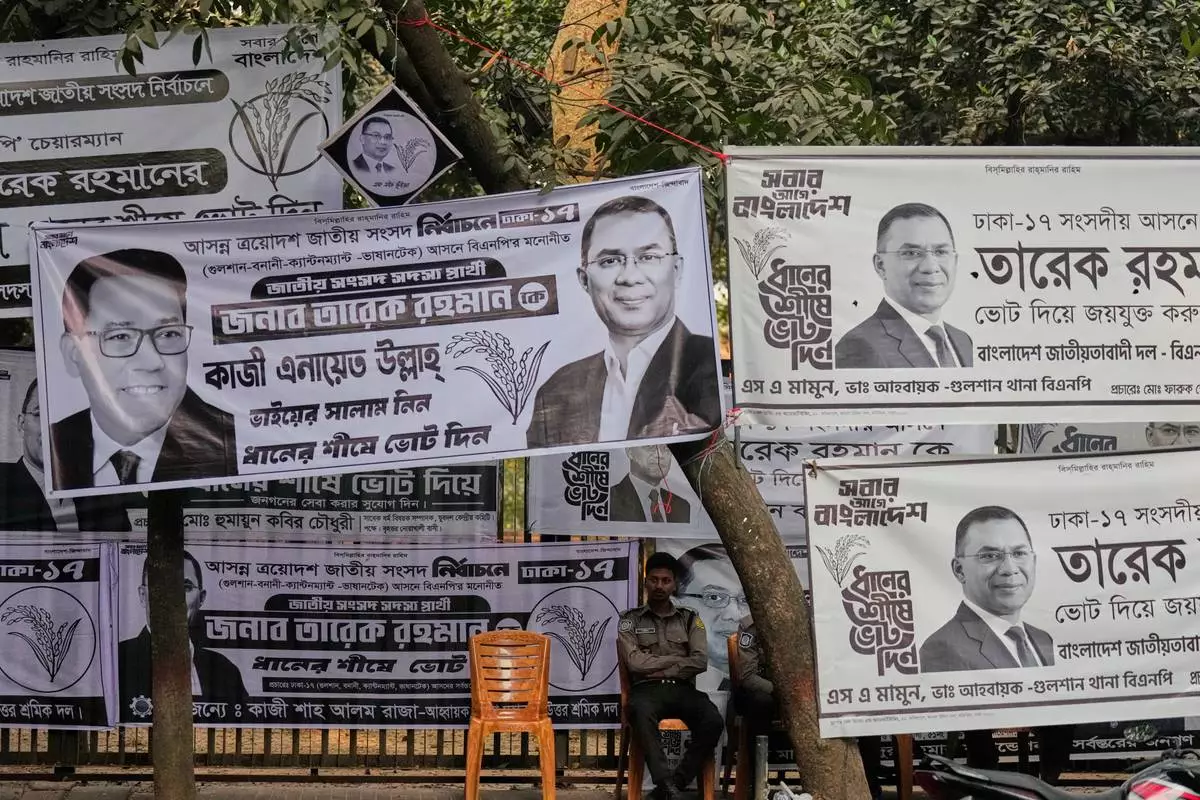
Security personnel guard near the chairman office of the Bangladesh Nationalist Party (BNP) before the national parliamentary election result is announced in Dhaka, Bangladesh, Thursday, Feb. 12, 2026. (AP Photo/Anupam Nath)
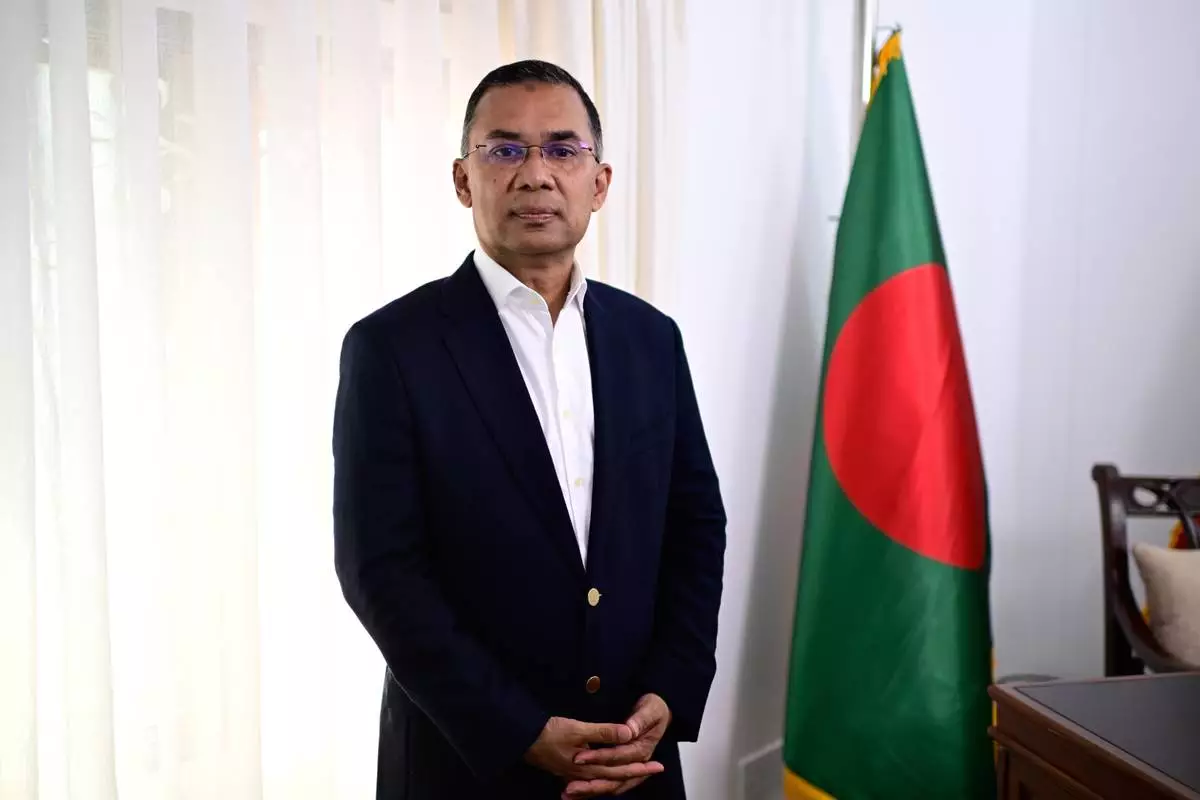
Bangladesh Nationalist Party Chairperson Tarique Rahman poses for a photograph in his party office in Dhaka, Bangladesh, Sunday, Feb. 8, 2026. (AP Photo/Mahmud Hossain Opu)
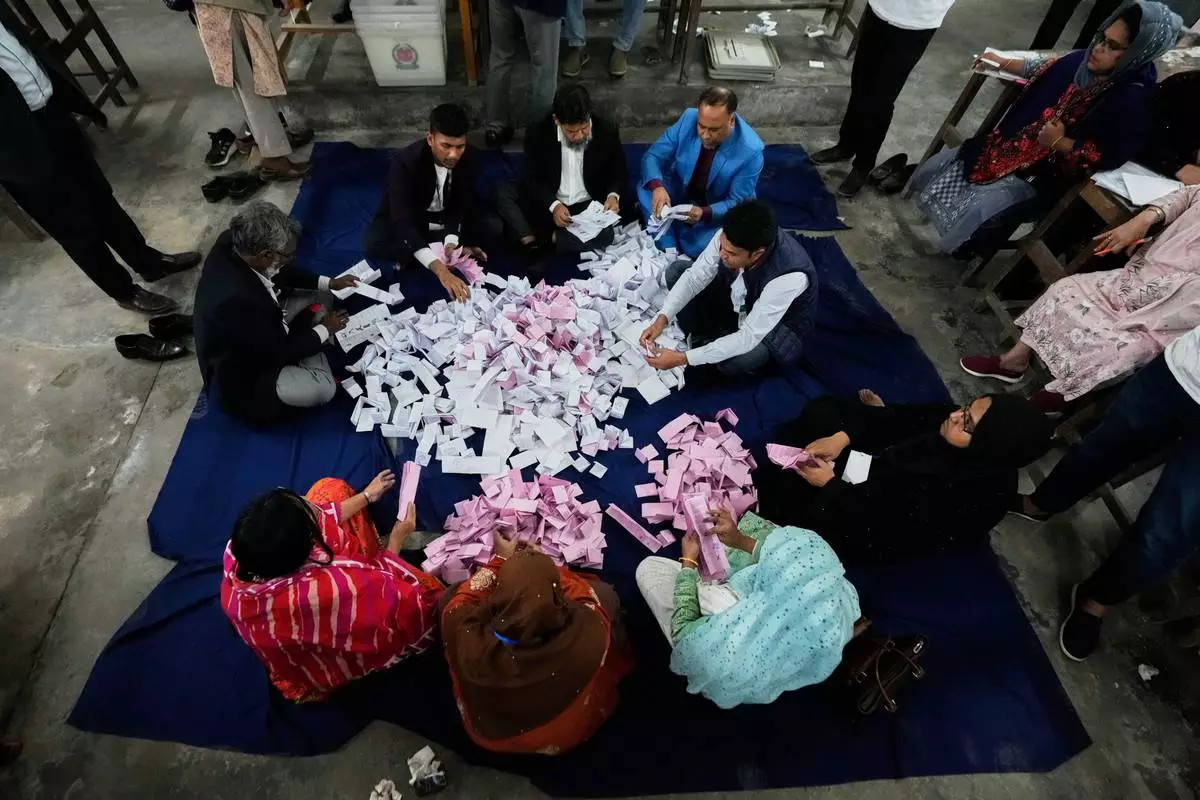
Bangladeshi polling officials count ballots shortly after the voting of national parliamentary election ended at a polling station in Dhaka, Bangladesh, Thursday, Feb. 12, 2026. (AP Photo/Anupam Nath)
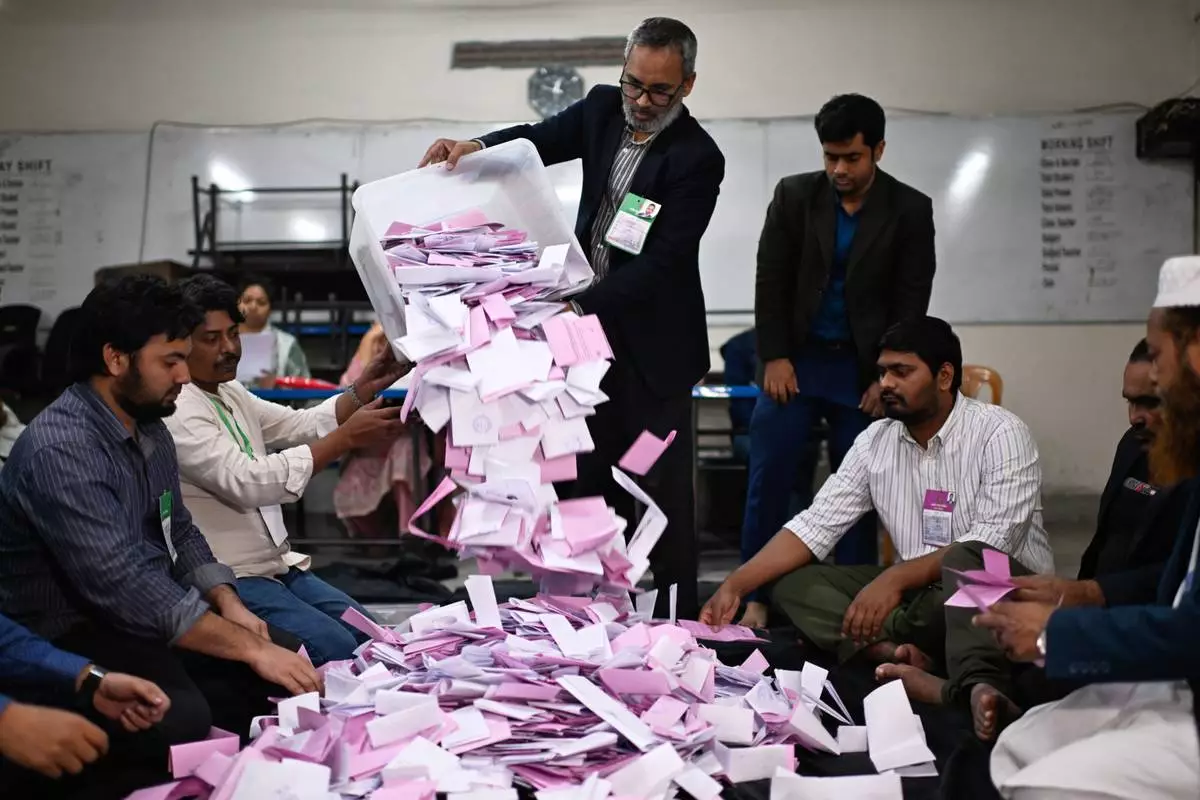
Polling officials begin the counting of votes cast for the national parliamentary election in Dhaka, Bangladesh, Thursday, Feb. 12, 2026. (AP Photo/Mahmud Hossain Opu)
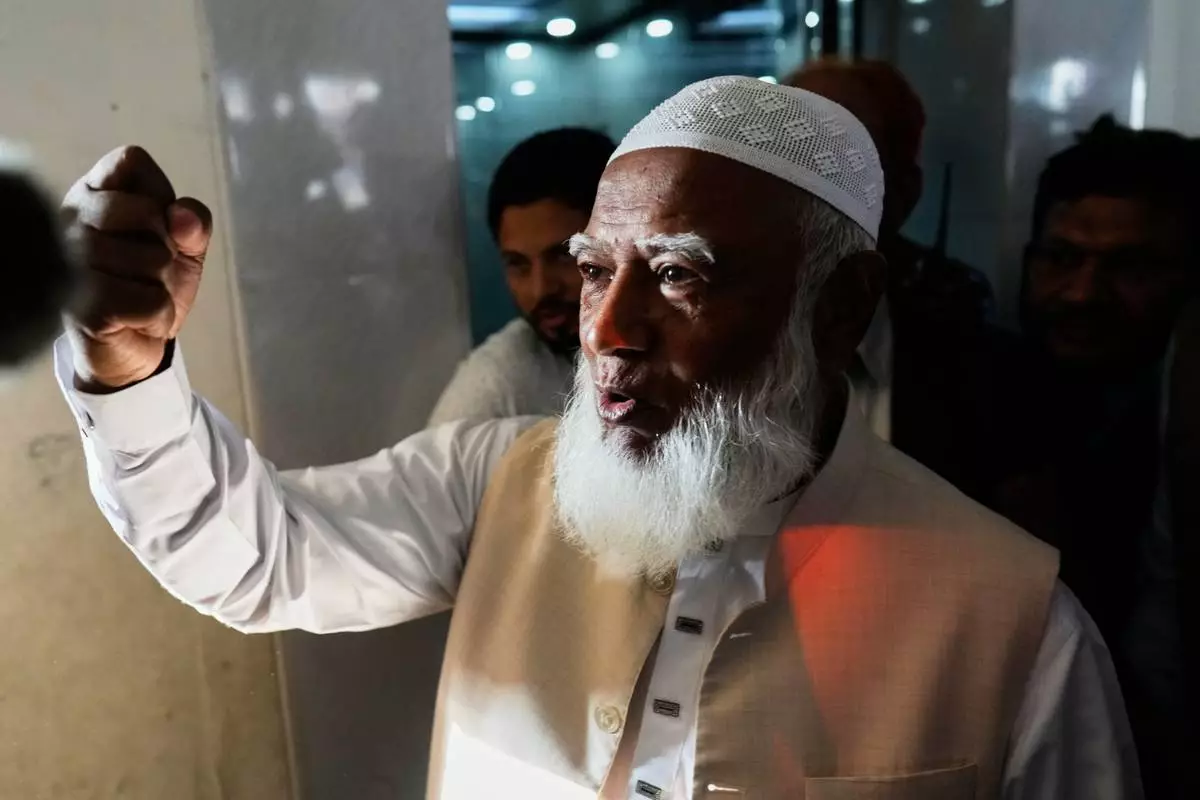
Jamaat-e-Islami leader Shafiqur Rahman arrives to cast his vote at a polling station during parliamentary election in Dhaka, Bangladesh, Thursday, Feb. 12, 2026. (AP Photo/Anupam Nath)
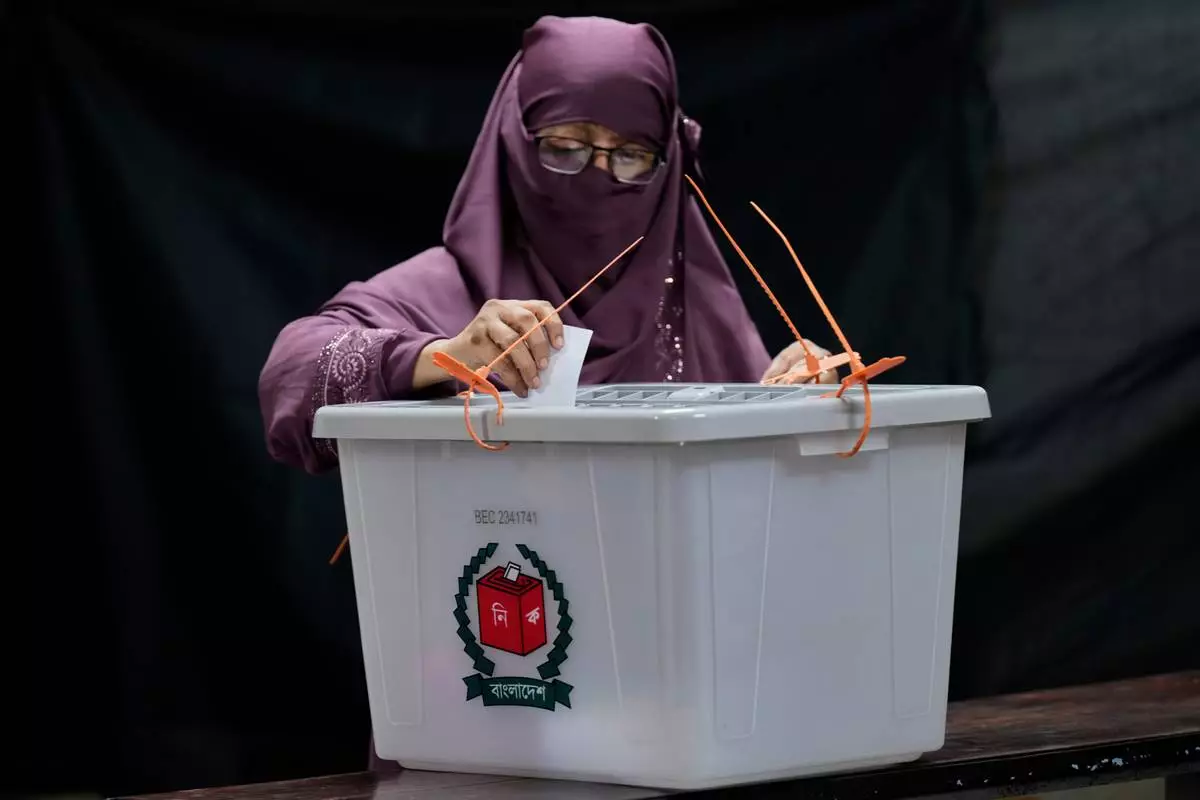
A Bangladeshi woman casts her vote in a polling station during national parliamentary election in Dhaka, Bangladesh, Thursday, Feb. 12, 2026. (AP Photo/Anupam Nath)
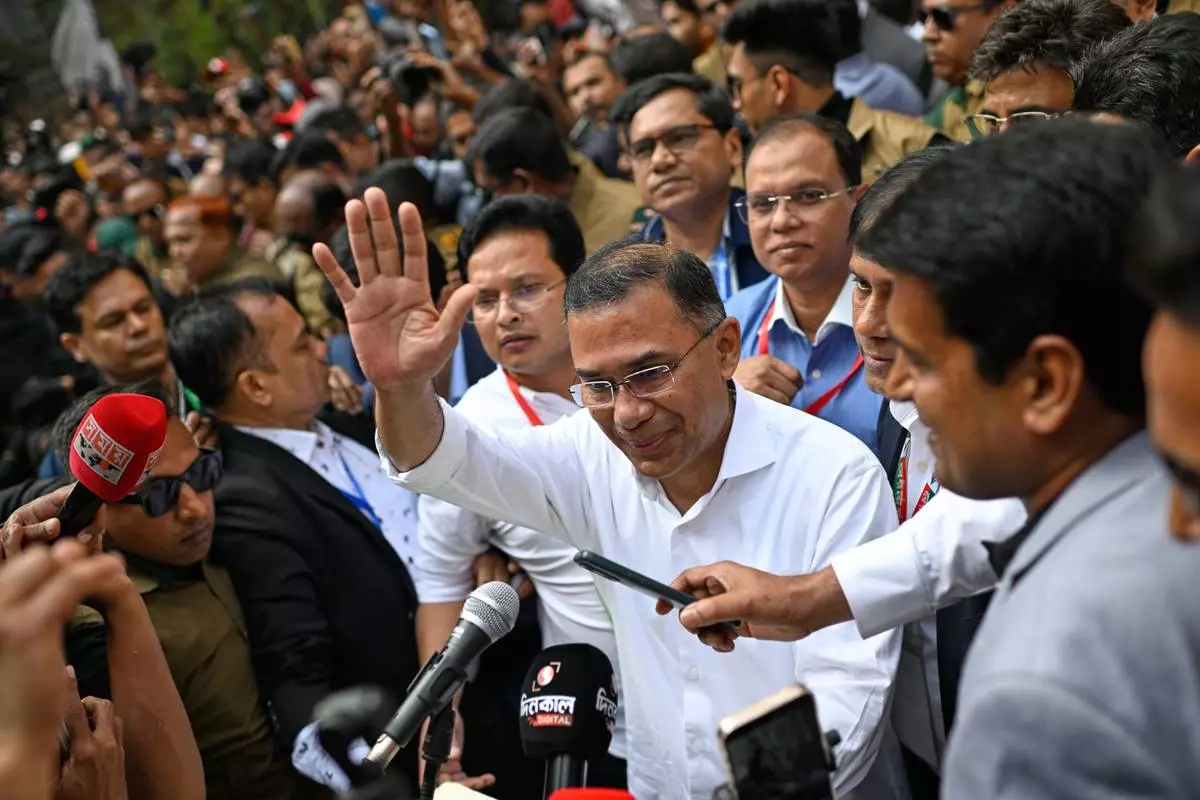
Bangladesh Nationalist Party Chairperson Tarique Rahman waves as he comes out after casting his vote during the national parliamentary elections in Dhaka, Bangladesh, Thursday, Feb. 12, 2026. (AP Photo/Mahmud Hossain Opu)