FSD mounts joint operation with Hong Kong Customs and Police against illicit fueling activities and holds special meeting with oil industry to strengthen intelligence collection and combat strategies
The Fire Services Department (FSD), in collaboration with the Hong Kong Customs (Customs) and the Hong Kong Police Force (Police), launched a joint operation codenamed "Flow Stopper" today (February 13), specifically targeting on blackspots of illicit fueling activities in urban areas for a focused crackdown with a view to curbing the spread of such activities in densely populated areas and ensuring public safety.
Click to Gallery

The Fire Services Department today (February 13) invited government departments such as the Hong Kong Customs and the Hong Kong Police Force, as well as representatives from the oil industry, to a special meeting to conduct in-depth discussion on intelligence for illicit fueling activities, and the operational tactics for preventing and controlling fuel supply at the source. Source: HKSAR Government Press Releases
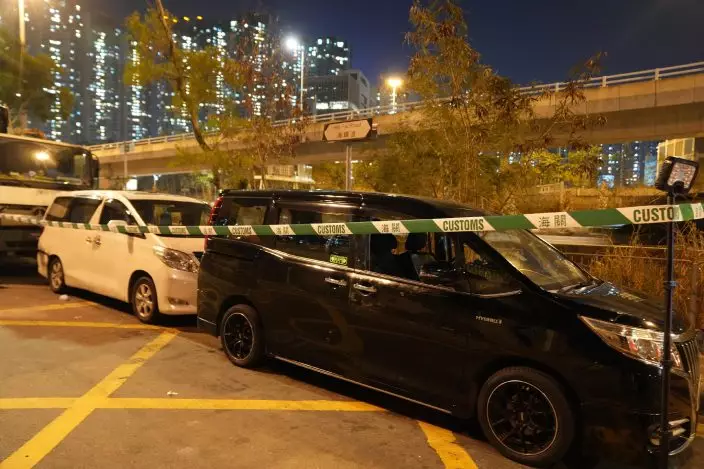
The Fire Services Department (FSD), in collaboration with the Hong Kong Customs and the Hong Kong Police Force, launched a joint operation codenamed "Flow Stopper" today (February 13), specifically targeting on blackspots of illicit fueling activities in urban areas for a focused crackdown. Photo shows some vehicles seized and detained during the operation. Source: HKSAR Government Press Releases
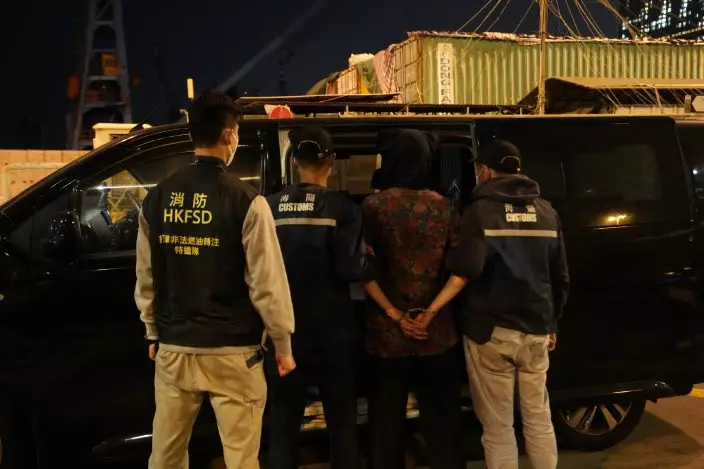
The Fire Services Department, in collaboration with the Hong Kong Customs and the Hong Kong Police Force, launched a joint operation codenamed "Flow Stopper" today (February 13), specifically targeting on blackspots of illicit fueling activities in urban areas for a focused crackdown. Photo shows an arrested person in the operation. Source: HKSAR Government Press Releases
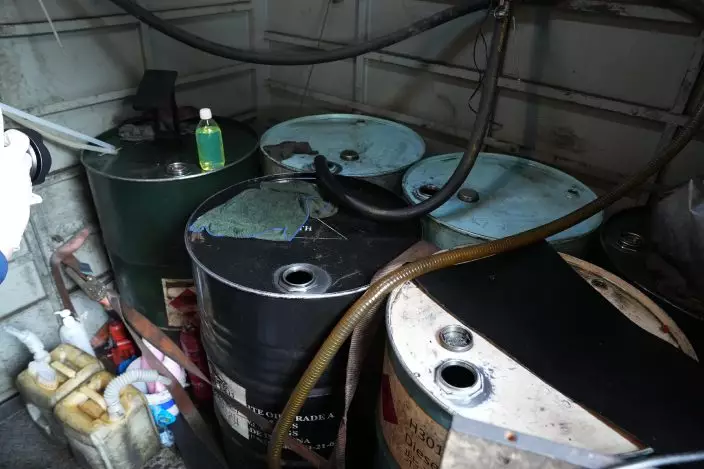
The Fire Services Department, in collaboration with the Hong Kong Customs and the Hong Kong Police Force, launched a joint operation codenamed "Flow Stopper" today (February 13), specifically targeting on blackspots of illicit fueling activities in urban areas for a focused crackdown. Photo shows some illegal fuel seized during the operation. Source: HKSAR Government Press Releases
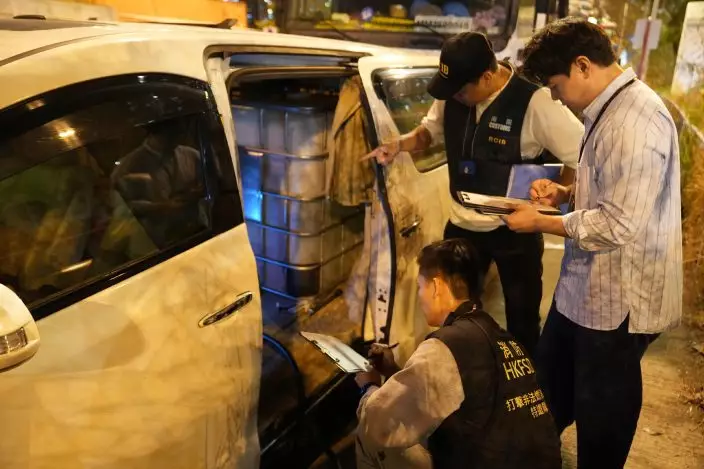
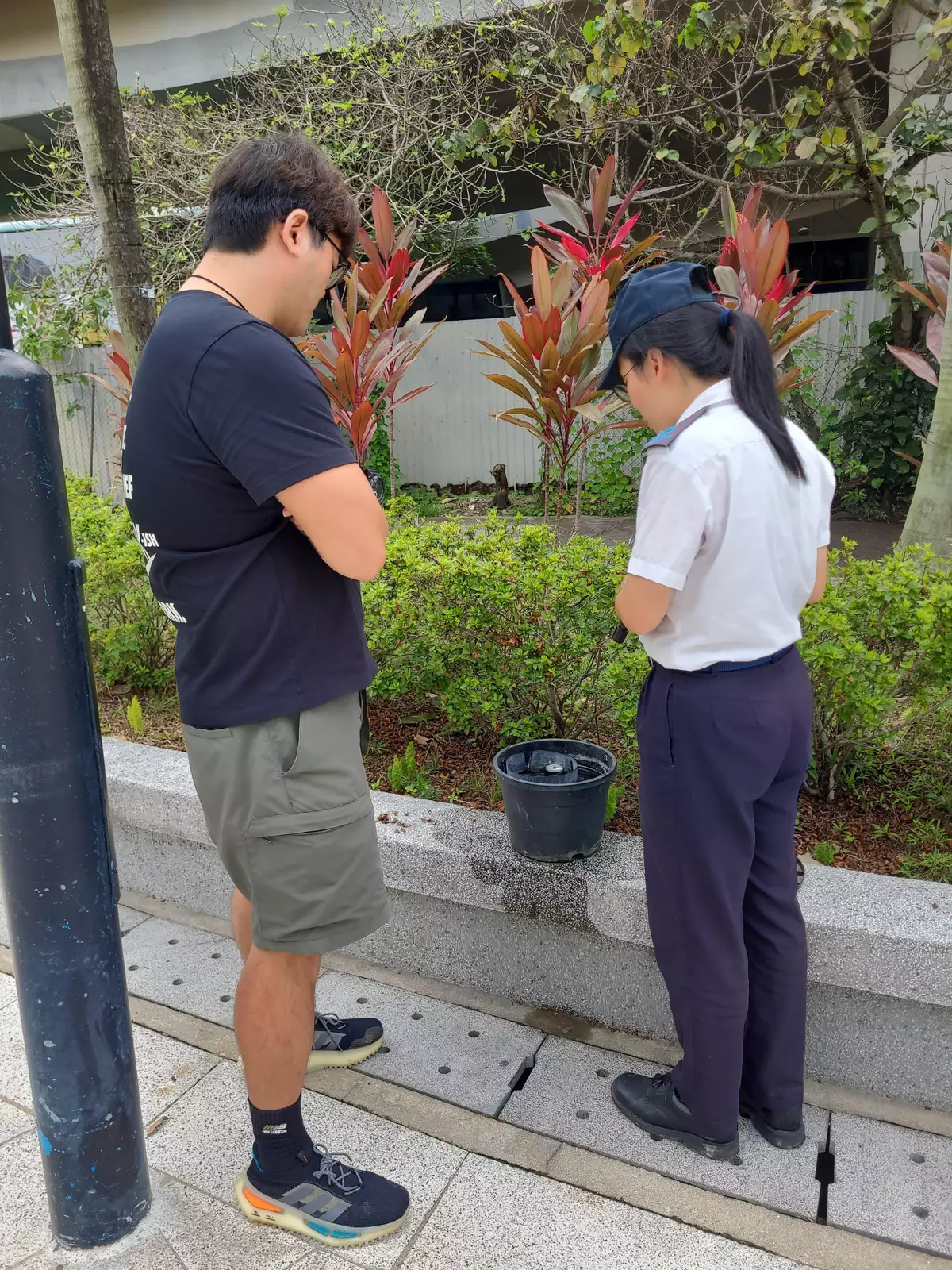
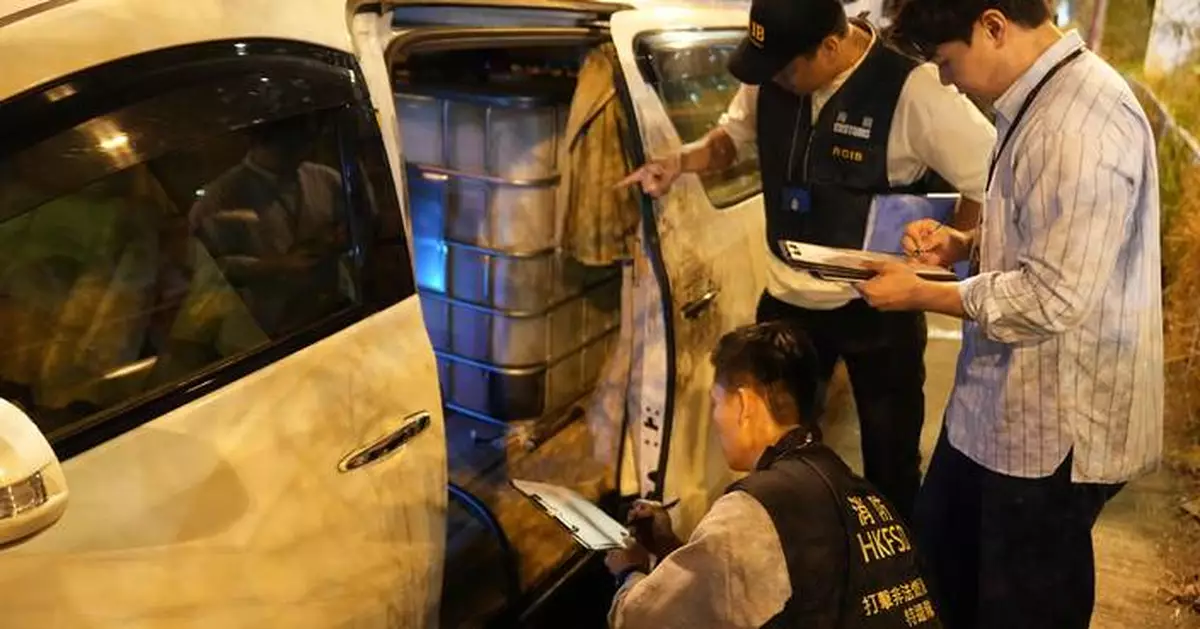
The Fire Services Department, in collaboration with the Hong Kong Customs and the Hong Kong Police Force, launched a joint operation codenamed "Flow Stopper" today (February 13), specifically targeting on blackspots of illicit fueling activities in urban areas for a focused crackdown. Photo shows the law enforcement officers collecting evidence during the operation. Source: HKSAR Government Press Releases
During the operation, the FSD officers deployed unmanned aircraft systems for aerial surveillance and successfully detected seven concealed blackspots. The law enforcement officers smashed two cases in total, including one mobile illegal petrol fueling station on Hoi Fai Road in Tai Kwok Tsui and one illegal diesel fueling station on Wang Kwong Road in Kowloon Bay. About 600 litres of suspected illicit motor spirit and 1 000 litres of diesel were seized, along with a large batch of fueling equipment. The persons suspected to be connected with the cases included two persons who were believed to be the persons-in-charge of the illegal fueling stations and a man who was patronising a station. They were suspected of violating the Fire Services (Fire Hazard Abatement) Regulation, the Dangerous Goods Ordinance (DGO) and the Dutiable Commodities Ordinance (DCO). Besides, two vehicles suspected of being used as illicit fueling stations and one vehicle patronising for fueling were also seized. Investigation is underway.
In addition, to further enhance strategies for combating illicit fueling activities, the FSD invited government departments such as Customs and the Police, as well as representatives from the oil industry, to a special meeting today to conduct in-depth discussion on intelligence for illicit fueling activities, and the operational tactics for preventing and controlling fuel supply at the source. During the meeting, representatives from the oil industry shared the current models and operational procedures of fuel supply. Focused discussions on enhanced monitoring measures for dangerous goods vehicles collecting fuel at oil depots were also held. These measures include requiring those collecting fuel to provide details and destinations of fuel usage, as well as exploring the possibility of submitting inventory and sales records to relevant enforcement departments for supporting more precise enforcement.
The FSD has all along been committed to combating various kinds of illicit fueling activities. The department urges members of the public not to patronise illegal fueling stations. As these stations lack the proper fire service installations and equipment dedicated for fueling stations, the consequences could be catastrophic in the event of a fire.
Under the Fire Services (Fire Hazard Abatement) Regulation, it is an offence to possess or control any controlled substance for the business purpose of transferring it into vehicle fuel tanks. The DGO also provides that no person shall manufacture, store, convey or use any dangerous goods unless they possess a licence or exemption granted. Upon conviction, the maximum penalty for the first offence is a fine of $100,000 and imprisonment for six months.
According to the DCO, any vehicle found conveying illicit motor spirit, as well as any tools, equipment, or articles used or intended to be used in connection with the commission of related offences, shall be liable to forfeiture whether or not any person is convicted of any offence. Anyone involved in dealing with, possession of, selling or buying illicit motor spirit commits an offence. The maximum penalty upon conviction is a fine of $1 million and imprisonment for two years.
The law enforcement departments will continue to spare no efforts in combating illicit fueling activities by strengthening interdepartmental collaboration and enhancing technology-based enforcement (such as drone patrols). Members of the public who encounter suspected illegal fueling activities may call the FSD's 24-hour hotline at 5577 9666, or report via the Illicit Fuelling Activities on the Fire Hazard Electronic Complaint Portal of the FSD (fhcp.hkfsd.gov.hk).
The Fire Services Department today (February 13) invited government departments such as the Hong Kong Customs and the Hong Kong Police Force, as well as representatives from the oil industry, to a special meeting to conduct in-depth discussion on intelligence for illicit fueling activities, and the operational tactics for preventing and controlling fuel supply at the source. Source: HKSAR Government Press Releases
The Fire Services Department (FSD), in collaboration with the Hong Kong Customs and the Hong Kong Police Force, launched a joint operation codenamed "Flow Stopper" today (February 13), specifically targeting on blackspots of illicit fueling activities in urban areas for a focused crackdown. Photo shows some vehicles seized and detained during the operation. Source: HKSAR Government Press Releases
The Fire Services Department, in collaboration with the Hong Kong Customs and the Hong Kong Police Force, launched a joint operation codenamed "Flow Stopper" today (February 13), specifically targeting on blackspots of illicit fueling activities in urban areas for a focused crackdown. Photo shows an arrested person in the operation. Source: HKSAR Government Press Releases
The Fire Services Department, in collaboration with the Hong Kong Customs and the Hong Kong Police Force, launched a joint operation codenamed "Flow Stopper" today (February 13), specifically targeting on blackspots of illicit fueling activities in urban areas for a focused crackdown. Photo shows some illegal fuel seized during the operation. Source: HKSAR Government Press Releases
The Fire Services Department, in collaboration with the Hong Kong Customs and the Hong Kong Police Force, launched a joint operation codenamed "Flow Stopper" today (February 13), specifically targeting on blackspots of illicit fueling activities in urban areas for a focused crackdown. Photo shows the law enforcement officers collecting evidence during the operation. Source: HKSAR Government Press Releases