Skip to Content Facebook Feature Image

Bravo! Act I of the Winter Olympics' visit to Italy has been filled with drama, catharsis and tears

Sport

Bravo! Act I of the Winter Olympics' visit to Italy has been filled with drama, catharsis and tears
Sport

Sport

Bravo! Act I of the Winter Olympics' visit to Italy has been filled with drama, catharsis and tears

2026-02-14 14:14 Last Updated At:14:20

CORTINA D'AMPEZZO, Italy (AP) — Soaring arias. Wrenching tragedy. Joyful triumphs. Exotic backdrops. Climaxes often designed to produce tears, sad or otherwise.

Perhaps more than anything, the operas that Italians began creating 400 years ago are designed to make you feel. To have the rest of the world melt away as you get lost in a story sung in a language you might not understand, but whose stakes are unmistakable.

More Images
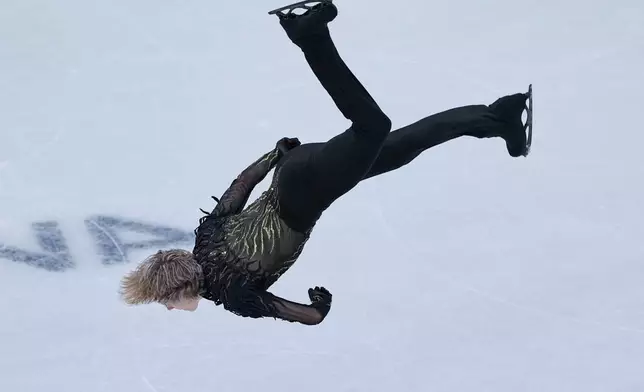
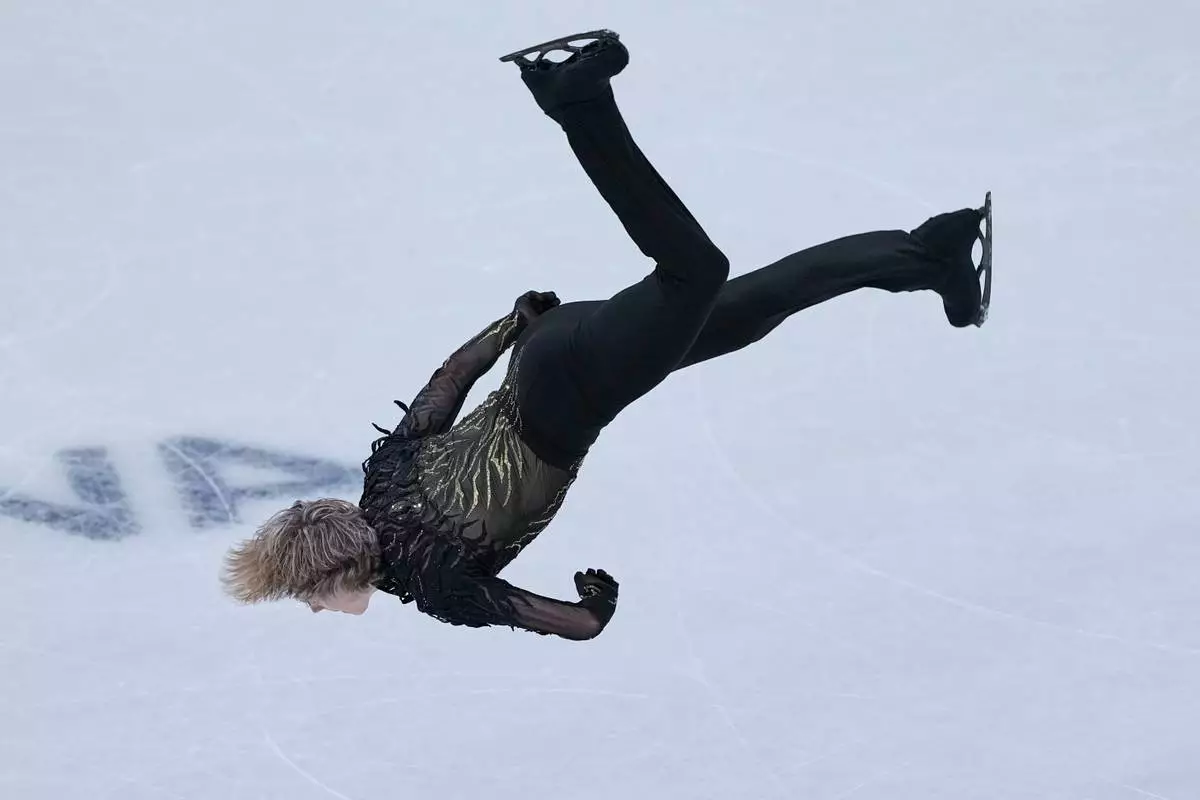
Ilia Malinin of the United States does a back flip while competing during the figure skating men's team event at the 2026 Winter Olympics, in Milan, Italy, Sunday, Feb. 8, 2026. (AP Photo/Natacha Pisarenko)
Ilia Malinin of the United States does a back flip while competing during the figure skating men's team event at the 2026 Winter Olympics, in Milan, Italy, Sunday, Feb. 8, 2026. (AP Photo/Natacha Pisarenko)

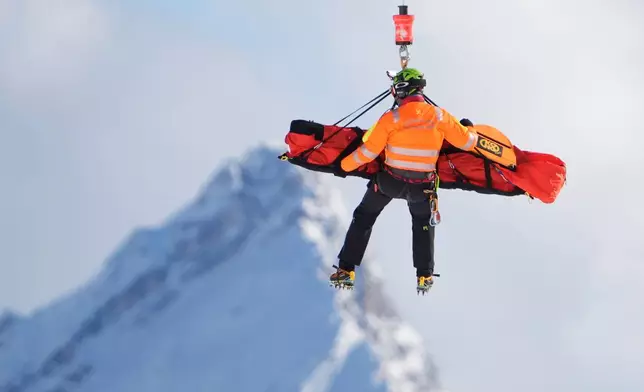
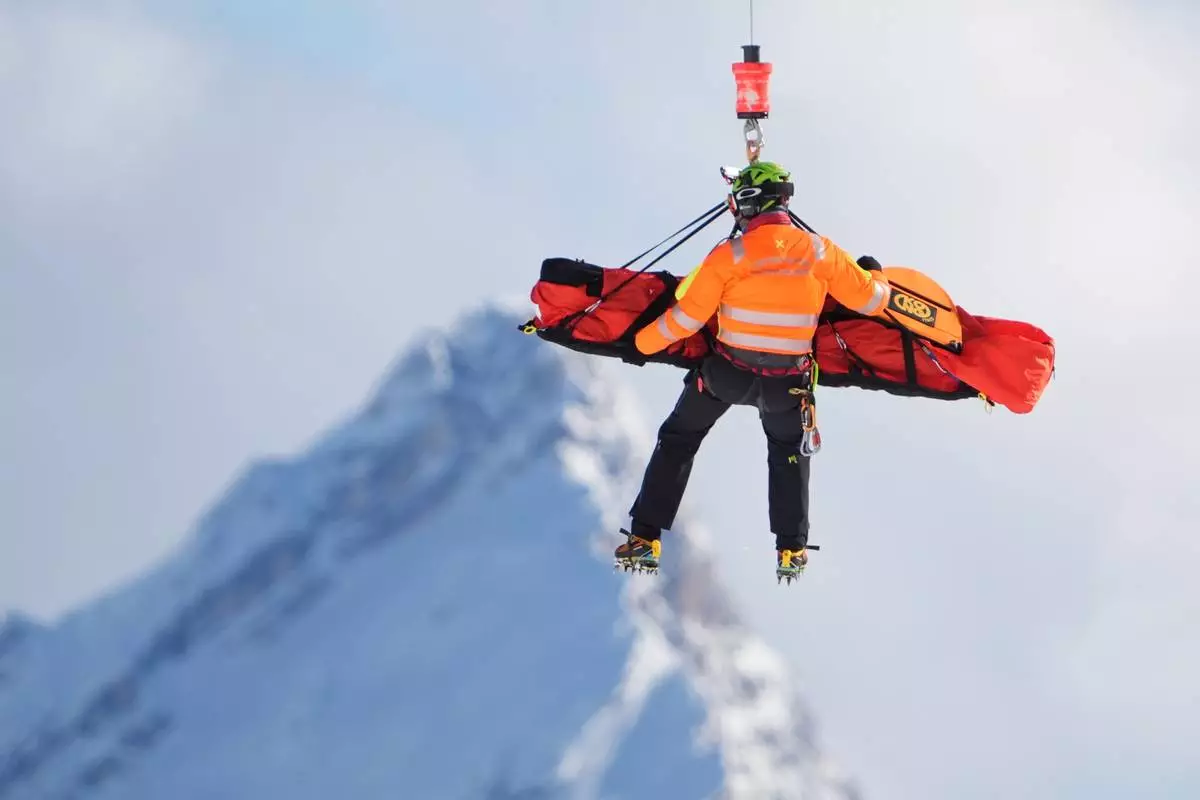
United States' Lindsey Vonn is airlifted away after a crash during an alpine ski women's downhill race, at the 2026 Winter Olympics, in Cortina d'Ampezzo, Italy, Sunday, Feb. 8, 2026. (AP Photo/Jacquelyn Martin)
United States' Lindsey Vonn is airlifted away after a crash during an alpine ski women's downhill race, at the 2026 Winter Olympics, in Cortina d'Ampezzo, Italy, Sunday, Feb. 8, 2026. (AP Photo/Jacquelyn Martin)

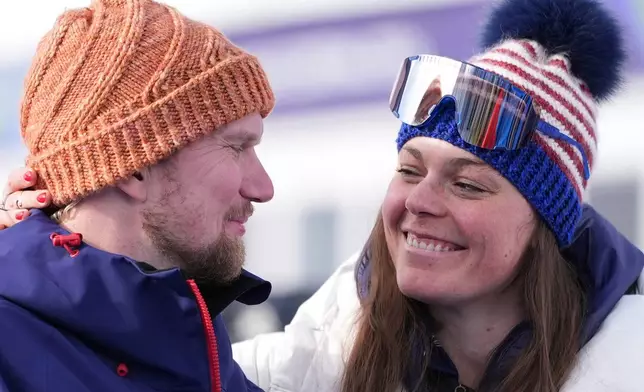
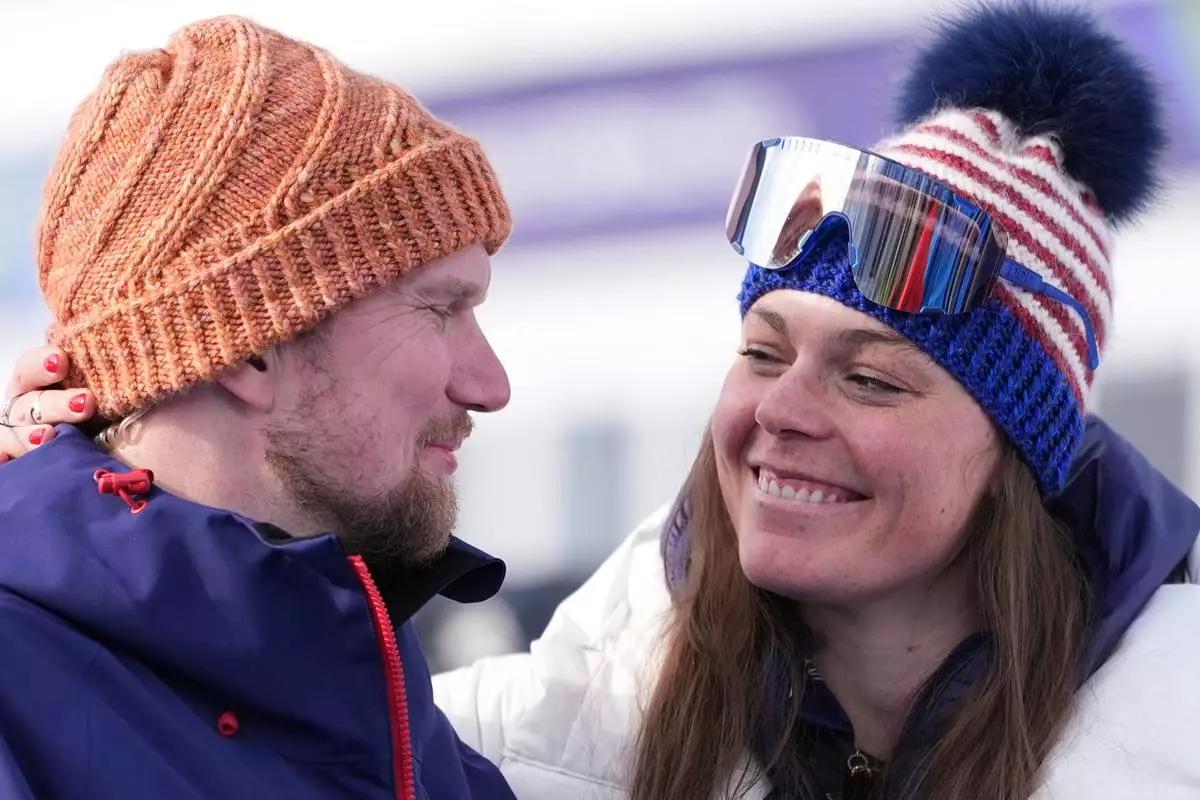
United States' Breezy Johnson, right, and fiancee Connor Watkins smile at each other as they are interviewed after he proposed to her at the end of an alpine ski, women's super-G race, at the 2026 Winter Olympics, in Cortina d'Ampezzo, Italy, Thursday, Feb. 12, 2026. (AP Photo/Jacquelyn Martin)
United States' Breezy Johnson, right, and fiancee Connor Watkins smile at each other as they are interviewed after he proposed to her at the end of an alpine ski, women's super-G race, at the 2026 Winter Olympics, in Cortina d'Ampezzo, Italy, Thursday, Feb. 12, 2026. (AP Photo/Jacquelyn Martin)

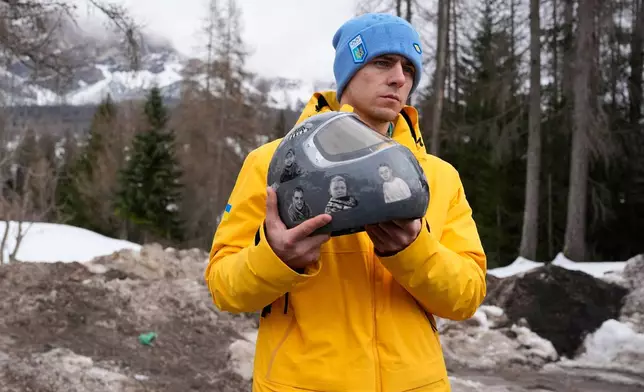
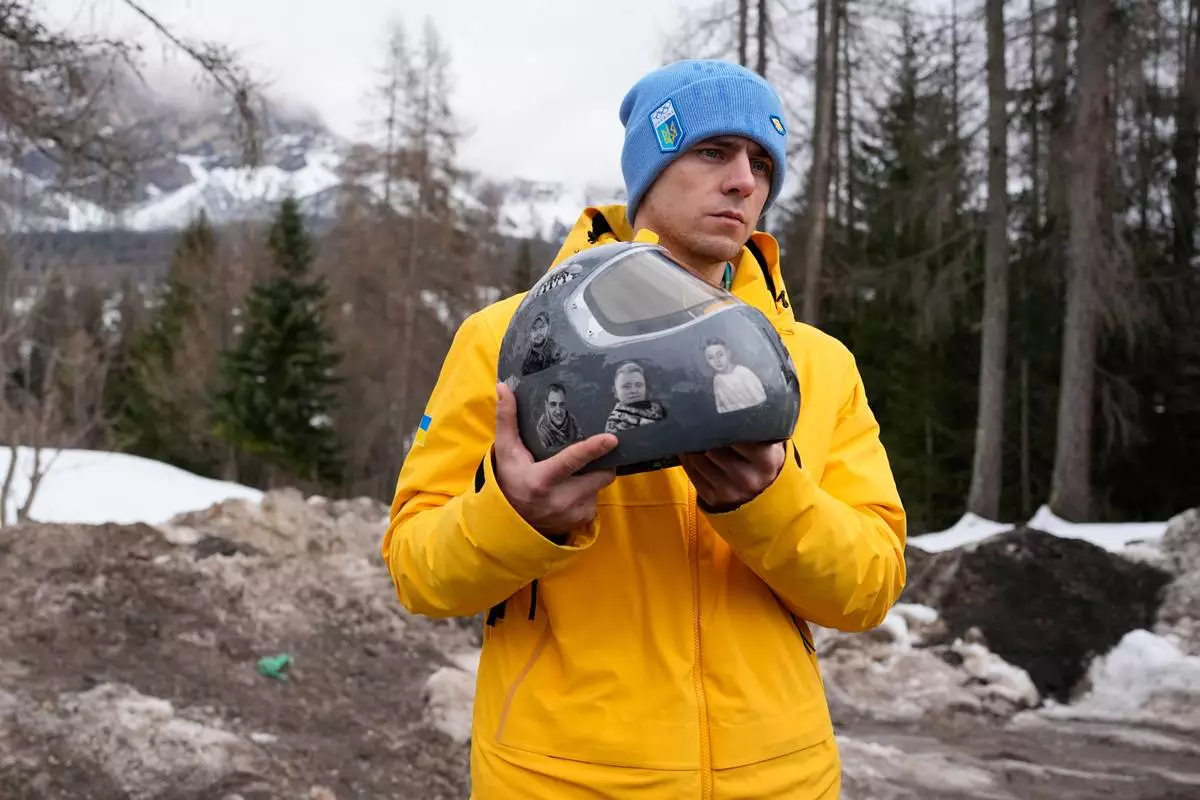
Ukrainian skeleton athlete Vladyslav Heraskevych holds his crash helmet as he stands outside the sliding center at the 2026 Winter Olympics, in Cortina d'Ampezzo, Italy, Thursday, Feb. 12, 2026. (AP Photo/Alessandra Tarantino)
Ukrainian skeleton athlete Vladyslav Heraskevych holds his crash helmet as he stands outside the sliding center at the 2026 Winter Olympics, in Cortina d'Ampezzo, Italy, Thursday, Feb. 12, 2026. (AP Photo/Alessandra Tarantino)

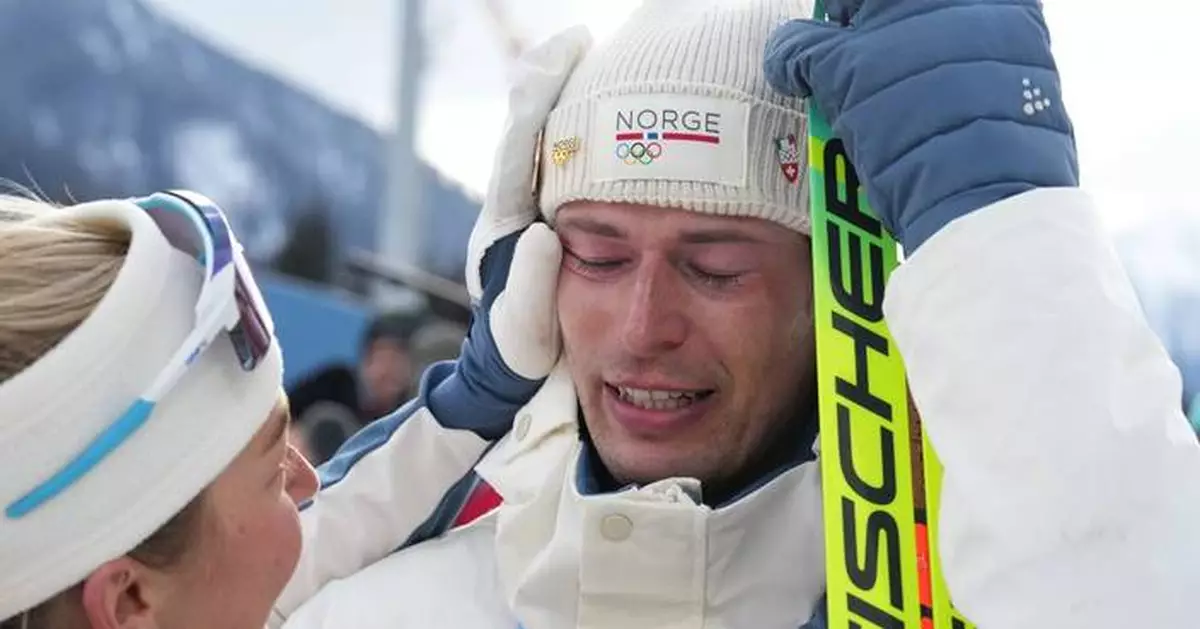
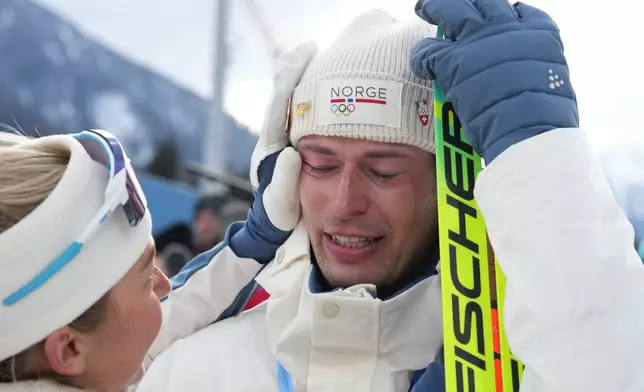
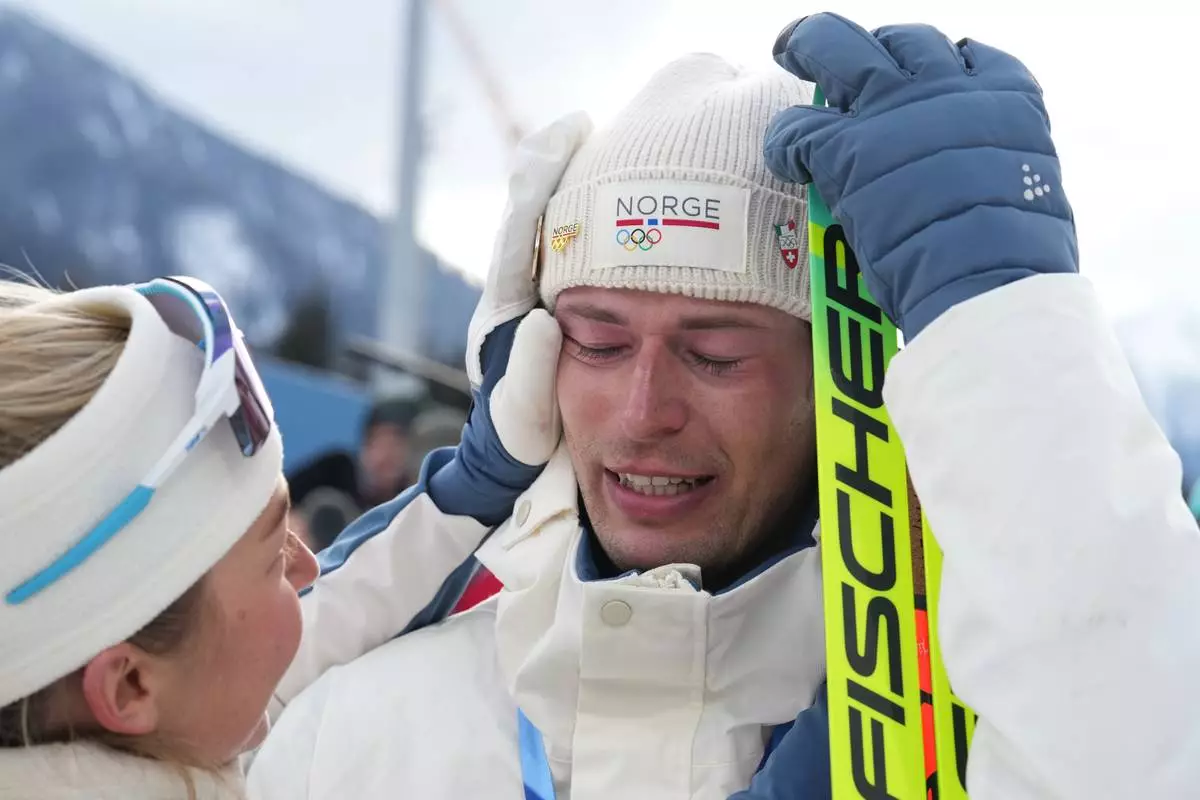
ADDS NAME OF TEAMMATE - Sturla Holm Laegreid, of Norway, reacts after he won bronze as teammate Ingrid Landmark Tandrevold comforts him after the men's 20-kilometer individual biathlon race at the 2026 Winter Olympics in Anterselva, Italy, Tuesday, Feb. 10, 2026. (AP Photo/Andrew Medichini)

ADDS NAME OF TEAMMATE - Sturla Holm Laegreid, of Norway, reacts after he won bronze as teammate Ingrid Landmark Tandrevold comforts him after the men's 20-kilometer individual biathlon race at the 2026 Winter Olympics in Anterselva, Italy, Tuesday, Feb. 10, 2026. (AP Photo/Andrew Medichini)

No wonder the country that invented the art form where music and poetry merge, and these Winter Olympics seem to be such a perfect fit.

The quadrennial spectacle that began its stay in Northern Italy with a gala hosted by the International Olympic Committee at the iconic La Scala opera house in Milan spent its first full week reflecting the host country's signature art form onto itself.

The magic the Games so often provide, no matter where they may go, seemingly a little bolder, a little louder, a little more deeply felt.

The initial gasp that gave way to eerie silence after American skiing star Lindsey Vonn's right arm clipped a gate just 13 seconds into the women's downhill on Sunday, leading to a spectacular and brutal crash that broke her left leg and ended her unlikely Olympic return at 41.

Crashes happen. It's a part of the sport. The “only at the Games” flourish came afterward, when Vonn's long, slow helicopter ride down the mountain to safety veered gently to the left, flying over the grandstand where the throngs who came out to watch her bid for history waved a tearful goodbye instead.

The tears for Vonn were borne out of concern and what might have been. The tears from IOC president Kirsty Coventry after telling Ukrainian skeleton racer Vladyslav Heraskevych he was disqualified for refusing to replace a helmet adorned with images of over 20 coaches and athletes who have died since Russia's invasion began were of anguish and regret.

“No one, no one — especially me — is disagreeing with the messaging,” Coventry said. “The messaging is a powerful message.”

One so compelling and so important to Heraskevych that the 27-year-old sacrificed his dreams of Olympic glory to make it. Even if the attention he received for his stand caught him off guard.

"I never expected it to be such a big scandal,” he said on Friday after an appeal hearing.

Four years into a war that drags on with an end still not quite in sight, Heraskevych's stand dragged a conflict that in some areas of the world has retreated to the shadows and thrust it back into the international spotlight unique to the Games. His selfless decision elevated the discussion about his homeland to the public writ large in a way that no gold-medal-winning run ever could.

Heraskevych's act was intended for a global audience. Norway's Sturla Holm Laegreid was speaking to an audience of one after earning bronze in the men’s 20-kilometer race. His startling confession of infidelity to a former partner after what was supposed to serve as one of the highlights of his career upstaging the gold won in the same race by countryman Johan-Olav Botn.

Being lovesick in Italy is hardly new. There's a reason seemingly every high school literature class makes “Romeo and Juliet" required reading. The Shakespearean tragedy is set in Verona, about 3 hours southwest of where Laegreid made his stunning plea, sounding very much like a teenager in the throes of heartache. His vow of contrition created a viral moment that passes for social currency, the fallout be damned.

“I can understand what he wants to have happen with his girlfriend," retired German athlete Erik Lesser told The Associated Press. "But I just want to think about sport, want to see sport, want to talk about sport.”

Yet the Olympics have never really been just about sport. How can they be when the lines between sports, politics and culture seem to be growing more blurry by the day? The only thing perfect about the Games may be the five intertwined rings that have long served as its logo.

That's what makes it so enthralling. A few days after Laegreid achieved a small piece of infamy, Olympic downhill champion Breezy Johnson retreated into the arms of boyfriend Connor Watkins after crashing in the Super-G.

While Johnson's dreams of leaving Cortina with multiple golds were gone, another was realized anyway when Watkins dropped to a knee and recited Taylor Swift lyrics while producing a blue and white sapphire ring.

Johnson giddily accepted before jumping into his arms, the physical pain and emotional disappointment of what happened up on the mountain only minutes earlier replaced by a memory and a promise that will stick with her forever.

"I think most people want to peak at the Olympics,” Johnson said. “I just extra peaked.”

Not everyone does at a festival where unpredictability often outduels inevitability for top billing, as bold-faced champions who ceded the stage they've so often commanded.

American figure skater Ilia Malinin has spent two years dominating his sport one electrifying backflip and quadruple jump at a time. Yet after helping the U.S. win team gold during his first days in Milan, he stumbled to eighth in the men's competition Friday after a pair of uncharacteristic falls that left him wondering if the nerves unique to this showcase got to him.

Mikaela Shiffrin arrived in Cortina as the winningest ski racer in the history of the sport. Eager to put an 0 for 6 run four years ago in Beijing behind her, she instead began her fourth Olympics with her worst showing in a slalom that she started and finished since 2012, costing Shiffrin and Johnson a gold in women's combined and opening the door for teammates Jackie Wiles and Paula Moltzan to claim the first Olympic medals of their long careers.

American snowboarding icon Chloe Kim's bid for an unprecedented third gold in the halfpipe ended late Thursday when a teenager who grew up idolizing her — Gaon Choi of South Korea — pulled off an upset in snowy Livigno.

"I’m a winner because I was able to persevere and fight through,” said Kim, who competed just a month removed from a dislocated shoulder.

And perhaps more than anything at the Olympics, it's the fight that matters.

For the thousands of athletes scattered across northern Italy, the road to this moment in their lives is rooted in a passion found long ago. The flames may have flickered for many along the way. How could they not? The drudgery of practice. The financial burden. The inevitable physical toll. The hidden mental strain has only recently graduated from hushed whispers to a full-fledged conversation.

It's a lot to carry. No wonder it's such fertile ground for drama.

And no one has leaned into it more than the hosts who have surged to the top of the medal table.

Yet a country known for big gestures and even bigger emotions is also one that can revel in the quiet and before the catharsis.

Ten months ago, Italian skier Federica Brignone shredded her left leg in a crash that required multiple surgeries, a handful of screws to keep things in place and months of rehab. The 35-year-old never stopped pointing toward Cortina. On Thursday, in front of a crowd that included Italian President Sergio Mattarella, Brignone ignored the lingering pain to throw down a sublime Super-G run in tricky conditions to earn her first Olympic gold.

After the medal ceremony, the Italian Air Force’s acrobatic unit thundered overhead, leaving a trail of the country's familiar combination of green, white and red in its wake.

The slopes in Cortina shook. The flags waved. Brignone wept, thinking not so much of glory, but the winding path she took to get here.

"One of those films that you don’t believe in because it’s not possible for it to end that well,” Brignone said.

Maybe that's the best part.

It's not the end. We're only halfway there. Who knows?

Milan Cortina's second act could be even better than the first.

AP Sports Writers Andrew Dampf, Graham Dunbar, Dave Skretta, Tim Reynolds and AP National Writer Eddie Pells contributed to this report.

AP Winter Olympics: https://apnews.com/hub/milan-cortina-2026-winter-olympics
Ilia Malinin of the United States does a back flip while competing during the figure skating men's team event at the 2026 Winter Olympics, in Milan, Italy, Sunday, Feb. 8, 2026. (AP Photo/Natacha Pisarenko)
Ilia Malinin of the United States does a back flip while competing during the figure skating men's team event at the 2026 Winter Olympics, in Milan, Italy, Sunday, Feb. 8, 2026. (AP Photo/Natacha Pisarenko)

United States' Lindsey Vonn is airlifted away after a crash during an alpine ski women's downhill race, at the 2026 Winter Olympics, in Cortina d'Ampezzo, Italy, Sunday, Feb. 8, 2026. (AP Photo/Jacquelyn Martin)
United States' Lindsey Vonn is airlifted away after a crash during an alpine ski women's downhill race, at the 2026 Winter Olympics, in Cortina d'Ampezzo, Italy, Sunday, Feb. 8, 2026. (AP Photo/Jacquelyn Martin)

United States' Breezy Johnson, right, and fiancee Connor Watkins smile at each other as they are interviewed after he proposed to her at the end of an alpine ski, women's super-G race, at the 2026 Winter Olympics, in Cortina d'Ampezzo, Italy, Thursday, Feb. 12, 2026. (AP Photo/Jacquelyn Martin)
United States' Breezy Johnson, right, and fiancee Connor Watkins smile at each other as they are interviewed after he proposed to her at the end of an alpine ski, women's super-G race, at the 2026 Winter Olympics, in Cortina d'Ampezzo, Italy, Thursday, Feb. 12, 2026. (AP Photo/Jacquelyn Martin)

Ukrainian skeleton athlete Vladyslav Heraskevych holds his crash helmet as he stands outside the sliding center at the 2026 Winter Olympics, in Cortina d'Ampezzo, Italy, Thursday, Feb. 12, 2026. (AP Photo/Alessandra Tarantino)
Ukrainian skeleton athlete Vladyslav Heraskevych holds his crash helmet as he stands outside the sliding center at the 2026 Winter Olympics, in Cortina d'Ampezzo, Italy, Thursday, Feb. 12, 2026. (AP Photo/Alessandra Tarantino)

ADDS NAME OF TEAMMATE - Sturla Holm Laegreid, of Norway, reacts after he won bronze as teammate Ingrid Landmark Tandrevold comforts him after the men's 20-kilometer individual biathlon race at the 2026 Winter Olympics in Anterselva, Italy, Tuesday, Feb. 10, 2026. (AP Photo/Andrew Medichini)
ADDS NAME OF TEAMMATE - Sturla Holm Laegreid, of Norway, reacts after he won bronze as teammate Ingrid Landmark Tandrevold comforts him after the men's 20-kilometer individual biathlon race at the 2026 Winter Olympics in Anterselva, Italy, Tuesday, Feb. 10, 2026. (AP Photo/Andrew Medichini)
CAIRO (AP) — Pakistan’s powerful army chief met Thursday with Iran’s parliament speaker as part of international efforts to press for an extension to a ceasefire that has paused almost seven weeks of war between Israel, the U.S. and the Islamic Republic.

It was unclear whether the frantic diplomacy could lead to a lasting deal as the two-week ceasefire passes the halfway mark. The Iran war has killed thousands of people and upended global markets by disrupting the flow of oil.

Iranian state television did not provide details on the meeting between Pakistani Army Gen. Asim Munir and Iranian Parliament Speaker Mohammad Bagher Qalibaf, who has emerged as his country’s chief negotiator.

There was no immediate comment from Pakistan, which has become a key mediator after hosting direct talks between the U.S. and Iran that authorities said helped narrow differences between the sides. Mediators are seeking a new round before the ceasefire expires next week.

The White House said any further talks regarding Iran would likely take place in the Pakistani capital of Islamabad, though no decision had been made on whether to resume negotiations. The fragile ceasefire is holding despite a U.S. naval blockade of Iranian ports and Iranian counter-threats to target regional ports across the Red Sea.

The war has jolted markets and rattled the global economy as shipping has been cut off and airstrikes have torn through military and civilian infrastructure across the region. Oil prices have fallen amid hopes for an end to fighting, and U.S. stocks on Wednesday surpassed records set in January.

Despite the fragile ceasefire with Iran, fighting has continued in Lebanon between Israel and the Iran-backed militant group Hezbollah.

U.S. President Donald Trump had announced that the leaders of Israel and Lebanon would speak about halting the fighting. If that were to occur, it would be the first direct conversation between the leaders of the two countries in more than 30 years.

But Lebanese President Joseph Aoun refused Thursday to speak to Israeli Prime Minister Benjamin Netanyahu, a government official familiar with the developments told The Associated Press.

The government official, who spoke on condition of anonymity in line with regulations, said the remarks were made during a call with U.S. Secretary of State Marco Rubio and that Washington “understands Lebanon’s position.”

Aoun’s office acknowledged a call with Rubio, but did not mention the possibility of talks with Netanyahu. Netanyahu’s office did not do so either.

Lebanon and Israel held their first direct diplomatic talks in decades Tuesday in Washington following more than a month of war between Israel and Hezbollah. Lebanon has insisted on a ceasefire to stop the fighting between Israel and Hezbollah before engaging in direct talks, while vowing to commit to disarming the group.

Washington has not publicly stated its support of a ceasefire as a precondition, and the Israeli government has framed the talks as peace negotiations with a focus on disarming Hezbollah.

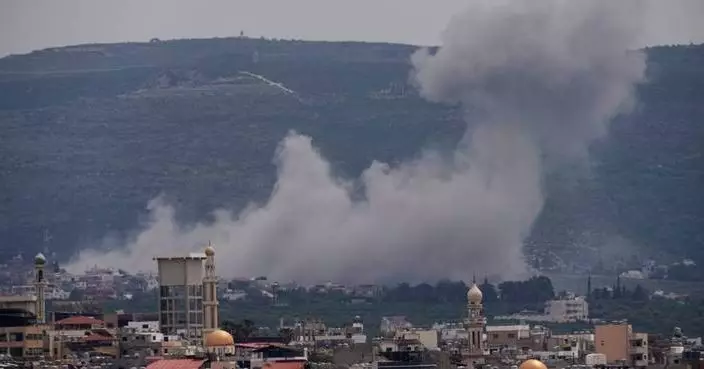
Israel and Hezbollah continued exchanging fire across the border, with Hezbollah targeting towns in northern Israel with rockets and drones. Israeli fire against southern Lebanon intensified, especially around the cities of Tyre, Nabatieh and the strategic town of Bint Jbeil near the border with Israel.

Israel and Lebanon have technically been at war since Israel was established in 1948, and Lebanon remains deeply divided over diplomatic engagement with Israel.

Israeli troops have pushed deeper into southern Lebanon to create what officials have called a “security zone,” which Netanyahu has said will extend at least 8 to 10 kilometers (5 to 6 miles) into Lebanon.

Even as the U.S. blockade on Iranian ports and renewed Iranian threats strained the ceasefire agreement, regional officials reported progress, telling The Associated Press the United States and Iran had an “in-principle agreement” to extend it to allow for more diplomacy. They spoke on condition of anonymity to discuss sensitive negotiations.

But tensions simmered.

The commander of Iran’s joint military command, Ali Abdollahi, threatened to halt trade in the region if the U.S. does not lift its naval blockade, and a newly appointed military adviser to Iranian Supreme Leader Mojtaba Khamenei said he does not support extending the ceasefire.

Mediators are pushing for a compromise on three main sticking points: Iran’s nuclear program, the Strait of Hormuz and compensation for wartime damages, according to a regional official involved in the mediation efforts.

Iranian Foreign Ministry spokesman Esmail Baghaei said Iran is open to discussing the type and level of its uranium enrichment, but his country “based on its needs, must be able to continue enrichment,” Iranian state media reported.

The Pentagon urged Iran to make a deal, with U.S. Defense Secretary Pete Hegseth telling reporters at the Pentagon that “ultimately, they need to come to the table.”

He said the U.S. will ensure that Iran never has a nuclear weapon.

“We’d prefer to do it the nice way through a deal led by our great vice president and negotiating team. Or we can do it the hard way,” Hegseth said.

Iran has repeatedly insisted that it does not seek a nuclear weapon and that its nuclear program is for peaceful proposes.

The fighting has killed at least 3,000 people in Iran, more than 2,100 in Lebanon, 23 in Israel and more than a dozen in Gulf Arab states. Thirteen U.S. service members have also been killed.

U.S. Treasury Secretary Scott Bessent said the Trump administration would ramp up economic pain on Iran with new economic sanctions on countries doing business with it, calling the move the “financial equivalent” of a bombing campaign.

Pakistani Prime Minister Shehbaz Sharif met with Qatar’s emir, Sheikh Tamim bin Hamad Al Thani, during a visit to Doha, his office said, as part of a regional visit aimed at discussions on the ongoing U.S.-Iran peace process.

Chinese Foreign Minister Wang Yi said the window of peace was opening during a phone call with his Iranian counterpart, according to a statement from the Chinese Foreign Ministry.

Wang told Iranian Foreign Minister Abbas Araghchi that the situation has reached a critical juncture, and said Iran’s sovereignty, security and legitimate rights should be respected, while freedom of navigation and safety through the Strait of Hormuz should be ensured.

Since the war began, Iran has curtailed maritime traffic through the strait, which a fifth of global oil transited through in peacetime. Tehran’s effective closure of the strait sent oil prices skyrocketing, raising the cost of fuel, food and other basic goods far beyond the Middle East, and the U.S. has responded with a blockade on Iranian shipping.

U.S. Central Command said Wednesday that no ships had made it past the blockade since it was imposed two days earlier, while 13 merchant vessels complied with direction from U.S. forces to turn around and reenter Iranian waters.

Lidman reported from Tel Aviv, Israel and Chehayeb reported from Beirut. Associated Press writer Munir Ahmed in Islamabad, Elena Becatoros in Athens, Greece and Ben Finley in Washington contributed to this report.

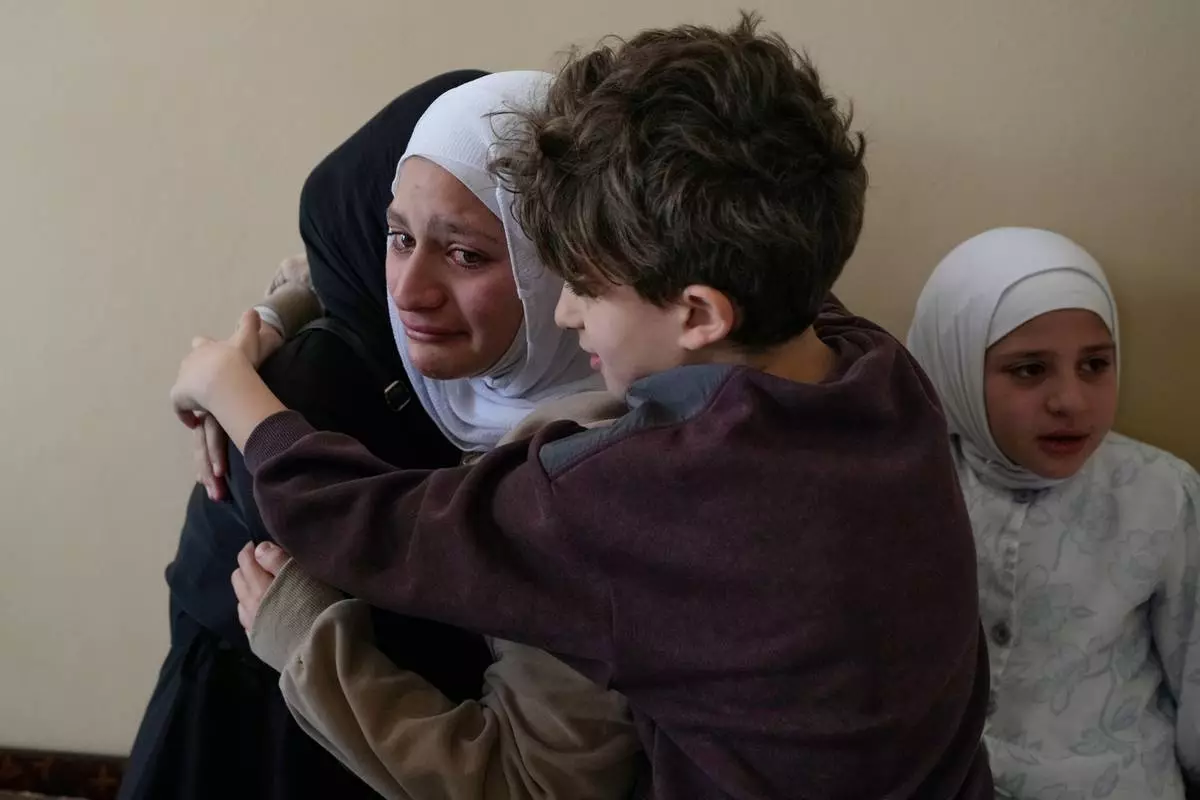
Relatives of Ghadir Baalbaki, 19, who was killed on Tuesday in an Israeli airstrike, mourn during her funeral in the southern port city of Tyre, Lebanon, Wednesday, April 15, 2026. (AP Photo/Hussein Malla)

Relatives of Ghadir Baalbaki, 19, who was killed on Tuesday in an Israeli airstrike, mourn during her funeral in the southern port city of Tyre, Lebanon, Wednesday, April 15, 2026. (AP Photo/Hussein Malla)

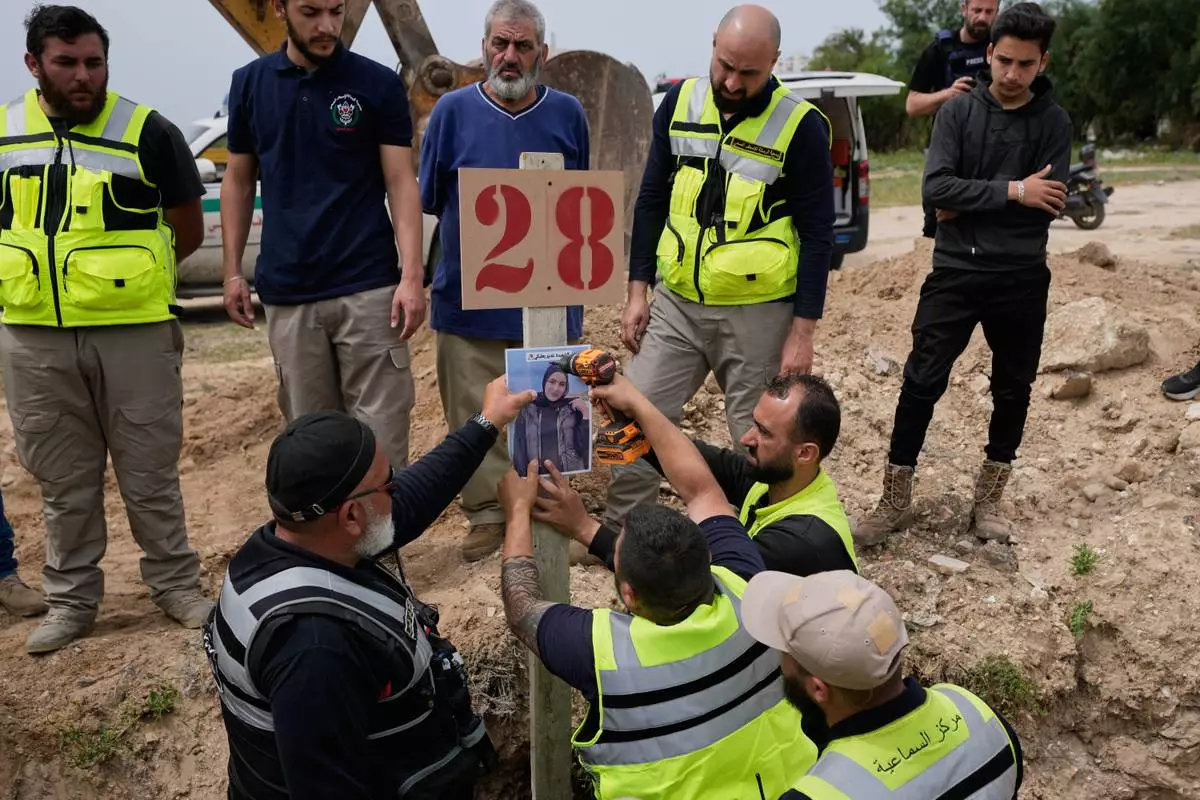
Paramedics attach a portrait over the grave of Ghadir Baalbaki, 19, who was killed on Tuesday in an Israeli airstrike, at a temporary mass grave in the southern port city of Tyre, Lebanon, Wednesday, April 15, 2026. (AP Photo/Hussein Malla)

Paramedics attach a portrait over the grave of Ghadir Baalbaki, 19, who was killed on Tuesday in an Israeli airstrike, at a temporary mass grave in the southern port city of Tyre, Lebanon, Wednesday, April 15, 2026. (AP Photo/Hussein Malla)

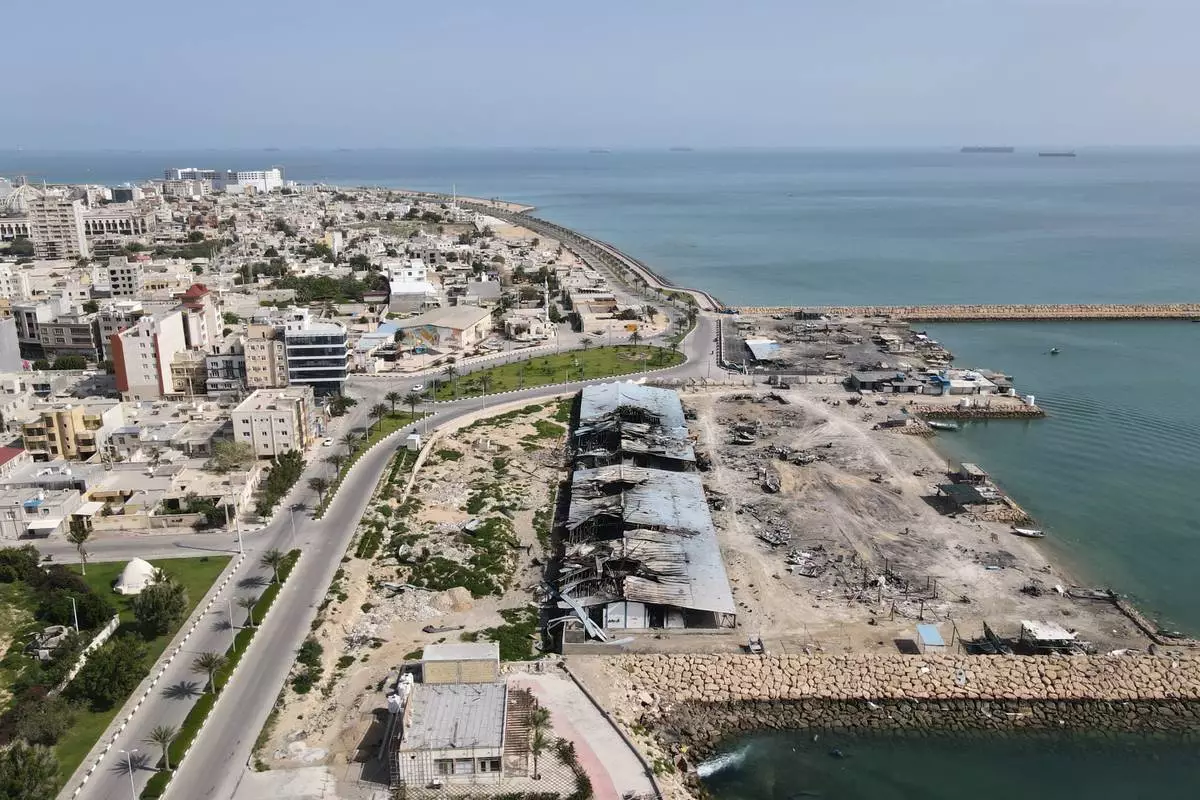
Backdropped by ships in the Strait of Hormuz, damage, according to local witnesses caused by several recent airstrikes during the U.S.-Israel military campaign, is seen on a fishing pier in the port of Qeshm island, Iran, Monday, April 13, 2026. (AP Photo/Asghar Besharati)

Backdropped by ships in the Strait of Hormuz, damage, according to local witnesses caused by several recent airstrikes during the U.S.-Israel military campaign, is seen on a fishing pier in the port of Qeshm island, Iran, Monday, April 13, 2026. (AP Photo/Asghar Besharati)

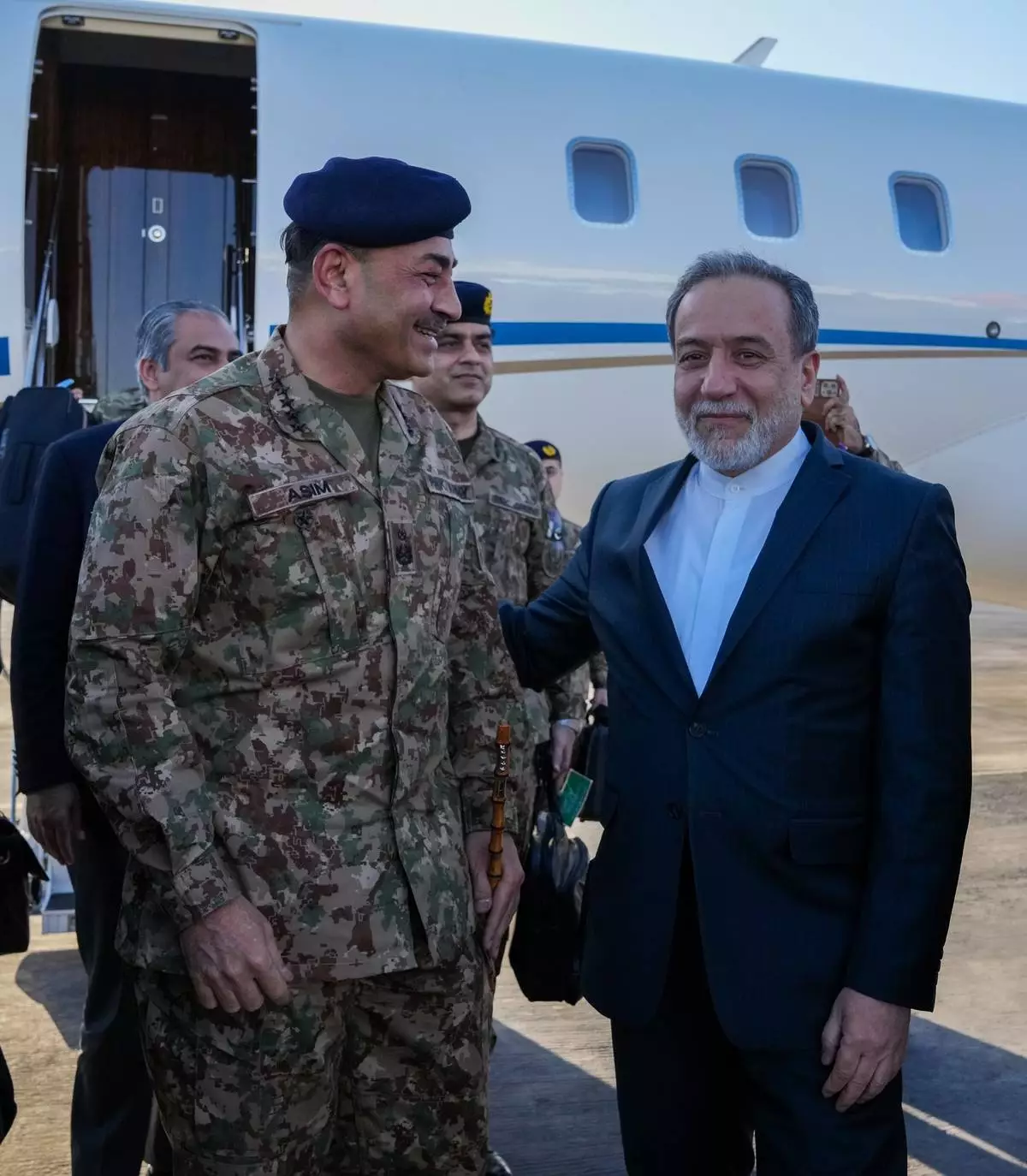
In this photo released by the Iranian Foreign Ministry, Pakistan's Army Chief Field Marshal Gen. Asim Munir, left, is welcomed by Iranian Foreign Minister Abbas Araghchi upon his arrival in Tehran, Wednesday, April 15, 2026. (Iranian Foreign Ministry via AP)

In this photo released by the Iranian Foreign Ministry, Pakistan's Army Chief Field Marshal Gen. Asim Munir, left, is welcomed by Iranian Foreign Minister Abbas Araghchi upon his arrival in Tehran, Wednesday, April 15, 2026. (Iranian Foreign Ministry via AP)

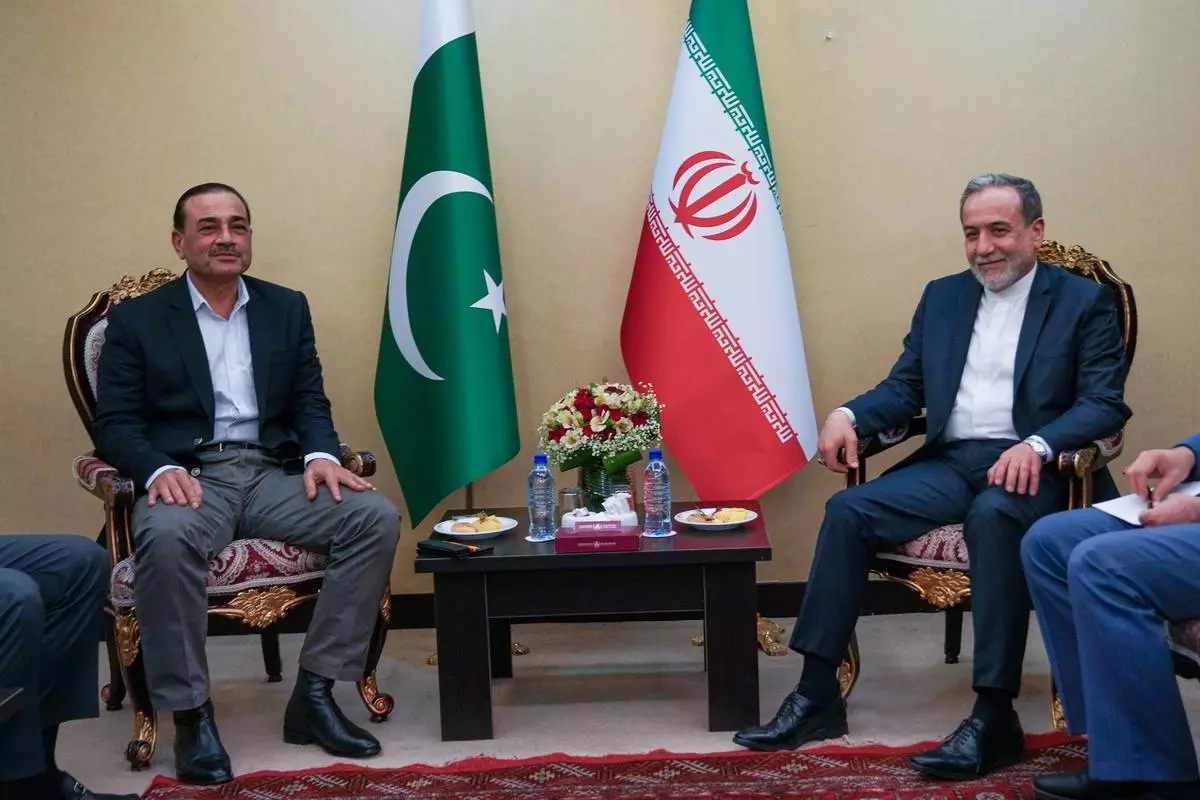
In this photo released by the Iranian Foreign Ministry, Iranian Foreign Minister Abbas Araghchi, right, meets with Pakistan's Army Chief Field Marshal Gen. Asim Munir in Tehran, Wednesday, April 15, 2026. (Iranian Foreign Ministry via AP)

In this photo released by the Iranian Foreign Ministry, Iranian Foreign Minister Abbas Araghchi, right, meets with Pakistan's Army Chief Field Marshal Gen. Asim Munir in Tehran, Wednesday, April 15, 2026. (Iranian Foreign Ministry via AP)

Recommended Articles