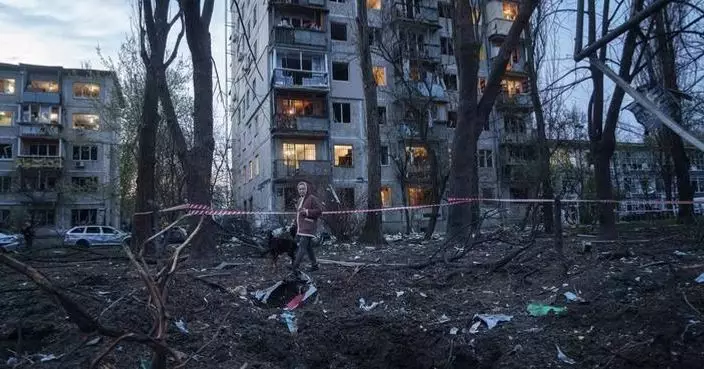
BAMENDA, Cameroon (AP) — Pope Leo XIV travelled Thursday to the western Cameroonian city of Bamenda to preach a message of peace in the epicenter of a separatist conflict that humanitarian groups have called one of the world’s most neglected crises.
Leo's Camair charter landed at the Bamenda airport, where jubilant Cameroonians clogged the roads, blowing horns and dancing. They were overjoyed that a pope had come so far to see them and put a global spotlight on the violence that has traumatized this region for nearly a decade.
Click to Gallery
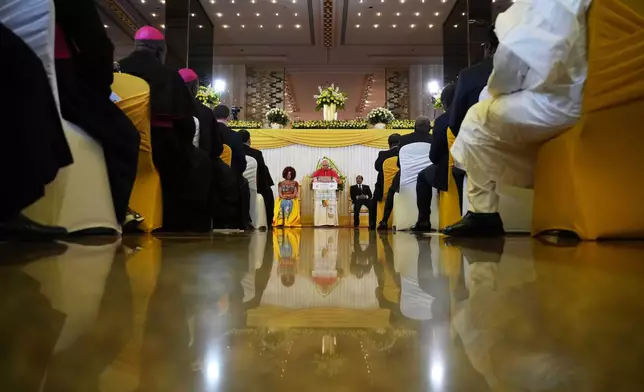
Pope Leo XIV, background center, flanked by Cameroon's President Paul Biya and his wife Chantal, meets with the authorities, civil society and the diplomatic corps in Yaounde Cameroon, Wednesday, April 15, 2026. (AP Photo/Andrew Medichini)
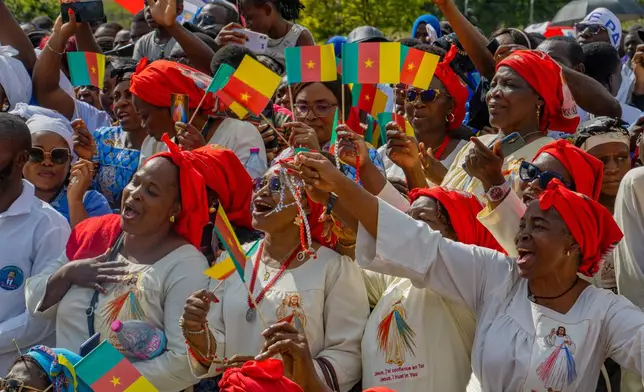
People cheer as Pope Leo XIV arrives in Yaounde, Cameroon, Wednesday, April 15, 2026. (AP Photo/Welba Yamo Pascal)
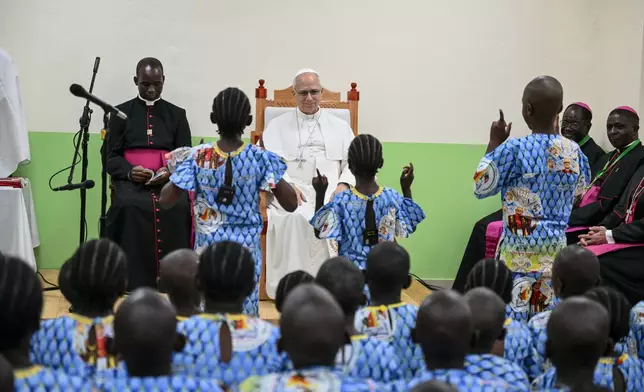
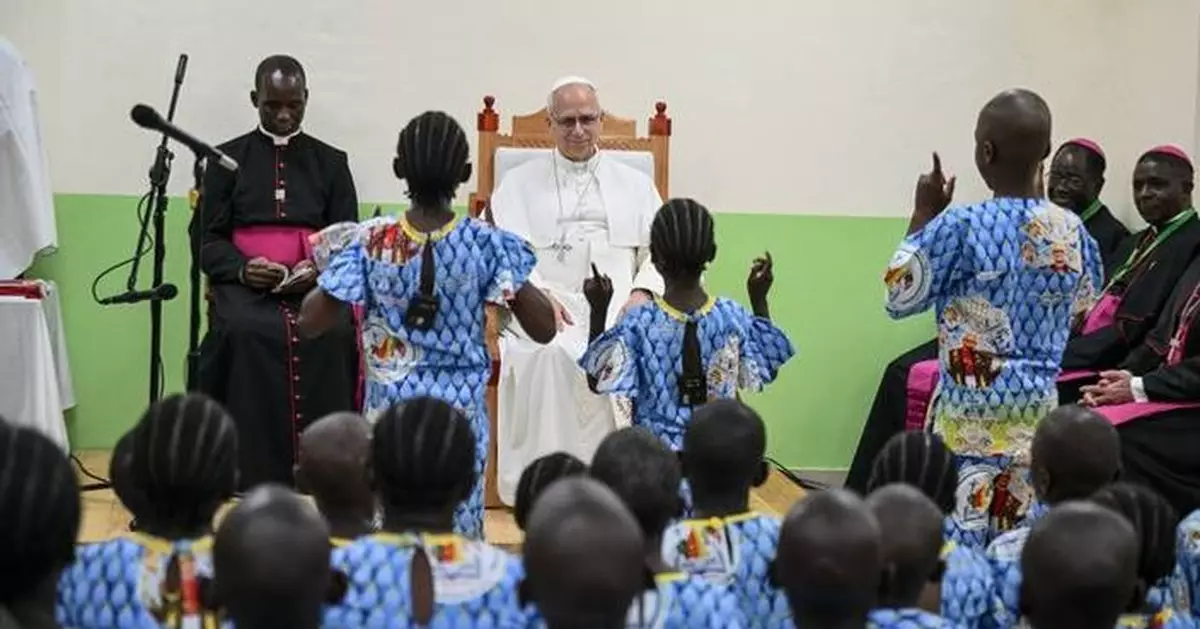
Pope Leo XIV watches children perform a dance as he visits the Ngul Zamba (Power of God) orphanage in Yaounde, Cameroon, Wednesday April 15, 2026 on the third day of his apostolic journey to Africa. (Alberto Pizzoli, Pool Photo via AP)
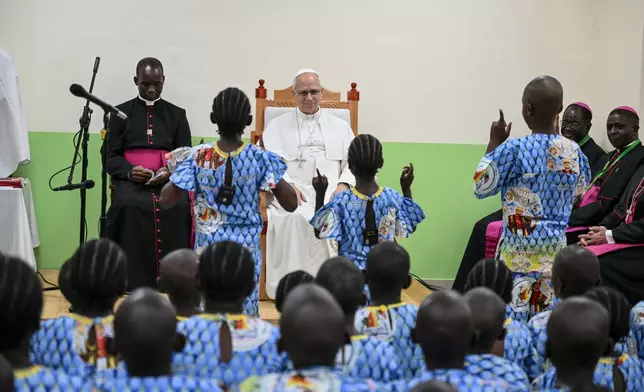
Pope Leo XIV watches children perform a dance as he visits the Ngul Zamba (Power of God) orphanage in Yaounde, Cameroon, Wednesday April 15, 2026 on the third day of his apostolic journey to Africa. (Alberto Pizzoli, Pool Photo via AP)
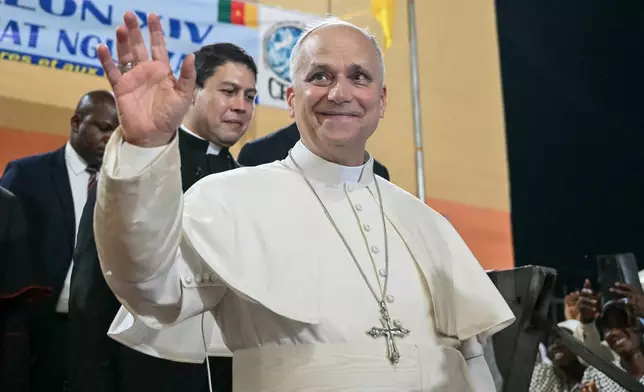
Pope Leo XIV waves to supporters as he leaves after his visit to the Ngul Zamba (Power of God) orphanage in Yaounde, Cameroon, Wednesday April 15, 2026 on the third day of his apostolic journey to Africa. (Alberto Pizzoli, Pool Photo via AP)
Leo is to preside over a peace meeting involving a Mankon traditional chief, a Presbyterian moderator, an imam and a Catholic nun. The aim is to highlight the interfaith movement that has been seeking to end the conflict and care for its many traumatized victims.
It wasn't immediately clear if any of the separatist fighters, who announced a three-day pause in fighting to allow the pope safe passage, would attend.
The pope is also set to celebrate a Mass for the people of Bamenda, near the western border with Nigeria.
Leo arrived in Cameroon on Wednesday on the second leg of his four-nation African trip, the first by the first American pope. In his arrival speech, he demanded the “chains of corruption” in the mineral-rich country be broken and lectured President Paul Biya on the legitimate exercise of authority.
The 93-year-old Biya, the world’s oldest leader, has been in power since 1982 and claims to have won a disputed election last year that gave him an eighth term in office.
The conflict in Cameroon’s two Anglophone regions is rooted in Cameroon’s colonial history, when the country was divided between France and Britain after World War I. English-speaking regions later joined French Cameroon in a 1961 U.N.-backed vote, but separatists say they have since been politically and economically marginalized.
In 2017, English-speaking separatists launched a rebellion with the stated goal of breaking away from the French-speaking majority and establishing an independent state. The conflict has killed more than 6,000 people and displaced over 600,000 others, according to the International Crisis Group.
The separatist movement is believed to be backed by several actors abroad. In December last year, a federal jury in U.S. convicted two individuals for conspiracy to provide funds and equipment to the separatist fighters. Belgian authorities in March also announced they had arrested four people as part of its investigations into Belgian residents suspected of being among the separatist leaders and raising money for them from Belgium.
Cameroon sits atop significant reserves of oil, natural gas, cobalt, bauxite, iron ore, gold and diamonds, making resource extraction one of the pillars of its economy.
While French and English companies have long dominated the extraction industry in Cameroon, Chinese companies have established a significant presence in recent years, particularly in the gold mining regions of the east.
On the eve of Leo’s arrival, separatist fighters announced a three-day pause in fighting. A spokesperson for the Unity Alliance, Lucas Asu, said the pause “reflects a deliberate commitment to responsibility, restraint and respect for human dignity, even in the context of ongoing conflict.”
He said the pope’s visit should remain “spiritual” and not be seen as endorsing any political authority.
Though the number of deadly attacks by separatists has decreased in recent years, the conflict shows no sign of resolution. Peace talks with international mediators have stalled, with both sides accusing each other of acting in bad faith.
Morine Ngum, a mother of three whose husband was shot dead in 2022 by Cameroonian soldiers while fighting as a separatist, expressed doubt that the pope’s visit and peace meeting would lead to meaningful change. She said any real progress must begin with those in power.
“Nothing is going to change,” said Ngum, 30. “This conflict has turned my children into orphans and me into a widow. Many families have been rendered homeless.”
Akua contributed from Yaonde, Cameroon. Chinedu Asadu contributed from Abuja, Nigeria.
Associated Press religion coverage receives support through the AP’s collaboration with The Conversation US, with funding from Lilly Endowment Inc. The AP is solely responsible for this content.
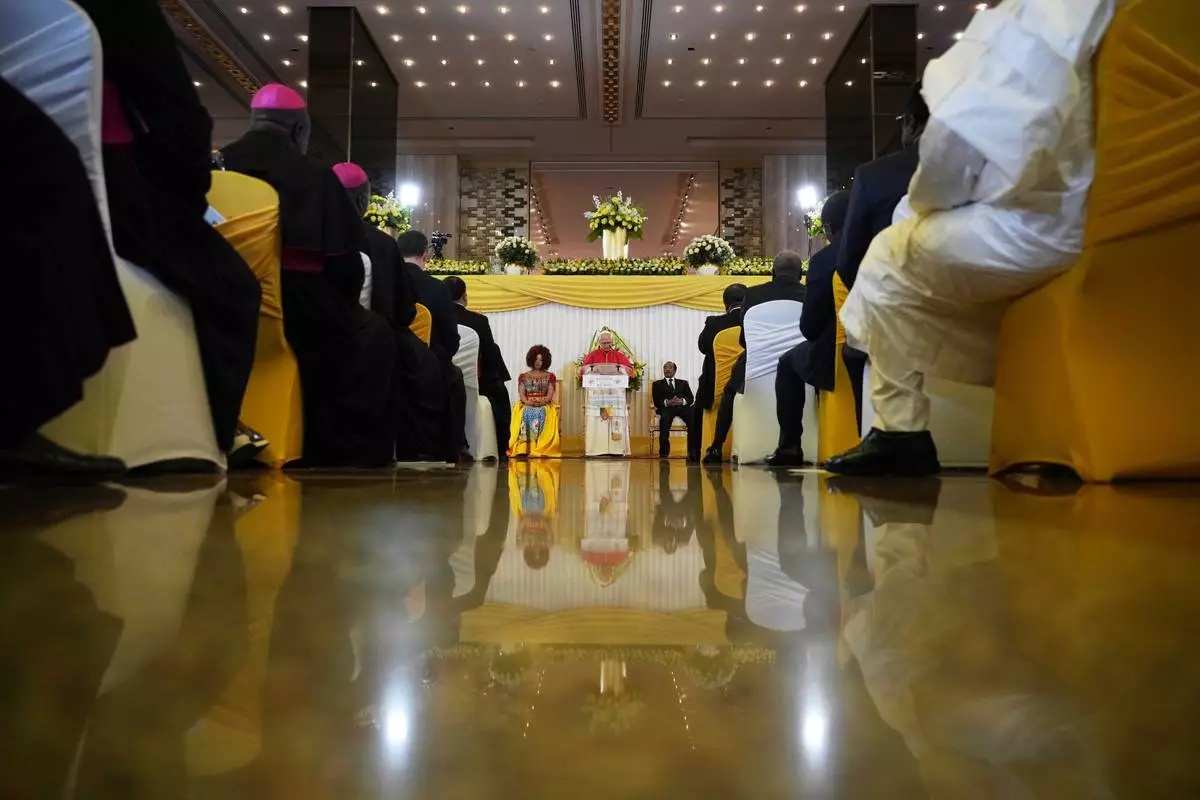
Pope Leo XIV, background center, flanked by Cameroon's President Paul Biya and his wife Chantal, meets with the authorities, civil society and the diplomatic corps in Yaounde Cameroon, Wednesday, April 15, 2026. (AP Photo/Andrew Medichini)
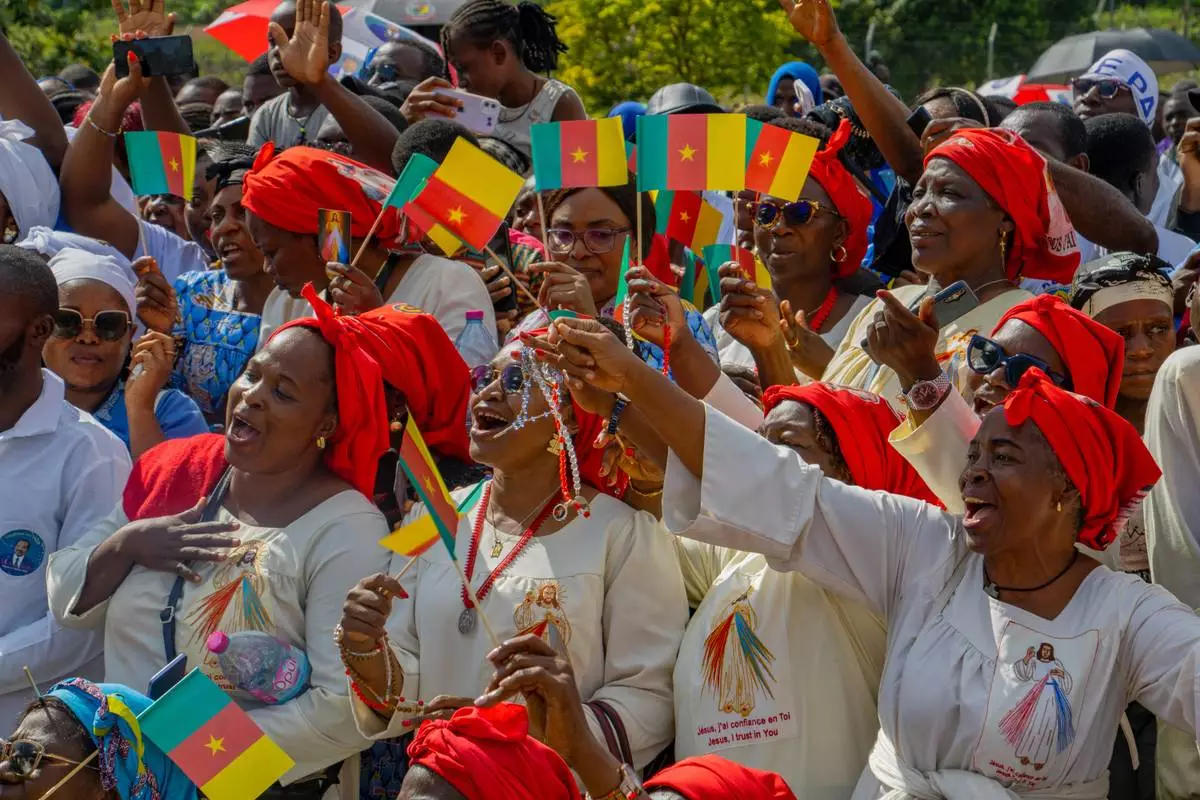
People cheer as Pope Leo XIV arrives in Yaounde, Cameroon, Wednesday, April 15, 2026. (AP Photo/Welba Yamo Pascal)
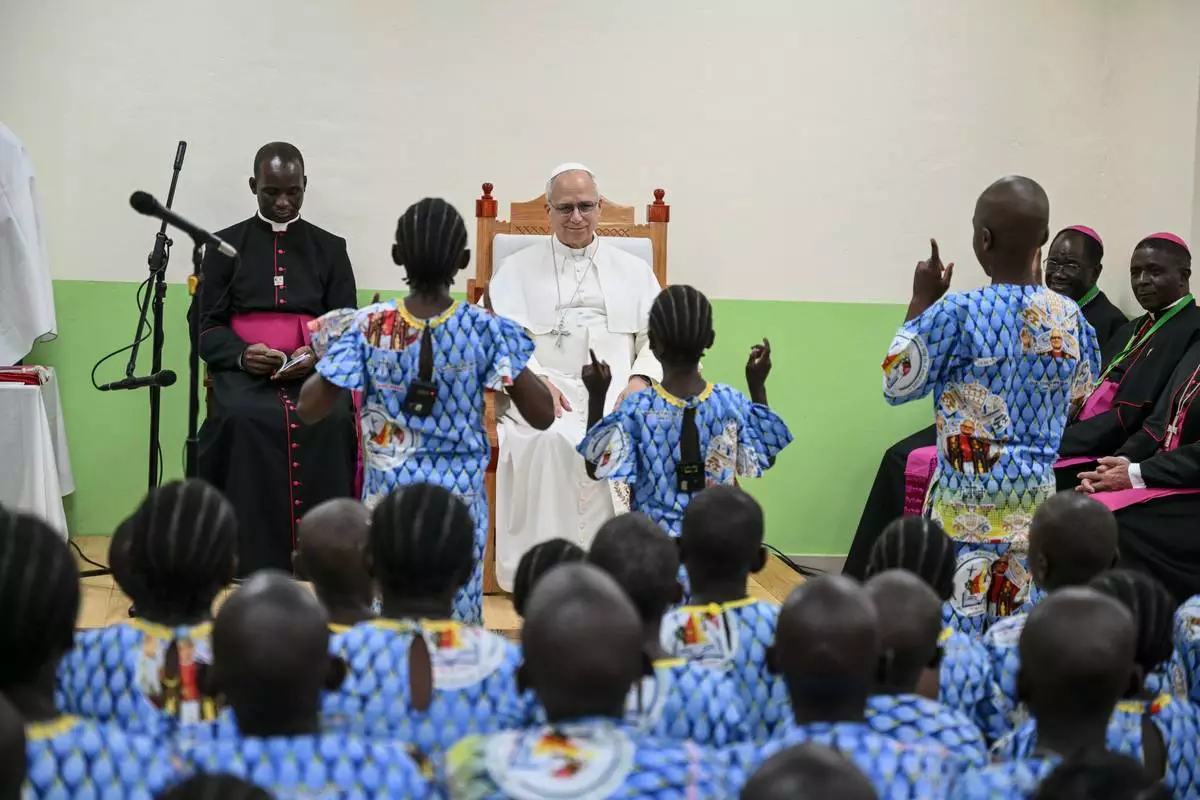
Pope Leo XIV watches children perform a dance as he visits the Ngul Zamba (Power of God) orphanage in Yaounde, Cameroon, Wednesday April 15, 2026 on the third day of his apostolic journey to Africa. (Alberto Pizzoli, Pool Photo via AP)
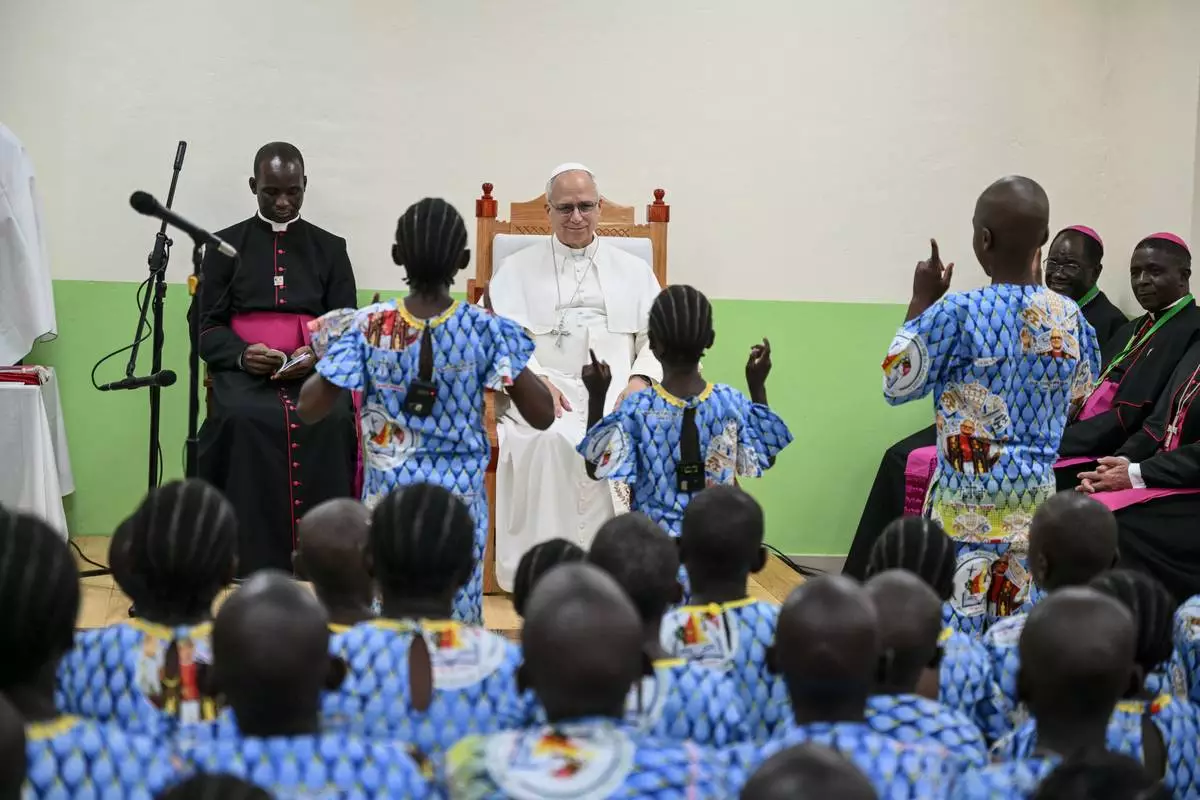
Pope Leo XIV watches children perform a dance as he visits the Ngul Zamba (Power of God) orphanage in Yaounde, Cameroon, Wednesday April 15, 2026 on the third day of his apostolic journey to Africa. (Alberto Pizzoli, Pool Photo via AP)
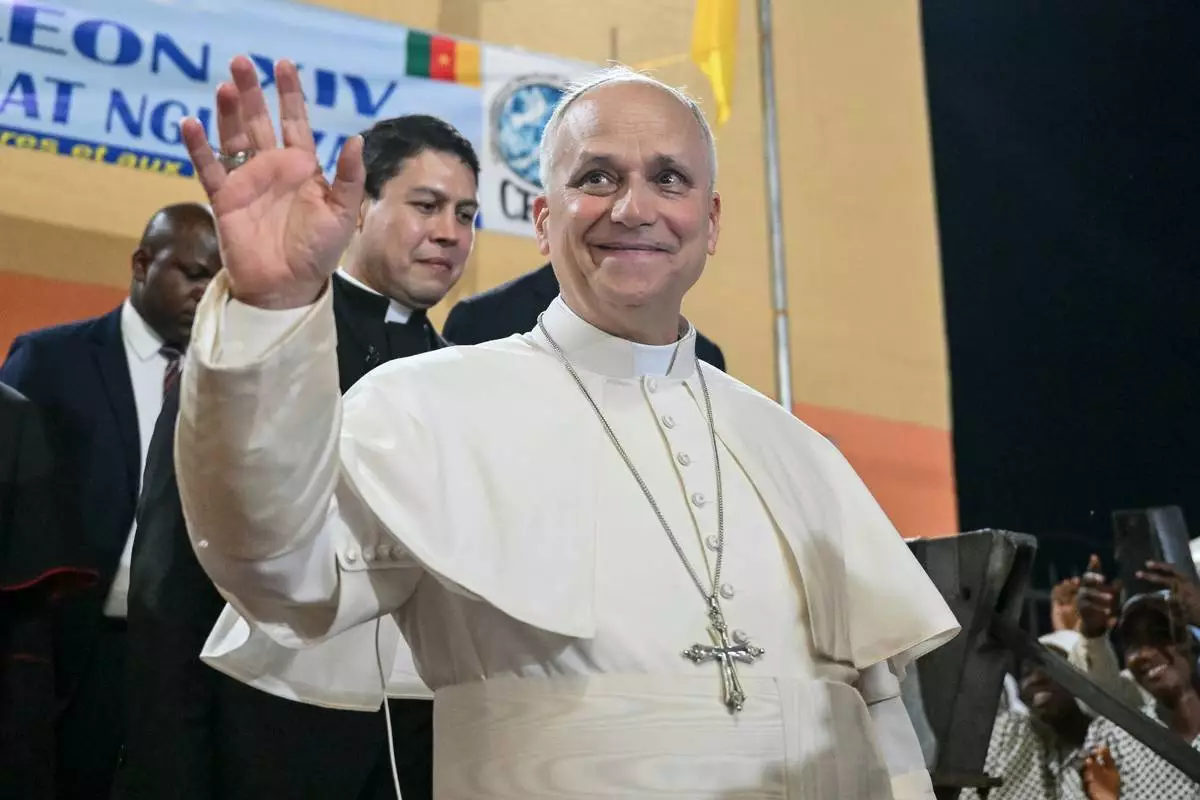
Pope Leo XIV waves to supporters as he leaves after his visit to the Ngul Zamba (Power of God) orphanage in Yaounde, Cameroon, Wednesday April 15, 2026 on the third day of his apostolic journey to Africa. (Alberto Pizzoli, Pool Photo via AP)