NEW DELHI (AP) — India’s Parliament opened debate Thursday on a landmark bill to reserve one-third of legislative seats for women, which could set off a sweeping redrawing of voting boundaries that could sharpen political tensions nationwide.
If passed, the bill would fast-track a 2023 law mandating 33% reservation for women in Parliament and state legislatures. It would be one of the most consequential shifts in political representation since India’s independence and potentially widen female participation in a system where women remain underrepresented.
Click to Gallery
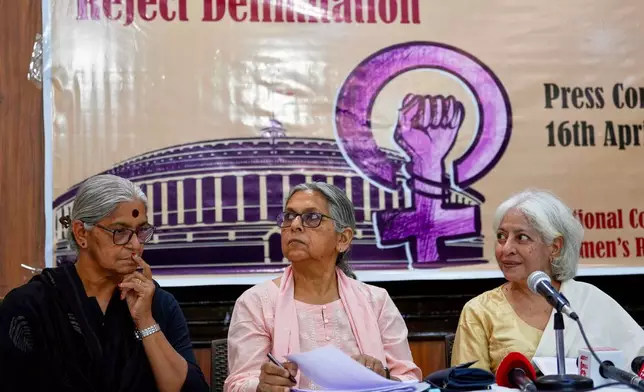
Communist Party of India member Annie Raja, left, activist Padma Singh, center, and writer Radha Kumar address a press conference after sending a petition on women's reservation to the parliamentarians in New Delhi, India, Thursday, April 16, 2026. (AP Photo/Manish Swarup)
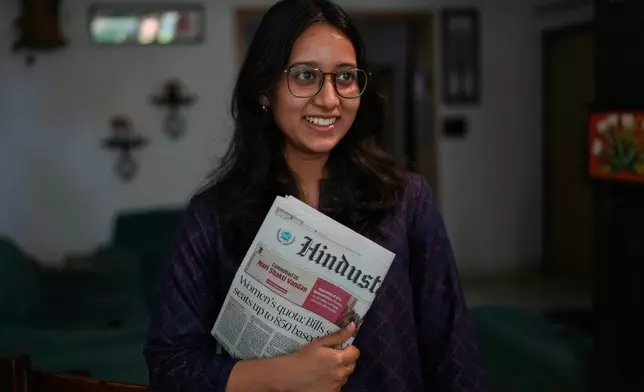
Pranita Gupta, a law graduate, poses for a photograph in New Delhi, India, Wednesday, April 15, 2026. (AP Photo/Manish Swarup)
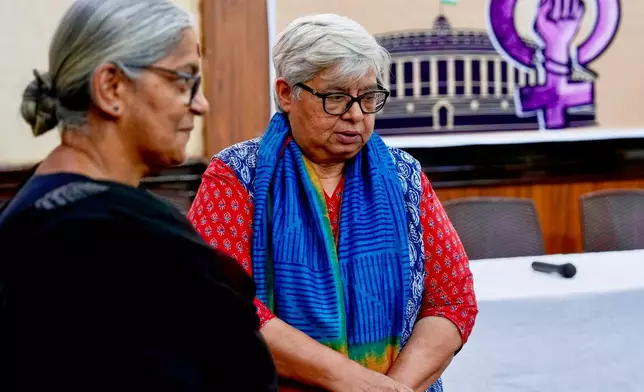
Communist Party of India member Annie Raja, left, and activist Shabnam Hashmi have a chat before a press conference on sending a petition on women's reservation to the parliamentarians in New Delhi, India, Thursday, April 16, 2026. (AP Photo/Manish Swarup)
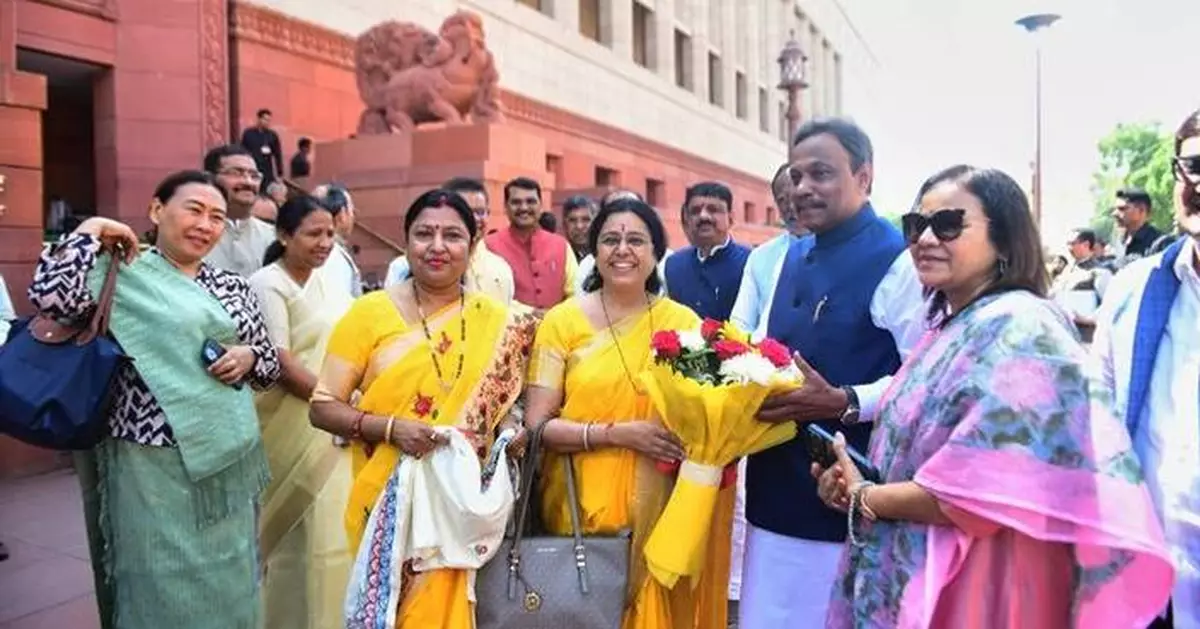
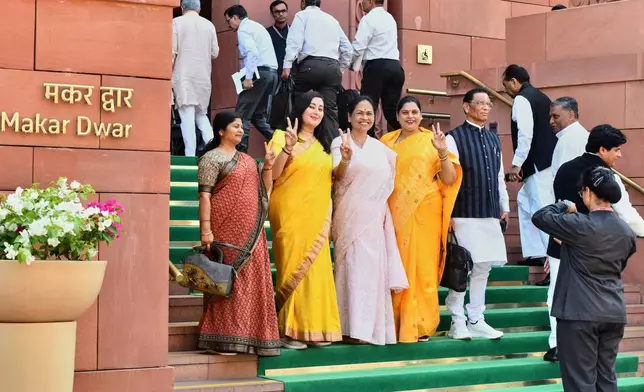
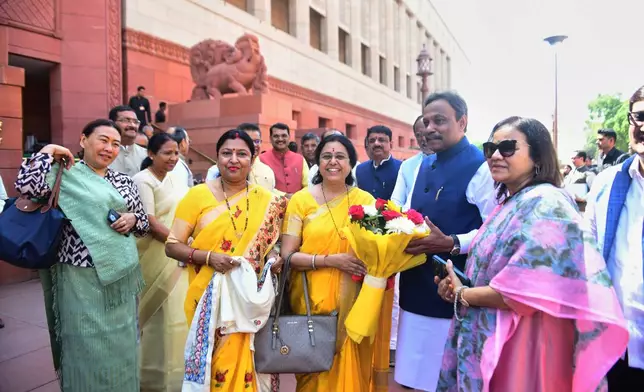
A security officer takes photograph of Indian women lawmakers as they pose outside Parliament House before the start of the debate on a landmark bill to reserve one-third of seats for women, in New Delhi, India, Thursday, April 16, 2026. (AP Photo)
Indian women lawmakers pose outside Parliament House before the start of the debate on a landmark bill to reserve one-third of seats for women, in New Delhi, India, Thursday, April 16, 2026. (AP Photo)
The quota, however, is linked to a controversial separate bill to change voting boundaries, a process that could increase the number of seats in the lower house from 543 to about 850.
While there appears to be a broad bipartisan support for putting more women into Parliament, opposition parties have raised concerns over changing voting boundaries, warning it could tilt the political balance in favor of Prime Minister Narendra Modi’s Bharatiya Janata Party.
The bills are being taken up during a three-day special session of Parliament and will require a two-thirds majority in both houses to pass. Modi’s ruling National Democratic Alliance holds 293 seats in Parliament, while a two-thirds majority would require 360 seats.
Several Asian countries, including India’s neighbors like Nepal and Bangladesh, have similar quotas for women in national legislatures. India already mandates that one-third of seats be set aside for women in local governance bodies, but women currently hold only about 14% of seats in the lower house of Parliament.
The quota could bring hundreds more women into legislative politics, which supporters say could redirect policy attention toward women’s health, education and gender-based violence. It is unclear how seats would be allocated to women in an expanded Parliament.
Ranjana Kumari, a women’s rights advocate, said the move would make India’s “democracy truly representative” and force political parties to field more female candidates.
“(The) door is little open. Women will enter and fill the room slowly,” Kumari said.
For many young Indian women, the change also carries symbolic weight.
Pranita Gupta, a 23-year-old law graduate, said it will instill “a sense of confidence that we can participate in politics and we can be part of Parliament not only as an exception but as well as a norm.”
The rollout of the quota is tied to a population-based redrawing of voting boundaries using data from the last completed census in 2011. While the timeline for this process remains unclear, the proposal has already triggered political debate.
Opposition parties warn that basing constituencies on population could shift political power toward faster-growing northern states, while diminishing the parliamentary representation, seat share and overall influence of southern regions. They also argue it could benefit Modi’s party, which has strong support in the northern states.
India’s Constitution mandates that parliamentary seats be allocated by population and revised after each census. However, boundaries have not been redrawn since the 1971 census, as successive governments delayed the process over concerns about uneven population growth.
Leaders in southern states, where birthrates have declined more sharply, say a population-based delimitation exercise could increase seats in the north and disadvantage southern regions that have slowed population growth and built stronger economies.
Modi’s party has pushed back on the criticism of the bill and said it would implement a uniform 50% increase in seats across all states, maintaining proportional representation nationwide. However, the draft legislation does not explicitly spell this out.
Speaking in Parliament, Modi said the legislation is “not discriminatory” and “will not do injustice to anyone.”
But early opposition surfaced Thursday, as Tamil Nadu chief minister M.K. Stalin burned a copy of the bill and raised a black flag in protest. He urged people across the state to do the same.
Some leaders from southern states also turned up in Parliament dressed in black as a mark of protest.
India’s opposition leader Rahul Gandhi alleged the exercise could be used to “gerrymander” parliamentary constituencies in favor of Modi’s party ahead of the 2029 national elections.
“Delimitation should be based on a transparent policy framework, developed after wide consultations with a consensus,” he wrote Wednesday on X.
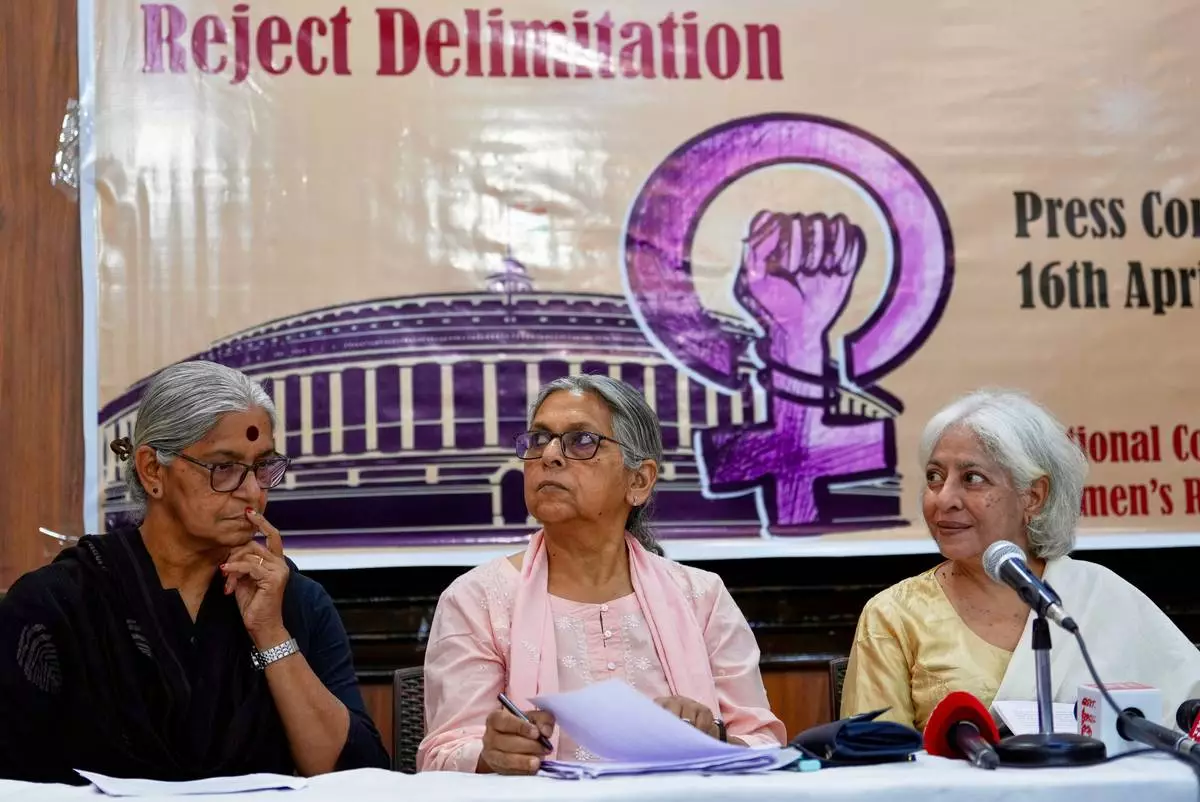
Communist Party of India member Annie Raja, left, activist Padma Singh, center, and writer Radha Kumar address a press conference after sending a petition on women's reservation to the parliamentarians in New Delhi, India, Thursday, April 16, 2026. (AP Photo/Manish Swarup)
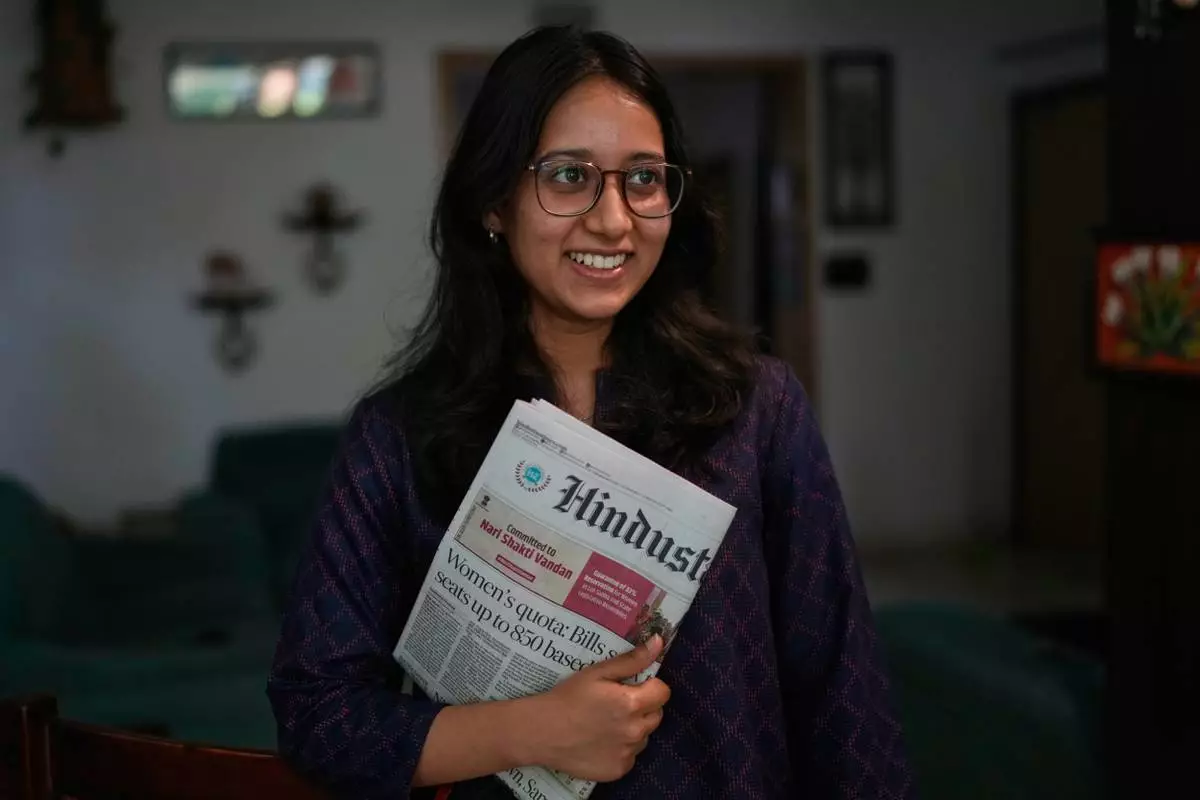
Pranita Gupta, a law graduate, poses for a photograph in New Delhi, India, Wednesday, April 15, 2026. (AP Photo/Manish Swarup)
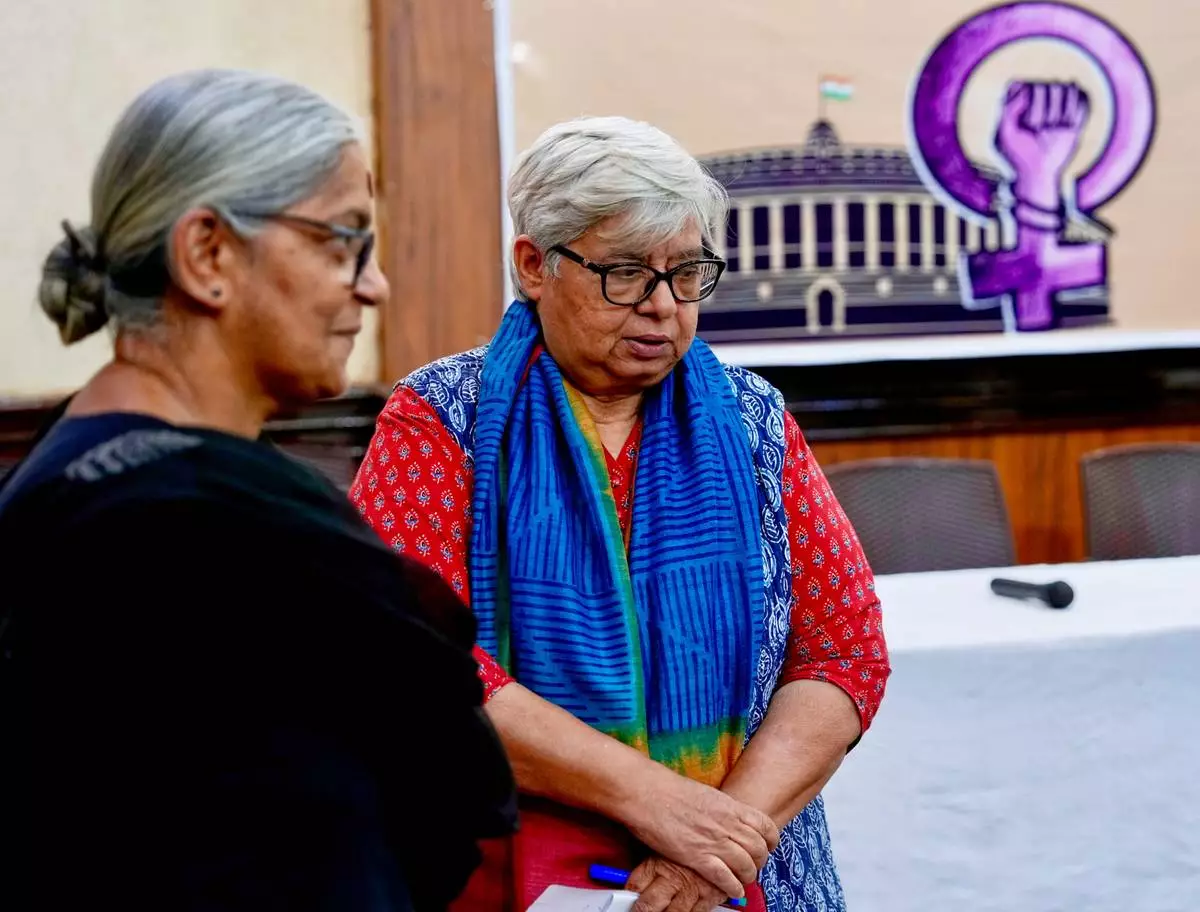
Communist Party of India member Annie Raja, left, and activist Shabnam Hashmi have a chat before a press conference on sending a petition on women's reservation to the parliamentarians in New Delhi, India, Thursday, April 16, 2026. (AP Photo/Manish Swarup)
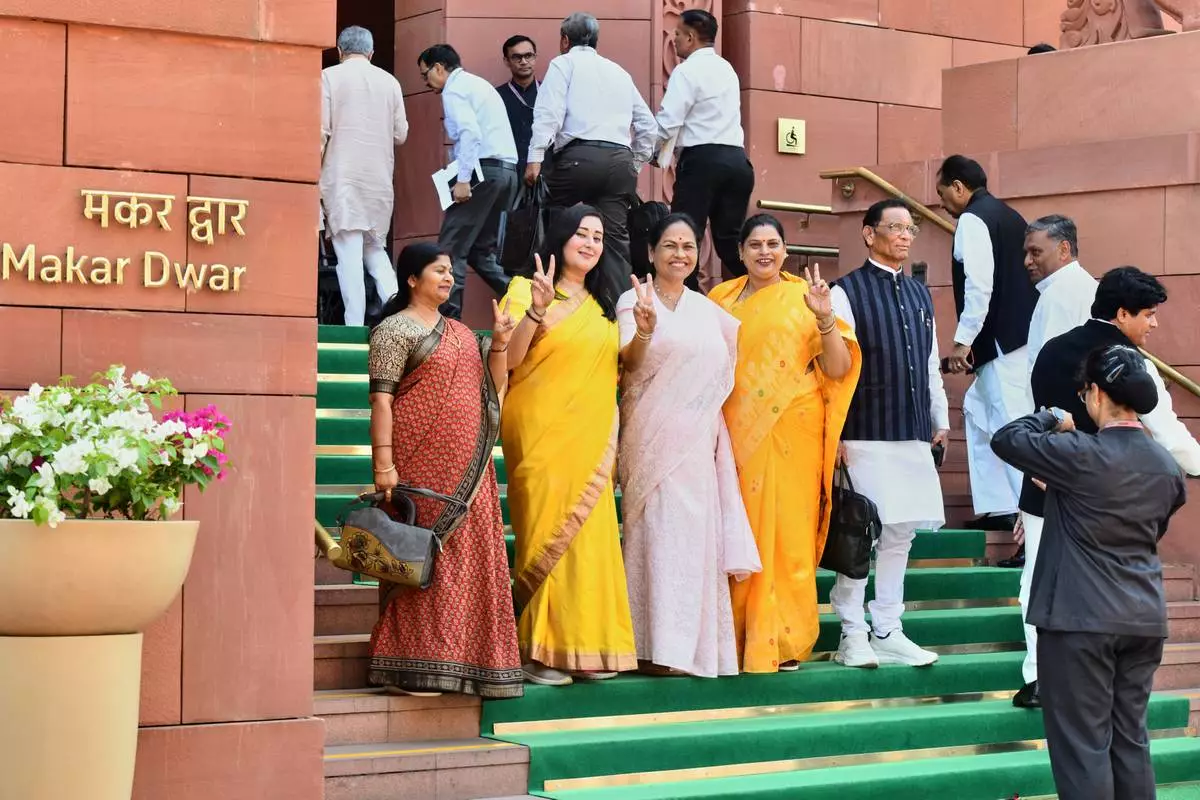
A security officer takes photograph of Indian women lawmakers as they pose outside Parliament House before the start of the debate on a landmark bill to reserve one-third of seats for women, in New Delhi, India, Thursday, April 16, 2026. (AP Photo)
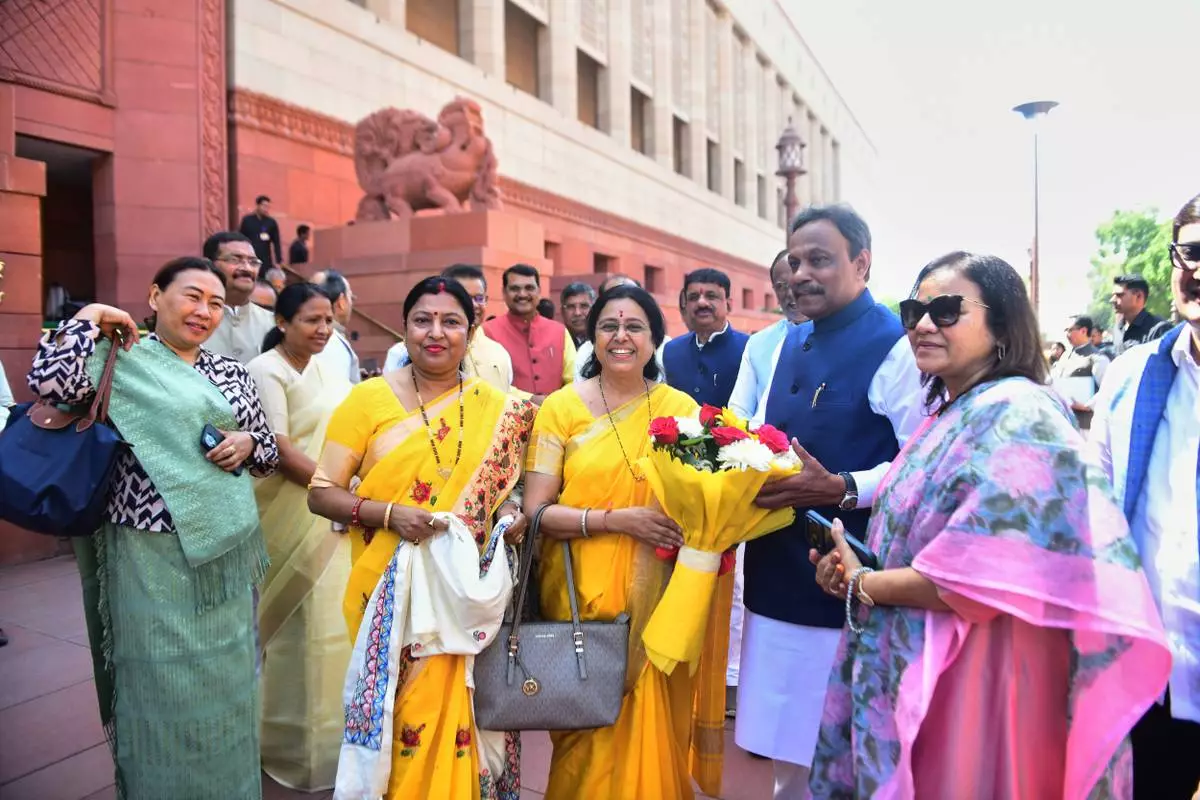
Indian women lawmakers pose outside Parliament House before the start of the debate on a landmark bill to reserve one-third of seats for women, in New Delhi, India, Thursday, April 16, 2026. (AP Photo)
Bayern Munich turned the tables on old rival Real Madrid.
Luis Díaz and Michael Olise scored late for the Bavarian powerhouse to beat Madrid 4-3 and advance to the Champions League semifinals on Wednesday.
In the last four two-legged ties between the sides, the Spanish giant had prevailed each time.
The second-leg quarterfinal game ended in acrimony with Madrid’s players furious that referee Slavko Vinčić sent off substitute Eduardo Camavinga in the 86th minute with a second yellow card for an innocuous challenge on Harry Kane.
Díaz fired inside the right post three minutes later and Olise ended the contest definitively with a spectacular strike in stoppage time to give Bayern a 6-4 win on aggregate after the Bavarian powerhouse won the first leg of their quarterfinal 2-1 in Madrid last week.
Madrid’s players surrounded Vinčić after the game. Arda Guler, who scored two brilliant goals to spark the visitors’ hopes of a famed “remontada” (comeback), was shown a red card for his vehement complaints.
“Everything was over with the red card,” Madrid coach Álvaro Arbeloa said of Camavinga's sending off. “It’s unbelievable. You cannot send off a player for this action.”
Bayern will play defending champion Paris Saint-Germain in the semifinals. Also Wednesday, Arsenal advanced past Sporting Lisbon to set up a last-four showdown against Atlético Madrid.
Guler opened the scoring after just 34 seconds thanks to a mistake from Bayern goalkeeper Manuel Neuer – who was outstanding in the first leg – whose attempted pass went straight to the 21-year-old Turkey star, who fired the ball into the empty net from distance.
Bayern seemed unfazed and Aleksandar Pavlović equalized with a point-blank header from a Joshua Kimmich corner in the sixth minute. Bayern maintained its dominance with Madrid patiently looking for breaks.
Konrad Laimer did well to block Kylian Mbappé, who had an adhesive bandage above his right eye after getting a heavy blow to his face last weekend.
Guler beat Neuer with a brilliant free kick in the 29th, but Bayern had legitimate complaints it should not have been awarded with Brahim Díaz going down after minimal contact from Laimer.
Bayern again seized control and it was no surprise when Harry Kane equalized in the 38th inside the right post after being left free by English compatriot Trent Alexander-Arnold.
It was the England captain’s 12th goal in the competition this season and his 50th across all competitions for Bayern.
Vinícius Júnior then struck the crossbar before setting up Mbappé to restore Madrid’s lead on the night in the 42nd.
Bayern coach Vincent Kompany was booked for complaining about an foul from Antonio Rüdiger on Josip Stanišić in the buildup. It means he’s suspended for the semifinal first leg.
There were no more goals, however, until the late drama.
“I hope all the kids in Germany were allowed stay awake a little longer,” Kimmich said. “I hope my wife let my son stay up a bit longer and then late to school tomorrow.”
Bayern, which smashed the Bundesliga goals record last weekend, can clinch yet another German league title on Sunday — the 13th in 14 years — if Borussia Dortmund drops points the day before.
Bayern also faces Bayer Leverkusen in the semifinals of the German Cup on April 22 as it chases a repeat of the treble it won in 2013.
The Champions League was Madrid's best remaining chance of salvaging a trophy from a troubled season. The 15-time European champion is now facing a second year without a trophy after its fourth match without a win across all competitions.
Madrid was held 1-1 at home by Girona in La Liga last weekend, allowing Barcelona to open a nine-point lead, while it was knocked out of the Spanish Cup by second-division side Albacete in Arbeloa's first game in charge in January.
Unless Barcelona squanders its sizable lead in the remaining seven rounds of the league, Kylian Mbappé's drought in major trophies since joining the club in 2024 will continue.
A 0-0 draw with Sporting Lisbon at the Emirates Stadium saw Arsenal advance 1-0 on aggregate.
Arsenal has never won the European Cup and only once reached the final. But it is now just two games away from this year’s showpiece in Budapest, Hungary.
Kai Havertz’s late winner in the first leg of the quarterfinals in Portugal last week proved to be decisive as Sporting failed to find a breakthrough in London.
It is the fourth time Arsenal has advanced to the semifinals, having lost to eventual winner Paris Saint-Germain at that stage last season.
This story has been corrected to say Arbeloa was Madrid coach when the team lost to Albacete in the Spanish Cup, not Xabi Alonso.
AP soccer: https://apnews.com/hub/soccer
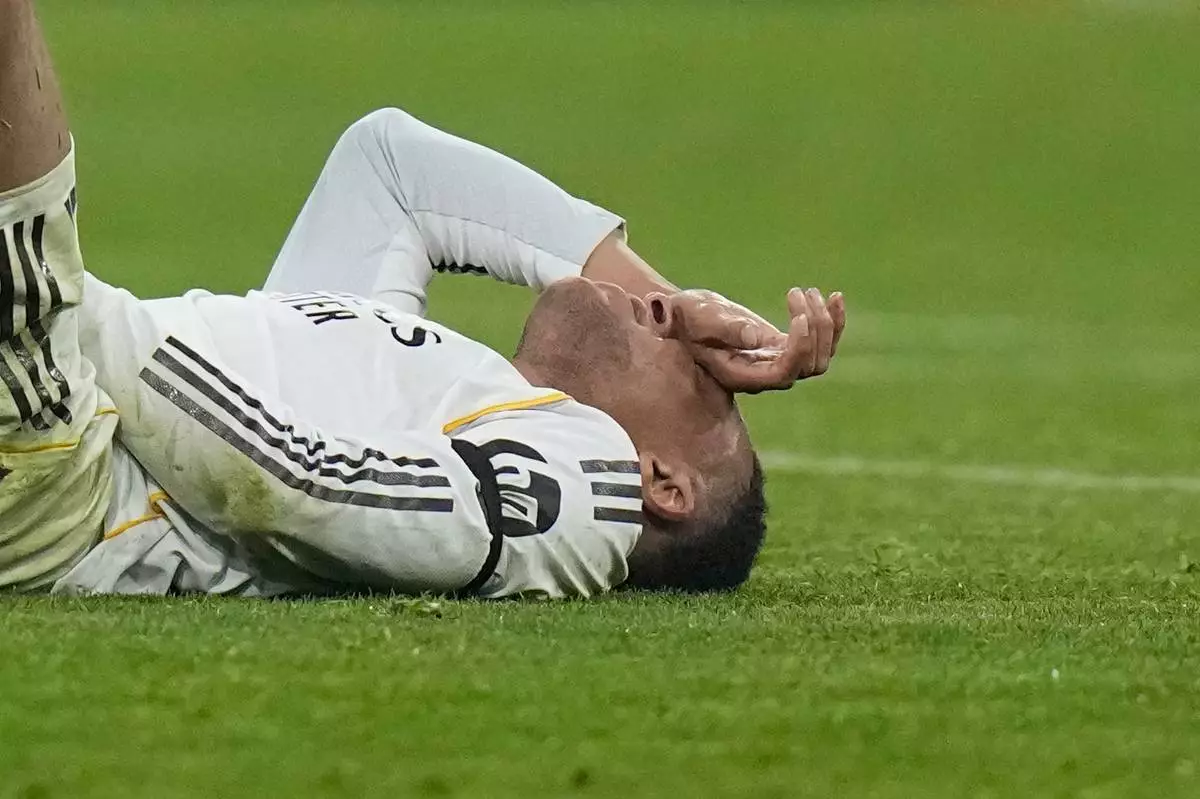
Real Madrid's Kylian Mbappe lies on the pitch after injuring during the Champions League quarterfinal second leg soccer match between Bayern Munich and Real Madrid in Munich, Germany, Wednesday, April 15, 2026. (AP Photo/Matthias Schrader)

Bayern's Luis Diaz, center, celebrates with Dayot Upamecano right, and Jonathan Tah after scoring his their third goal during the Champions League quarterfinal second leg soccer match between Bayern Munich and Real Madrid in Munich, Germany, Wednesday, April 15, 2026. (Sven Hoppe/dpa via AP)
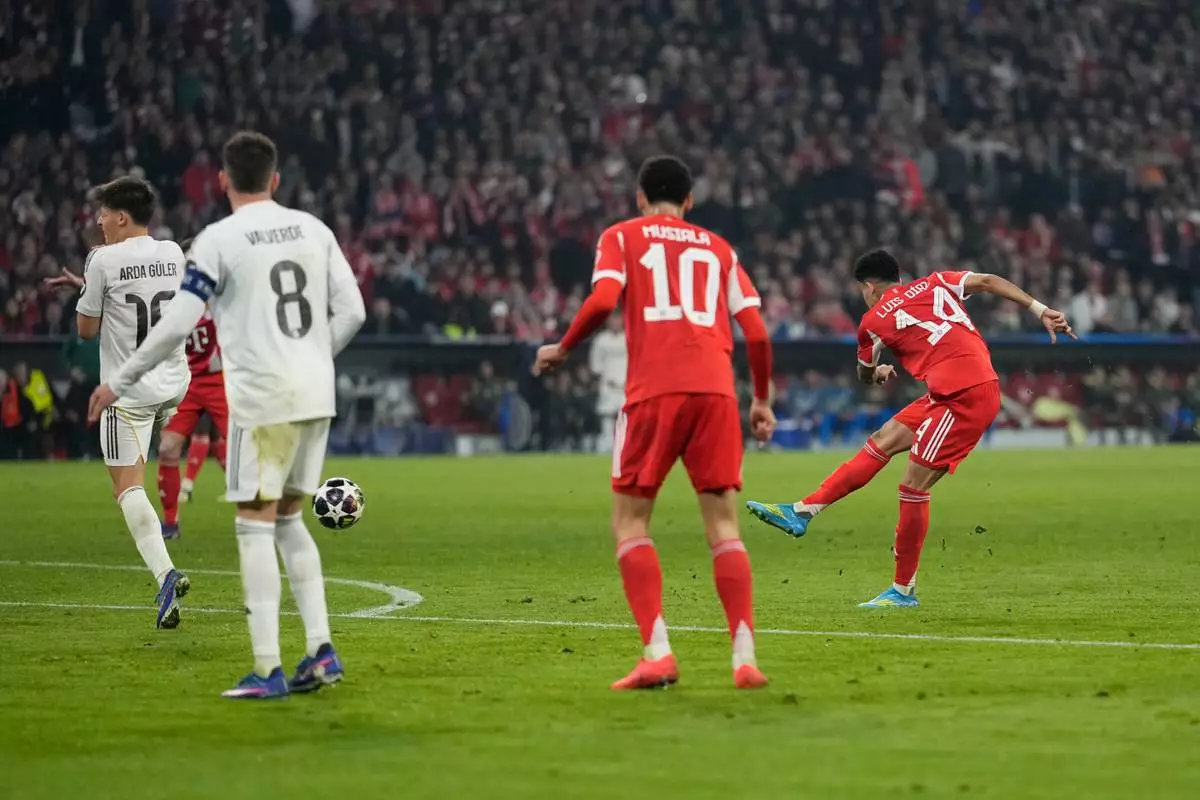
Bayern's Luis Diaz, right, scores his side's third goal during the Champions League quarterfinal second leg soccer match between Bayern Munich and Real Madrid in Munich, Germany, Wednesday, April 15, 2026. (AP Photo/Matthias Schrader)
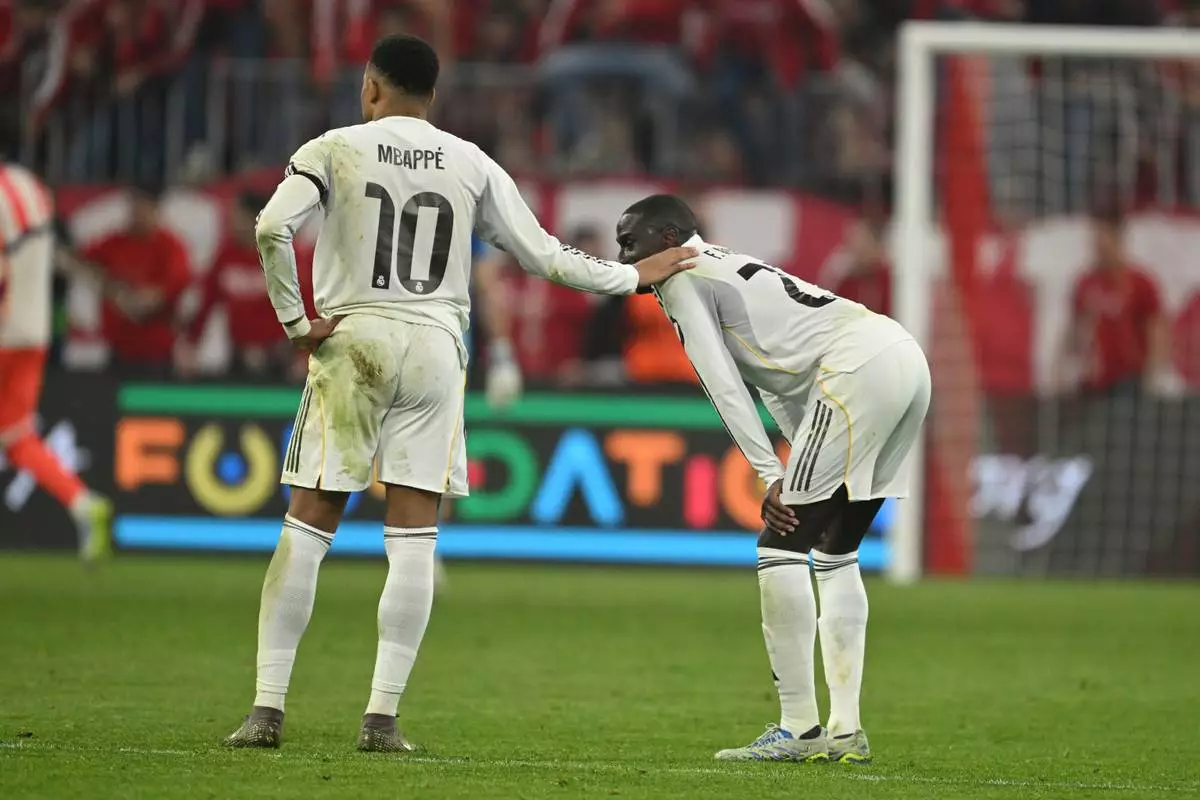
Real Madrid's Kylian Mbappe reacts at the end of the Champions League quarterfinal second leg soccer match between Bayern Munich and Real Madrid in Munich, Germany, Wednesday, April 15, 2026. (AP Photo/Lennart Preiss)

Bayern's Luis Diaz, center, celebrates with his teammates after scoring his side's third goal during the Champions League quarterfinal second leg soccer match between Bayern Munich and Real Madrid in Munich, Germany, Wednesday, April 15, 2026. (AP Photo/Matthias Schrader)

Bayern's goalkeeper Jonas Urbig, left, watches Bayern's goalkeeper Manuel Neuer during a training session ahead of the Champions League quarterfinal second leg soccer match between Bayern Munich and Real Madrid in Munich, Germany, Tuesday, April 14, 2026. (AP Photo/Matthias Schrader)
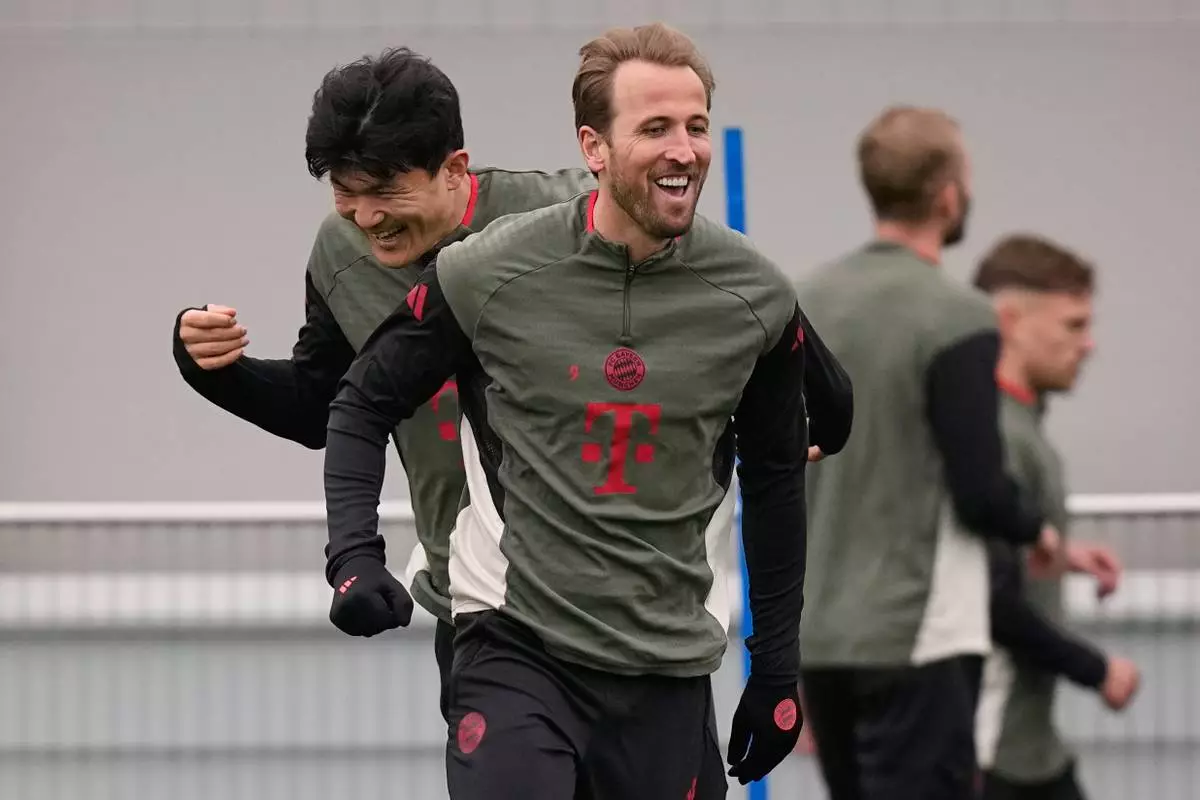
Bayern's Kim Min-jae and Bayern's Harry Kane exercise during a training session ahead of the Champions League quarterfinal second leg soccer match between Bayern Munich and Real Madrid in Munich, Germany, Tuesday, April 14, 2026. (AP Photo/Matthias Schrader)
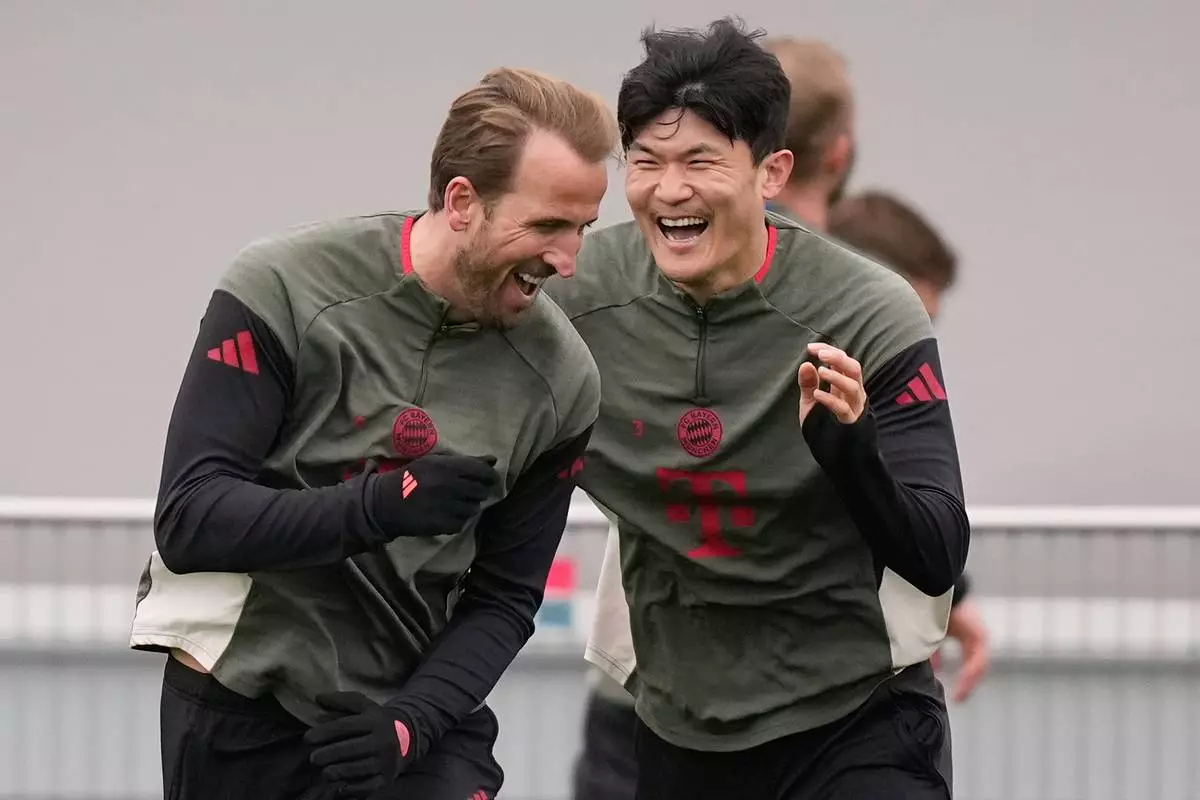
Bayern's Kim Min-jae and Bayern's Harry Kane having fun during a training session ahead of the Champions League quarterfinal second leg soccer match between Bayern Munich and Real Madrid in Munich, Germany, Tuesday, April 14, 2026. (AP Photo/Matthias Schrader)
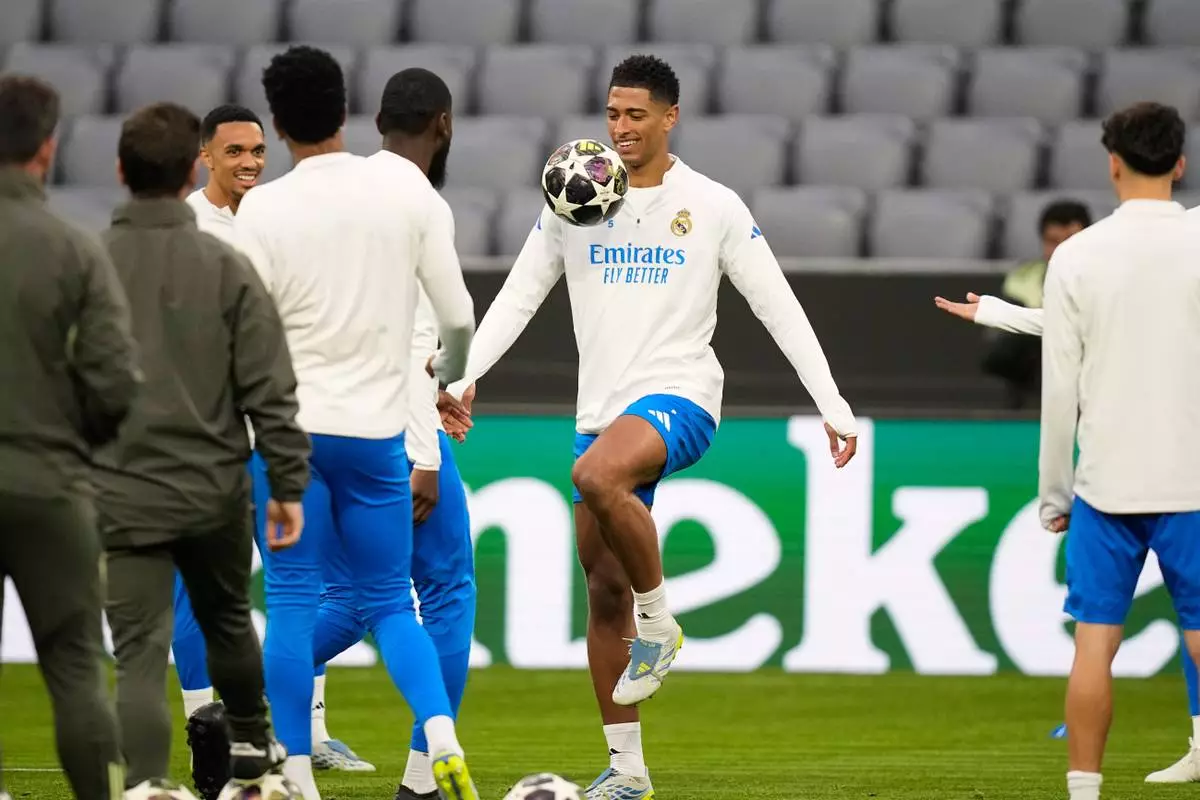
Real Madrid's Jude Bellingham exercises during a training session ahead of the Champions League quarterfinal second leg soccer match between Bayern Munich and Real Madrid in Munich, Germany, Tuesday, April 14, 2026. (AP Photo/Matthias Schrader)

Real Madrid's Kylian Mbappe reacts during a training session ahead of the Champions League quarterfinal second leg soccer match between Bayern Munich and Real Madrid in Munich, Germany, Tuesday, April 14, 2026. (AP Photo/Matthias Schrader)