Skip to Content Facebook Feature Image

Israeli army chief says Gaza demilitarization remains top goal

China

China

China

Israeli army chief says Gaza demilitarization remains top goal

2026-02-14 10:37 Last Updated At:11:07

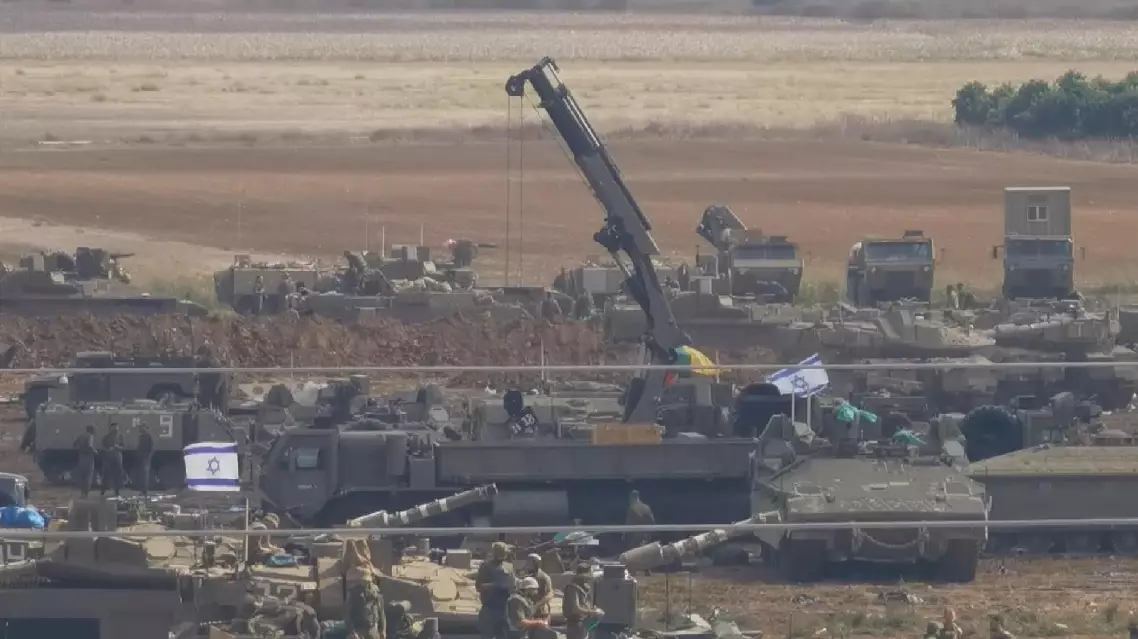
Israeli army chief Eyal Zamir said on Friday that Israel remains committed to the complete demilitarization of the Gaza Strip and the disarmament of Hamas, according to a statement issued by the Israel Defense Forces (IDF).

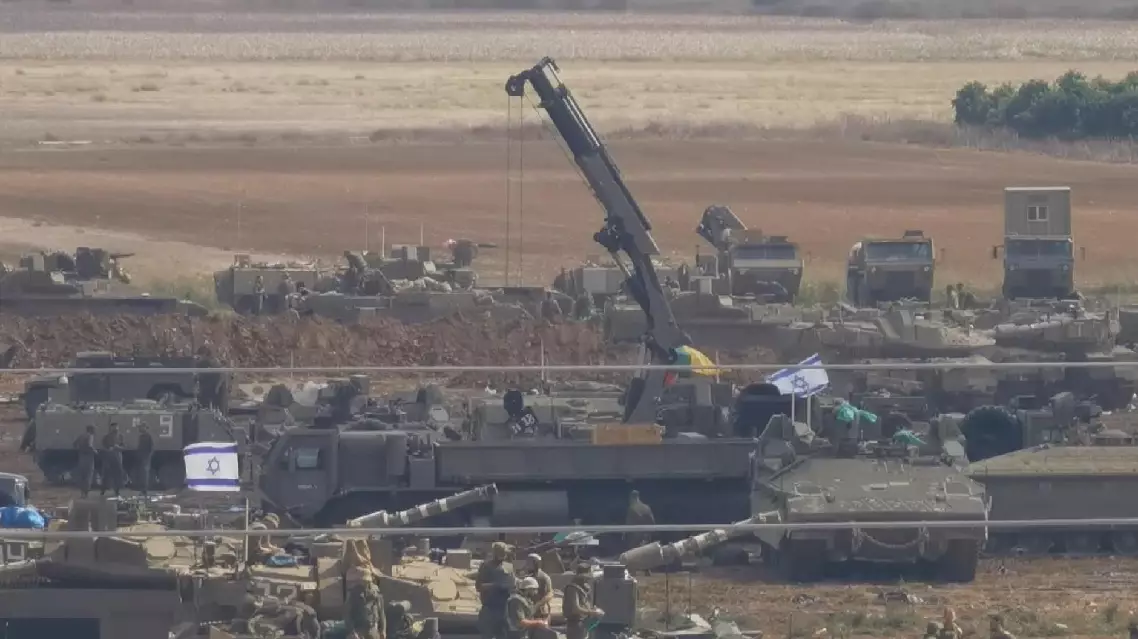
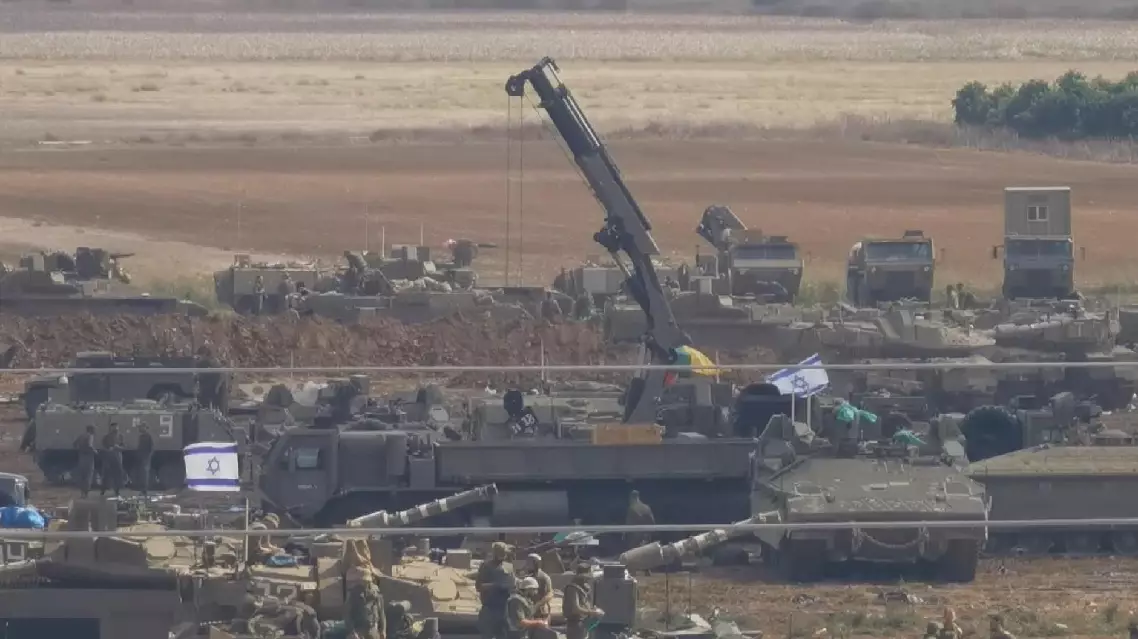
"We are not giving up on the war goal -- the complete demilitarization of the Gaza Strip and the disarmament of Hamas," Zamir said during a tour of the southern Gaza Strip city of Rafah.

Accompanied by senior commanders, he ordered forces to intensify clearing operations in the area with a focus on destroying tunnel networks.

The army chief noted that troops are deployed along the "Yellow Line," demarcating Israeli-controlled areas under the ceasefire, systematically clearing "terrorist" infrastructure while controlling access to the strip.

Earlier on Friday, the IDF said in a statement that its troops in the northern Gaza Strip identified two militants entering a structure east of the "Yellow Line." The Israeli Air Force subsequently struck the building, with a hit confirmed.

A day earlier, senior Hamas official Mahmoud Mardawi said Palestinian factions would not give up their weapons unless Israel fully adheres to the ceasefire agreement in the Gaza Strip.

The latest Hamas-Israel ceasefire, in effect since Oct. 10, 2025, initially focused on prisoner exchanges and humanitarian aid to Gaza. A proposed second phase of the peace plan calls for a full Israeli military withdrawal, the disarmament of Hamas, and the start of reconstruction in the enclave under a transitional governing authority.
Israeli army chief says Gaza demilitarization remains top goal
Israeli army chief says Gaza demilitarization remains top goal

A senior Iranian official reiterated Friday that Tehran's missile program remained a nonnegotiable "red line," as the United States ordered a second aircraft carrier to the Middle East amid stalled diplomatic efforts.

Ali Shamkhani, a senior political adviser to Iran's Supreme Leader Ali Khamenei, said in an interview with Al Jazeera that Iran would respond "decisively and appropriately" to any military action.

Iran's missile power is among its red lines and is not subject to negotiation, he said, adding that the military remained on high alert and warning that the cost of any "miscalculation" by outside powers would be high.

Still, he said talks between Tehran and Washington could advance and safeguard mutual interests if they were rooted in realism and avoided excessive demands.

Later in the day, U.S. President Donald Trump said the USS Gerald R. Ford, the world's largest aircraft carrier, had been ordered to join the USS Abraham Lincoln and three guided-missile destroyers already deployed to the region.

Trump previously stated that he hoped the United States would reach an agreement with Iran "over the next month," noting that he was weighing military options if negotiations failed to yield a new nuclear agreement.

"I'll talk to them as long as I like, and we'll see if we can get a deal," he told reporters on Thursday. "And if we can't, we'll have to go to phase two. Phase two will be very tough for them."

The two countries held indirect talks in Muscat, Oman, on Feb. 6, but tensions have remained high amid a U.S. military buildup near Iranian waters.

Washington has said any deal with Iran must include a ban on uranium enrichment, the removal of already enriched material, limits on long-range missiles, and a rollback of support for regional proxies. Analysts said such conditions would be "very difficult" for Iran to accept.

Meanwhile, Israeli Prime Minister Benjamin Netanyahu said Thursday that he had "expressed general scepticism about the nature of any deal with Iran" and if a deal between the United States and Iran is indeed reached, it must include "the ballistic missiles and the Iranian proxies," demands Tehran has previously rejected.

His remarks came as Iran and the United States sent mixed signals regarding the future of their recently resumed nuclear talks. Tehran denied sending any formal communication to Washington, while the Pentagon is preparing for a potential second aircraft carrier deployment to the Middle East.

Iran reasserts missile 'red line' as U.S. orders 2nd carrier to region

Iran reasserts missile 'red line' as U.S. orders 2nd carrier to region

Recommended Articles