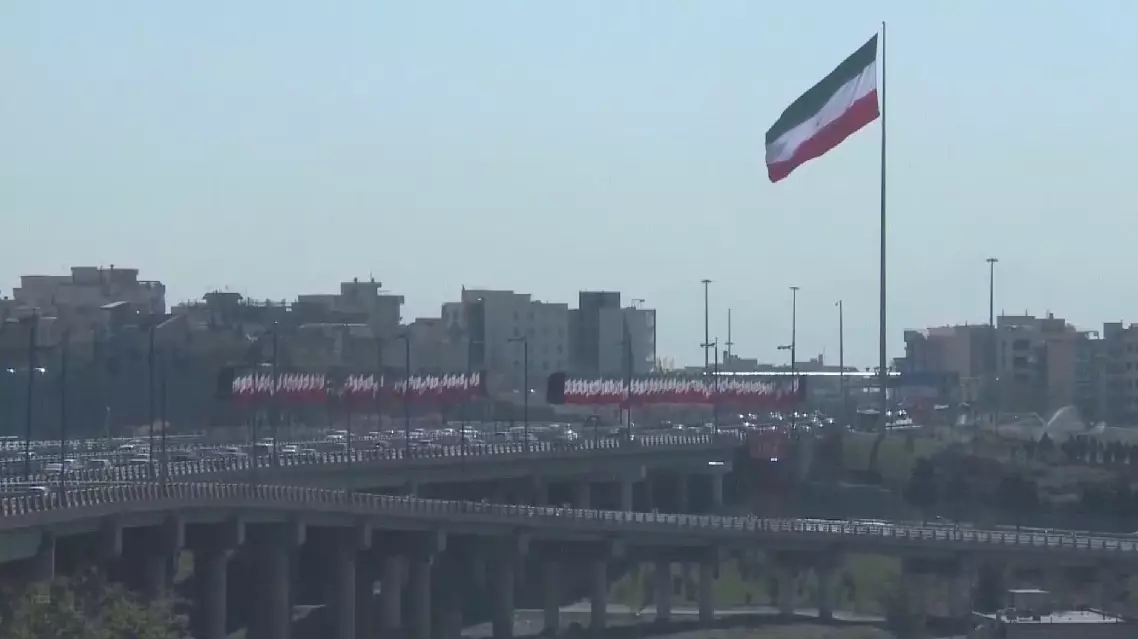
A senior Iranian official reiterated Friday that Tehran's missile program remained a nonnegotiable "red line," as the United States ordered a second aircraft carrier to the Middle East amid stalled diplomatic efforts.
Ali Shamkhani, a senior political adviser to Iran's Supreme Leader Ali Khamenei, said in an interview with Al Jazeera that Iran would respond "decisively and appropriately" to any military action.
Click to Gallery
Iran reasserts missile 'red line' as U.S. orders 2nd carrier to region
Iran reasserts missile 'red line' as U.S. orders 2nd carrier to region
Iran reasserts missile 'red line' as U.S. orders 2nd carrier to region
Iran reasserts missile 'red line' as U.S. orders 2nd carrier to region
Iran's missile power is among its red lines and is not subject to negotiation, he said, adding that the military remained on high alert and warning that the cost of any "miscalculation" by outside powers would be high.
Still, he said talks between Tehran and Washington could advance and safeguard mutual interests if they were rooted in realism and avoided excessive demands.
Later in the day, U.S. President Donald Trump said the USS Gerald R. Ford, the world's largest aircraft carrier, had been ordered to join the USS Abraham Lincoln and three guided-missile destroyers already deployed to the region.
Trump previously stated that he hoped the United States would reach an agreement with Iran "over the next month," noting that he was weighing military options if negotiations failed to yield a new nuclear agreement.
"I'll talk to them as long as I like, and we'll see if we can get a deal," he told reporters on Thursday. "And if we can't, we'll have to go to phase two. Phase two will be very tough for them."
The two countries held indirect talks in Muscat, Oman, on Feb. 6, but tensions have remained high amid a U.S. military buildup near Iranian waters.
Washington has said any deal with Iran must include a ban on uranium enrichment, the removal of already enriched material, limits on long-range missiles, and a rollback of support for regional proxies. Analysts said such conditions would be "very difficult" for Iran to accept.
Meanwhile, Israeli Prime Minister Benjamin Netanyahu said Thursday that he had "expressed general scepticism about the nature of any deal with Iran" and if a deal between the United States and Iran is indeed reached, it must include "the ballistic missiles and the Iranian proxies," demands Tehran has previously rejected.
His remarks came as Iran and the United States sent mixed signals regarding the future of their recently resumed nuclear talks. Tehran denied sending any formal communication to Washington, while the Pentagon is preparing for a potential second aircraft carrier deployment to the Middle East.
Iran reasserts missile 'red line' as U.S. orders 2nd carrier to region
Iran reasserts missile 'red line' as U.S. orders 2nd carrier to region
Iran reasserts missile 'red line' as U.S. orders 2nd carrier to region
Iran reasserts missile 'red line' as U.S. orders 2nd carrier to region
South China's Guangdong Province is accelerating its transformation into an international medical tourism hub, positioning itself as a destination for patients worldwide seeking affordable, high-quality care.
The push follows a joint initiative announced in late March by nine Chinese government departments, including the Ministry of Commerce, aimed at boosting spending by foreign tourists and enhancing exports of tourism services as part of broader efforts to expand the country's service sector.
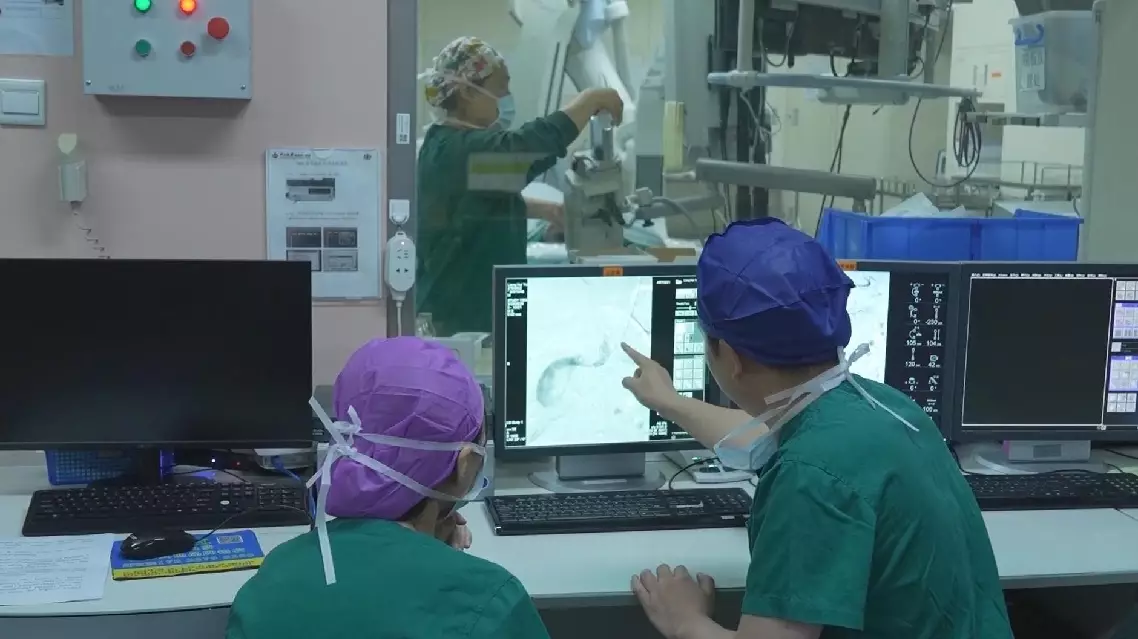
Every day, some of the most complex surgeries are performed here. Li Zilun, deputy director of the division of vascular surgery at the First Affiliated Hospital of Sun Yat‑sen University, is among the doctors capable of carrying out these intricate procedures.
He recently completed surgery on a patient with an aortic aneurysm, a condition often described as a "time bomb" in the body’s main artery, increasingly common in aging societies around the globe. Li also specializes in highly difficult and pioneering procedures, including repairing leaks caused by failed grafts.
"This was a very challenging case. And then, we implanted the covered stent to eliminate the endoleak. Actually, the outcome was pretty good. The patient will be discharged today," said Li Zilun.
The ability to handle such complex cases -- combining international techniques with domestically produced devices -- is drawing patients from around the world to seek treatment. In addition, high safety standards and low costs are also major draws.
"Our government is encouraging innovation. So, lots of physicians -- including our vascular surgeons -- we are actively involved in the innovation that helps to increase the effectiveness and safety, and also bring down the cost," said Li.
This hospital is one of the first in Guangdong to be designated by the provincial health commission as a pilot site for building an international medical service hub.
The growing number of patients has pushed the hospital to explore new ways to transform every step -- from treatment to payment and everything in between -- into a seamless experience, reducing waiting times and delivering better care for patients.
"I think it's fast. When the patient come here for just about, I think, one week, you can solve the problem," said Xiao Haipeng, president of the First Affiliated Hospital of Sun Yat-sen University.
The hospital is also deepening its international cooperation with top-tier medical institutions, including those at Harvard University.
"Not just for China, for the whole globe, we are facing health care challenges -- emerging infectious disease and chronic, lung infectious diseases, and also the aging population, also the shortage of healthcare workforce," said Xiao.
In response to these challenges, China is promoting its own solutions, including aggressive innovation in artificial intelligence (AI)-driven workflows, while stepping up research and development investment and global engagement along the way.
"In recent years, the innovation in Western medicine is dramatically growing. An example of my hospital -- in the past few years, we have 140 innovations and seven of them are international leading innovations," said Xiao.
As global demand for medical tourism grows, China is positioning itself as a new destination. Official data shows that the number of foreign patients in Guangdong increased by 20 percent last year. Among them, the growth in inpatient admissions was even faster, rising by 76 percent.
Guangdong fast-tracks pilot for int'l medical service hub