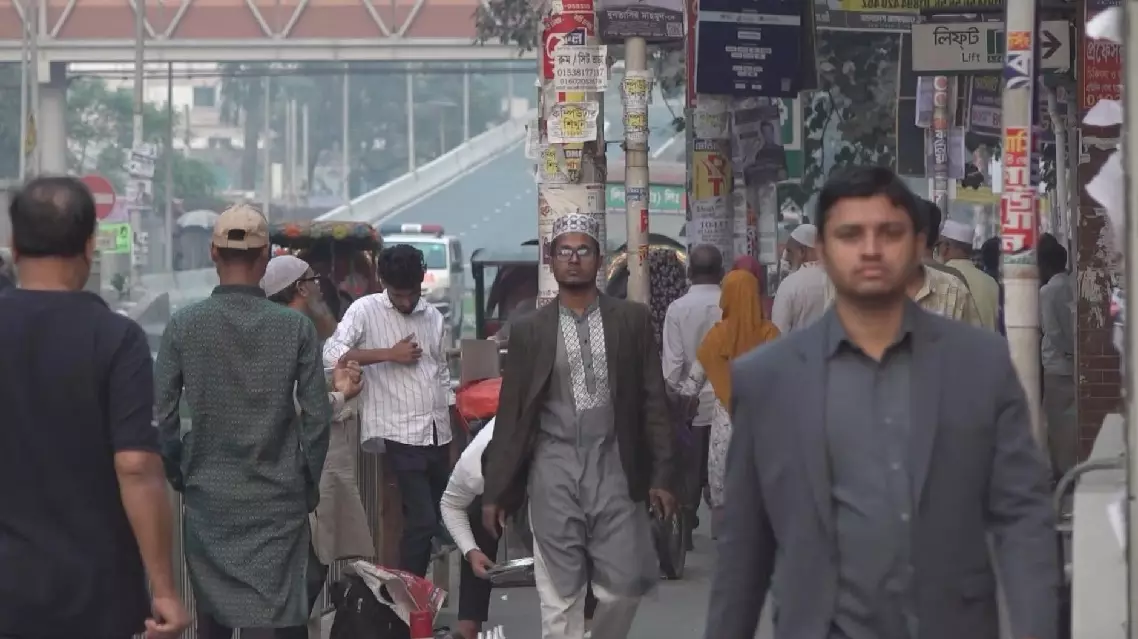
Bangladesh's parliamentary elections ended on Friday local time, with the capital city of Dhaka witnessing an unusually peaceful atmosphere.
Road traffic operated normally, commercial activities continued without significant disruption, and public order remained stable throughout the city.
Analysts noted that the calm situation was closely related to the Bangladesh Nationalist Party (BNP)'s appeal to its members and supporters to refrain from holding street rallies or celebration gatherings after the vote.
In South Asia's political landscape, post-election assemblies often risk escalating into social unrest. The restrained stance this time sent a signal of stability.
Many voters gave recognition to the overall order maintained during the election process.
"It's been a while since Bangladesh had fair election. It's like one of the biggest elections Bangladesh has had in many years. People could vote that's a very good thing and it was peaceful," said a college student.
For the new government, yet, greater challenges lie ahead in addressing long-standing structural issues. Residents of Dhaka voiced their expectations when being interviewed.
"I hope the new government can ease the traffic congestion and ensure women's safety. Generally speaking, I wish for a more peaceful Bangladesh," a company employee said.
"Problems such as extortion, corruption and drug-related crimes should be curbed," a small business owner told the reporter.
A political science expert from Dhaka University said that while the new government has secured a parliamentary majority, it also faces higher social expectations.
How the new administration translates its electoral mandate into institutional reform and economic recovery will directly affect the sustainability of Bangladesh's political stability, according to Rashed Al Mahmud Titumir, a professor of economics with the university's Department of Development Studies.
"So it requires not only democratization of this state so that the state becomes accountable to the people, but it requires democratization of economy from the classes of the oligarchic structure. Because what it requires is participation of all people of all ages, of all strata to be actively involved in economic reconstruction," he said.
Bangladesh parliamentary elections conclude in calm, stability