TUCSON, Ariz. (AP) — Law enforcement agents have been gathering more potential evidence as the search for “Today” show host Savannah Guthrie 's mother heads into its third week.
Nancy Guthrie, 84, was last seen at her Arizona home on Jan. 31 and was reported missing the following day. Authorities say her blood was found on the front porch. Purported ransom notes were sent to news outlets, but two deadlines for paying have passed.
Authorities have expressed concern about Nancy Guthrie’s health because she needs vital daily medicine. She is said to have a pacemaker and have dealt with high blood pressure and heart issues, according to sheriff’s dispatcher audio on broadcastify.com.
Here's what to know about her disappearance and the intense search to find her:
The Federal Bureau of Investigation released surveillance videos of a masked person wearing a handgun holster outside Guthrie’s front door in Tucson the night she vanished. A porch camera recorded video of a person with a backpack who was wearing a ski mask, long pants, jacket and gloves.
On Thursday, the FBI called the person a suspect. It described him as a man about 5 feet, 9 inches tall with a medium build. The agency said he was carrying a 25-liter “Ozark Trail Hiker Pack” backpack.
Investigators initially said there was no surveillance video available since Guthrie didn’t have an active subscription to the doorbell camera company. But digital forensics experts kept working to find images in back-end software that might have been lost, corrupted or inaccessible.
Investigators collected DNA from Guthrie’s property which doesn’t belong to Guthrie or those in close contact with her, the Pima County Sheriff's Department said. Investigators are working to identify who it belongs to.
Evidence requiring forensic analysis is being sent to the same out-of-state lab that has been used since the beginning of the case, the department said.
Investigators found several gloves, the nearest about 2 miles (3.2 kilometers) from Guthrie’s home, and submitted them for lab analysis, the sheriff’s department said. It did not specify what type of gloves.
The sheriff stressed his department is working closely with the FBI.
The Pima County sheriff and the FBI announced phone numbers and a website to offer tips. Several hundred detectives and agents have been assigned to the case, the sheriff’s department said.
The FBI said it has collected more than 13,000 tips since Feb. 1, the day Guthrie was reported missing. The sheriff’s department, meanwhile, said it has taken at least 18,000 calls.
The sheriff’s department has not said whether any tips have advanced the investigation.
Late Friday night, law enforcement sealed off a road about 2 miles (3.2 kilometers) from Guthrie’s home as part of their investigation. A parade of sheriff’s and FBI vehicles, including forensics vehicles, passed through the roadblock.
The sheriff’s department said the activity was part of the Guthrie investigation but declined to detail specifics.
On Tuesday, sheriff deputies detained a person for questioning during a traffic stop south of Tucson. Authorities didn’t say what led them to stop the man but confirmed he was released.
The same day, deputies and FBI agents conducted a court-authorized search in Rio Rico, about an hour's drive south of the city.
Savannah Guthrie, her sister and her brother have shared on social media multiple video messages to their mother’s purported captor.
The family’s Instagram videos have shifted in tone from impassioned pleas to whoever may have their mom, saying they want to talk and are even willing to pay a ransom, to bleaker and more desperate requests for the public’s help.
The latest video on Thursday was simply a home video of their mother and a promise to “never give up on her.”
Nancy Guthrie lived alone in the upscale Catalina Foothills neighborhood, where houses are spaced far apart and set back from the street by long driveways, gates and dense desert vegetation.
Savannah Guthrie grew up in Tucson, graduated from the University of Arizona and once worked at a television station in the city, where her parents settled in the 1970s. She joined “Today” in 2011.
In a video, she described her mother as a “loving woman of goodness and light.”
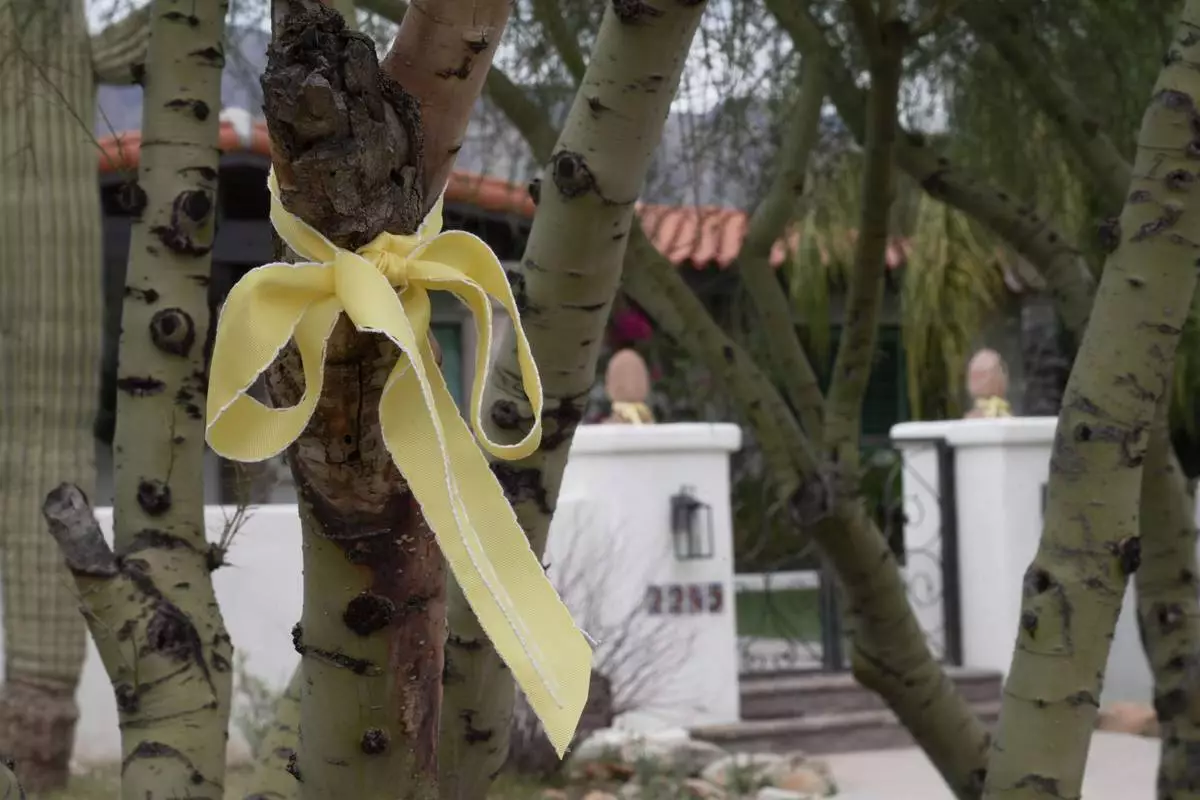
People hang yellow ribbons in their neighborhood around Nancy Guthrie’s home in Tucson, Ariz., on Friday, Feb. 13, 2026. (AP Photo/Ty ONeil)
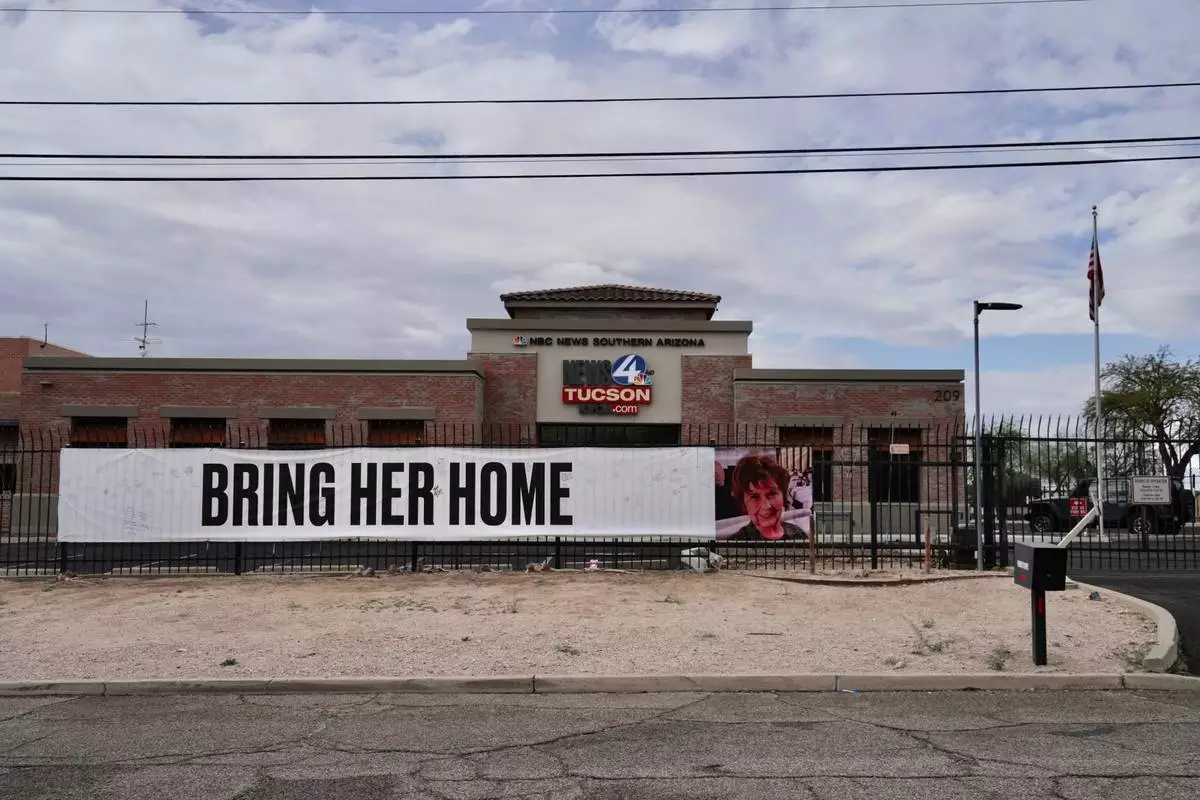
A banner reading "Bring her home" on a fence outside of the KVOA news station in Tucson, Ariz., on Friday, Feb. 13, 2026. (AP Photo/Ty ONeil)
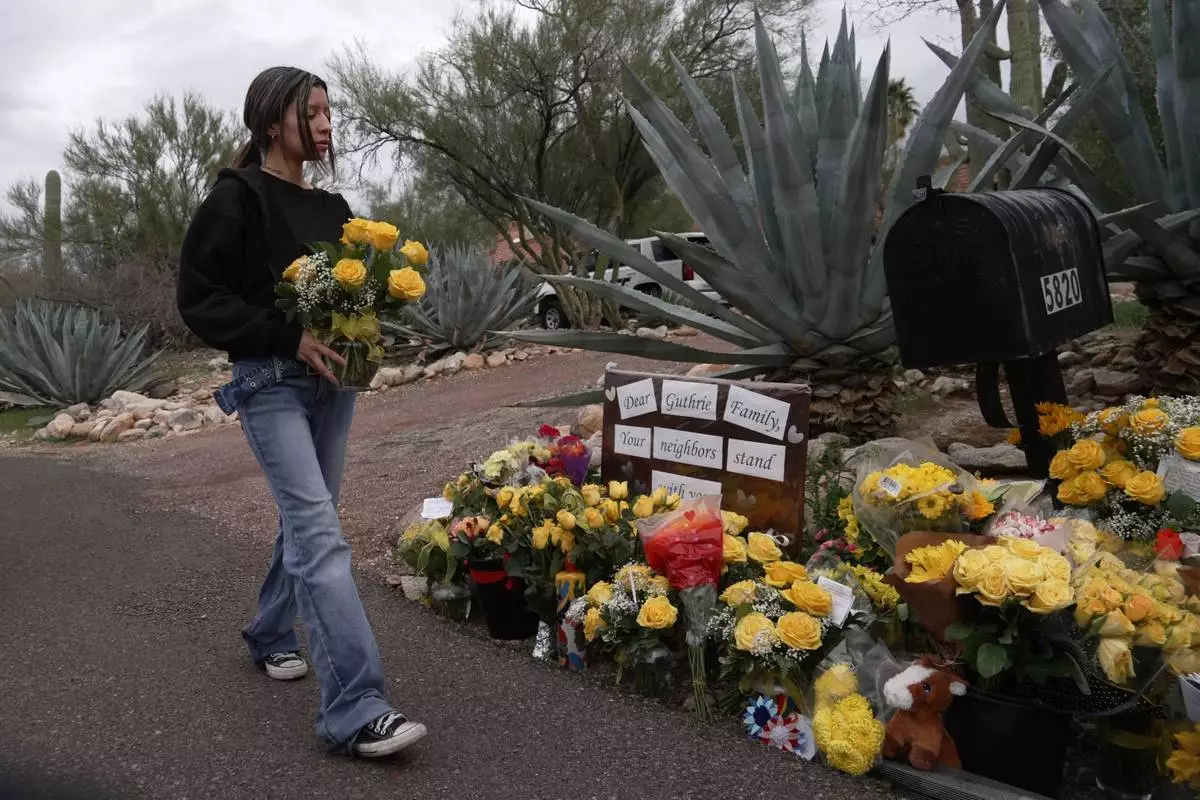
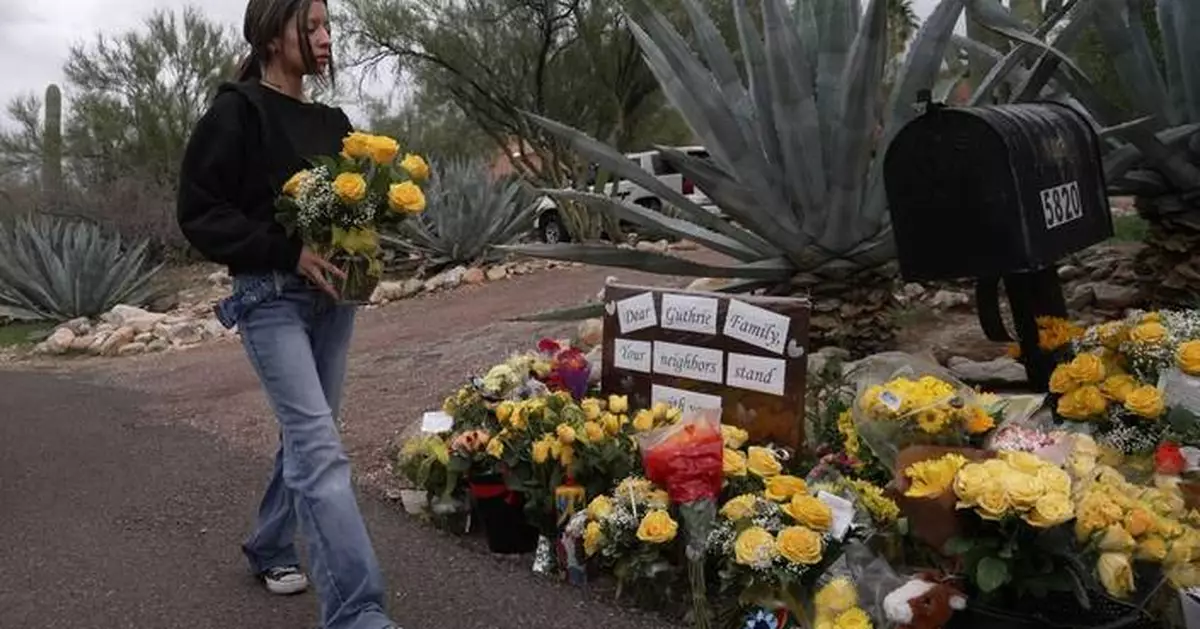
A person places flowers in front of Nancy Guthrie’s home in Tucson, Ariz., on Friday, Feb. 13, 2026. (AP Photo/Ty ONeil)
A federal law requiring impairment-detection devices inside all new cars survived a recent push to strip its funding but remains stalled by questions about whether the technology is ready.
Rana Abbas Taylor lost her sister, brother-in-law, nephew and two nieces when a driver with a blood-alcohol level almost four times the legal limit slammed into their car in January 2019 as the Michigan family drove through Lexington, Kentucky, on the way home from a Florida vacation.
The tragedy turned Abbas Taylor into an outspoken advocate for stopping the more than 10,000 alcohol-related deaths each year on U.S. roads. Lawmakers attached the Honoring Abbas Family Legacy to Terminate Drunk Driving Act to the $1 trillion infrastructure law that then-President Joe Biden signed in 2021.
The measure, often referred to as the Halt Drunk Driving Act, anticipated that as early as this year, auto companies would be required to roll out technology to “passively” detect when drivers are drunk or impaired and prevent their cars from operating. Regulators can choose from a range of options, including air monitors that sample the car's interior for traces of alcohol, fingertip readers that measure a driver's blood-alcohol level, or scanners that detect signs of impairment in eye or head movements.
Mothers Against Drunk Driving called it the most important piece of legislation in the organization's 45-year history. Still, implementation has been bogged down by regulatory delays, without any clear signals that final approval is near.
“The way we measure time is not by days or months or years. It’s by number of lives lost,” Abbas Taylor said in an interview with The Associated Press. “So when we hear manufacturers say, ‘We need more time,’ or ‘The tech is not ready,’ or ‘We’re not there yet,' all we hear is, ‘More people need to die before we’re willing to fix this.’”
A Republican-led effort to remove the Halt Act's funding was defeated in the U.S. House last month by a 268-164 vote. Another bill to repeal it entirely awaits a committee vote.
Most of the opposition has stemmed from suggestions that the law would require manufacturers to equip cars with a “kill switch". That would essentially allow them to “be controlled by the government,” Florida Gov. Ron DeSantis posted on the social platform X, drawing comparisons to George Orwell's dystopian novel “1984.”
The alcohol industry has fiercely defended the law against such arguments. Chris Swonger, president and CEO of the Distilled Spirits Council of the United States, said it specifically requires the technology to be passive, similar to other current safety mandates such as seat belts and air bags.
“There is no switch, there’s no government control, there is no sharing of data," he said. “That’s just an unfortunate scare tactic.”
But Rep. Thomas Massie, a Kentucky Republican who authored the defunding effort, said even the dashboard acting on its own could serve as “your judge, your jury, and your executioner." He cited the example of a mother who swerves in a snowstorm to avoid hitting a neighbor's pet, only for her car to deactivate itself because it determines she's impaired.
The Alliance for Automotive Innovation, a trade association for U.S. automakers, made a similar case to regulators in 2024, arguing that much more research was needed before mandating the technology.
“Even if 1 in 10,000 trips were expected to experience a false positive, this could result in thousands of unimpaired drivers encountering problems that prevent them from driving each day,” the Alliance wrote.
The National Highway Traffic Safety Administration, which is establishing the rules to implement the Halt Act, told the AP in an email that it's still “assessing developing technologies for potential deployment” and expects to report back to Congress soon. Even supporters predict the agency will push the decision at least into 2027, and auto companies still would have another two to three years to install it.
The Insurance Institute for Highway Safety, a research arm funded by auto insurers, recently announced that impairment detection and other technology aimed at curbing risky driving behavior would soon be included as criteria for a vehicle to earn one of its top safety awards.
Many states already have laws requiring breath-activated ignition interlock systems to be installed on the cars of DUI offenders. The system ultimately chosen under the Halt Act is intended to detect impairment beyond just drunk driving.
“We’re still sort of pushing back against this narrative that the technology doesn’t exist,” said Stephanie Manning, chief government affairs officer at MADD. “We’ve seen many different types of technology that can solve drunk driving. We just haven’t seen it deployed and implemented the way that we would like.”
To accelerate the timeline, one bill advancing in Congress would offer a $45 million prize to whoever can produce and deploy the first consumer-ready piece of technology. Abbas Taylor, whose family members were killed in the Kentucky crash, said efforts like that give her hope.
“When you've lost everything, there is nothing that will stop you from fighting for what is right,” she said. “But we see the writing on the wall, and we know it’s only a matter of time before this happens.”
FILE - Madiha Maria, left, cries with Rana Abbas Taylor of Northville, Mich., who lost her only sister, brother-in-law and their three children to a drunk driver, during a candlelight vigil for people who had family members killed by drunk drivers, Tuesday, Nov. 19, 2024, on the National Mall, in Washington. (AP Photo/Jacquelyn Martin, File)