Senior officials from multiple countries have offered Spring Festival greetings and best wishes to the Chinese people as the Chinese New Year draws near.
Falling on Feb 17 this year, the Spring Festival marks the start of the Chinese New Year and ushers in the Year of the Horse, the seventh animal in the Chinese zodiac.
Central African Republic President Faustin-Archange Touadera conveyed Spring Festival greetings to the Chinese people, emphasizing friendship and goodwill.
"On behalf of the people and government of the Central African Republic, and on my own behalf, I extend festive greetings and good wishes to the brotherly Chinese people," said Touadera.
Khamphanh Pheuyavong of the Lao People's Revolutionary Party (LPRP) also sent Spring Festival greetings, expressing hopes for prosperity and well-being among the Chinese people. "I wish the Chinese people even greater achievements in their journey of national construction and development," said Pheuyavong.
Speaking at the Chinese Embassy's Spring Festival reception on Feb 6, Russian officials offered festive greetings and voiced hopes for expanded ties with China.
"The horse symbolizes vitality, dynamism, perseverance and confidence in traditional Chinese culture. I hope that in the Year of the Horse, Russia-China relations can embody these characteristics. Let us forge ahead with resolve, deepen mutual trust and expand practical cooperation in the new year. I believe we will achieve this goal," said Ivan Melnikov, first deputy speaker of the State Duma and chairman of the Russia-China Friendship Association.
Andrey Denisov, first deputy chair of Russia's Federation Council Committee on Foreign Affairs, delivered Spring Festival greetings in Mandarin, wishing Chinese friends joy, prosperity and good health in the Year of the Horse.
"Chinese people like to wish others good health, family happiness, and success in all endeavors. The Chinese phrase is 'may all go well with you.' This is also the blessing I want to offer," said Denisov.
Dmitry Novikov, First Deputy Chairman of the State Duma Committee on International Affairs, expressed confidence that the Chinese people would achieve greater accomplishments in the New Year as he extended his warmest wishes for prosperity and success.
"From the growth of trade to cultural and sports exchanges, ties between Russia and China are steadily strengthening across various fields. China has accumulated unique development experience that Russia should study in depth and draw upon, particularly the most essential and valuable aspects. I'm confident that in the new year, China will surely achieve new accomplishments and make fresh breakthroughs," Novikov said.
Nthati Moorosi, Minister of Information, Communications, Science, Technology and Innovation of Lesotho, extended Spring Festival greetings to the Chinese people, voicing warm wishes for peace and prosperity.
"I think China has made tremendous progress in economic development, in digital transformation, in innovation. I would like to wish the Chinese people more love, peace, unity and prosperity," said Moorosi.

Officials from multiple countries extend Spring Festival greetings to Chinese people
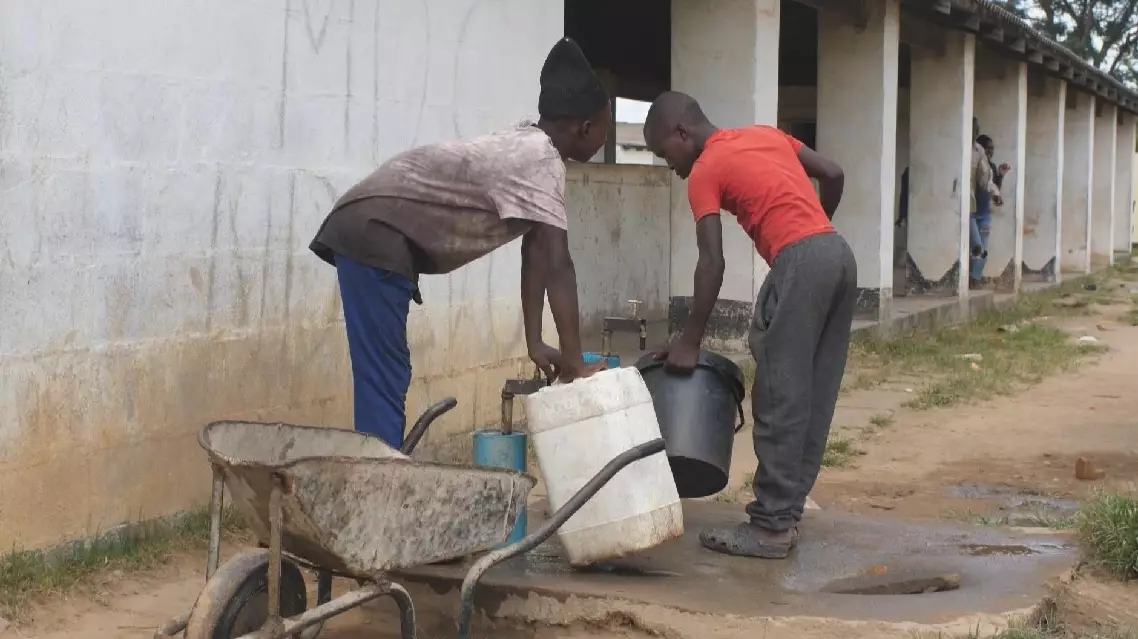
A solar-powered borehole drilling program supported by China has expanded water access across Zimbabwe's rural and peri-urban communities, strengthening disaster recovery and sustaining livelihoods since Cyclone Idai struck in 2019.
Tropical Cyclone Idai entered Zimbabwe from neighboring Mozambique, triggering floods and causing tragic losses of life and property.
Launched under a Chinese government initiative to restore water and sanitation services after cyclones and drought, the program has delivered lasting benefits.
At Mahusekwa Growth Point, where boreholes were drilled last year, reliable water now sustains dozens of small businesses and households, underscoring how the intervention continues to shape community resilience seven years on.
"We now have clean water to wash our products and for customers to wash their hands before they eat. We also fetch water to use at our homes because there is an intermittent supply," said Cynthia Garan'nga, a market vendor.
Reliable water access has also created employment opportunities, especially for young entrepreneurs such as car wash owner Loveness Marabwanya.
"Maybe I was going to get people to fetch water for me from the river, but it's very far and I was going to pay more for that. To imagine that the water is just like a few meters away, it's very easy and convenient for me," she said.
The borehole is solar powered, which means the community can access water at any hour of the day, and that refers to greater reliability and sustainability. There are no longer any limitations of fuel costs or power cuts.
Mahusekwa is one of more than 300 communities nationwide benefiting from boreholes drilled under Chinese disaster assistance. Around 60 of them are in Mashonaland East, where water shortages had long slowed development and undermined food security.
"These boreholes came at the right time. Remember the last two or three years we have been having droughts," said Jeremiah Gwanzura, chairperson of Marondera Rural District Council.
Gwanzura says the availability of water is sustaining livelihoods and boosting production, even during prolonged dry spells.
"We have livelihoods in terms of livestock cattle, people are doing boilers behind the scenes, road runners, goats, piggery projects within the rural set-up, and if there is the missing link of water, it means we are going nowhere. Some of the areas in the rural areas are using it for nutritional gardens, going to the market, so they will be watering their vegetables, they will be watering their plants," he said.
At a national level, authorities say the boreholes reflect a shift from emergency response to long-term resilience.
"In any disaster recovery programme, what we always talk about is building-back better. And I'm sure this principle of building-back better, you can actually see it in the way that we are establishing these boreholes in Chimanimani, Masvingo, Midlands and Mashonaland East," said Nathan Nkomo, chief director of the Civil Protection Department.
Beyond water access, China has also supported food security through agricultural training, helping communities rebuild stronger and more sustainably in the years since Cyclone Idai.
China-supported borehole program expands water access, strengthens Zimbabwe's disaster recovery