Skip to Content Facebook Feature Image

In battleground Michigan, 3 Democrats test vision of affordability in the Senate primary

News

In battleground Michigan, 3 Democrats test vision of affordability in the Senate primary
News

News

In battleground Michigan, 3 Democrats test vision of affordability in the Senate primary

2026-02-14 20:33 Last Updated At:20:41

SAGINAW, Mich. (AP) — When Donald Trump fought his way back to the White House in 2024, he capitalized on simmering economic discontent in political battlegrounds such as Michigan. Now Democrats are trying to harness those same concerns, which have lingered as people across the country lose confidence in the Republican president's ability to ease the cost of living.

The only question is how to do it. That nationwide challenge is especially urgent in Michigan, where three Democrats are running in the U.S. Senate primary in August.

More Images
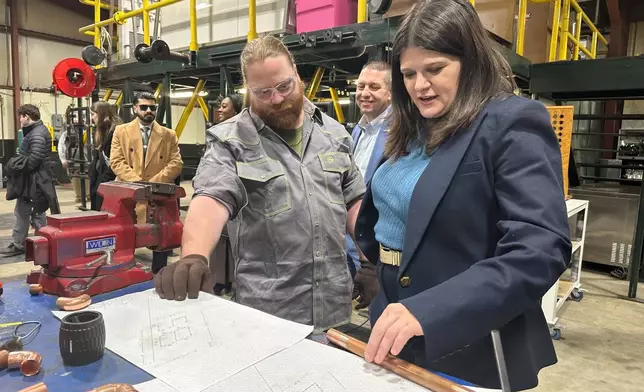
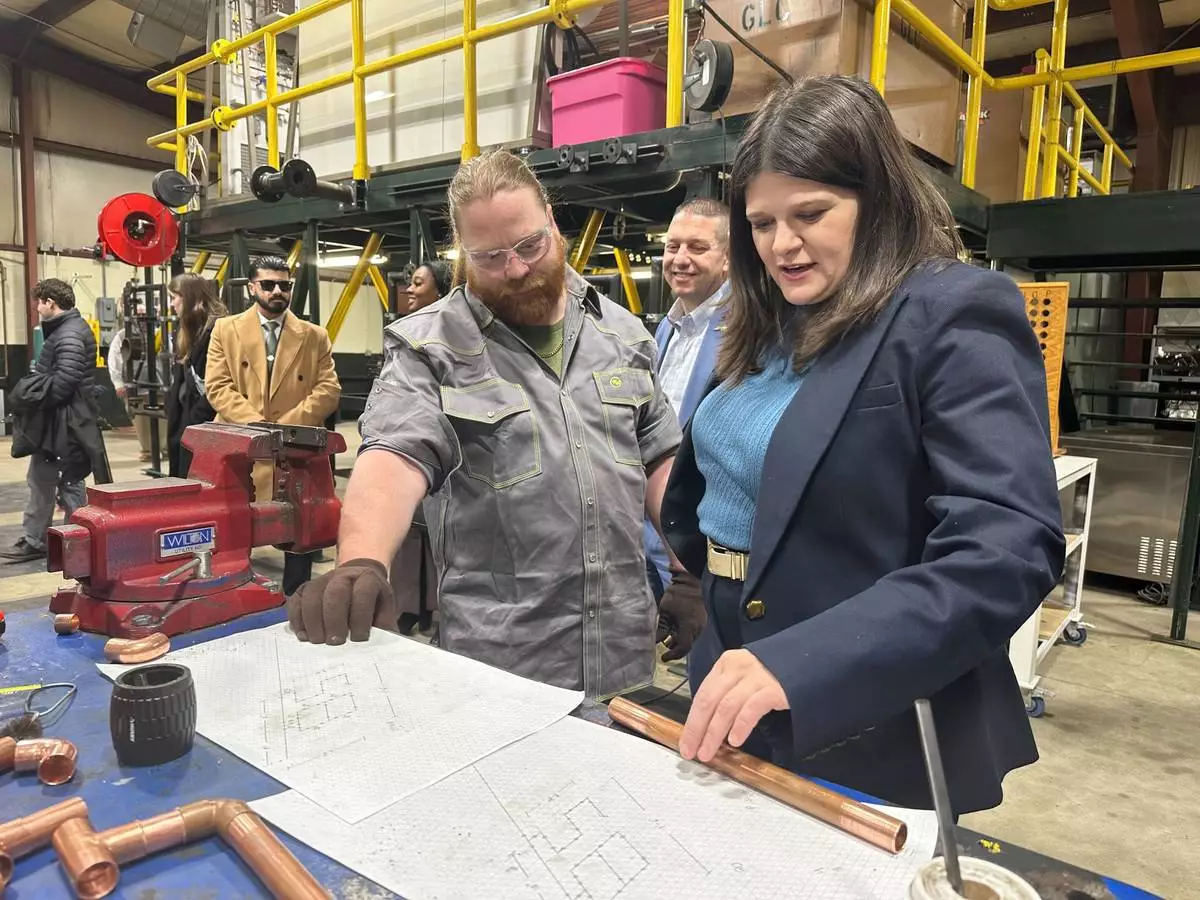
U.S. Rep. Haley Stevens, a Democrat running for U.S. Senate in Michigan, tours a plumbing and pipefitting apprenticeship program workshop at UA Local 85 in Saginaw, Mich., Friday, Jan. 30, 2026. (AP Photo/Isabella Volmert)
U.S. Rep. Haley Stevens, a Democrat running for U.S. Senate in Michigan, tours a plumbing and pipefitting apprenticeship program workshop at UA Local 85 in Saginaw, Mich., Friday, Jan. 30, 2026. (AP Photo/Isabella Volmert)

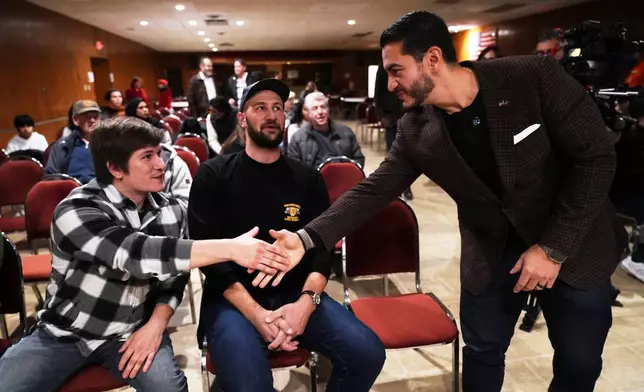
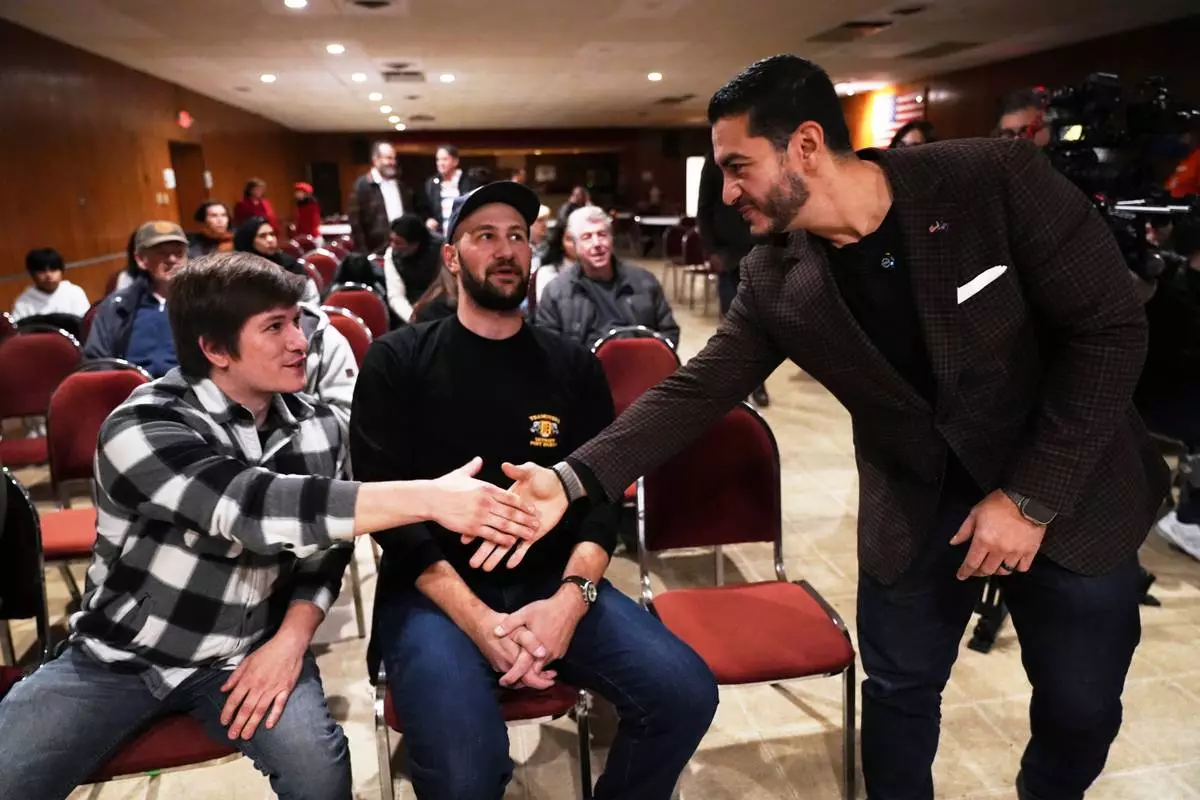
U.S. Senate candidate for Michigan Abdul El-Sayed greets visitors during a town hall, Tuesday, Nov. 11, 2025, in Lincoln Park, Mich. (AP Photo/Ryan Sun)
U.S. Senate candidate for Michigan Abdul El-Sayed greets visitors during a town hall, Tuesday, Nov. 11, 2025, in Lincoln Park, Mich. (AP Photo/Ryan Sun)

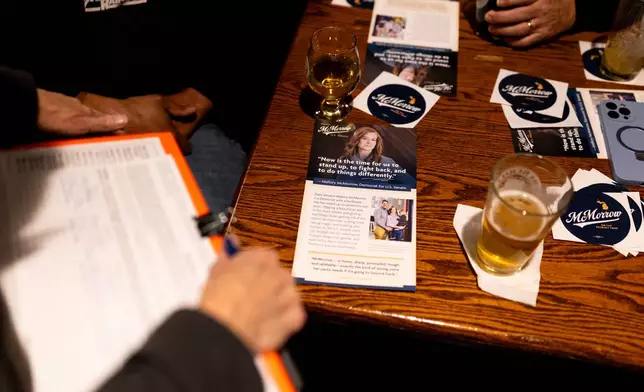
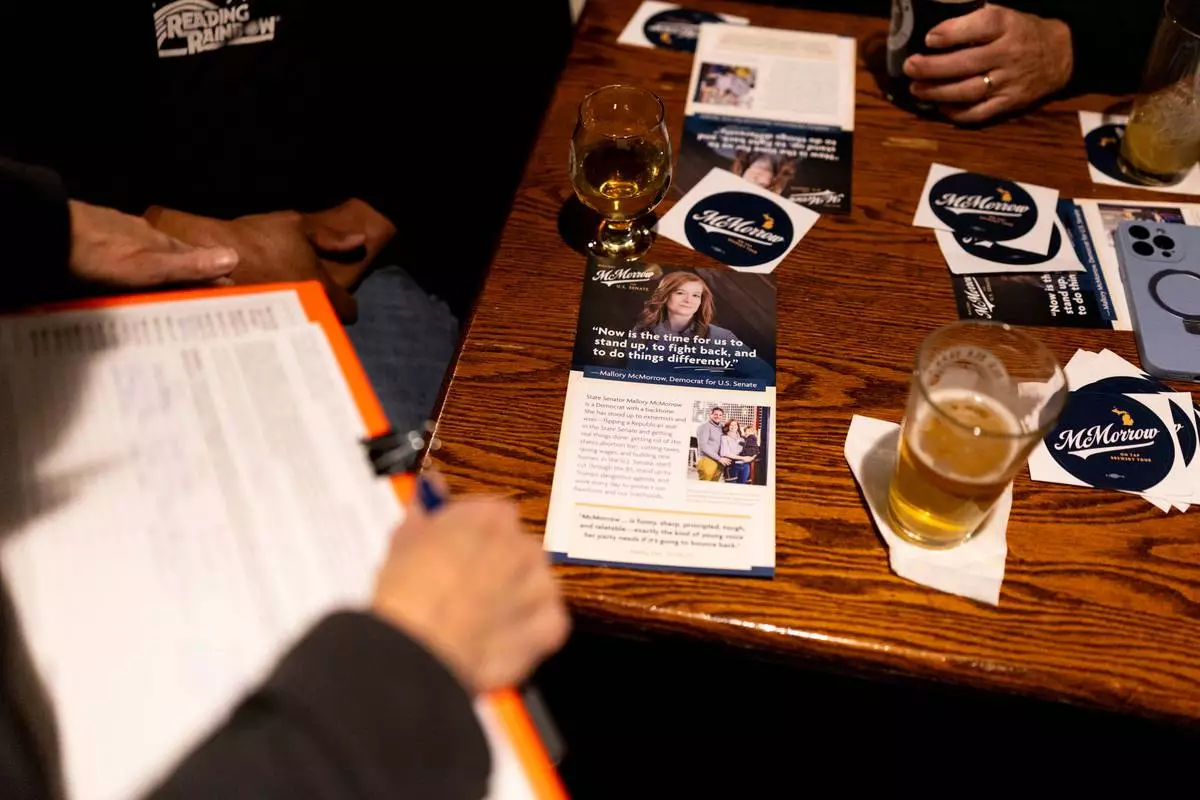
Promotional materials on a table during a campaign event for Michigan State Sen. Mallory McMorrow, a candidate for the U.S. Senate, on Thursday, Feb. 5, 2026, at Churchill's Food & Spirits in Flint, Mich. (AP Photo/Emily Elconin)
Promotional materials on a table during a campaign event for Michigan State Sen. Mallory McMorrow, a candidate for the U.S. Senate, on Thursday, Feb. 5, 2026, at Churchill's Food & Spirits in Flint, Mich. (AP Photo/Emily Elconin)

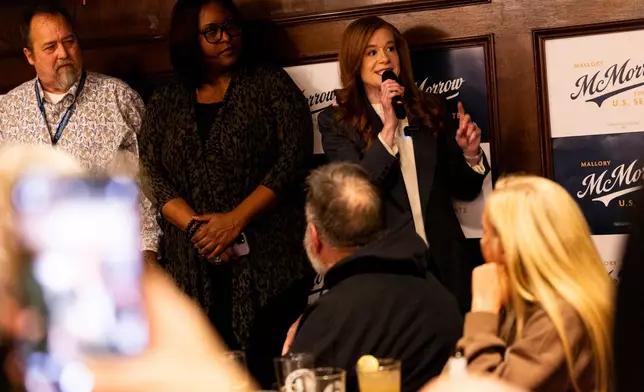
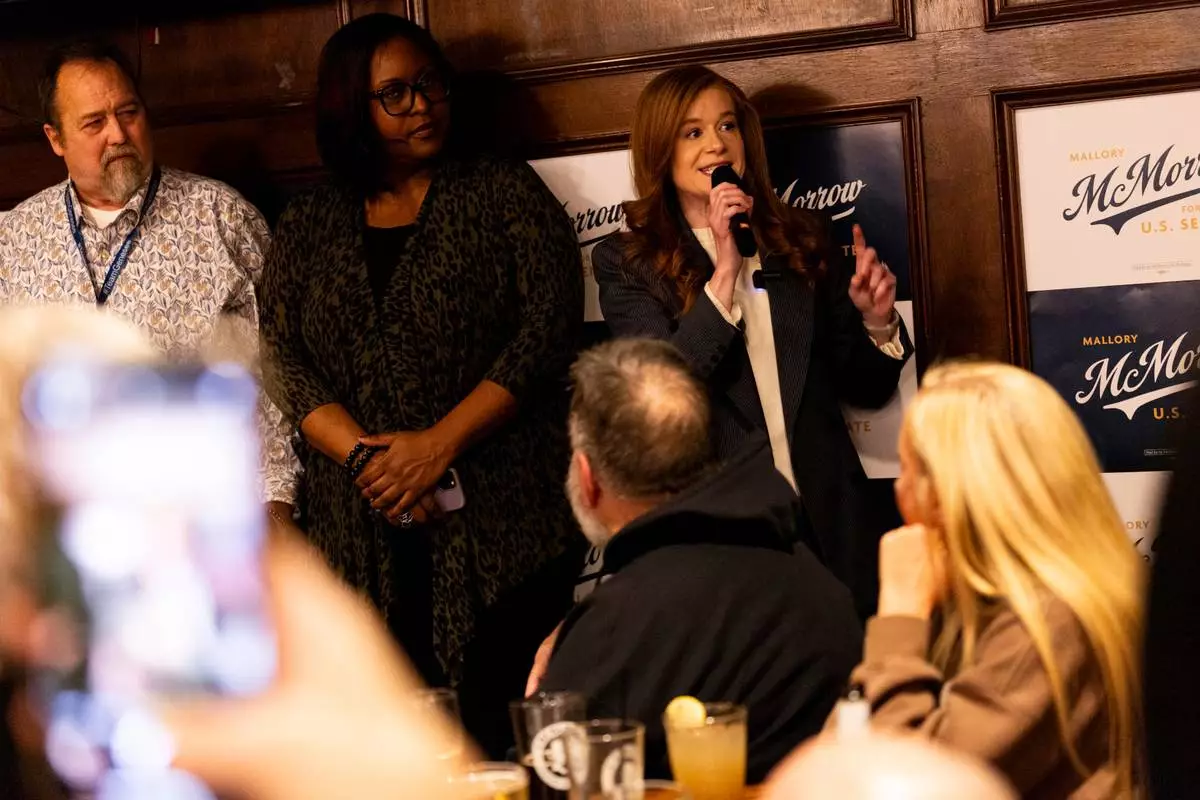
Michigan State Sen. Mallory McMorrow, a candidate for the U.S. Senate, speaks during a campaign event on Thursday, Feb. 5, 2026, at Churchill's Food & Spirits in Flint, Mich. (AP Photo/Emily Elconin)

Michigan State Sen. Mallory McMorrow, a candidate for the U.S. Senate, speaks during a campaign event on Thursday, Feb. 5, 2026, at Churchill's Food & Spirits in Flint, Mich. (AP Photo/Emily Elconin)

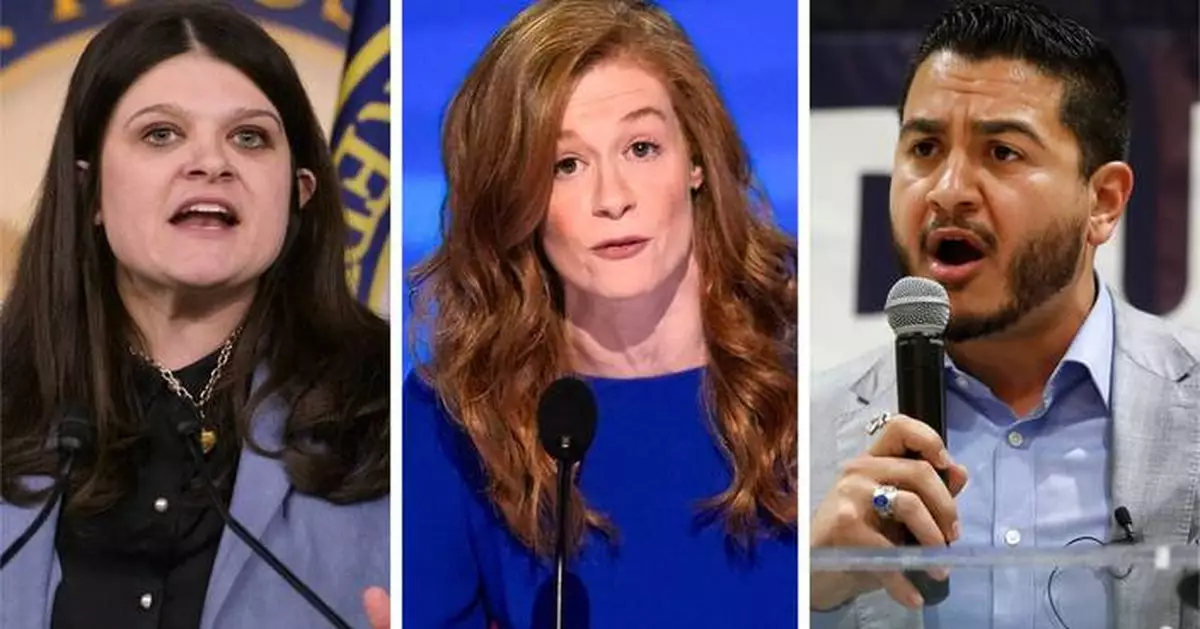
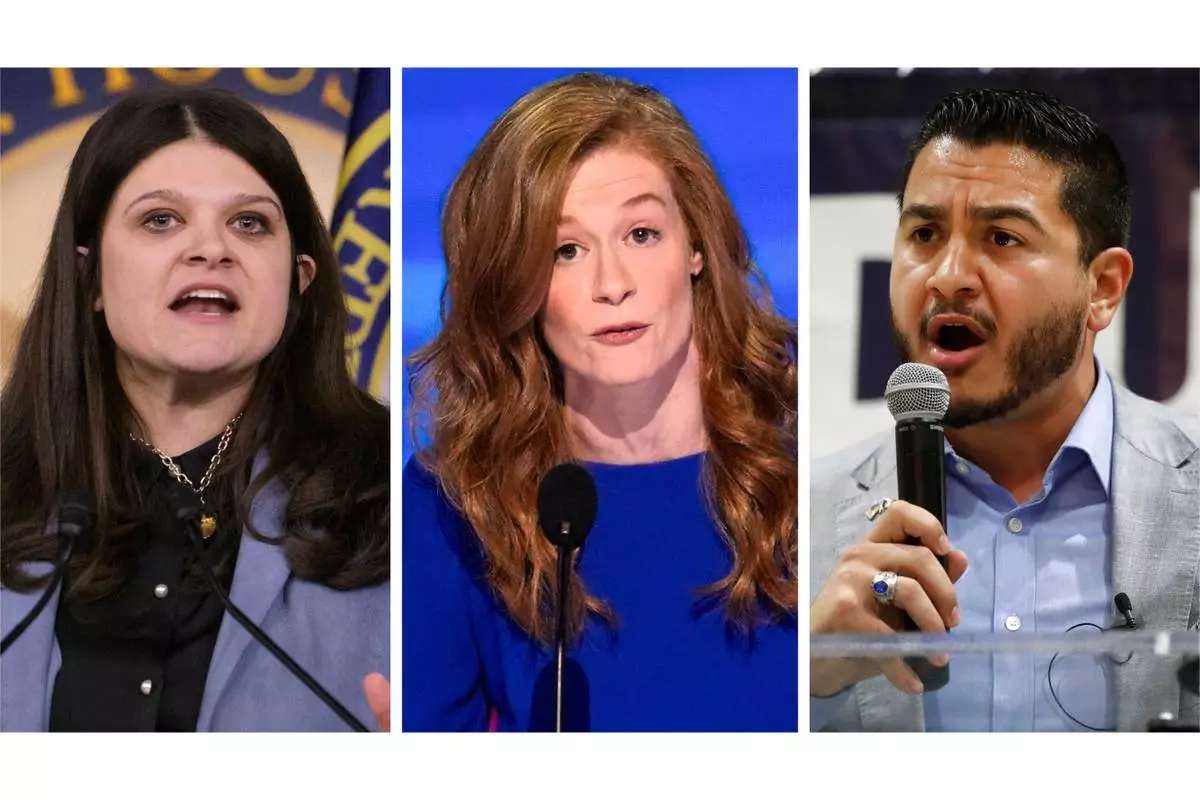
This combination of photos shows Rep. Haley Stevens, D-Mich., Feb. 6, 2025, in Washington, left, Michigan state Sen. Mallory McMorrow, D-Royal Oak, Aug. 19, 2024, in Chicago, center, and Abdul El-Sayed in Detroit on July 28, 2018. (AP Photo/Rod Lamkey, Jr., J. Scott Applewhite, Paul Sancya)

This combination of photos shows Rep. Haley Stevens, D-Mich., Feb. 6, 2025, in Washington, left, Michigan state Sen. Mallory McMorrow, D-Royal Oak, Aug. 19, 2024, in Chicago, center, and Abdul El-Sayed in Detroit on July 28, 2018. (AP Photo/Rod Lamkey, Jr., J. Scott Applewhite, Paul Sancya)

The candidates — U.S. Rep. Haley Stevens, state Sen. Mallory McMorrow and physician Abdul El-Sayed — are making different pitches to voters, and their success or failure will help determine the party's fortunes in the November midterm elections, when control of Congress is at stake.

The party's chances of winning back control of the Senate will become much harder without retaining the seat held by retiring Democratic Sen. Gary Peters.

The likely Republican nominee is Mike Rogers, a former congressman seeking a Senate seat for the second time. In 2024, he lost by 19,000 votes to Democrat Elissa Slotkin, who moved from the House to the Senate.

Wearing a welding helmet and gloves, Stevens moved in close toward flying sparks as a plumbing apprentice showed off his welding technique at a union training workshop in Saginaw.

Her suburban Detroit district is part of the automobile hub central to Michigan's economy and workforce. She is building off her relationships with organized labor and campaigning against Trump's tariff strategy, saying the president is hurting the state's manufacturing sector and driving up prices across the board.

"He’s been more focused on cutting deals all over the world than cutting deals here in Michigan, and now we have job insecurity and in some cases job loss," Stevens said in an interview.

Stevens introduced herself to students at their work stations and asked questions about their projects, such as carefully connecting pipes with tightly fitted grooves as an alternative to welding.

At one station, three apprentices showed the congresswoman paper sketches of plumbing construction designs. She told them how important their careers will be as existing infrastructure ages. She promised that she will find the money to hire people to fix it.

“We like that,” said one student.

After the tour, Stevens sat around a table with union leaders. Speaking over whirring machinery, she sympathized with the complexity of providing health care benefits.

Justin Pomerville, the business manager at UA Local 85, said that the “far left” and the “far right” are failing to improve things in politics, a complaint that dovetailed with Stevens' efforts to pitch herself as a moderate.

“This is why I like walking a day in people's shoes,” she said.

A crowd of Democrats recently packed into a dimly lit side room of Churchill's Food & Sprits in downtown Flint. “Jesse's Girl” played over the speakers as McMorrow's team shuffled chairs to squeeze in a few more people before she took to the microphone.

The lawmaker has hosted campaign stops at various breweries around the state. Her favorite beer is a blood orange honey ale from the Cheybogan Brewing Co.

She got into politics after Trump's victory in 2016, and she was first elected in 2018. McMorrow is in the state Senate's Democratic leadership and has gained national recognition for a few viral moments in recent years, including bringing a Project 2025 prop to the party's national convention in 2024. She is running with a new motivation this time around for the sake of her 5-year-old daughter.

“Like any parent, I am thinking a lot about what tomorrow looks like,” she said.

One of her goals is expanding a Michigan program that helps mothers with new children by giving them cash grants.

“When something's working, you expand on it," McMorrow said in an interview. “I think there’s a huge opportunity where Michigan has done a lot of things right that we can ensure every American benefits from.”

Karen Breasbois, a former farmer, asked McMorrow what she would do about Trump's tariffs that have hurt soybean operations. McMorrow promised to listen to rural communities, not act like a “missionary” like other Democrats from liberal urban areas.

“We need another Debbie Stabenow,” Breasbois said in an interview, referencing Michigan's longtime agriculture champion in the U.S. Senate who retired in early 2025. “Mallory, she's got that spunk.”

El-Sayed, a physician and former county health official, delivered a diagnosis for the cost of living problem at a recent town hall: corporate greed.

About 100 people turned out at a community college in Detroit in late January on a brutally cold night. El-Sayed, who finished far behind the current governor, Gretchen Whitmer, in the 2018 Democratic primary for that office, led the crowd in a chant he uses to begin and end his rallies: “Money out of politics, money in your pocket, Medicare for all.”

El-Sayed has long campaigned for Medicare for all, a slogan that champions universal health care. In recent weeks, he has started adding an asterisk, saying that people should be able to obtain additional coverage from their union or employer.

The discussion at the gathering often circled back to the high cost of health care, something he chalks up to corporate entities and their lobbying powers.

“In an era where union membership is near an all-time low and in an era where inequality is near an all-time high, we have to recognize that these two things are not a coincidence, they are one in the same problem,” he said from a small stage where campaign staff and volunteers filmed from multiple angles for social media.

In an interview, El-Sayed said he has been talking about the cost of living for years, while other candidates, Democrats and Republicans alike, are just now getting on board with the affordability focus.

Natasha VanGessel, a medical assistant from Royal Oak who sat in one of the first rows at the town hall, has followed El-Sayed since he ran for governor in 2018 and regularly tunes into his podcast, called America Dissected.

“He’s very well thought out, very intelligent," she said. "And really, I think, has some good ideas."
U.S. Rep. Haley Stevens, a Democrat running for U.S. Senate in Michigan, tours a plumbing and pipefitting apprenticeship program workshop at UA Local 85 in Saginaw, Mich., Friday, Jan. 30, 2026. (AP Photo/Isabella Volmert)
U.S. Rep. Haley Stevens, a Democrat running for U.S. Senate in Michigan, tours a plumbing and pipefitting apprenticeship program workshop at UA Local 85 in Saginaw, Mich., Friday, Jan. 30, 2026. (AP Photo/Isabella Volmert)

U.S. Senate candidate for Michigan Abdul El-Sayed greets visitors during a town hall, Tuesday, Nov. 11, 2025, in Lincoln Park, Mich. (AP Photo/Ryan Sun)
U.S. Senate candidate for Michigan Abdul El-Sayed greets visitors during a town hall, Tuesday, Nov. 11, 2025, in Lincoln Park, Mich. (AP Photo/Ryan Sun)

Promotional materials on a table during a campaign event for Michigan State Sen. Mallory McMorrow, a candidate for the U.S. Senate, on Thursday, Feb. 5, 2026, at Churchill's Food & Spirits in Flint, Mich. (AP Photo/Emily Elconin)
Promotional materials on a table during a campaign event for Michigan State Sen. Mallory McMorrow, a candidate for the U.S. Senate, on Thursday, Feb. 5, 2026, at Churchill's Food & Spirits in Flint, Mich. (AP Photo/Emily Elconin)

Michigan State Sen. Mallory McMorrow, a candidate for the U.S. Senate, speaks during a campaign event on Thursday, Feb. 5, 2026, at Churchill's Food & Spirits in Flint, Mich. (AP Photo/Emily Elconin)
Michigan State Sen. Mallory McMorrow, a candidate for the U.S. Senate, speaks during a campaign event on Thursday, Feb. 5, 2026, at Churchill's Food & Spirits in Flint, Mich. (AP Photo/Emily Elconin)

This combination of photos shows Rep. Haley Stevens, D-Mich., Feb. 6, 2025, in Washington, left, Michigan state Sen. Mallory McMorrow, D-Royal Oak, Aug. 19, 2024, in Chicago, center, and Abdul El-Sayed in Detroit on July 28, 2018. (AP Photo/Rod Lamkey, Jr., J. Scott Applewhite, Paul Sancya)


This combination of photos shows Rep. Haley Stevens, D-Mich., Feb. 6, 2025, in Washington, left, Michigan state Sen. Mallory McMorrow, D-Royal Oak, Aug. 19, 2024, in Chicago, center, and Abdul El-Sayed in Detroit on July 28, 2018. (AP Photo/Rod Lamkey, Jr., J. Scott Applewhite, Paul Sancya)

CAIRO (AP) — The Iranian security agents came at 2 a.m., pulling up in a half-dozen cars outside the home of the Nakhii family. They woke up the sleeping sisters, Nyusha and Mona, and forced them to give the passwords for their phones. Then they took the two away.

The women were accused of participating in the nationwide protests that shook Iran a week earlier, a friend of the pair told The Associated Press, speaking on condition of anonymity for her security as she described the Jan. 16 arrests.

Such arrests have been happening for weeks following the government crackdown last month that crushed the protests calling for the end of the country’s theocratic rule. Reports of raids on homes and workplaces have come from major cities and rural towns alike, revealing a dragnet that has touched large swaths of Iranian society. University students, doctors, lawyers, teachers, actors, business owners, athletes and filmmakers have been swept up, as well as reformist figures close to President Masoud Pezeshkian.

They are often held incommunicado for days or weeks and prevented from contacting family members or lawyers, according to activists monitoring the arrests. That has left desperate relatives searching for their loved ones.

The U.S.-based Human Rights Activists News Agency has put the number of arrests at more than 50,000. The AP has been unable to verify the figure. Tracking the detainees has been difficult since Iranian authorities imposed an internet blackout, and reports leak out only with difficulty.

Other activist groups outside Iran have also been working to document the sweeps.

“Authorities continue to identify people and detain them,” said Shiva Nazarahari, an organizer with one of those groups, the Committee for Monitoring the Status of Detained Protesters.

So far, the committee has verified the names of more than 2,200 people who were arrested, using direct reports from families and a network of contacts on the ground. The arrestees include 107 university students, 82 children as young as 13, as well as 19 lawyers and 106 doctors.

Nazarahari said authorities have been reviewing municipal street cameras, store surveillance cameras and drone footage to track people who participated in the protests to their homes or places of work, where they are arrested.

The protests began in late December, triggered by anger over spiraling prices, and quickly spread across the country. They peaked on Jan. 8 and 9, when hundreds of thousands of people in more than 190 cities and towns across the country took to the streets.

Security forces responded by unleashing unprecedented violence. The Human Rights Activists News Agency has so far counted more than 7,000 dead and says the true number is far higher. Iran’s government offered its only death toll on Jan. 21, saying 3,117 people were killed. The theocracy has undercounted or not reported fatalities from past unrest.

Gholamhossein Mohseni Ejehi, a hard-line cleric who heads Iran’s judiciary, became the face of the crackdown, labeling protesters “terrorists” and calling for fast-tracked punishments.

Since then, “detentions have been very widespread because it’s like a whole suffocation of society,” said one protester, reached by the AP in Gohardasht, a middle-class area outside the Iranian capital. He said two of his relatives and three of his brother’s friends were killed in the first days of the crackdown, as well as several neighbors. The protester spoke on condition of anonymity for fear of being targeted by authorities.

The Nakhii sisters, 25-year-old Nyusha and 37-year-old Mona, were first taken to Tehran’s notorious Evin prison, where they were allowed to contact their parents, their friend said. Later, she said, they were moved to Qarchak, a women’s prison on the outskirts of Tehran where rights groups reported conditions that included overcrowding and lack of hygiene even before the crackdown.

Other people whose arrests were documented by the detainees committee have disappeared into the prisons. The family of Abolfazl Jazbi has not heard from him since his Jan. 15 arrest at a factory in the southern city of Isfahan. Jazbi suffers from a severe blood disorder that requires medication, according to the committee.

Atila Sultanpour, 45, has not been heard from since he was taken from his home in Tehran on Jan. 29 by security agents who beat him severely, according to Dadban, a group of Iranian lawyers based abroad who are also documenting detentions.

Authorities have also moved to suspend bank accounts, block SIM cards and confiscate the property of protesters' relatives or people who publicly express support for them, said Musa Barzin, an attorney with Dadban, citing reports from families.

In past crackdowns on protests, authorities sometimes adhered to a veneer of due process and rule of law, but not this time, Barzin said. Authorities are increasingly denying detainees access to legal counsel and often holding them for days or weeks before allowing any phone calls to family. Lawyers representing arrested protesters also have faced court summons and detention, according to Dadban.

“The following of the law is in the worst situation it has ever been,” Barzin said.

Despite the crackdown, many civic groups continue to issue defiant statements.

The Writers’ Association of Iran, an independent group with a long tradition of dissent, issued a statement describing the protests as an uprising against “47 years of systemic corruption and discrimination.”

It also announced that two of its members had been detained, including a member of its secretariat.

A national council representing schoolteachers urged families to speak out about detained children and students. “Do not fear the threats of security forces. Refer to independent counsel. Make your children’s names public,” it said in a statement.

A spokesman for the council said Sunday that it has documented the deaths of at least 200 minors who were killed in the crackdown. That figure is up several dozen from the count just days before.

“Every day we tell ourselves this is the last list,” Mohammad Habibi wrote on X. “But the next morning, new names arrive again.”

Bar associations and medical groups have also spoken out, including Iran’s state-sanctioned doctors council, which called on authorities to stop harassing medical staff.

Anger over the bloodshed now adds to the bitterness over the economy, which has been hollowed out by decades of sanctions, corruption and mismanagement. The value of the currency has plunged, and inflation has climbed to record levels.

The Iranian government has announced gestures such as launching a new coupon program for essential goods. Labor and trade groups, including a national retirees syndicate, have issued statements condemning the economic and political crisis.

Meanwhile, U.S. President Donald Trump has moved an aircraft carrier and other military assets to the Persian Gulf and suggested the U.S. could attack Iran over the killing of peaceful demonstrators or if Tehran launches mass executions over the protests. A second American aircraft carrier is on its way to the Mideast.

Iran’s theocracy has faced down protests and U.S. threats in the past, and the crackdown showed the iron grip it holds over the country. This week, authorities organized pro-government rallies with hundreds of thousands of people to mark the anniversary of the 1979 Islamic Revolution.

Still, Barzin said, he sees the ferocity of the crackdown as a sign that Iran’s leadership “for the first time is afraid of being overthrown.”

Associated Press writer Kareem Chehayeb in Beirut contributed to this report.

This story corrects ages for Nyusha and Mona.

FILE - In this image from video obtained by the AP outside Iran, a masked demonstrator holds a picture of Iran's Crown Prince Reza Pahlavi during a protest in Tehran, Iran, on Jan. 9, 2026. (UGC via AP, File)

FILE - In this image from video obtained by the AP outside Iran, a masked demonstrator holds a picture of Iran's Crown Prince Reza Pahlavi during a protest in Tehran, Iran, on Jan. 9, 2026. (UGC via AP, File)

FILE - In this image from video circulating on social media, protesters dance and cheer around a bonfire as they take to the streets of Tehran, Iran, on Jan. 9, 2026. (UGC via AP, File)

FILE - In this image from video circulating on social media, protesters dance and cheer around a bonfire as they take to the streets of Tehran, Iran, on Jan. 9, 2026. (UGC via AP, File)

FILE - In this image from video made by an individual not employed by The Associated Press and obtained by the AP outside Iran, people block an intersection during a protest in Tehran, Iran, on Jan. 8, 2026. (UGC via AP, File)

FILE - In this image from video made by an individual not employed by The Associated Press and obtained by the AP outside Iran, people block an intersection during a protest in Tehran, Iran, on Jan. 8, 2026. (UGC via AP, File)

Recommended Articles