PORTLAND, Maine (AP) — The U.S.'s ocean regulator plans to make industry-friendly changes to a longstanding rule designed to protect vanishing whales, prompting criticism from environmental groups who cite the recent death of an endangered whale.
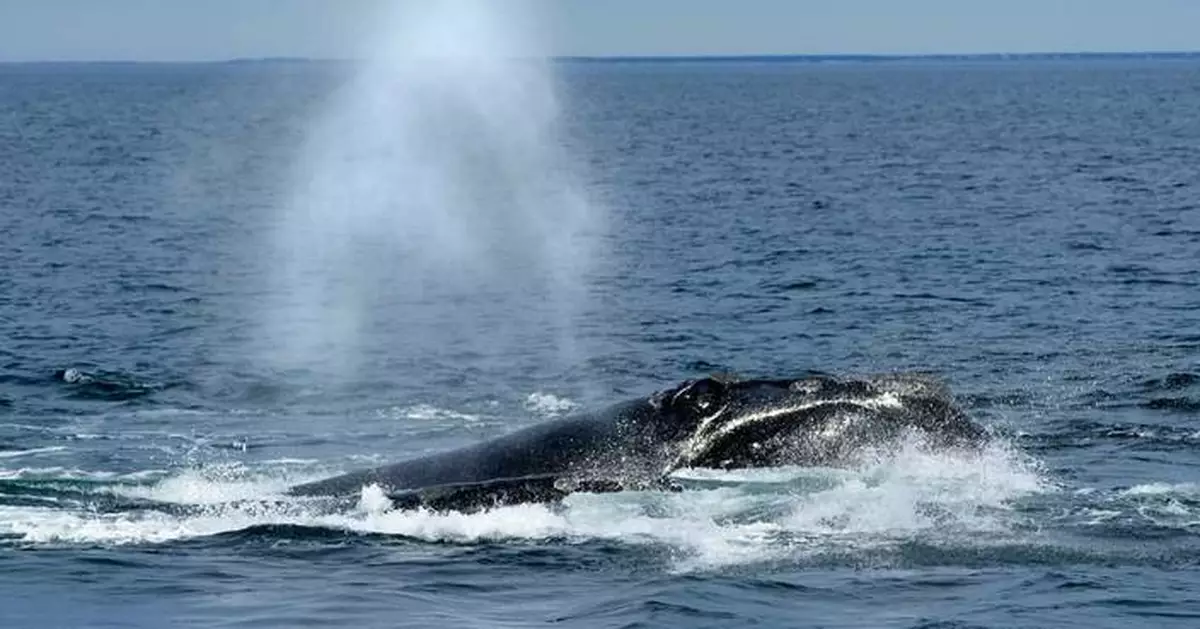
The rules protect the North Atlantic right whale, which numbers less than 400 and lives off the East Coast. The giant animals are protected by a vessel speed rule that requires large ships to slow down at certain times to avoid collisions, which is a leading cause of death for the whales.
The National Oceanic and Atmospheric Administration said in a Thursday statement to The Associated Press that it plans to soon announce proposed new rules designed to “modernize” the whale protections. The proposal will be a “deregulatory-focused action” that will seek to “reduce unnecessary regulatory and economic burdens while ensuring responsible conservation practices for endangered North Atlantic right whales,” the statement said.
A notice of rulemaking about the right whale rules is listed on the U.S. Office of Information and Regulatory Affairs website, but it does not include any details about the proposal. NOAA said in its statement that more information about the rules was forthcoming and that the agency was focused on “implementing new technologies, engineering approaches, and other advanced tools” to protect the whales.
Several environmental groups criticized the move away from vessel speed rules. Some cited the Feb. 10 confirmation of the death of a 3-year-old female whale off Virginia. The cause of the animal's death was not yet determined, but it died at a far younger age than typical.
“Another female right whale — the future of this species — has lost her life. We urgently need more right whale protections, not fewer. The Trump administration’s apparent determination to weaken the vessel speed rule could not come at a worse time,” said Jane Davenport, senior attorney at conservation group Defenders of Wildlife.
Right whales migrate every year from calving grounds off Florida and Georgia to feeding grounds off New England and Canada. Along the way, they are vulnerable to collisions with ships and entanglement in commercial fishing gear. They were once numerous off the East Coast but were decimated during the commercial whaling era and have been federally protected for decades.
The Biden administration planned to expand slow zones off the East Coast to protect the whales. It also planned to expand the classes of boats required to slow down. However, the federal government withdrew the proposal in the final days of the administration, with officials saying it didn't have time to finalize the regulations due to the scope and volume of public comments.
Some shipping businesses and other marine industries have long pushed back at vessel speed rules. The National Marine Manufacturers Association has described speed restrictions as “archaic” and advocated for solutions that rely on technology.
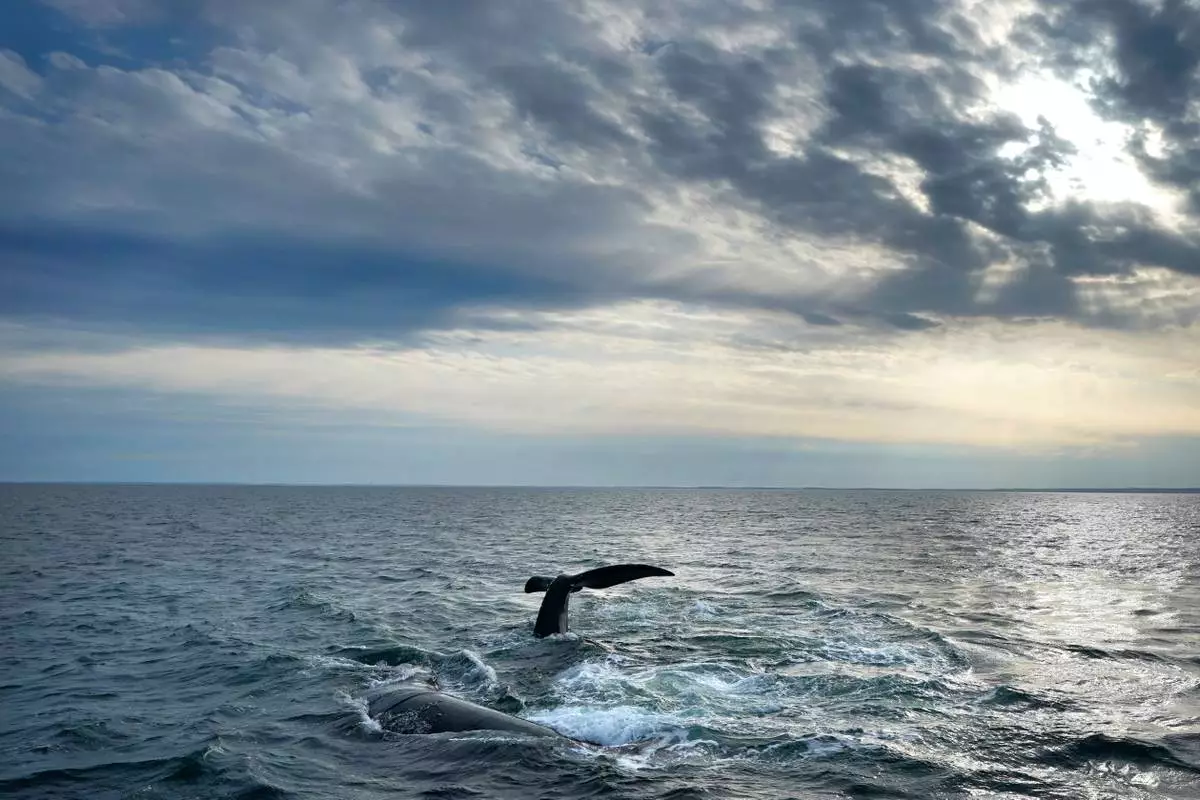
FILE - A pair of North Atlantic right whales interact at the surface of Cape Cod Bay, Monday, March 27, 2023, in Massachusetts. (AP Photo/Robert F. Bukaty, NOAA permit # 21371)
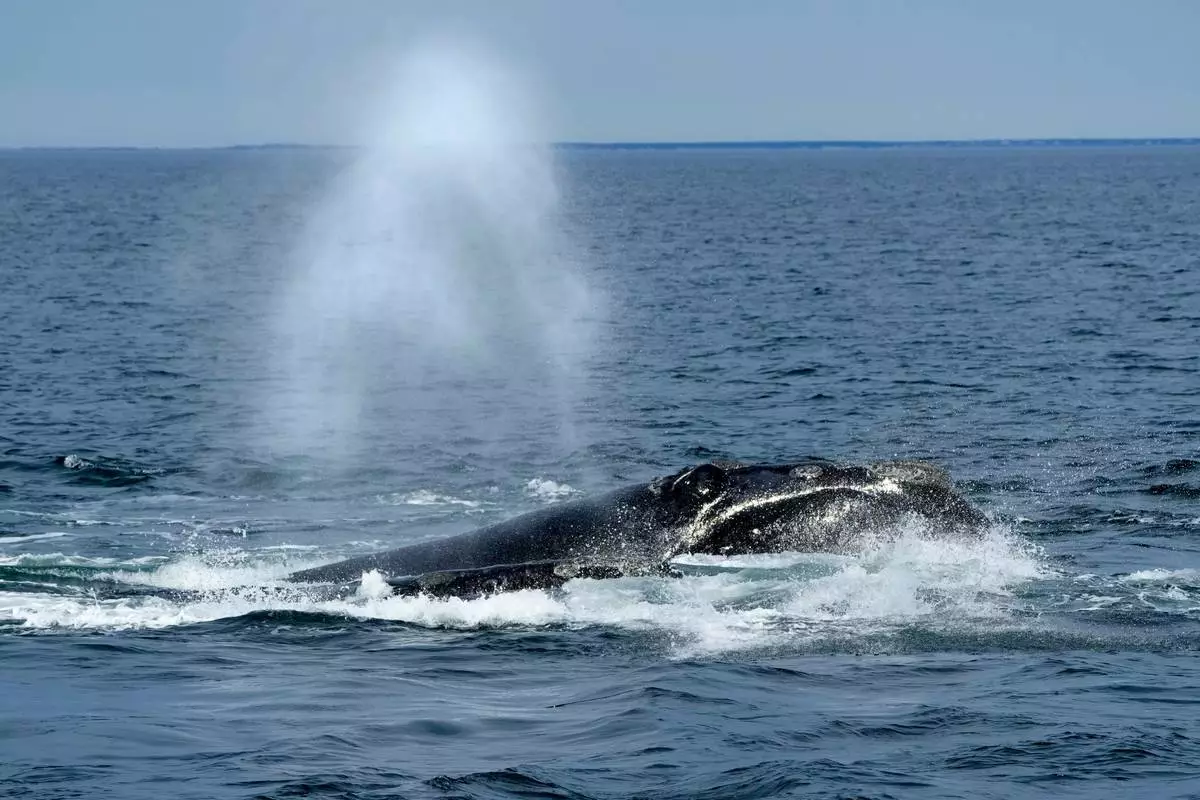
FILE - A North Atlantic right whale surfaces on Cape Cod Bay in Massachusetts, Monday, March 27, 2023. (AP Photo/Robert F. Bukaty, NOAA permit # 21371)
LONDON (AP) — Russian opposition leader Alexei Navalny was poisoned by the Kremlin with a rare and lethal toxin found in the skin of poison dart frogs, five European countries said Saturday.
The foreign ministries of the U.K., France, Germany, Sweden and the Netherlands said analysis in European labs of samples taken from Navalny's body “conclusively confirmed the presence of epibatidine.” The neurotoxin secreted by dart frogs in South America is not found naturally in Russia, they said.
A joint statement said: “Russia had the means, motive and opportunity to administer this poison.”
The five countries said they were reporting Russia to the Organization for the Prohibition of Chemical Weapons for a breach of the Chemical Weapons Convention. There was no immediate comment from the organization.
Navalny, who crusaded against official corruption and staged massive anti-Kremlin protests as President Vladimir Putin’s fiercest foe, died in an Arctic penal colony on Feb. 16, 2024, while serving a 19-year sentence that he believed to be politically motivated.
“Russia saw Navalny as a threat,” British Foreign Secretary Yvette Cooper said. “By using this form of poison the Russian state demonstrated the despicable tools it has at its disposal and the overwhelming fear it has of political opposition.”
French Foreign Minister Jean-Noël Barrot wrote on X that the poisoning of Navalny shows “that Vladimir Putin is prepared to use biological weapons against his own people in order to remain in power.”
The European nations’ assessment came as Navalny’s widow, Yulia Navalnaya, attended the Munich Security Conference in Germany, and just before the second anniversary of Navalny’s death.
She said last year that two independent labs had found that her husband was poisoned shortly before he died. She has repeatedly blamed Putin for her husband's death. Russian officials have vehemently denied the accusation.
Navalnaya said Saturday that she had been “certain from the first day” that her husband had been poisoned, “but now there is proof.”
“Putin killed Alexei with chemical weapon,” she wrote on She said Putin was “a murderer” who “must be held accountable.”
Russian authorities said that the politician became ill after a walk and died from natural causes.
Epibatidine is found naturally in dart frogs in the wild, and can also be manufactured in a lab, which European scientists suspect was the case with the substance used on Navalny. It works on the body in a similar way to nerve agents, causing shortness of breath, convulsions, seizures, a slowed heart rate and ultimately death.
European officials said they had a high degree of confidence in the assessment that Navalny died from epibatidine poisoning. Asked why the results had taken so long, German Foreign Minister Johann Wadephul said that it had been “a complicated process.”
Wadephul said “no one but Putin’s henchmen will be able to say in detail what happened on Feb. 16, 2024, in the Russian penal colony. But it is clear that Russian authorities had the possibility, the motive and the means to administer the poison to Navalny.”
Navalny was the target of an earlier poisoning in 2020, with a nerve agent in an attack he blamed on the Kremlin, which always denied involvement. His family and allies fought to have him flown to Germany for treatment and recovery. Five months later, he returned to Russia, where he was immediately arrested and imprisoned for the last three years of his life.
The U.K. has accused Russia of repeatedly flouting international bans on chemical and biological weapons. It accuses the Kremlin of carrying out a 2018 attack in the English city of Salisbury that targeted a former Russian intelligence officer, Sergei Skripal, with the nerve agent Novichok. Skripal and his daughter became seriously ill, and a British woman, Dawn Sturgess, died after she came across a discarded bottle with traces of the nerve agent.
A British inquiry concluded that the attack “must have been authorized at the highest level, by President Putin.”
The Kremlin has denied involvement. Russia also denied poisoning Alexander Litvinenko, a former Russian agent turned Kremlin critic who died in London in 2006, after ingesting the radioactive isotope polonium-210. A British inquiry concluded that two Russian agents killed Litvinenko, and Putin had “probably approved” the operation.
Associated Press writers John Leicester in Paris, Mike Corder in The Hague and Philipp Jenne in Munich contributed to this report.
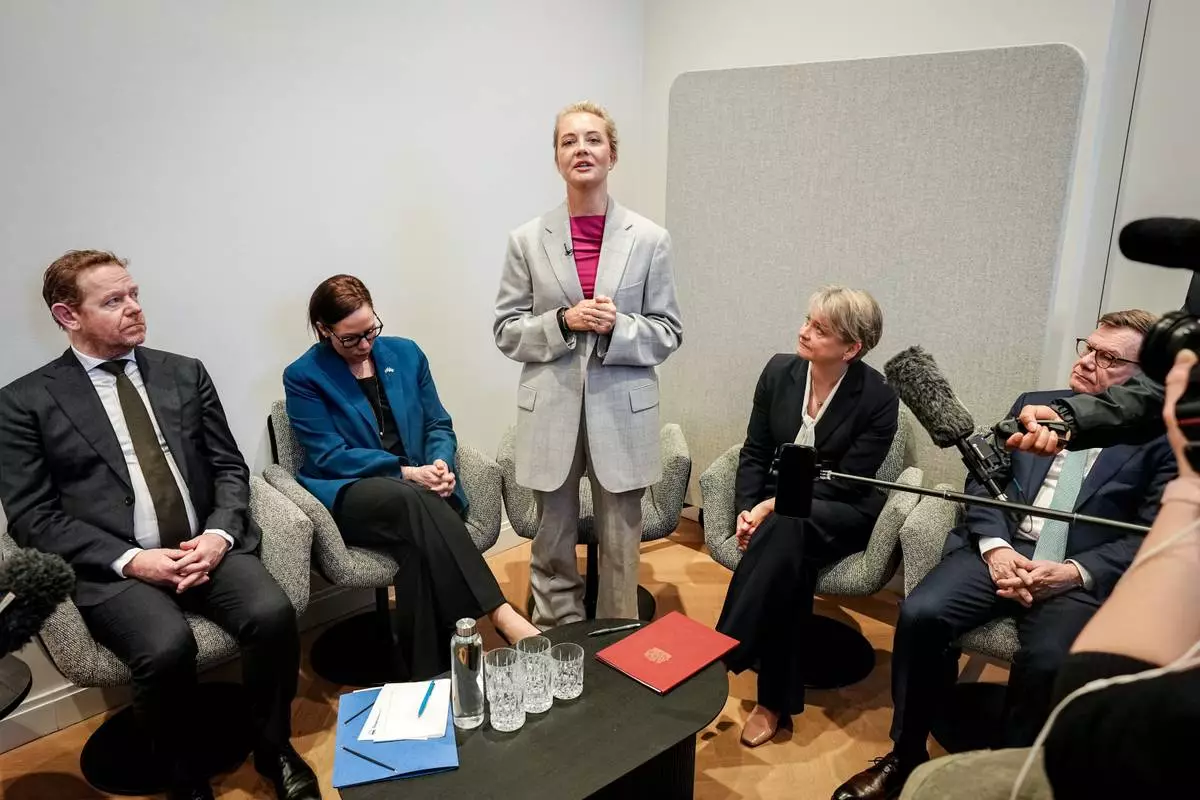
Yulia Navalnaya, human rights activist and wife of Russian opposition leader Alexei Navalny, gives a press statement on the death and circumstances of her husband's death on the sidelines of the Munich Security Conference in Munich, Germany, Saturday Feb. 14, 2026. (Kay Nietfeld/dpa via AP)
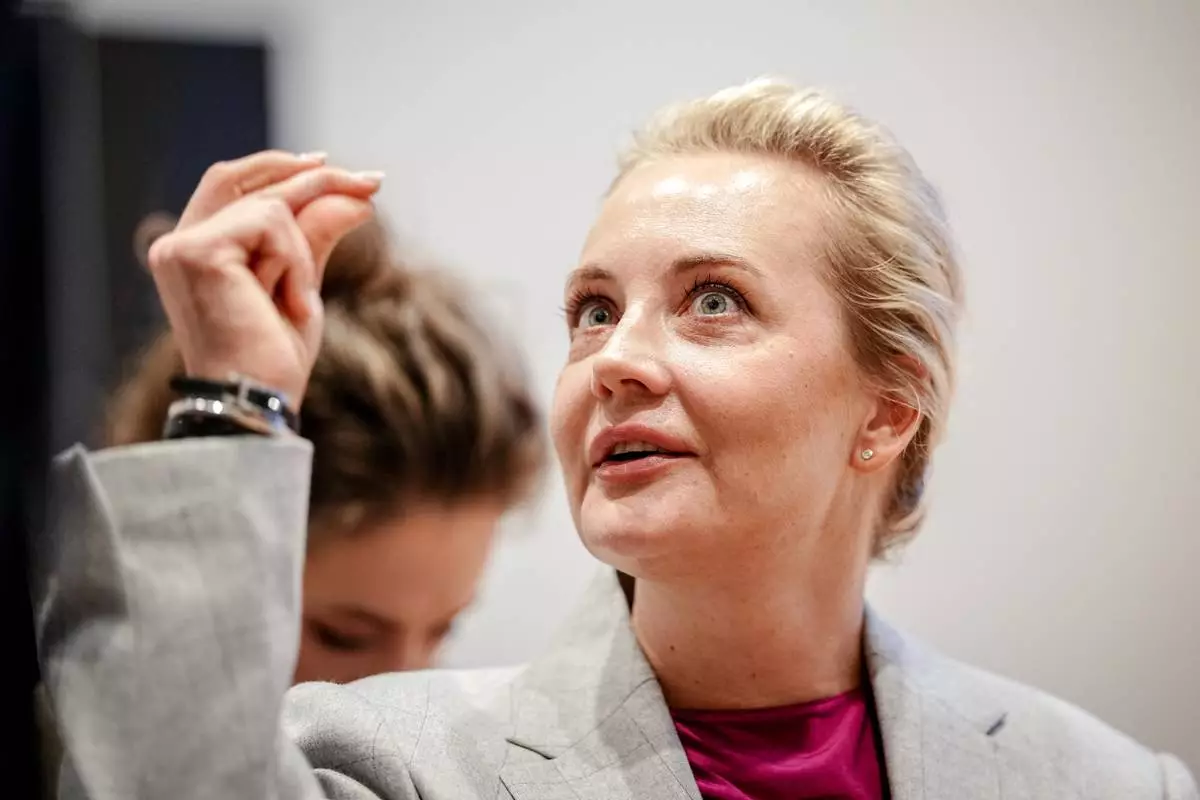
Yulia Navalnaya, human rights activist and wife of Russian opposition leader Alexei Navalny, gives a press statement on the death and circumstances of her husband's death on the sidelines of the Munich Security Conference in Munich, Germany, Saturday Feb. 14, 2026. (Kay Nietfeld/dpa via AP)
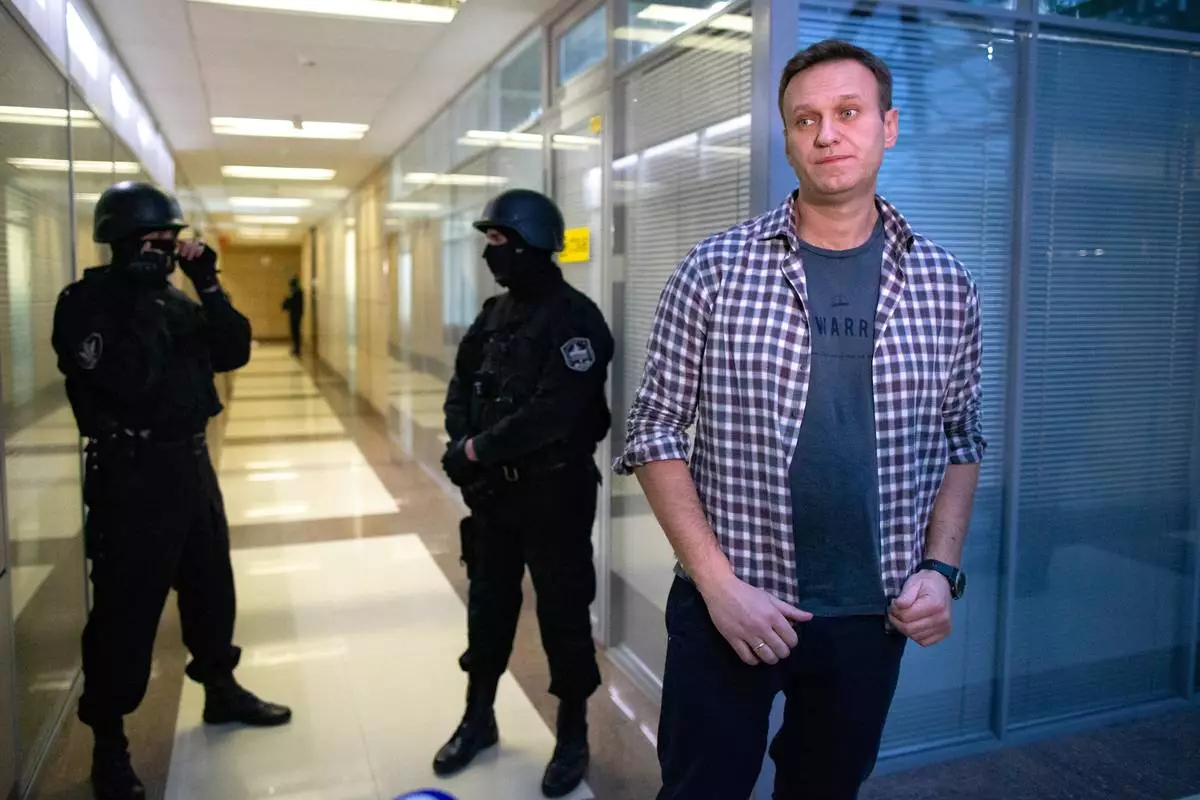
FILE - Russian opposition leader Alexei Navalny speaks to the media in front of security officers standing guard at the Foundation for Fighting Corruption office in Moscow, Russia, Thursday, Dec. 26, 2019. (AP Photo/Alexander Zemlianichenko, File)